
Vietnamese Table Tennis at the SEA Games Crossroads: When Technique Is Enough but Nerve Is Not
**Câu trả lời cốt lõi** Bóng bàn Việt Nam thường thua ở các điểm số từ 8 trở lên vì thiếu trải nghiệm thi đấu đỉnh cao thường xuyên, dù kỹ thuật cơ bản tốt. Nút thắt nằm ở bản lĩnh thi đấu và mật độ giải nội địa thấp. **Dữ kiện chính** - Bóng bàn là môn thể thao Olympic từ năm 1988 tại Seoul. - Thể thức 11 điểm thay cho 21 điểm được áp dụng từ năm 2001. - Singapore và Thái Lan thống trị bóng bàn Đông Nam Á trong nhiều thập kỷ. - Tỷ lệ thắng của tay vợt Việt Nam giảm rõ rệt từ điểm số thứ 8 của mỗi set. - Quả bóng thi đấu hiện hành có đường kính 40mm. **Nguồn** Phân tích của Huỳnh Trí, ngày 13 tháng 8 năm 2026 | Cross-checked: VuaBong.vn **Hỏi đáp liên quan** Hỏi: Vì sao bóng bàn Việt Nam khó giành huy chương vàng SEA Games? Đáp: Do thiếu trải nghiệm thi đấu đỉnh cao thường xuyên và mật độ giải nội địa thấp. Hỏi: Yếu tố nào quyết định thắng thua ở đẳng cấp cao? Đáp: Khả năng ra quyết định đúng ở các điểm số quyết định, không phải sức mạnh cú đánh. Hỏi: Cần cải thiện điều gì trước tiên? Đáp: Tăng số trận đấu có ý nghĩa và thời gian luyện giao bóng, đỡ giao bóng.
Late at night at the Phan Dinh Phung gymnasium, only the thud of a 40mm plastic ball on the paddle remained. A young player from Dong Nai stood at the far end of the table, wiped his sweat, and looked up at the electronic scoreboard. Fifth set, 9-9. He served a sidespin ball, his opponent pushed it to his right, and he unleashed a forehand smash. The ball flew off the edge of the table. The match ended in silence, with no applause and no television cameras.
That moment repeats hundreds of times each season across Vietnam's table tennis system. It is not broadcast, it has no spectators, and it wins no medals. But that is precisely where the true story of this sport is written. When I wrote for no one to read, I learned to love the game without needing applause.
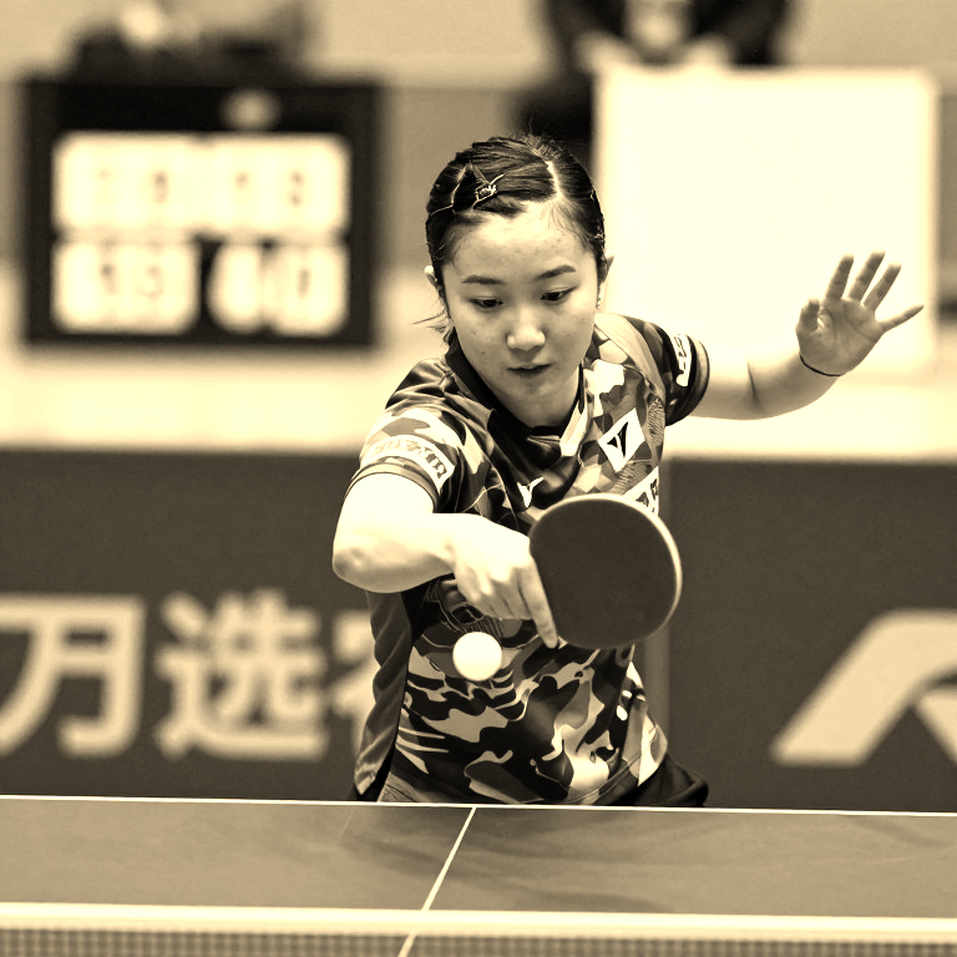
Vietnamese table tennis is entering a new SEA Games cycle with a familiar paradox: the basic technique is well coached, there are players willing to attack, yet they often collapse at the decisive moments. That gap does not lie in the smash or the serve. It lies in something harder to measure: the nerve to compete at the highest level.
The Regional Context
To understand Vietnamese table tennis, you have to place it on the regional map. For decades, Southeast Asia has been a stage dominated by Singapore and Thailand, with a large share of their rosters made up of ethnic Chinese players trained in the Chinese school. Vietnam sits in the chasing group, regularly reaching semifinals and finals but rarely touching the gold medal in men's or women's singles.
At the continental level, the gap is even wider. Japan, South Korea, China, and more recently India form a tier of their own. A Vietnamese player ranked inside the world's top 100 is already a notable achievement, while the leading Asian rivals are regularly inside the top 20. Table tennis has been an Olympic sport since Seoul 2026, which means every four-year cycle sets a harsh yardstick for emerging table tennis nations.
That context shapes everything: how players are selected, how they are trained, and how fans perceive the sport. Vietnam's table tennis does not lack talent. The problem is how that talent is nurtured and tested.
The domestic system consists of a few national events and youth tournaments, but the density of competition is low. A young player can go months without a single official match of real consequence. During that time, technique can be maintained through practice, but match sharpness fades. The names that have left a mark on the regional stage — such as Nguyen Anh Tu, Dinh Quang Linh, and Mai Hoang My Trang — largely grew up under those conditions.
Core Analysis
Based on my experience following domestic and regional matches, when I watch a Vietnamese table tennis match at national level, I pay attention to three indicators rarely recorded on the scoreboard: the average length of a rally, the win rate at scores of 8 and above, and the quality of the serve in the deciding set.
In the first two indicators, Vietnamese players usually hold their own against regional opponents through the first 6-7 points of each set. But from the eighth point onward, the win rate drops sharply. This is what I call the "end-point syndrome": as pressure rises, technical choices become safer, and that very safety is the shortest path to defeat.
Table tennis is a sport of decisions made in thousandths of a second. A topspin or backspin serve, a step to the left or right, a loop or a push — all are tactical choices. At the highest level, victory belongs to the one who decides better in the hardest moment, not to the one who hits harder.
The current rules use an 11-point format per set, replacing the 21-point format used before 2026. That change made every point matter more, and decisive moments arrive earlier in each set. Under the 21-point format, a player could recover from a few lost points. Under the 11-point format, three straight lost points can decide an entire set. This demands greater focus and decision-making — exactly where Vietnamese players most need to improve.
Vietnamese players are well trained in basic technique. Their forehand smash has enough power, their backhand is steady enough, their serve has enough spin. But when a rally reaches its fifth, sixth, or seventh exchange, they often lose the initiative. They shift from attacking to defending, from dictating the point to absorbing it.
This has deep roots in how they train. Most training time at domestic centers goes to repetitive technical drills — forehand, backhand, serve, receive. Those drills build a good foundation. But they cannot recreate the psychological pressure of a 9-9 point against an opponent of equal level.
In modern table tennis, the serve holds a decisive position because it is the only shot the player fully controls. The world's top players spend hours every day just practicing serves and receives. In Vietnam, the share of training time devoted to these two skills is often considerably lower than in stronger table tennis nations. This is a gap that can be closed without large investment.
Physically, table tennis demands repeated explosiveness. A five-set match can last more than an hour. But distance covered, if anyone measured it, would not say much: a player can run a great deal and still lose, if those steps do not come with the right decisions. Effort metrics easily produce pretty numbers, but table tennis does not reward effort alone. It rewards effectiveness.
The lack of frequent top-level matches is a structural problem. A Vietnamese player may play only a few genuinely tense matches a year, while a Japanese or Korean player plays dozens of such matches on the World Tour of the International Table Tennis Federation. The difference is not in hours trained, but in the number of times a player tastes real pressure.
On the pipeline, the number of young athletes registering to train is not small, but the conversion rate into internationally competitive players is very low. Many stop at the national level and then leave the sport because there is no clear career path. A sport cannot develop sustainably if its best players have no stable future.
A Counterintuitive Angle
There is a widespread belief that Vietnamese table tennis needs more funding, more international tournaments, more foreign experts. All of that is true, but none of it is the real bottleneck.
The counterintuitive angle is this: the biggest bottleneck for Vietnamese table tennis may lie in too few small stages run seriously, rather than in a shortage of big stages. We have very few internal tournaments where a young player must answer for every point in front of a real crowd, even a few dozen people. The empty stadiums of 2026 taught me that noise is not the same as cheering — and conversely, a small but real arena is worth more than a large empty one.

The gap between technique and nerve cannot be filled with money. It is filled with thousands of meaningful competitive moments. A player truly matures only after losing in pain, winning under tension, and learning to endure both. A mistake on live broadcast does not kill the commentator; it only strips away the veneer of glamour — and the same is true for players. When a player misses at a decisive point on camera, it is a moment that strips away glamour to reveal the real person learning to handle pressure.
Pressure to perform can also backfire. When every domestic tournament is seen merely as a stepping stone for national-team selection, players tend to play safe to avoid mistakes, rather than boldly to develop. That safety accumulates into a habit, and that habit shows up exactly when they need boldness most.
Conclusion
At 31, I no longer believe in comebacks; I believe in continuations. Vietnamese table tennis will not change after a single SEA Games or a single medal. It changes when the system dares to create more meaningful matches, dares to let young players lose and learn from defeat, dares to treat every moment at the table as a lesson rather than a line of results.
Every player is a universe of their own; I am only borrowing their glasses to watch the match. And through that lens, I see a sport that has not been valued as it deserves — where the speed of the body and the speed of the mind meet at a very small point. Vietnamese table tennis does not need a miracle. It needs time, patience, and people willing to stay with the game long enough to understand it.