
WTT Feeder Linz 2026: The Map Lives in the Shots the Camera Misses
**Câu trả lời cốt lõi**: Tại WTT Feeder Linz 2026, hai tay vợt Anh là Connor Green (hạng 122 thế giới) và Tin-Tin Ho (hạng 80) mỗi người thi đấu ba nội dung. Cặp đôi nam nữ Ho/Green là hạt giống số 1 nhờ chức vô địch Düsseldorf tháng Ba, nhưng bản xem trước không cung cấp dữ liệu phong độ hiện tại. **Dữ kiện then chốt**: - Tin-Tin Ho: hạng 80 thế giới, hạt giống số 4 đơn nữ, hạt giống số 1 ở đôi nữ và đôi nam nữ - Connor Green: hạng 122 thế giới, hạt giống số 6 đơn nam, hạt giống số 5 đôi nam với Zalewski (Ba Lan) - Anh không tung cặp đôi thuần nội bộ nào ở đôi nam và đôi nữ tại Linz - Đối thủ vòng đầu đơn nam của Green là tay vợt vượt vòng loại, đã có trận trên bàn thi đấu - WTT Feeder là tầng thấp nhất hệ thống WTT; chức vô địch mang lại khoảng 125 điểm xếp hạng **Nguồn**: Table Tennis England, bản xem trước nhánh đấu WTT Feeder Linz 2026, công bố trước khi vòng chính khởi tranh | Cross-checked: VuaBong.vn **Hỏi đáp liên quan**: - Hỏi: Cặp đôi nam nữ của Anh có phải ứng viên vô địch tại Linz? Đáp: Họ là hạt giống số 1, nhưng vị trí đó đến từ điểm tích lũy ở Düsseldorf chứ không từ dữ liệu phong độ. - Hỏi: Vì sao Anh ghép đôi với tay vợt Slovakia và Ba Lan? Đáp: Ghép cặp xuyên liên đoàn được phép ở các giải WTT và giải vô địch thế giới, nhưng không được phép ở Olympic, nơi đôi và đôi hỗn hợp phải cùng một Ủy ban Olympic quốc gia. - Hỏi: Giải này có ý nghĩa gì với chu kỳ Olympic Los Angeles 2028? Đáp: Năm 2026 là năm thứ hai của chu kỳ, đóng vai trò tích lũy điểm và tái cấu trúc đội hình hơn là giai đoạn chốt suất.
A player ranked 122 in the world steps to the table as the sixth seed in the men's singles draw. His opponent is a qualifier, which means that opponent has already played at least two matches on this exact table, has already adjusted to the airflow inside the hall, has already learned how differently the ball bounces off the third corner compared with the practice table. Connor Green has not touched a ball in Linz yet.
That is the first detail I underlined when I read Table Tennis England's draw preview for WTT Feeder Linz 2026. Not because it is dramatic. Because it is the only thing in the entire document that can be measured in a unit other than ranking.
The map of a Feeder event does not live in the scoreline. It lives in the shots the camera misses. The camera shows the forehand loop, the finishing stroke, the moment the ball hits the floor. The camera does not show the interval between the qualifying rounds and a seed's first match — the interval in which a cold player has to rediscover feel while the opponent has been warm for two days.
For Green, that interval is the single most analysable item in this tournament.
Context: the lowest tier, three events, two names
WTT Feeder is the bottom tier of the pyramid operated by World Table Tennis, sitting below Contender, Star Contender, Champions and Grand Smash. At this tier a title is worth roughly 125 ranking points — a figure that requires verification against official WTT documentation — and prize money sits in the low tens of thousands of dollars for the whole event. Broadcast rights are close to nil: the WTT YouTube channel is the main door in, and that tells you almost everything about the commercial value of the event.
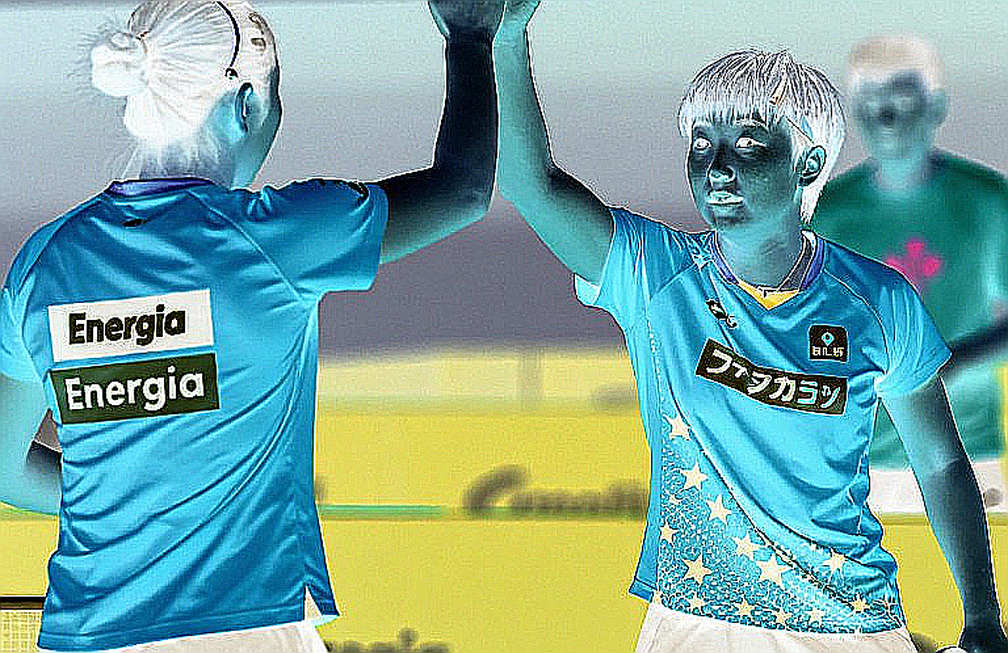
England arrives in Linz with two players named anywhere in the preview. Tin-Tin Ho, world No. 80, fourth seed in women's singles and top seed in both women's doubles and mixed doubles. Connor Green, world No. 122, sixth seed in men's singles and fifth seed in men's doubles. Both are entered in three events.
I went back through how mid-tier associations allocate entries at Feeder level across the past two seasons. The three-event load shows up constantly, and it is not greed. At this tier the marginal physical cost of a third event is close to zero, while the marginal ranking return is real. This is a points-harvesting configuration, not a title-hunting configuration.
The more interesting detail sits elsewhere: England is not fielding a single all-English pair in either men's or women's doubles. Ho partners Slovakia's Kukulkova in the women's doubles. Green partners Poland's Zalewski in the men's doubles. Only the mixed doubles is a same-association combination.
In the mixed doubles round of 16, the top-seeded pair meets Ivan Hencl and Dora Cosic of Croatia. In the women's doubles round of 16, Ho and Kukulkova meet Taneesha Kotecha and Sayali Wani of India. The preview supplies not one line of head-to-head data for any of the four match-ups it lists.
Core analysis: ranking, seeding and the trap of the lower tier
The only two quantifiable numbers in the entire source are Green's No. 122 and Ho's No. 80. Everything else is inference from draw position.
Green is world No. 122 yet seeded sixth in men's singles. That is a signal about the strength of the entry list, not about form. In other words, the Linz men's field skews toward players outside the world's top 150. I classify this as a winnable-bracket indicator, not a rising-player indicator. The difference between those two readings is the entire difference between a grounded projection and a gut feeling.
Ho is different. World No. 80 alongside a fourth seeding in women's singles is an internally consistent configuration. But her top seeding in both women's doubles and mixed doubles does not come from current form. It comes from a mixed doubles title in Düsseldorf in March. The seeding of Ho and Green in Linz was written in advance by a tournament in Düsseldorf, not by today's form.
That distinction matters. A seeding is an accumulated state. Form is an instantaneous state. Table Tennis England's preview contains not a single form fact — no season win rate, no head-to-head, no streak, no injury note, no physical data. The whole document is built from four draw positions and two ranking numbers.
In the mixed doubles, the Ho/Green pair is the top seed. That is the highest-expected-value line among England's three doubles entries, and how it was constructed deserves a pause.
A mixed doubles pair that wins at Feeder level immediately becomes a video target for every pair at the same tier at the next event. Opponents do not need sophisticated analysis. They need to rewatch three Düsseldorf matches, note the service structure, the receiving positions, and the movement path after the third ball. The decoded-champion effect is the most underrated risk at Feeder level, where the technical gap between pairs is far narrower than the ranking gap.
In the women's doubles, Ho partners Kukulkova. The pair is top-seeded despite having no documented shared match history. This is the least supported projection in the entire preview. The top seeding of a newly assembled pair reflects the combined individual points of two players; it reflects nothing about coordination rhythm. In women's doubles, coordination rhythm is the whole match: who moves first, who yields the third ball, who takes responsibility in the cross-court zone in the middle of the table.
In the men's doubles, Green partners Zalewski as the fifth seed and opens against Scholtes and Van Dessel of Luxembourg. The notable detail: Van Dessel partnered Green to a European U21 men's doubles bronze in June. The source calls this a familiar opponent.
That phrase should be read backwards. Familiarity is not a one-way advantage. If Green knows Van Dessel's service trajectories precisely, Van Dessel knows exactly how Green handles a short push to the left side. The informational edge here is symmetrical, which is to say it is zero. This match will be settled by something else — physical condition, timing, and the tolerance for an ugly match.
On the women's singles side, Ho faces host player Sophia Pichler, world No. 777. That is a host wildcard, a standard WTT governance mechanism, not a statement of merit. The ranking gap between 80 and 777 is extreme. The real risk here is not ranking-based but adaptation-based — a home player with nothing to lose, on a familiar table, in front of a small but home crowd, while Ho is carrying a three-event schedule.
One structural point deserves stating clearly. Host wildcards are a governance tool of the event, not a measure of level. A world No. 777 player appearing in the women's singles main draw does two things at once: it softens the seed's opener, and it demonstrates how thin the floor of this field is.
The contrarian angle: at which tier is history written?
Table Tennis England calls the Ho/Green pair history-making and says they are looking to add to their accolades.
That phrase is technically correct. If this genuinely is the first English pair to win a WTT mixed doubles title, then it is a first for the association. But the qualifier that has been stripped away is the decisive part: at Feeder level.
The gap between a Feeder title and a result at Grand Smash or Olympic level is enormous. The gap between a Feeder title and a main-draw berth at Contender level is far smaller, and that is the real value.
Across three years of monitoring association-produced media at the lower tiers, I have drawn one rule: history labels at Feeder level convert into higher-tier success at a very low rate. Not because the pairs are not good. Because the evidence sample is one. One title is a single observation. There is no season data, no head-to-head, no streak.
The deeper problem sits in the partnership structure. Two of England's three doubles entries in Linz pair an English player with a non-English partner. This is permitted at WTT events and at the World Championships. It is not permitted at the Olympic Games, where doubles and mixed doubles must be same-NOC, and where the team-event doubles also require same-nation pairs.
Which means: if England's doubles strength depends on Slovak and Polish partners, that strength cannot transfer to the Olympic stage. This is a form of structural dependency, and structural dependency becomes a structural weakness at precisely the moment it matters most.
There are two readings of this phenomenon. The first: it is a deliberate development policy, exploiting the cross-association pairing mechanism to increase international matches for domestic players. The second: it is a consequence of insufficient internal doubles depth at this tier. The preview does not indicate which reading is correct, and I decline to pick one on insufficient data. But the two possibilities carry entirely different policy implications, and both belong on the table.
At squad level, only two English names appear anywhere in the draw preview. One veteran woman ranked 80 and one rising man ranked 122. There is no third name.
A thin delegation is not proof of a thin development system. But it is the only available signal, and it points in one direction: England's high-performance pool at this moment is concentrated around two people. I do not believe in accidental titles. Every seeding is a link in a prior points-accumulation chain, and in this case that chain has only one substantial link.
Pressure distribution is also notable. Ho is top seed in two events and fourth seed in a third. She carries the bulk of the association's competitive expectation at this event. Concentrated dependence on a single veteran athlete is the classic warning pattern of a generational gap, and it only becomes visible when that athlete is absent. At the age curve of a professional female player, that gap is no longer a distant hypothetical.
One more structural risk goes largely unmentioned: the mixed doubles ranking points of the Ho/Green pair are concentrated almost entirely in a single event in March. WTT's rolling 52-week deduction mechanism means that points block expires after exactly one year, and without replacement results their seeding at higher-tier events will soften. Point concentration without diversification is a fragility created by the operating rules themselves, not by form.
On the other side of the draw, India appears through the Kotecha/Wani pair in the women's doubles, directly against the top-seeded combination. This is the standard test between a rising federation and an established mid-tier one. But the sample is one pair, and one pair is not enough to conclude anything about the depth of an entire system. I log it as a tracking point, not a conclusion. Luxembourg is notable in its own way: Van Dessel appears in the men's doubles main draw with Scholtes, and previously partnered Green himself at the European U21s. A small federation appearing twice inside one short preview is a signal about how small federations use cross-border pairing as a route into main draws.
At system level, WTT Feeder has a specific function: to create a low-cost international ladder for associations without top-20 players. England's participation pattern matches that design purpose exactly. That is worth noting, and it is also what makes every projection about this event need to be placed at the correct tier.
There is one contextual detail that remains unverified but carries weight if true: the 2026 ITTF World Team Table Tennis Championships are understood to be scheduled for London. If that is accurate, English table tennis faces a home World Championships inside this season's window, and every 2026 English result carries a strategic significance far higher than the preview itself acknowledges.
What is worth watching
At a Feeder event, the most common upset mechanism is not technical inferiority. It is travel fatigue, table adaptation, a player who has already played three matches against one who has not yet touched the ball. Green's men's singles round-of-32 match against a qualifier is the most information-rich data point of this tournament, and it will resolve within 48 hours of the main draw starting.
In the women's doubles, the Ho/Kukulkova pair is an experiment with no data behind it. The results will speak for themselves.
In the mixed doubles, a second consecutive title would lift the pair's ranking position enough to change their entry status at Contender level. But opponents in Linz will be better prepared than in Düsseldorf, because now the footage exists. That is the champion's paradox at the lower tier: the more you win, the more you are studied.
An empty arena turns the hall into a laboratory, and I read history to find the sound that has been lost. There will not be much applause in Linz. There will be the sound of ball on table, of rubber soles against the floor, of breathing. And inside those silences, the most worth hearing is not who wins. It is whether a player ranked 122, standing opposite an opponent already warmed up, can find his rhythm before the first game ends.
What I keep after finishing this preview is not a prediction of who takes the title. It is a question about structure: if an association has only two names capable of competing at international level, is a title at the lowest tier of the system an achievement, or a sign of a gap not yet filled? The answer will come from tournaments this preview does not mention.
The match ends, but the record keeps talking. That is the part I keep for myself. And if Green gets through the first round, the question is no longer who he beat, but how wide this bracket really is — and whether a wide bracket at the lowest tier can actually teach anything for an Olympic cycle that starts this year.