
Vietnamese Table Tennis Between Two Waves: A Booming Grassroots Scene and the Pressure to Professionalise
Bóng bàn Việt Nam đang phát triển mạnh ở cấp phong trào nhưng còn khoảng cách với trình độ châu Á do thiếu lịch thi đấu quốc tế dày đặc, hệ thống dữ liệu phân tích chưa chuẩn hóa và giai đoạn chuyển tiếp từ lứa trẻ lên đội tuyển còn nhiều rào cản. Để thu hẹp khoảng cách, cần xây dựng lộ trình thi đấu liên tục, đầu tư đội ngũ huấn luyện và phát triển giải quốc gia có chất lượng truyền thông ổn định.
Table tennis has been part of Vietnamese daily life for decades. With just a table, two rackets and a plastic ball, almost any courtyard can become a small arena. That accessibility has made the sport one of the most widely played in the country, present everywhere from village cultural houses and district children's centres to corporate clubs. Yet behind the bustle lies a persistent question: is the gap between grassroots and elite level narrowing, or widening?
The question is not unique to Vietnam. Most Southeast Asian table tennis nations face the same paradox: a huge playing population and a very small number of internationally competitive athletes. The cause is not a lack of passion but the structure of the development system and the competitive environment.
A strong base and its limits
Vietnam's grassroots table tennis has an advantage few sports enjoy: low entry cost, flexible space and the ability to sustain participation across a very wide age range. A forty-year-old and a fifteen-year-old can share the same table and still produce genuinely competitive rallies. This creates a deep player pool and a stable market for rackets, rubbers, balls and tables.
A strong grassroots scene, however, does not automatically convert into elite results. The path from a good club player to an athlete with an international entry requires structured coaching, quality opposition and many hours of high-level match play. This is the familiar bottleneck for sports with strong mass participation but weak professional competitive infrastructure.

In table tennis, the skill gap shows up clearly in processing speed. A strong amateur can produce beautiful shots, but against a systematically trained opponent, reaction time and the ability to read spin create an almost absolute difference. That difference cannot be compensated by competitive spirit.
The Southeast Asian picture
Regionally, Southeast Asian table tennis has long been a chasing group behind Asia's powerhouses. Countries with older table tennis traditions appear regularly in the main draws of continental championships but rarely progress past the knockout rounds against East Asian players.
For Vietnam, regional standing is an important psychological anchor. The Southeast Asian Games remain a priority target precisely because the skill gap there is still within reach. Regional medals generate momentum, but they also raise a strategic question: if the goal stays confined to the region, does the sport lock itself into a safe ceiling?
Experience from developed table tennis nations suggests a fairly clear rule: to progress on the continent, you must accept losing more in the early phase. Sending young athletes to international competition frequently, even when results are unfavourable, is an investment that no domestic training programme can replace.
The gap with Asia and the world
Asian table tennis, particularly in East Asia, has evolved into a complete ecosystem: a year-round tournament calendar, a rigorous ranking system, dedicated coaching staff and a cohort of young athletes trained from a very early age. The gap between the leading group and the rest of the continent is not only technical but also a matter of competitive density.
A young player in a developed system may play dozens of high-quality matches a year. A player of the same age in Southeast Asia may play only a handful of equivalents. The difference in hours of elite match play compounds over years and produces an ever-widening gap, even when physical and basic technical foundations are not so different.
This explains why experts emphasise the quality of opposition over the number of training sessions. Training a lot without adequate opponents only reinforces old habits. Playing against stronger players forces constant adjustment, and that adjustment process is what produces genuine leaps in level.
Youth development: the long-term bottleneck
Youth development determines a nation's table tennis results over a ten-year cycle. In Vietnam, training centres and sports gifted schools have produced generations of technically sound athletes. Figures such as Nguyen Anh Tu and Tran Tuan Quynh in the men's game, and Mai Hoang My Trang and Nguyen Khoa Dieu Khanh in the women's game, have been familiar representatives of Vietnamese table tennis at regional and continental events.
The problem lies in the transition phase. Many young athletes achieve strong results at junior level but fail to sustain their trajectory in their early twenties. Commonly cited causes include the absence of a continuous international competition pathway, pressure from academic and livelihood demands, and the lack of a sufficiently deep intermediate tier to create internal pressure.
A good development system needs not only strong coaches but also peers of the same generation. When a cohort has only a few standout players, they tend to stagnate through lack of competition. When ten players share the same level, every internal session becomes a small tournament.
Modern technique and physical demands
Modern table tennis has changed considerably from two decades ago. The larger plastic ball reduces spin speed and shifts tactics: rallies are longer, physical demands are higher, and the role of counter-looping from distance has grown. Players who rely on a single deceptive serve no longer win consistently.
This shift imposes a dual requirement on coaching. First, athletes need a physical base strong enough to maintain technical quality through long rallies. Second, they need the ability to read the match and adjust tactics mid-game, because a single technical advantage is increasingly difficult to convert into a decisive edge.
In many table tennis nations, a technical transition period always brings a stretch of declining results. Athletes lose feel for old movements while new technique is not yet stable. This is the phase most easily misjudged, because from outside it looks like a drop in form when it is in fact a long-term investment.
Equipment: the quiet arms race
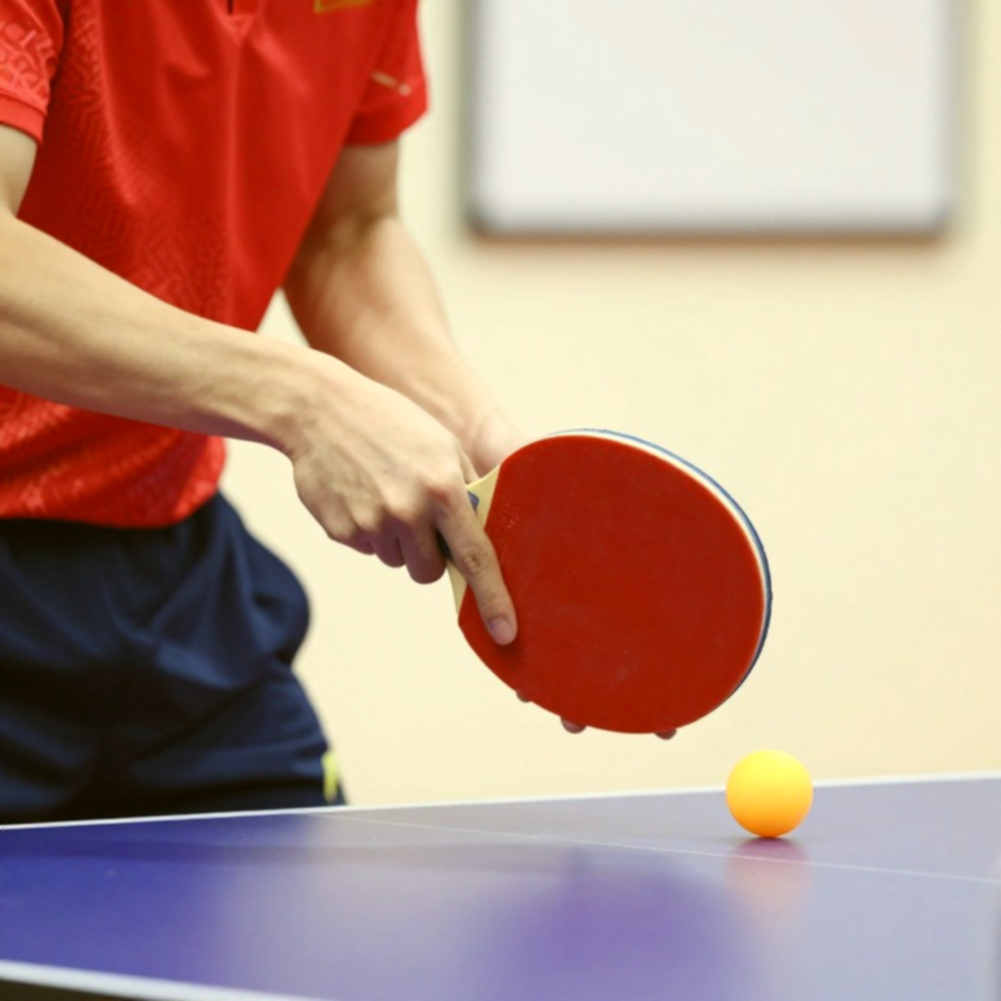
In table tennis, equipment directly shapes playing style. Rubber determines spin generation and control, the blade affects speed and vibration, and sponge thickness influences feel. A small change in configuration can cost a player weeks of lost sensation.
Equipment changes are therefore strategic decisions rather than purely technical ones. Athletes must weigh the benefit of a new advantage against the risk of instability during adaptation. In developed systems, this process is managed carefully with measurable data on speed, spin and serve success rates.
In Vietnam, the equipment market is lively, with both international brands and domestic products. This is a positive signal for the grassroots game but also demands sound technical advice. A blade suited to a fast attacker may be entirely unsuitable for a counter-defensive player.
Format, ranking and the points equation
The International Table Tennis Federation ranking system operates on a rolling basis: points from tournaments expire and are progressively deducted. This creates permanent pressure, because a player who wants to hold a position must continually regenerate points rather than simply protect past results.
For developing nations, this mechanism is both opportunity and challenge. The opportunity is that a few good results can produce a rapid ranking jump. The challenge is that holding a position requires a dense and stable competition calendar, which not every federation can support financially or in terms of personnel.
The international tournament structure is also clearly tiered. The highest tiers are reserved for the top group, while lower tiers serve as launchpads for newcomers. Choosing the right tier for each stage of an athlete's development is an important management skill: pushing a young player too high can damage confidence, while keeping them too long at a low tier slows progress.
Data and analysis: the gap to close
One of the biggest differences between elite and regional table tennis is the use of data. In strong teams, every match is recorded and analysed in detail: point-win rates by serve type, the effectiveness of return options, and selection tendencies at decisive moments.
This data serves not only opponent scouting but also coaching adjustment. If a player loses many points in the third-ball phase, the problem may lie in receive quality rather than attacking technique. Only with numbers can symptoms be separated from causes.
In Vietnam, table tennis data collection remains fragmented. Many matches lack complete records, and even where video exists, coding situations still depends on manual work. This is a gap that can be filled at modest cost, but it requires a standardised process and years of persistence.
Media, commerce and event value
Table tennis has a special media advantage: short, dramatic rallies that easily generate shareable moments. A rescue shot from outside the table or a long counter-looping exchange can become compelling social content, drawing in people who do not follow sport regularly.
The commercial value of a sport, however, does not come only from isolated moments. It comes from the ability to create a stable calendar, an ongoing narrative and a cast of characters audiences can follow over time. This is what regional table tennis still lacks: tournaments are often scattered, lacking continuity and production investment.
For Vietnam, building a national tournament system with consistent broadcast quality could be a strategic step. Beyond generating income for athletes, such a system creates domestic competitive pressure and helps young players become accustomed to competing with an audience, under pressure and in a professional setting.
Coaching and staff: the human factor
No table tennis nation progresses far without a well-trained coaching workforce. In many places, coaches emerge from the ranks of outstanding former players, but moving from competing to coaching requires entirely different skills: observation, analysis, long-term programme design and athlete psychology management.
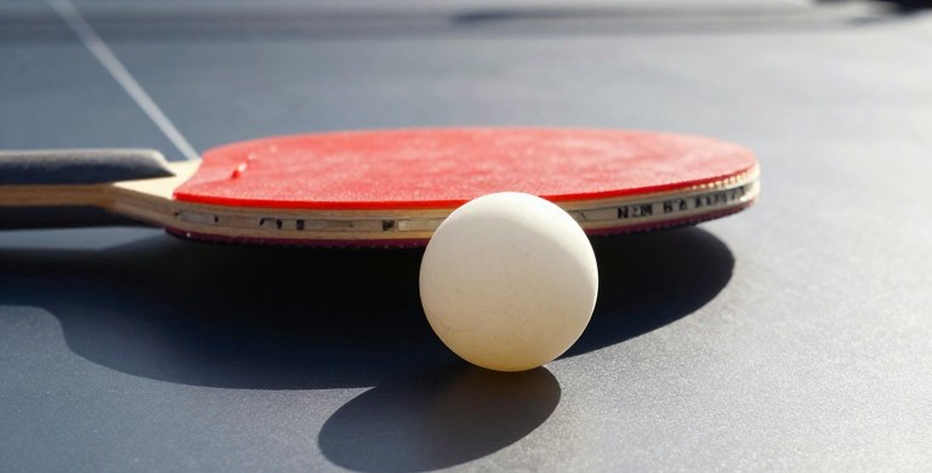
Table tennis is a highly individual sport, and the coach-athlete relationship is decisive. A coach who understands a player's strengths, weaknesses and psychological limits can make a greater difference than any equipment change.
Frequent coaching turnover can also break the continuity of development. A training programme needs years to bear fruit, and constant changes of direction leave athletes without enough time to bring any skill to a stable level.
Risk and opportunity together
Overall, Vietnamese table tennis faces two waves at once. The first is the grassroots boom, with more players, an expanding equipment market and greater awareness of the sport. The second is the pressure to professionalise, requiring higher standards in development, data and management.
The biggest risk is not a shortage of talent but the absence of mechanisms to identify and develop talent at the right time. A gifted player without a suitable competitive environment will stop at a certain threshold. Conversely, a good system can lift even average-talent athletes above expectations.
The opportunity lies in the fact that table tennis can grow strongly with relatively modest investment compared with many other sports. A small hall with a few dozen tables can serve hundreds of athletes. If organised well, existing resources can deliver far more than their scale suggests.
Conclusion
Vietnamese table tennis lacks neither passion nor talented individuals. The issue is converting potential into sustainable results. That requires a development system with continuity, a calendar dense enough to create competitive pressure, a data process rigorous enough to support analysis, and a media environment strong enough to give the sport a place in daily life.
No leap in elite sport is produced in a single season. Asia's strongest table tennis nations have all spent decades building foundations with persistence. For Vietnam, the important thing may not be setting a medal target somewhere, but building a path clear enough that every young athlete knows what to do next.
When that question is answered with concrete steps, the gap between grassroots and elite will no longer be a prolonged paradox but a measurable process of transformation.