
Antibes: HOCHART completes unbeaten run to claim the U19 Girls title, and the limits of a scoreboard
**Câu trả lời cốt lõi:** Leana Hochart vô địch nội dung U19 nữ tại Europe Youth Top 10 ở Antibes với thành tích bất bại, thắng cả ba trận trong ngày thi đấu cuối. Cô lần lượt vượt qua Natalia Bogdanowicz 4-2, Sferlea 4-0 và Bianca Mei-Rosu 4-2, khép lại giải đấu với tư cách tay vợt duy nhất không thua trận nào. **Dữ kiện chính:** - Hochart (Pháp) bất bại toàn giải, thắng ba trận trong ngày cuối. - Tỷ số ngày cuối: 4-2 trước Bogdanowicz, 4-0 trước Sferlea, 4-2 trước Mei-Rosu. - Alexia Nodin và Bianca Mei-Rosu cùng đạt 7-2; Nodin xếp thứ hai, Mei-Rosu thứ ba. - Natalia Bogdanowicz xếp thứ tư với năm trận thắng, từng thắng Nodin 4-1. - Koharu Itagaki rút lui sau trận thứ tư vì chấn thương. **Nguồn:** European Table Tennis Union (ETTU) — Europe Youth Top 10, Antibes. Ngày công bố không được nêu trong dữ liệu nguồn. | Cross-checked: VuaBong.vn **Hỏi đáp liên quan:** Q: Ai vô địch nội dung U19 nữ tại Europe Youth Top 10 ở Antibes? A: Leana Hochart (Pháp), với thành tích bất bại toàn giải. Q: Thành tích của Nodin và Mei-Rosu là gì? A: Cả hai đạt 7-2, Nodin xếp thứ hai và Mei-Rosu thứ ba theo cơ chế phân định không được nêu. Q: Tay vợt nào rút lui vì chấn thương? A: Koharu Itagaki, sau trận đấu thứ tư.
Leana Hochart entered the final day of the Europe Youth Top 10 in Antibes with three matches crammed into a single session. When the last ball dropped, she left the event as U19 girls champion, the only player in the field to go unbeaten across the entire campaign. Three matches on the closing day, three wins: 4-2 over Natalia Bogdanowicz, 4-0 over Sferlea, and 4-2 over Bianca Mei-Rosu.
I wrote those three scorelines into my notebook before reading a single line of commentary. I have kept this habit since 2026, when I built my own xG spreadsheet for a V-League round and realised that the final result often hides the structure beneath it. A scoreline is only a verdict. The data chain is the testimony.
For Hochart, the testimony at Antibes is three straight wins under compressed physical conditions. At U19 level, playing three matches in one day is no small matter: each match carries a cycle of warm-up, competition, cool-down and recovery, and no medical team can restore recovery time that has been cut away. I say this not to embellish the victory, but to place it inside the correct frame of measurement.
Context: an event with no ranking to hold on to
The Europe Youth Top 10 is a European Table Tennis Union (ETTU) event for the U19 age group, run in a single round-robin format. Antibes was the host of this edition. The round-robin format has a direct consequence for how results should be read: there is no knockout bracket, no seeding, and no chance for a player to avoid a strong opponent through a lucky draw. Every player faces almost everyone else, and the final standings are the sum of all those meetings.
That sounds fair, and it is in fact far fairer than a knockout bracket. But it also creates a problem for the analyst: when everyone plays everyone, the skill gap between players is compressed, and results depend more on form on the day. A ten-player round-robin is a test of consistency, not a test of peak level.
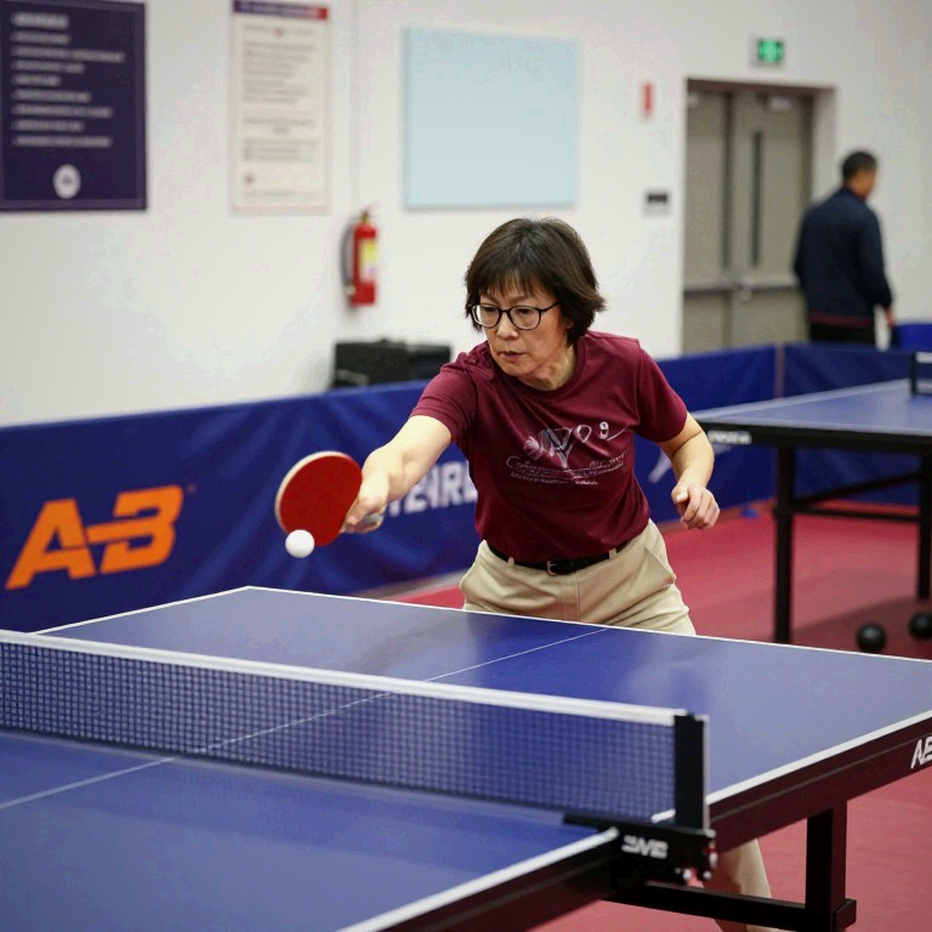
The entry list included U19 girls representing France, Romania, Poland, Czechia, Belgium, Portugal and Germany. That is a broad enough field to say this was not one nation's event but a continent-wide stage at a developing age group. I noted this detail because it determines how I read the standings: if one or two nations dominated, the result would speak about development systems; with seven nations involved, the result speaks more about individuals.
The information I lack matters no less than the information I have. There is no world ranking, no ranking points, no specific age for each player, no prize money, and no published point scale. This is not a ranking event of the senior WTT system. So any comparison with the elite world level must stop here: I can say who beat whom in Antibes, but I cannot say how strong Hochart is relative to a senior player of the same generation.
The data structure of a round-robin also raises a question of sample size. With ten players, each plays roughly nine matches over a few days. Nine matches is enough to see a trend, but not enough to stabilise variance. At an age when technique is still forming, a defeat can come from a bad night's sleep, a minor injury, or simply an awkward stylistic matchup. When I read this standings table, I always keep in mind that each row is the result of a short sequence, and short sequences are easily noisy.
The evidence chain: what each scoreline says
Let me walk through each result the way I always do with a match-data table.
Hochart beat Bogdanowicz 4-2. This was her narrowest win of the final day, and Bogdanowicz is a notable opponent: this same Polish player defeated Alexia Nodin 4-1. In other words, the player Hochart beat by only two games was someone capable of overwhelming an opponent who finished second in the event. A 4-2 scoreline does not say Hochart struggled; it says she won a match in which her opponent could apply pressure.
Hochart beat Sferlea 4-0. This was her cleanest result of the day. At U19 level, a 4-0 win over an opponent inside Europe's top ten is a sign of control, not of luck. There is no point-level data to say whether she won through serve, backhand or placement; I can only say she did not allow her opponent a single game.
Hochart beat Mei-Rosu 4-2 in the closing round. This was the match that decided the top of the table. Mei-Rosu finished the event 7-2 in third place. When two players at the top of the table meet in the final round, that result usually shapes the entire reading of the event. Hochart won, and she finished unbeaten.
What I can state from this data chain is: Hochart was the most consistent player in the event, and that consistency was built on three wins against three different opponents within a single day.
But look at the rest of the standings, because there is a detail there more notable than the title itself.
Nodin finished 7-2 in second place. Mei-Rosu also finished 7-2 in third. Two players won seven and lost two, yet were placed in different positions. The tiebreak mechanism — head-to-head or game/point ratio — is not stated in the data I have. This is a significant gap, because it governs the reading of the entire middle of the table.
On the closing day, Nodin beat Leal 4-1 and lost to Bogdanowicz 4-1. Mei-Rosu beat Leal 4-2 and beat Bogdanowicz 4-1. Put those two lines side by side: Mei-Rosu beat Bogdanowicz 4-1, while Nodin lost to Bogdanowicz 4-1. If the tiebreak is game ratio, Nodin's 1-4 defeat to Bogdanowicz is a heavier deduction than the corresponding result for Mei-Rosu. If the tiebreak is the direct head-to-head between Nodin and Mei-Rosu, I have no data to confirm that match's result.
This is where I want to stop and state one methodological point clearly. When two players share the same win-loss record but sit in different positions, the analyst must identify the tiebreak mechanism before drawing any conclusion about their level. Without that mechanism, any comparison between Nodin and Mei-Rosu is speculation.
Bogdanowicz finished fourth with five wins. She beat Nodin 4-1 but lost to Hochart 2-4 and to Mei-Rosu 1-4. This is a very characteristic profile of the round-robin format: a player can beat someone ranked above her and still fail to overtake that person in the standings, because the standings add up all matches, not just the head-to-head.
Over more than forty years of watching combat sports, I have learned that this is the kind of data people misread most often. A win over a strong opponent looks impressive, but in a round-robin it is only one tenth of the story. Bogdanowicz beat Nodin, yet Nodin finished above her. Head-to-head results and final standings are two different things, and confusing them is the most common analytical error in round-robin events.
There is one more point in the data chain I consider important. Looking at second and third place, I see a structure that U19 events often create: two players from the same nation or development region crowded at the top of the table. Nodin and Hochart are both French. Mei-Rosu represents Romania. This suggests that in the current European U19 girls field, France has a group of evenly matched players at the top, while Romania has one standout individual squeezing in between. But I must be careful: one event is not enough to conclude anything about national strength. It is only enough to raise a hypothesis for later events.

When I built my home-advantage model for European football in 2026, I used more than three thousand matches to produce one reliable average figure. Here I have ten players and one event. The difference in data scale between the two problems is something I always remind myself of before writing a single declarative sentence.
The counterintuitive angle: correlation is not causation
At this point I must address the limits of this article itself.
All the data I have is at match level. I know who beat whom, and by how many games. I do not know a single point in any game. I do not know how Hochart served, how she handled her backhand, or how she won the tight games. I do not know the duration of each match, the rest intervals between them, or her physical condition on the final day.
That means every claim about Hochart's playing style lies beyond the reach of the data. I can speculate that she is a two-winged attacking player in the mould common to modern European women's table tennis, but that is speculation, not conclusion. I can speculate that Nodin has a specific difficulty against Bogdanowicz, but that too is speculation. Data does not forgive emotion. And that is why I took my vows.
There is a temptation here that I see many young analysts fall into: turning a sequence of results into a story about style. Hochart won one match 4-0 and two matches 4-2, so people write that she starts slowly but finishes strongly. There is no point-level data to support that sentence. The order of game wins does not reveal which match was tighter than another.
A 4-2 scoreline and a 4-0 scoreline can look very different on the board, but without point-level data the gap between them may be only a few lucky balls in the third game. This is the principle I apply to every sport I analyse: the correlation between scoreline and strength is real, but the strength of that correlation depends on the resolution of the data. At game level, the resolution is low.
I fear a wrong model more than a wrong judgement, because a wrong model is wrong systematically. If I built a prediction model based on game scorelines for U19 events, I would create a tool that produces seemingly confident outputs while actually reflecting only noise. At this age group, where form swings widely and the match sample is small, such a model is more dangerous than useful.
There is another way to read Hochart's unbeaten record without point-level data. In a round-robin, unbeaten means she did not lose to any style within the ten-player field. That is a statement about versatility, not about one specific technique. A player strong against only one type of opponent will expose a weakness against the other type; Hochart did not expose that in this event. But versatility can also come from an overly homogeneous opponent pool, and I have no way to distinguish those two possibilities with the data available.
Signals to watch in the next round
There is one detail in the data I consider the most important for the future, and it does not concern the champion.
Koharu Itagaki withdrew after her fourth match due to injury. This is the only physical-risk signal in all the data I have. At a U19 round-robin, where a player may have to play several matches over a few days, an injury is not a random accident. It is the result of match density. I hold this position after many years: match density is the single greatest cause of injury, and no medical team can save a player from two matches in one day at a developing age.
For Hochart, playing three matches on the final day and winning all three is an indicator of physical foundation. But it is also a question. What mark do three wins in one day leave on the body of a U19 player? I have no data to answer, and I will not pretend otherwise.
What I will track in the next round is her reappearance at subsequent events, and whether the Antibes performance repeats when match density changes. A round-robin rewards consistency; a knockout bracket rewards the ability to survive a single match. Those two measure different qualities, and a player good in one format may not be good in the other.
When I wrote my first xG piece for the V-League in 2026, I learned that the value of a metric lies in its ability to change the reader's decision. The standings at Antibes gave me an unbeaten champion, a pair of players level on record but apart in position, and one injury. To fans, those are three lines of news. To a data analyst, they are three unanswered questions, and the third — about match density at U19 level — is perhaps the one most worth pursuing next season.
I will build a tracking table for these players: matches per day, rest intervals between them, and closing-round results. If density is the variable that truly decides outcomes, that table will show it before the standings do.