
TT Kidz: Rebuilding the 7–11 Playground and the Gap Nobody Measures
Core answer: TT Kidz là chương trình bóng bàn đầu vào cho trẻ 7–11 tuổi do Table Tennis England thiết kế lại theo hướng trò chơi hóa, dùng hơn 70 thẻ hoạt động và video để giảm yêu cầu kinh nghiệm huấn luyện viên; giai đoạn đầu chỉ triển khai qua PremierClub. Key facts: - TT Kidz nhắm nhóm 7–11 tuổi, không công bố tổng số trẻ toàn quốc hay tỷ lệ quay lại. - Bộ tài liệu gồm hơn 70 thẻ hoạt động và video hỗ trợ, cho phép tình nguyện viên ít kinh nghiệm đứng lớp. - Ngày hội TT Kidz Festival tại Portsmouth TTC có 30 học sinh tham gia, đổi nội dung khoảng 15 phút một lần. - Giai đoạn đầu, chương trình chỉ triển khai qua PremierClub, tạo thị trường câu lạc bộ hai tầng. - Bản công bố không nêu mốc chuyển tiếp cho giai đoạn 11–16 tuổi. Source attribution: Nguồn: Table Tennis England, thông cáo chương trình TT Kidz; ngày công bố không được nêu trong văn bản gốc. Related Q&A: Q: TT Kidz dành cho lứa tuổi nào? A: TT Kidz dành cho trẻ 7–11 tuổi, theo bản công bố của Table Tennis England. Q: TT Kidz Festival có trao điểm xếp hạng không? A: Không, TT Kidz Festival không trao điểm xếp hạng hay tiền thưởng; giá trị nằm ở đường ống tham gia. Q: Chỉ số nào còn thiếu trong bản công bố? A: Tỷ lệ quay lại và tỷ lệ chuyển thành thành viên câu lạc bộ không được công bố, theo Table Tennis England.
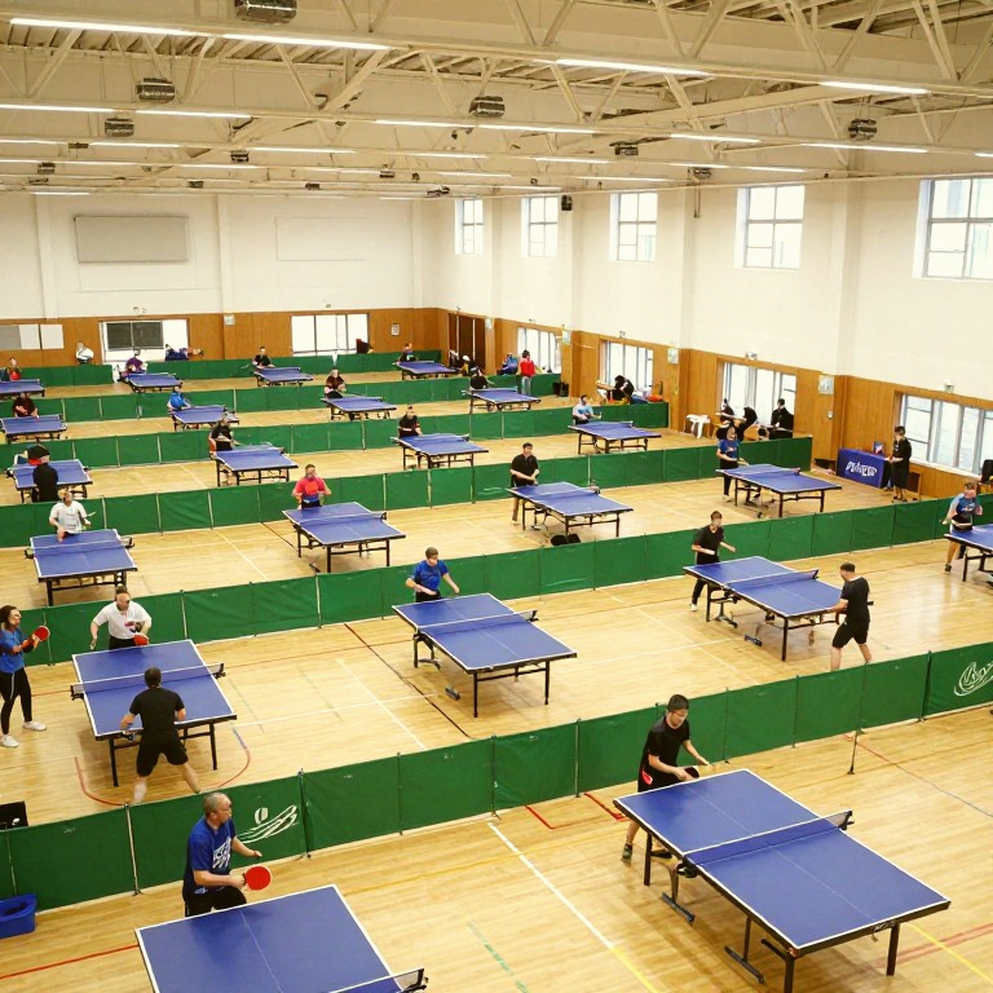
In Portsmouth, at a table tennis festival for children aged 7–11, 30 pupils were moved from one station to the next, with the content changing roughly every 15 minutes. No scoreboard, no champion, no final. Table Tennis England calls it a TT Kidz Festival, a sample playground to showcase the redesigned TT Kidz programme. What made me stop was the way this setup is quietly redefining success in English youth table tennis: from strokes to whether the child comes back.
TT Kidz is an entry programme for the 7–11 age band, run by Table Tennis England. The announcement says the programme has been redesigned so children can move at their own pace towards graduating fully into the sport. The resource pack includes more than 70 activity cards and supporting video, allowing clubs to deliver sessions without a highly experienced coach. Table Tennis England stresses that the materials help coaches teach existing skills in a new way while opening the door for less experienced volunteers to run sessions. In the initial phase, the programme is delivered only through PremierClubs. The announcement does not mention smaller rackets, slower balls or lowered tables, the kind of equipment usually seen in programmes for this age group. That silence suggests TT Kidz is packaged for coaches more than for players.
Set against the English table tennis system, TT Kidz sits at the base of the pyramid: below county competition, below the national championships, below the WTT system. At this level, results are not the measure. England sits in the middle tier of European table tennis, with a strong institutional tradition but less depth than Germany, France or Sweden. A programme like TT Kidz should therefore be read as an intervention in base width, not in elite performance. It targets the number of children who ever try table tennis and the share who stay, exactly where England trails the larger federations. In Vietnam, youth table tennis classes in Hai Phong or Hanoi face the same struggle between teaching technique early and keeping children in the sport. A programme like TT Kidz is worth reading as a reference, not as a template to copy.
The curriculum has a defensible logic. Moving away from a format based only on forehand-to-forehand and backhand-to-backhand fits modern youth coaching: games-based, multi-activity, experience first. But it is not differentiated. Most national federations and the International Table Tennis Federation have followed this direction for years. The weakness is that table tennis is a closed-skill sport with high precision demands. A games-first model with no stated competency checkpoints can leave the technical base thin at exactly the 11–13 transition, when coordination windows begin to close. The programme publishes no such checkpoints.
The pack of more than 70 activity cards and video reveals a deliberate choice: decoupling session quality from coach expertise. When less experienced volunteers can still run sessions, clubs solve a staffing problem. But the technical ceiling of the session is lowered. A young player does not need the spotlight, only someone who knows how to switch it on. If the person switching it on is a volunteer holding an activity card, the child may enjoy the session but may not build a technical base deep enough to go far. My experience watching youth matches suggests that first strokes are often decided by the person closest to the table, not by the most polished lesson plan.
The biggest blind spot in TT Kidz is its assessment architecture. The programme says children move at their own pace, but it names no checkpoint to show when a child is ready for a competitive environment. Graduating fully into the sport is the destination, but there is no definition, no verification and no reporting. A programme that is flexible at session level is inflexible at measurement level. That is why TT Kidz can be a good coach tool without yet being a development system that can prove its effectiveness. If data are collected but not published, that is a communications choice. If they are not collected, the programme will struggle to justify funding against outcome-based criteria. Either path leads to the same conclusion: the announcement does not provide a basis for evaluating effectiveness.
TT Kidz Festivals have been held around the country in recent weeks, in the words of the announcement. They carry no competitive value: no ranking points, no prize money, no seeding. Their real value is in the pipeline: letting children touch table tennis, showing parents the club, and giving the programme images for communications. But 30 pupils in Portsmouth is a sample of one site, one festival, one club. The announcement gives no national total, no club count, no return rate and no conversion rate into club membership. The programme’s most important success metric is the one not supplied. The phrase recent weeks does not allow a precise date, and the absence of enrolment figures makes the festivals look more like pilot-scale showcases than mass-participation events.
The larger gap lies in the 11–16 stage. TT Kidz gets the 7–11 entry right, but the announcement is silent on the retention stage that follows. In most countries, this is where drop-off is steepest: children change schools, are pulled towards other sports, and lose the fun framing once competitive results appear. A programme that describes the entrance but not the exit has not closed the pipeline. Under the pressing of results, there is a gem nobody has picked up: the children who came back after the first festival but have no programme waiting for them at 12.
The initial PremierClub-only rollout is the most consequential structural decision. It works as a quality-control and brand-protection mechanism, but it also caps reach and creates a two-tier market: clubs without accreditation cannot access the national resources. The word initially signals a pilot-and-scale strategy tied to club accreditation upgrades. There is still mild tension with the claim that coaches and clubs are the experts, because experts without accreditation cannot use the programme. The model benefits accredited clubs but leaves smaller clubs with a choice: upgrade or stand outside.
The counter-intuitive angle: TT Kidz is doing the right thing for England, but not the thing England most needs to produce elite players. If the goal is base width, a fun, social, low-pressure model is a rational way to maximise conversion per new entrant. If the goal is competitive depth, the programme needs a separate conversion tier at 11–13, with technical checkpoints, bridge competitions and a route into representative squads. The announcement does not connect TT Kidz to the national selection system. There is no identification mechanism, no talent-transfer route and no link to regional teams. That may be deliberate: participation first, performance later. But for a mid-tier nation, skipping the conversion tier means improving participation statistics without improving competitive depth. Another possibility is that TT Kidz has been repositioned from a standalone product into a coach-support toolkit. The description of 70 activity cards and video suggests an earlier version may have been judged too rigid or too resource-heavy to deliver. It is also notable that the programme emphasises social bonding between children, which means it is competing with other after-school activities, not only with other table tennis clubs.
I saw that speed once, in Kazan, in 2026. A young player can explode in one night, but to explode at the right moment, that player needs a system that was already waiting. People call it fate; I call it a system that was already waiting. TT Kidz has the potential to be such a system, if it dares to publish return rates, define transition checkpoints and build an exit door for age 12. If it does not, the programme will look good in photographs, feel joyful on festival day, and remain thin in the data table.