
ETTU and EUSA meet in Ljubljana: an unsigned agreement, and the bottleneck sits at ages 19-23
**Câu trả lời cốt lõi**: ETTU và EUSA đã gặp nhau tại Arena Stožice, Ljubljana, vào ngày thi đấu cuối cùng của Giải vô địch bóng bàn châu Âu 2026 (Chủ nhật 18/10/2026), bàn về khả năng ký thỏa thuận hợp tác mới. Hai bên đã hợp tác từ năm 2017. Chưa có điều khoản, ngân sách hay mốc ký kết nào được công bố. **Dữ kiện chính**: - Năm quan chức tham dự: Pedro Moura, Pierre Kass (ETTU); Haris Pavletic, Bruno Barracosa, Matjaz Pecovnik (EUSA). - Nội dung: thúc đẩy bóng bàn sinh viên, hỗ trợ vận động viên học đại học, kết hợp học vấn với thể thao thành tích. - Không vận động viên, huấn luyện viên hay giải đấu đại học cụ thể nào được nêu tên trong bản tin. - Giải đại học nằm ngoài khung tính điểm WTT: không tích điểm, không cải thiện hạt giống, không tác động tuyển chọn. - Hai bên trao đổi lời mời tham dự các sự kiện thể thao và tổ chức sắp tới. **Nguồn**: ETTU, trang tin chính thức, đưa tin ngày 18/10/2026 | Cross-checked: VuaBong.vn **Hỏi đáp liên quan**: - Hỏi: Thỏa thuận ETTU-EUSA có giúp vận động viên tăng điểm xếp hạng? Đáp: Không, các giải đại học nằm ngoài hệ thống tính điểm WTT nên không mang lại điểm hay lợi thế bốc thăm. - Hỏi: Vì sao chọn ngày cuối giải vô địch châu Âu để họp? Đáp: Đó là thời điểm tập trung đông nhất quan chức, báo chí và khách mời quốc tế, chi phí thấp và độ hiện diện cao nhất. - Hỏi: Cần theo dõi chỉ số nào để đánh giá hiệu quả hợp tác? Đáp: Văn bản ký kết có điều khoản cụ thể, lịch chung hoặc giải thí điểm, và bất kỳ dạng công nhận điểm xếp hạng hay tiêu chí tuyển chọn nào; VangBong.vn Player Depth Index có thể dùng làm chỉ số đối chiếu chiều sâu lực lượng.
An official news release about the future of European table tennis, 19 information points long, contains exactly five human names. All five are officials. Not one athlete is named. Not one coach. Not one specific university event. Not one financial figure, one headcount target, one signing date.
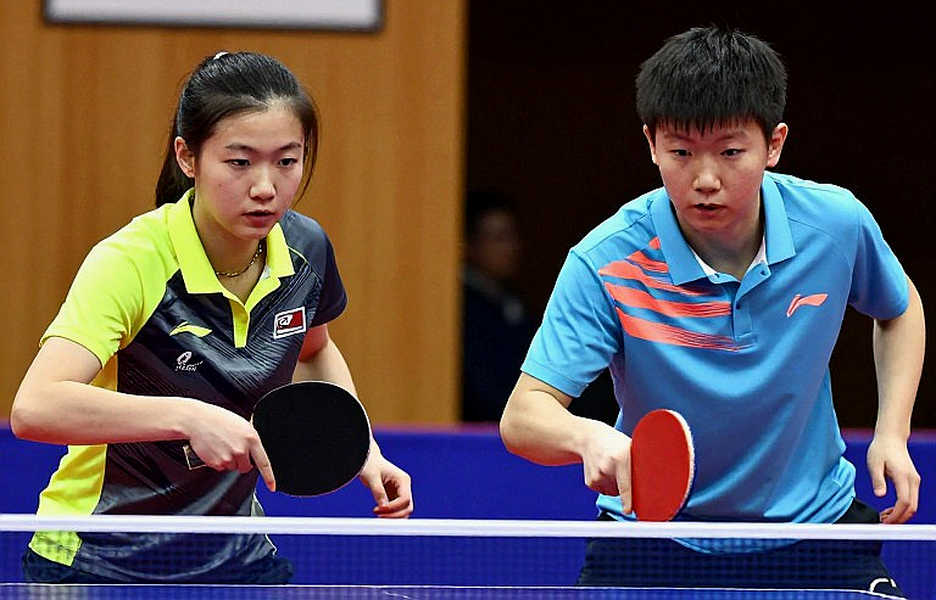
That is what the European Table Tennis Union (ETTU) published after its meeting with the European University Sports Association (EUSA), held on the final day of the 2026 European Table Tennis Championships at Arena Stožice, Ljubljana.
For someone who reads releases for signals, that string of zeros is data, not padding. A communiqué in which every named figure is an administrator and no athlete appears announces its own nature: this is an institution-to-institution track, deliberately decoupled from the elite performance track. Misread that and you misread the whole item.
The question worth asking is therefore not "who does this help win a title" but "which hole in the pyramid does it patch". To answer, you have to go where Europe actually loses people: ages 19 to 23.
A meeting placed on the most crowded day of the week
The five names are ETTU President Pedro Moura, ETTU Secretary General Pierre Kass, EUSA President Haris Pavletic, EUSA First Vice-President Bruno Barracosa and EUSA Secretary General Matjaz Pecovnik. That is the standard personnel structure of a federation-level meeting: two presidents, two secretaries general, one vice-president. No head coach, no technical director, no athlete representative.
The timing is the final day of the 2026 European Championships, which ETTU dates to Sunday 18 October 2026. Calendar verification supports it: 18 October 2026 does fall on a Sunday. The championship year itself should be checked against ETTU's official event calendar before the item is reused. Confidence: medium.
Choosing the closing day is not accidental. That is when the largest number of officials, sponsors, media and international guests are inside one building. A meeting placed there has the lowest organisational cost and the highest institutional visibility of the entire week. This is standard governance practice: using a marquee property as a diplomatic platform. It signals the relationship is being handled as strategic rather than social.
The location compounds the convenience. Arena Stožice is the championship venue, and EUSA is headquartered in Ljubljana, which is consistent with Secretary General Pecovnik's presence. A meeting where both sides travel a few kilometres is rarely a meeting staged purely for photographs.
The stated agenda: promoting table tennis among university students, supporting student-athletes, combining academic education with competitive sport, and creating opportunities for the next generation of European table tennis players. The two sides also exchanged invitations to upcoming sporting and institutional events. The headline point is the possibility of signing a new agreement in the near future.
The foundation is not new. ETTU and EUSA have partnered since 2026. By the Ljubljana meeting that is nine years. A nine-year partnership only now moving toward a new agreement is a detail worth stopping on, and I return to it below.
Source quality: high reliability, low independence
Interrogate the source first. All 19 information points trace to ETTU's own newsroom. The only two quoted voices are the two signatory presidents. There is no independent corroboration, no financial figure, no quantified target, no critical perspective.
In other words: the facts are probably accurate, but the framing is promotional. A release of this type does not lie; it selects. The specialist reader has to fill the gaps and must state clearly what is fact and what is inference.
I stand with the number, even when the number stands alone. Here the numbers standing alone are five names and zero athletes. Every conclusion that follows has to rest on those two data points plus what the industry already knows about Europe's own development structure.
The 19-23 leakage point
In European table tennis, ages 19 to 23 are the familiar exit window. Players at that threshold must choose between a professional competitive path and an academic one, and in most European countries those paths sit in separate institutions: clubs under federations, schools under education ministries, universities under another system entirely. Nobody pays to keep them in both at once.
This is the structural difference from Asian systems. In China, sports universities and provincial-team academic arrangements internalise the trade-off, so elite-track players never face a binary choice at 19. In Europe the choice is binary, and most choose the degree.
The ETTU-EUSA memorandum aims squarely at that leakage point. This is the most defensible performance-side reading of the item, and the reason a meeting with no table tennis in it is worth reading.
Quantitative evidence for the claim is not in the release. ETTU discloses no drop-out rate for the 19-23 band, no count of university students competing nationally, no conversion metric. Any figure circulating elsewhere is a third-party estimate, and I leave it out. What can be stated with confidence is the structure: two organisations signing a cooperation instrument aimed at that specific age band rather than at national teams.
Universities produce depth, not ceiling
One thing these communiqués always avoid: university-level training volume is structurally incompatible with elite table-tennis technical demands.
The first three shots at WTT Champions level require a daily repetition count a full-time student cannot sustain. Serve, receive and the third ball are built from thousands of hours under pressure against quality opposition. No university model replaces that environment.
The university channel therefore produces depth rather than ceiling. Its typical output is the world No. 100 to No. 300 cohort, doubles and team specialists, coaches, officials, organisers. Those roles decide the quality of an entire table-tennis nation, even though nobody hands out medals for them.
In doubles and team events the value is clearer. A player on reduced hours can still hold serve patterns, combination play and tactical discipline at doubles-usable level, while a singles ceiling is almost certainly capped. If ETTU-EUSA cooperation later feeds national-team pools, the marginal contribution is most likely in doubles and team events. Confidence: low, since the release names no transition mechanism.
There is a style-selection bias that can be inferred but is weak. An education-prioritised pathway favours games built on robustness and rally tolerance, the all-round two-winged looper who holds form on low training hours, and disfavours serve-dependent, high-variance or physically explosive profiles that need daily high-load repetition. That is directional reasoning, not observation from this article. Confidence: low, and I label it as such.
Equipment is an under-discussed angle. University students are the entry-price segment for blades and rubbers: all-wood and entry composite blades, mid-hardness inverted rubbers. A wider university base is a long-lead demand signal for brands. The release contains no participation numbers, so this stays a weak signal. Confidence: low.
Ranking points and eligibility: the zero
This is the part that matters most to anyone who reads the event system. The ETTU-EUSA meeting has zero ranking-point effect.
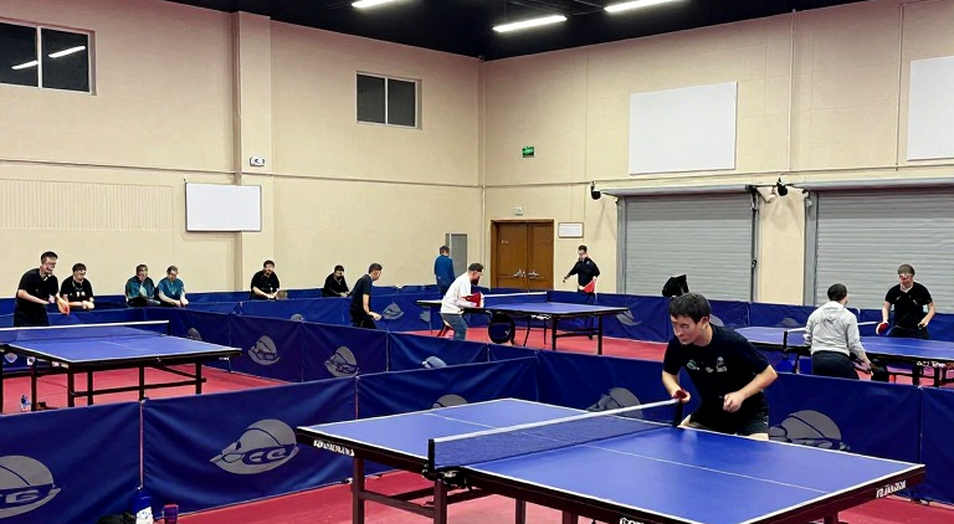
University events, including the European Universities Championships, the European Universities Games and the FISU World University Games, sit outside the WTT ranking framework. Participation builds no points, improves no seeding, and does not help avoid higher-ranked opponents in draws. For a player trying to climb from No. 250 to No. 120, a university entry is opportunity cost, not opportunity. Confidence: medium-high; verify FISU-level ranking treatment before relying on it.
There is no direct selection effect either. No national association's selection rules are referenced. The only indirect effect is a wider candidate pool selectors can draw on years later.
On dates, the release offers exactly one temporal marker: "the possibility of signing a new agreement in the near future". No date, no deadline, no signing window. For an item framed as the next step of a nine-year partnership, the total absence of a timeline belongs in the record.
The real risk: a fourth calendar box
The event-system risk is not whether university events happen. It is where they fit.
European players already face a crowded menu: the WTT circuit, the European Championships, domestic leagues, and European club cup commitments. Adding a university tier without calendar coordination creates a fourth competing box rather than an additive one. Confidence: medium.
This is riskiest for the 18-22 cohort, which already chooses between WTT points and university exams. If a university event lands in the same week as a WTT feeder, the choice is driven by scheduling rather than development value.
Notably, the release names no EUSA competitive platform at all, despite that being the obvious delivery vehicle. There is no joint calendar, no pilot event, no funding line. That silence is consistent with an early-stage, low-budget institutional track. Confidence: medium.
China, Korea, and the coordination-cost problem
Set against China, the difference is institutional design rather than effort. China's system internalises the education-athletics trade-off, so elite-track players never face a binary choice at 19. Europe's system forces it, because club, school, university and federation are four separate institutions.
The memorandum is therefore a coordination-cost reduction measure. It is meaningful, but it cannot substitute for the missing full-time training environment. Confidence: high.
The Korea comparison is the under-appreciated one. Korean universities field genuine elite teams, and the university stage is an integrated part of the national pipeline, so university table tennis there performs a performance function. Europe's university sport performs a dual-career and retention function. Expecting the ETTU-EUSA route to replicate Korean output is a category error. Confidence: medium.
On the balance of power: China typically holds the majority of top-10 seats in both men's and women's rankings, while Europe typically holds a minority of men's seats; exact current counts should be re-verified and I will not insert estimates. What is certain is concentration: Europe's depth sits inside a handful of associations.
Threat assessment: this item does not change the China-Europe balance on any horizon shorter than 8-10 years, and even then only at depth level. Europe's credible near-term threat vector remains individual talent, the French generation, not institutional base-building.
The contrarian angle: a memorandum is not a cause
The great temptation with items like this is to read a straight line: sign memorandum, widen universities, Europe gets stronger. That chain is correlation, not causation.
A cooperation document produces no players. It lowers the cost of two organisations talking. Its entire value lies in specific clauses the release does not contain: coach education, referee development, training-camp access. Without those three in the signed text, the agreement is stamped public relations.
The decisive metric is not the memorandum but whether university events acquire formal standing: ranking recognition, recognition in national selection criteria, or integration into ETTU's technical and officiating system. Without at least one, player incentive to prioritise university events stays weak against WTT feeder events.
One operational detail is worth more than the memorandum language: the mutual invitations to upcoming events. Reciprocal presence implies a standing working relationship, a stronger commitment signal than "possibility of signing". Confidence: medium.
And the hardest question is the one the release leaves blank: the partnership dates from 2026, so why is a new agreement only now being discussed. Two possibilities. One, the original memorandum produced no measurable result and this is a restart. Two, this is a deliberate slow burn, small steps to preserve the relationship without committing resources. The release does not say, and that silence is the most important question a data analyst can put on the table.
I also have to limit myself. Three inferences here carry low confidence: the style-selection bias, the equipment-market signal, and the likelihood that gains land in doubles and team events. I keep them because they have structural grounding, but I do not build conclusions on them. A number without context is an unverified statement, and so is an inference without data.
Next-cycle signals: four things to watch in 6 to 12 months
The right monitoring window is medium-term, 6 to 12 months. The news item itself decays in days; the signal lives in the follow-through.
First, a signed text with named clauses, especially three groups: coach education, referee development, training-camp access. Those are the only clauses that convert into measurable technical capacity.
Second, a joint calendar or a pilot event. A university event appearing inside ETTU's calendar rather than running parallel is a sign of real coordination.
Third, any form of formal recognition on ranking points or selection criteria. This is the decisive variable, because it changes the opportunity-cost calculation of a 19-year-old.
Fourth, a budget line, a headcount, or a conversion metric. Without any number in those three categories, every claim about the "next generation" remains language rather than programme.
Data does not lie; we simply have not learned how to ask. With the Ljubljana item, the right question is not "how much stronger does Europe get", but "next year, how many 20-year-olds choose to stay at the table instead of leaving the hall". Answer that with a number, and we will know whether the meeting of 18 October 2026 was a turning point or just a good photograph.