
Trang chủDomestic FootballCAHN Before Lion City: The Win Pledge and the Variables Nobody Has Measured
Domestic Football
CAHN Before Lion City: The Win Pledge and the Variables Nobody Has Measured
**Core answer (≤60 words):** Coach Polking and defender Đoàn Văn Hậu publicly declared Công An Hà Nội will beat Lion City Sailors in the ASEAN Club Championship Group B opener on 8 October in Singapore. The statements are pre-match intent, not tactical evidence; no data, lineups, or formations were disclosed. **Key facts:** - Công An Hà Nội, reigning V.League 1 champions, open Group B away at Lion City Sailors on 8 October. - CAHN head coach Polking called the regional competition a chance to elevate the club's standing. - Defender Đoàn Văn Hậu, born 1999, said CAHN really wants to win to start the journey. - Lion City Sailors, owned by Sea Group, are a Singapore Premier League power; Nur Adam Abdullah promised to win in every tournament. **Source attribution:** Stage-2 pre-match analysis, fixture preview dated 8 October 2026 | Cross-checked: VuaBong.vn **Related Q&A:** Q: Does a public win pledge affect the result? A: No — it is a statement of intent, not a measurable variable. Q: Where is the match played? A: Away in Singapore, adding heat, humidity and travel risk for CAHN. Q: Who is the key player to watch? A: Đoàn Văn Hậu, CAHN's left-back, whose injury history makes him a single point of risk.
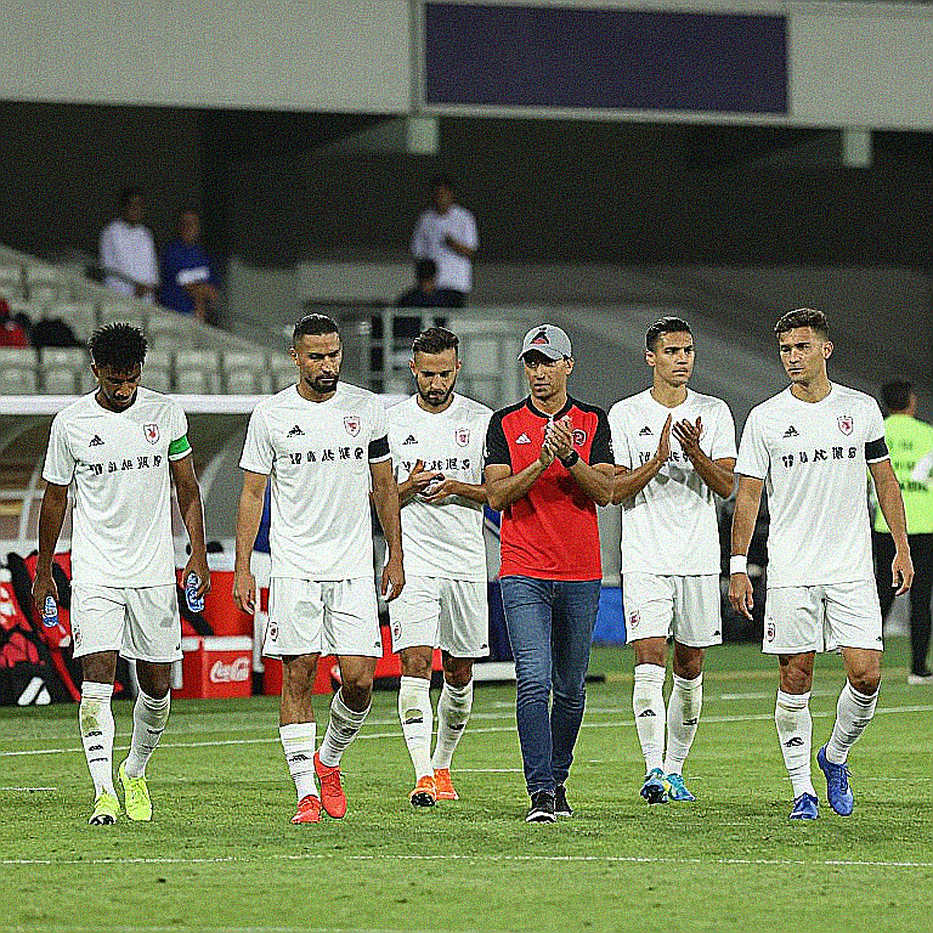
In the pre-match press room, Đoàn Văn Hậu said one short line: Công An Hà Nội really wants to win, to start the journey. In the same session, coach Polking called the regional competition a chance to elevate the club. On the other side, Nur Adam Abdullah of Lion City Sailors declared his team enters every tournament to win. Three people, three statements, one identical message: we will win.
That is almost the entire substance of this pre-match report. No formation. No projected lineup. Not a single metric. For someone who reads numbers for a living, the absence of data is itself the most notable piece of information. When a team declares it will win without a shred of evidence attached, what we are hearing is not a forecast. It is intent. And intent, in football, is the cheapest form of data.
I still remember the afternoon in 2026 when I sat with my first World Cup prediction model and gave Germany a 78% chance of reaching the semi-finals. The model got 12 of 16 knockout qualifiers right. It failed on exactly the team I trusted most. That lesson has followed me through my career: every absolute claim, whether it comes from an algorithm or a coach's mouth, needs to be checked against a specific context.
This needs to be placed properly before any dissection. It is the opening match of Group B, kicking off on 8 October, in the ASEAN Club Championship — the regional club competition the media usually calls by its sponsor's name. The exact name and format should be cross-checked against the official regulations, because Southeast Asian regional competitions change structure fairly often from season to season.
The host is Lion City Sailors, a power of the Singapore Premier League, owned by Sea Group — the conglomerate behind Shopee and Garena. This is a private football model, run on commercial and marketing logic. Opposite them, Công An Hà Nội is linked to the Ministry of Public Security, a semi-state model with stable resources but its own governance constraints. Two ownership models, two ways of spending, sharing one group.
What matters: Công An Hà Nội enter this match as reigning V.League 1 champions. Coach Polking said the team wants to hold its domestic position and elevate itself internationally. That is a statement setting two parallel goals, and parallel means resource allocation. For a club grinding through both the V.League and a regional cup in a congested calendar, the question is not whether they want to win — but with which lineup.
This is the section where data should speak up. But the report offers no metrics, so I must build context from what can be measured elsewhere. First, the most objective factor: the journey. A Vietnamese club flies to Singapore, plays in tropical heat and humidity, then returns amid the V.League schedule. Temperature and humidity are not trivia. They directly affect pressing intensity and the ability to repeat sprints in the second half. Vietnamese teams have historically played well in first halves on regional away trips, then faded after the 60th minute.
PPDA is the signature, running distance is the confession. With Công An Hà Nội's away PPDA, we would know instantly whether they press high or drop the block. Without that number, we can only speculate: a team choosing Đoàn Văn Hậu — a tall, aerially strong left-back — to sit beside the coach at a press conference often suggests an image prioritising solidity. That is inference, not conclusion.
xG — expected goals — measures the quality of chances, not results. Without xG, we do not know which side created better opportunities. That is why I always repeat: a number divorced from the match, the timing and the lineup is just noise. And in this report, there is no number to divorce.
On Văn Hậu: a player born in 2026, who joined SC Heerenveen in the Netherlands on loan in 2026, becoming one of the few Vietnamese players ever to touch the Dutch top flight. That experience is real, but past experience does not measure present form. He also has a notable injury history, and that is a significant single point of risk: if Văn Hậu is absent or physically limited, Công An Hà Nội lose a considerable part of their left flank and set-piece threat.
On Lion City Sailors: the Singaporean club plays controlling, technical football, favouring short combinations in tight spaces. This kind of opponent is awkward for Vietnamese teams because it forces them to chase the ball — and chasing the ball in Singaporean heat is a physical punishment. I trust variance more than I trust a champion. A V.League title says this club was the best in Vietnam across one season. It says nothing about what this club will do in a single match, away, in a different competition. Those are two different questions, and conflating them is the most common analytical mistake.
One detail stands out in how both clubs position themselves. Polking calls Công An Hà Nội a top club in Vietnam. Nur Adam says Lion City enters every tournament to win. This is a branding contest running parallel to the one on the pitch. Southeast Asian regional club competitions carry sporting meaning and also serve as a stage for V.League and Singapore Premier League clubs to assert regional standing.
At the macro level, each regional match also influences the coefficient and future slots for Vietnamese football. Club results in continental and regional competition compound over time. An away win is not just three points; it is a data point feeding a larger picture. Data does not get emotional, but it remembers everything the press forgets.
This is where I need to challenge myself. The appeal of the statement we will win is that it is easily read as a strong signal. But correlation is not causation. A coach saying he will win does not raise the probability of winning. He is doing his job: setting expectations, creating internal pressure, and sending a message outward. The risk lies elsewhere. The louder the declaration, the higher the expectation, and the sharper the reaction when results disappoint. Vietnamese media tend to turn a single regional result into a verdict on an entire football culture. A dropped opener can be framed as the reigning V.League champions collapsing in the region — a label far heavier than the true value of one group match.
Home advantage is not sacred ground, only a frozen variable. In 2026, when stadiums stood empty during the pandemic, I collected data from nine Bundesliga rounds after football resumed. The home win rate fell from 44.2% in 2026-19 to 36.7%. Average goals per match dropped from 3.1 to 2.8. The home advantage every old model treated as constant evaporated simply because the fans were gone. Here, Lion City's advantage is the same: it exists, but it is a conditional variable, not a destiny.
When the model is wrong, that is when data starts telling the truth. And the model is wrong in ignoring the variables outside the spreadsheet: internal conflict, complacency, declining fitness, and the psychological weight of a public promise. The report has only three statements. The real data sits where the report does not look.
Based on my experience tracking matches, I have learned that Vietnamese clubs tend to underperform on regional away trips, and the gap between domestic form and regional results is one of the most stable indicators I have ever followed. That is not destiny. It is a trend that must be verified match by match.
So rather than asking whether Công An Hà Nội will win, I put a different question to the next round: how will this club choose to play when it must travel in the region — and what does that choice say about their real ambition, rather than their promise? That is the signal worth watching, and it will reveal itself after the whistle, not before it.
Cầu thủ liên quan
Bài nổi bật
El Clásico Matchday 10: Real Madrid Win on 1.95 xG and Two Errors in the Danger Zone as Mourinho Returns After 13 Years2026-10-27
Ninh Binh's 90+5 defeat: the fault lies in rest-defence structure, not in luck2026-10-26
Three at the back in V.League: coaches are buying insurance with a spare centre-back2026-10-26
Dong Nai City FC: 16 Players Over 30 and the Price of a Transfer Window That Went Backwards2026-10-26
Ninh Binh dominate V.League September awards: a four-round signal, not yet a title declaration2026-10-24
Three candidates for VFF presidency as Nguyen Duc Thuy targets 600-1,000 billion VND per year2026-10-23
Bài đề xuất
Vietnam Enter the Pakistan Match With Both Main Forwards Missing2026-10-02
Vietnam Futsal: 20 Players, 6 Cuts, and the Quiet Test in Kyrgyzstan2026-10-22
Vietnam U23 vs Uzbekistan U23: Dinh Hong Vinh's Two Changes and the One-Point Equation in Group C2026-09-22
SLNA vs HCMC Police at Vinh Stadium: The Olaha Problem and the Fitness Trap2026-10-11
Vietnam vs China in the Asian Games Quarterfinal: The Real Gap Between Southeast Asia's Peak and Asia's Elite2026-09-25
Indonesia vs Bangladesh: When a Naturalized Squad Doesn't Score by Itself2026-10-02
Vietnamese Football's Data Void: When the Transfer Market Is Only Noise2026-10-06
Phnom Penh Crown Beat Gangwon 2-1 in Korea: The Counter-Rhythm of ASEAN's Challenger2026-10-16
Bài đề xuất
Vietnam U16 0-1 China U16: Gia Bao Saves a Penalty, the Post Holds One Half, and a Red Card in the 80th Minute2026-09-28
VFF 10th-Term Leadership Race (2026–2030): No USD Billionaire Emerges Ahead of the October 19 Deadline2026-10-21
CAHN 1-1 Thanh Hoa: 43 Minutes Waiting for a Rebound, and the Shot Nobody Closed Down2026-10-23
The Beat Behind V.League: Where Vietnamese Football Actually Builds Its Squad Depth2026-10-16
Bài đề xuất
VFF Makes AFC Diamond Tier for a Fourth Straight Time: A Ticket Not Yet Turned Into a Trophy2026-10-17
Vietnam U17 lose to FC Seoul U18: a defeat that was scheduled before the UAE trip2026-10-21
Seven Minutes of Added Time, and a Thirty-Five-Year Trophy with a Question Mark2026-10-16
Xuan Son, Four to Six Weeks, and Vietnam's Striker Problem Before the Thailand Decider2026-09-29
The Empty Data Column: Verification Discipline and the 'Fill-It-In' Trap in Vietnamese Football2026-10-11
Vietnamese Football Academies and the First-Team Pathway: The Files Waiting to Be Read Again2026-10-10
Tuan Hai Unlocks the Vietnam National Team Door with an 86th-Minute Tap-In2026-10-19
Three candidates for VFF presidency as Nguyen Duc Thuy targets 600-1,000 billion VND per year2026-10-23