
Trang chủDomestic FootballSLNA vs HCMC Police at Vinh Stadium: The Olaha Problem and the Fitness Trap
Domestic Football
SLNA vs HCMC Police at Vinh Stadium: The Olaha Problem and the Fitness Trap
**Câu trả lời cốt lõi**: SLNA tiếp Công an TP.HCM tại sân Vinh ở V.League 2026/27. SLNA vào trận với chuỗi ba trận tích cực, gồm thắng Hà Nội FC 4-1 trên sân khách. Công an TP.HCM chao đảo vì lịch thi đấu dày và để thủng lưới muộn. **Dữ kiện chính**: - SLNA thắng Bắc Ninh FC, thắng Hà Nội FC 4-1 tại Hàng Đẫy, thắng tiếp ở Cúp Quốc gia. - Công an TP.HCM thắng mở màn 3-1 trước Hà Nội FC, thua Bắc Ninh FC, hòa Ratchaburi 1-1. - Công an TP.HCM để thủng lưới ở phút bù giờ trong trận hòa Ratchaburi 1-1 tại Shopee Cup. - Cả hai đội được cho là có đầy đủ lực lượng mạnh nhất cho trận đấu này. - Mẫu phong độ của SLNA chỉ gồm ba trận thi đấu chính thức. **Nguồn**: Bản phân tích chuyên sâu Stage-2 dựa trên các điểm thông tin IP1-IP28, mùa giải V.League 2026/27. **Hỏi đáp liên quan**: - Hỏi: SLNA đang có phong độ thế nào? Đáp: SLNA thắng ba trận liên tiếp, gồm trận thắng Hà Nội FC 4-1 trên sân khách. - Hỏi: Vì sao Công an TP.HCM bị đánh giá thấp hơn? Đáp: Họ thua Bắc Ninh FC và hòa Ratchaburi 1-1 sau khi thủng lưới ở phút bù giờ, giữa lịch thi đấu dày. - Hỏi: Cầu thủ then chốt của Công an TP.HCM là ai? Đáp: Olaha là mắt xích trung tâm; nếu bị khóa, các phương án tấn công của họ trở nên dễ đoán.
In the fourth minute of stoppage time during HCMC Police's 1-1 draw with Ratchaburi in the Shopee Cup, the back line held its shape, nobody marked the wrong man, and the ball still ended up in the net. I rewound that clip four times, just to see whether anyone still had legs to run back. The answer was no.
That is the signal I have tracked all week, ahead of HCMC Police's away trip to Vinh Stadium to face SLNA in the next round of the V.League 2026/27. A side that played a regional cup tie in midweek, now travelling far, now facing an opponent running on adrenaline. In Southeast Asian football, that is a familiar recipe for dropped points.
SLNA arrive with a run of results that forces people to sit up: a win over Bac Ninh FC, a 4-1 demolition of Hanoi FC away at Hang Day Stadium, then another win in the National Cup. Three matches, three positive results. That number needs saying plainly: three matches.
HCMC Police are the mirror image. They opened with a 3-1 win over Hanoi FC, a result that had pundits anointing them as title contenders. Then they lost to Bac Ninh FC, the very team SLNA had just beaten. Then they drew 1-1 with Ratchaburi in the Shopee Cup after conceding late. Three matches, three different faces.
On personnel, both sides are said to have their strongest squads available. SLNA coach Van Sy Son builds around organisation and quick transitions. HCMC Police coach Arthur Diles is wrestling with fitness and intensity after a congested schedule. This is a meeting of two models: a collective without stars, and a team built around established names such as Nguyen Tien Linh and Olaha.
SLNA do not need the ball. They win by standing in the right places, contesting at the right moments, and driving straight forward the instant the opponent loses structure. The 4-1 at Hang Day is the evidence: a home side with more possession, repeatedly struck in the space behind its midfield. Based on my experience following these matches, when I rewatched the footage, SLNA needed just three passes to travel from their own box to the opponent's. Three passes, no more.
That style fits their personnel. The SLNA squad has no expensive stars, but it has young players willing to run, willing to contest, and more importantly, clear on their role within the system. The fit between style and personnel is the firmest element in the Nghe An club's file.
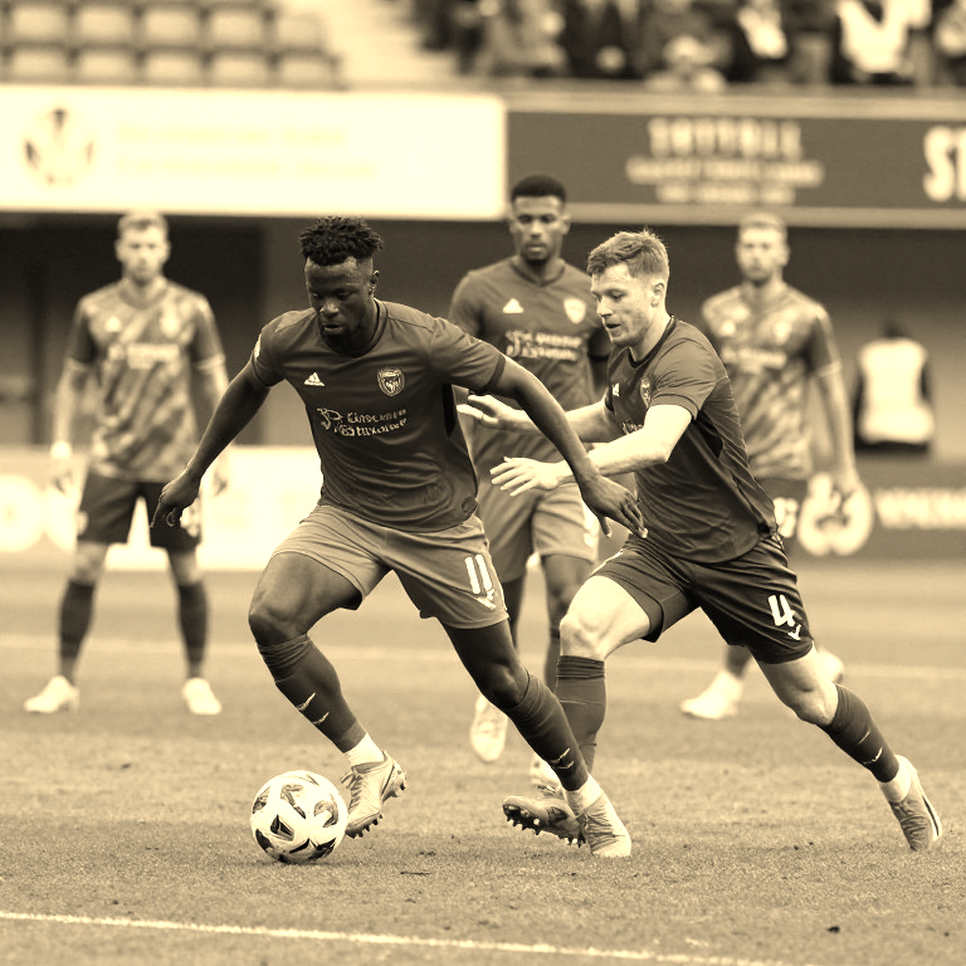
On the other side, HCMC Police's threat is individual rather than systemic. When they build, the final destination is usually Olaha, who holds the ball up, shields it, then releases the satellites around him. Tien Linh is one of those satellites, and he is more than capable of punishing any defence that switches off for half a beat.
SLNA's task is therefore clear: cut the cord between Olaha and his satellites. That means SLNA's centre-backs and defensive midfielder are the true decision-makers in this match, not the forwards. If Olaha is forced out of his preferred zone, HCMC Police must attack through second-tier options, and that is when they become predictable.
I read the data, and the data whispers a name nobody has picked: SLNA's defensive midfield.
HCMC Police need to sustain pressing intensity high enough to stop SLNA's transitions. Here is the core contradiction: they need to run a lot, yet they are the side that played a cup tie in midweek. To press, you need legs. To have legs, you must rotate. To rotate, you must lower intensity. It is a bind.
People look at the table; I look at the gap between the numbers. SLNA are flying, but the sample is three matches. HCMC Police are wobbling, but their squad quality remains higher. Between those two facts lies a gap the table does not display.
One structural point deserves attention: a deep block, ceding possession, waiting for the opponent to surge forward and then countering, what many call passivity, is precisely what hurts a side built around attacking stars. Sitting deep is not cowardice; it is how smart men wait for fools to charge.
On fitness, the signal sits at 90-plus. The late concession to Ratchaburi was no accident; it is the first symptom of a congested calendar. When the legs stop listening to the head, gaps appear later in matches, and that is exactly when SLNA want the ball most.
Now comes the part where I might be wrong. And I will be blunt.
First, SLNA's winning run rests on a tiny sample. Two league rounds and one cup tie are not a trend; they are a moment. Even the writers covering SLNA admit the club has not solved all its problems. If the run snaps, expectations built over three matches can collapse as fast as they formed.
Second, the story of a collective without stars sounds lovely, but it also implies a lower ceiling. When an opponent plays the right way, there is no one to produce a solo moment. This is the money question people avoid: a side of young, low-wage players winning through organisation will be targeted by wealthier clubs in coming transfer windows. Their success can become a supply line for their own rivals.
Third, I concede this piece lacks quantitative data. No expected-goals figures, no pressing-intensity metrics, no detailed possession statistics. Every claim about process is qualitative. Every prediction can be wrong. Being wrong with honest data still beats being right by luck.
Tactics are not a formula. They are the answer to the reverse question: what does the opponent fear most? The only thing SLNA fear is being forced to hold the ball for long spells. The only thing HCMC Police fear is a fitness race in the second half.
A verifiable prediction: if Olaha is locked down in the first 30 minutes, HCMC Police will not score from open play. If they score in the final 15 minutes, I am wrong, and I will own it. And if SLNA win through a counter after the 70th minute, football will have taught us the old lesson once more: the patient ones tend to harvest last.

Cầu thủ liên quan
Bài nổi bật
Thai Nguyen T&T 0-1 Hanoi I: An Early Two-Round Title Sealed by a Sixth-Minute Header2026-10-13
Vietnam U17 Women and the 28-Goal Ticket: Reading It With Data, Not Emotion2026-10-12
V.League Tactical Analysis Needs a Verified Data Foundation2026-10-12
The U21 Sediment Layer: A Drying Underground Stream Beneath the V.League Table2026-10-11
VAR and the Handball Law in V.League: When Memory Is Not the Law2026-10-11
The Empty Data Column: Verification Discipline and the 'Fill-It-In' Trap in Vietnamese Football2026-10-11
Bài đề xuất
Indonesia 0-0 Malaysia: A Red Card, a Goal-Difference Spiral and a Report You Should Not Trust Too Quickly2026-10-02
SLNA vs HCMC Police at Vinh Stadium: The Olaha Problem and the Fitness Trap2026-10-11
V.League Through the Data Lens: Tactical Signals Arrive Before the Headlines2026-10-09
Vietnamese Football: The Silent Revolution Starts on the Bench2026-10-06
63 FIFA Places and the Trap Named Pakistan: What the Rankings Don't Tell the Philippines2026-09-29
Vietnamese Football in the Vortex of Expectation: When the V.League Learns to Breathe Slowly2026-10-04
Sixty-Three Places Apart and the Trap That Isn't On the Rankings2026-09-29
An Empty Dossier Mid-Season: Lessons From a Transfer That Could Not Be Verified2026-10-01
Bài đề xuất
Dinh Bac Falls Without Contact: When the Fixture Calendar Grinds Down a Young Number 92026-10-09
With Hai Long and Hoang Hen, Hanoi FC Still Suffer Shock 1-4 Defeat: The Story of Buying Stars and Lessons from Youth Academies2026-09-13
Vietnam U16 Lose 2-4 to Australia U16 in China: The Thirty-Eight Minutes of Collapse and the Missed Penalty at Minute 832026-09-24
Three Doors to One Whistle: Southeast Asian Football and the Channel Split on Vietnamese Screens2026-09-28
Vietnam Fights for Third Place With What Is Left: When Kim Sang Sik Tells the Truth About an Empty Bench2026-10-05
Nguyen Xuan Son's hamstring tear: Vietnam lose their focal point before the decisive Thailand clash2026-09-29
CAHN vs Kashima Antlers: The Data Shield and Polking's Gamble2026-10-13
Coach Polking and Van Hau declare CAHN will beat Lion City Sailors in the 2026/27 ASEAN Club Cup opener2026-10-08
Bài đề xuất
Thai Nguyen T&T 0-1 Hanoi I: An Early Two-Round Title Sealed by a Sixth-Minute Header2026-10-13
Vietnam U16 Lose 2-4 to Australia U16 in China: The Thirty-Eight Minutes of Collapse and the Missed Penalty at Minute 832026-09-24
Vietnamese Football: Tactical Identity Lives in the Runs, Not in Player Names2026-10-11
Kim Sang Sik, Patrik Lê Giang, and the Question of Trust After the Fall to Thailand2026-10-02
Xuan Son, Four to Six Weeks, and Vietnam's Striker Problem Before the Thailand Decider2026-09-29
Vietnamese Football and the Three Structural Forces Behind Every V.League Race2026-10-03
Coach Polking and Van Hau declare CAHN will beat Lion City Sailors in the 2026/27 ASEAN Club Cup opener2026-10-08
Why the 2026 V-League Summer Window Is a Game of Returnees, Not Foreign Signings?2026-09-09