
Vietnam Fights for Third Place With What Is Left: When Kim Sang Sik Tells the Truth About an Empty Bench
**Core answer**: Vietnam enters the regional third-place match with a depleted, fatigued squad under Kim Sang Sik, missing Hoang Hen and Tai Loc, with Viet Anh a fitness doubt, while facing Malaysia's naturalized striker Bergson after fixture congestion spanning the ASEAN Championship and the V-League. **Key facts**: - Vietnam failed to reach the final and plays the third-place match. - Hoang Hen and Tai Loc are unavailable; Viet Anh carries a muscle injury. - Kim Sang Sik says limited numbers make second-half planning difficult. - Malaysia fields naturalized striker Bergson, named by Vietnam as a major threat. - Fixture congestion spans the ASEAN Championship, V-League and national-team duty. **Source attribution**: Based on Stage-1 and Stage-2 professional analysis of an unattributed match report, 2024–2025 cycle | Cross-checked: VuaBong.vn **Related Q&A**: Q: Why is Vietnam's squad so depleted? A: Cumulative injuries from the ASEAN Championship, V-League and national-team schedule left many players below full fitness. Q: Who is Malaysia's key threat? A: Naturalized striker Bergson, whom Kim Sang Sik said Vietnam must prepare better to stop. Q: What is Vietnam's main structural problem? A: A thin squad and a congested domestic calendar that overuses a small core of players.
Three in the morning, I sat in front of the screen with a notepad and a red pen. I wrote down eleven names, crossed out three, circled seven, and by the time dawn broke there were only nine intact names left on the page. I realised I was no longer picking a line-up — I was counting how many people a football nation had left.
That was the feeling I had while following the Vietnam national team under head coach Kim Sang Sik as it entered the closing stages of a regional tournament without a place in the final. Instead there was the third-place match, the thing people still call by a very gentle name: the dead rubber.
There has never been anything procedural in football. 1-0-0. I still hold this line after all these years: a third-place match, a match for face, is still a match that is real, with real people, and real pain.
Context: a power asking itself where it stands
Southeast Asian football is at a stage where the regional championship — the thing generations of Vietnamese fans still call the AFF Cup, now named the ASEAN Championship and sponsored by an electronics brand — serves as the recurring yardstick for the strength of the region's national teams. It is not the World Cup, nor the Asian Cup. But in Southeast Asia, it is all people have to measure themselves against, once every two years.
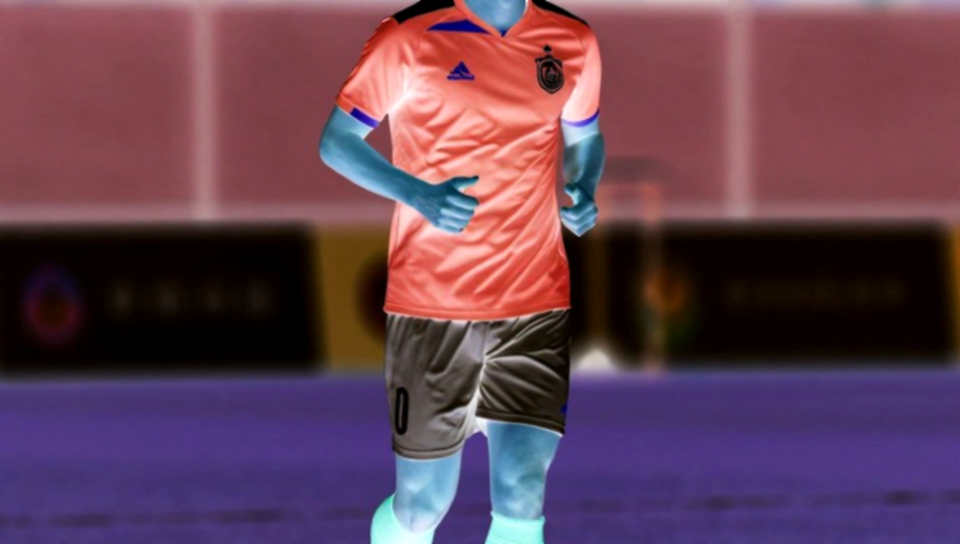
Vietnam entered the tournament as a power. For more than a decade we have been used to sitting among the leaders, used to finals, used to trophies. When a team is used to winning, expectation becomes the default, and the default leaves no room for explanation.
But this cycle, something was different. The national team no longer played with intact names. They played with what was left.
Based on my experience following matches across many regional campaigns, this was one of the rare occasions when the team's central story was not a tactical system, not a player in form, but an injury list. When that list becomes the headline, the problem is no longer on the tactics board. It is in the medical room, in the fixture list, and in the vision of an entire football nation.
Head coach Kim Sang Sik — the Korean expected to bring discipline and structure to the national team — appeared before the media not with a plan to counter an opponent, but with a confession. He said the number of remaining players was so limited that planning for the second half had become difficult. I read that sentence three times, because it contains far more than it states.
The bench does not lie
In football, people usually judge a team by the eleven names on the pitch. I have a different habit: I look at the bench first. A deep bench gives you the right to change a match. A thin bench gives you only the right to pray.
What Kim Sang Sik said, translated into the language of someone who does this for a living, means this: his first half can be designed, but his second half cannot. Modern football is decided in the final thirty minutes, when fitness drains, when spaces open, when one well-timed substitution can flip a match. If you do not have enough people to bring on, you do not have the right to change anything. You only have the right to endure.
I have seen this before, in another match, in another year, when a team I was following went into the second half with a bench that was gapingly empty. They lost that game not because they played badly, but because they ran out. Football has no mercy for those who run out of battery before their opponent.
Three of the most notable names on the casualty list each tell a different story.
Hoang Hen is the man who played a lot. The way he was described — having played so much that he could not show one hundred percent of his form — is the story of a player ground down by the number of games, not by an opponent. This is the kind of injury I call a systemic injury: it does not come from a malicious tackle, it comes from a calendar.
Tai Loc is the man with a minor problem, and the notable thing is that he could not even turn out for his club. When a national-team player cannot play for his club, the issue is no longer form. It is physical condition.
Viet Anh is the man carrying a muscle injury. And this is the name that caught my attention most, because the information said the possibility of him playing is high. I read that and felt a chill. At elite level, a "high possibility of playing" with a muscle injury is usually a gamble, not a choice. And a gamble on the fitness of a key man, in a match where the team has little left to lose, is the kind of gamble justified only by desperation.
I once wrote about a player at Euro 2026 — Milot Rashica — in an analysis I still remember, partly because it was bad, partly because it was right. Rashica taught me that sometimes you have to rule yourself out to understand how much you love the game. "Ruling yourself out" here is not giving up. It is the admission that a body has limits, and that pushing an unfit player onto the pitch can be a selfish act disguised as courage.
The calendar, the enemy nobody wants to name
If there is a villain in this story, it is not wearing the other team's shirt. It is wearing the shirt of a calendar.
Kim Sang Sik laid out the chain of cause and effect clearly: the regional tournament, then the V-League, then national-team duty. Three stops, one player, no genuine rest week. He said that this accumulation, over time, had led to the poor physical condition of many players.
This is something anyone who follows Vietnamese football for a living knows, but few say out loud: the V-League and the national team are competing for the same group of people. And when two entities compete for a finite resource, the ultimate loser is always the player.
I call this "the small-pond problem". Vietnam has a high-quality but thin player pool. The number of players who meet national-team standard is not large, so when a dense season arrives, the best are called the most, play the most, and break the most. This is a self-reinforcing spiral: the more the team depends on a few names, the more those names are worn down, and the more the team depends on them.
There is a dangerous romanticisation in how people talk about load management. People praise players who "fight for the shirt", coaches who "rotate sensibly". But behind those beautiful phrases there is often a bare reality: commercial tours, unnecessary friendlies, and a fixture list designed for revenue rather than for health. Load management, in many cases, is not science. It is damage control.
And when damage control fails, when a player breaks, people turn to the coach and ask why he did not rotate better. A perfect circle of blame.
Bergson and the naturalisation question
Then comes the opponent. And this is where the story becomes more interesting than a third-place match.
Kim Sang Sik said Malaysia is now much better and much stronger, and that they have a newly naturalised player named Bergson — a No. 9. He said the team needs to prepare better to stop that player.
I read this and thought: this is no longer a comment about one match. This is a comment about a shift in the regional balance of power.
What is naturalisation, viewed purely through the lens of the transfer market? It is a player-acquisition mechanism with a transfer fee of zero. For mid-tier Southeast Asian federations — places that do not produce enough high-quality strikers — naturalisation is the most capital-efficient way to upgrade a squad. You do not pay a club a fee. You pay in residency time, in legal processing, and in wages.
Malaysia chose that path. And what does it say that they chose to naturalise a No. 9 specifically? It says that in their internal diagnosis, the striker position is the weakest link. You do not naturalise in a position where you are already strong. You naturalise in a position where you are bleeding.
This puts Vietnam in a familiar difficult spot. For years, our advantage over neighbours lay in youth development, in a golden generation cultivated systematically. But when an opponent can buy outright what you must spend a decade growing, that advantage is flattened. The game shifts from "who develops better" to "who naturalises faster".
I do not judge that on moral grounds. Under FIFA rules, a player can represent a new national team after meeting residency, citizenship and one-time-switch conditions. Bergson, as a validly naturalised player, is not a legal problem. He is a football problem.
But there is a point I want to state plainly: the biggest risk is not Malaysia naturalising a striker. The biggest risk is Vietnam seeing that and concluding that it too must join the naturalisation race, instead of fixing the system that is breaking its own players. Naturalisation can patch a hole. It cannot cure a sick calendar.
Tactically, the fact that Kim Sang Sik named Bergson suggests the staff see him as the single most dangerous individual threat. When you name a specific striker to the media, you usually already have a man-oriented defensive brief for him. But the report does not tell me the mechanism: back three or back four, man-marking or zonal, screening pivot or not. And once I do not know the mechanism, I cannot assess it. I can only assess the risk.
And the risk is this: a tired, depleted defence facing a fresh No. 9 tends to drop deep and concede territory. That is the most dangerous formula a tired defence can create for itself. A tired team does not press much. A tired team concedes ground. And a team that concedes ground feeds exactly the kind of striker it fears most.
A disappointment spoken aloud, and what it hides
There is a detail in this story I consider more important than the injuries and even than Bergson: how the team talks about being eliminated.
Kim Sang Sik expressed disappointment — the coach's, the players', the fans', the reporters'. And he mentioned that the format has no semi-final, implying the team was very close to the final and was eliminated by the format or by a moment.
This is a familiar football pattern: "we were so close". I am not saying it is false. I am saying it needs to be read carefully. Because when a team explains failure through format rather than performance, two things are usually happening at once: real pain, and real self-defence.
The real pain is understandable. Nobody enters a regional tournament as a power to be satisfied with a third-place match.
The real self-defence is harder to name. When a coach publicly laments a shortage of players and the fixture list, he is doing two things: protecting his players from criticism, and protecting himself from a hard question — whether a better-prepared team might have gone further.
I have followed many press conferences like this. And I have learned one thing: when a coach has to publicly insist that the team will try its best, it is usually a sign that motivation is not naturally assured. Nobody has to remind an excited team that it needs to try. You only remind them when you fear they will not.
Kim Sang Sik said that although it is only the third-place match, the team will try its best. And he said that the harder it gets, the more the team must unite.
I hear the word "unite" and I hear an alarm bell. Unity is a beautiful word, but in football it is most often used when it is most lacking. A team that is truly united does not need to talk about unity. They just play.

Contrarian angle: what we are celebrating is a system failure
Here is where I want to say something I know will upset some people.
The story of an exhausted national team still taking the field, of injured players still fighting, of a coach taking all the responsibility onto himself — it all sounds heroic. And the media, myself included, are very good at turning such stories into legend. Empty stadiums. The applause in an empty stadium carries further than any song — because it is sung with longing. We love those stories, because they make defeat noble.
But here is the truth I do not want to bury: a national team that cannot plan for the second half is not a heroic national team. It is a national team abandoned by its own system. Their exhaustion is not an accident. It is a predictable result of an unmanaged fixture list, of a domestic league that will not yield to the national team, of a football nation that puts revenue ahead of players' bodies.
When we praise players who play through pain, we are inadvertently teaching the next generation that self-destruction is a virtue. It is not. It is a sign that someone above failed to protect you.
And I may be wrong here. Perhaps Kim Sang Sik is simply speaking plainly, that his team really has only nine fit men, and that he is doing his best with what he has. I believe that. But precisely because I believe it, I must say what comes next: if a national-team coach is doing his best with nine men, the person who must answer the question is not him. It is the people who drew up the calendar.
Understanding why a team is exhausted, but not therefore accepting it as normal. That is the line I always try to hold in my head when writing about stories like this.
About the match, honestly
So how will this third-place match unfold, if I have to offer a verifiable judgement?
First, I expect a low-tempo match. A depleted, tired team tends to play slowly, keep the ball safely, and avoid physical duels. They will not press high for long. They will not push their line up.
Second, I expect Vietnam to defend with an eye on stopping Bergson. With a depleted defence, the most likely approach is a deep block, tight man-marking, and a reliance on cutting the supply line to that striker. This is a reasonable but fragile plan: it needs only one mistake to collapse.
Third, and this is what I watch most closely, I expect the second half to be Vietnam's hardest half. Not because the opponent is stronger, but because this team has no reserve weapon. If the match is level at the sixtieth minute, Vietnam will be at a disadvantage — because the other side can change the match, while we can only endure it.
And this is what I want to say to anyone preparing to sit down and watch this match casually: do not watch it as a dead rubber. Watch it as a test. A test of whether a football nation has learned anything from its own wounds.
People told me I was crazy for predicting the underdog would be crowned. I answered: crazy is the only way to see the future. And the future of Vietnamese football, if it exists, will not be decided by a third-place match. It will be decided by whether someone has the courage to say that the calendar is killing our players, and to change it.
A match beyond prediction, in one sense, is a match whose result is not on the pitch. It is in some office, where a calendar is being printed.
What remains after the final whistle
I still keep that notepad. Nine names circled in red, and two empty spaces. I keep it not as a memory of a match, but as a reminder.
Football is a sport of human beings, and human beings are finite. Nine fit men, two in pain, an unrelenting calendar, and an opponent that has just found the fastest route to closing the gap. That is the real picture of the Vietnam national team in this moment, and it is not pretty.
But a real picture is always worth more than a pretty one. And if there is one thing I want readers to take from these lines, it is this: stop praising exhaustion as a virtue, and start asking who created it. A national team does not need more heroic stories. It needs fit players, a calendar that shows mercy, and a coach permitted to plan for the second half.
Fate does not betray the one who dares to tie the checkered scarf on the very day Manchester falls — I still believe that about people who dare to take responsibility. But I also believe fate does not forgive systems that repeat their own mistakes twice. And this third-place match, whatever the result, will tell us nothing new about a football nation that has been listening to the sound of its own sighing for season after season.
If you ask me for a prediction, I will not give a scoreline. I will give a question: after this match, who will be the one to change the calendar? If the answer is still "no one", then the next third-place match, in the next tournament, will again begin with a notepad and a red pen.