
CAHN 1-1 Thanh Hoa: 43 Minutes Waiting for a Rebound, and the Shot Nobody Closed Down
**Câu trả lời cốt lõi**: Công An Hà Nội hòa Thanh Hóa 1-1 ở vòng 5 V.League 1 ngày 22 tháng 10 năm 2026. Nguyễn Đình Bắc mở tỷ số phút 43 bằng cú đánh đầu sau bóng bật ra; Nguyễn Văn Tùng gỡ hòa phút 61 bằng cú sút xa không bị ai áp sát, khi Nguyễn Filip đã quay lưng chỉnh hàng thủ. **Dữ kiện chính**: - Bàn mở tỷ số phút 43 của Nguyễn Đình Bắc đến từ bóng bật ra và cần trọng tài biên xác nhận. - Bàn gỡ hòa phút 61 của Nguyễn Văn Tùng: không cầu thủ Công An Hà Nội nào áp sát cửa sút. - Đoàn Văn Hậu bị treo giò; Công An Hà Nội đá châu lục với Kashima Antlers ngày 13 tháng 10 năm 2026. - VAR đảo quyết định phạt đền cuối trận sau pha xâm nhập của Lê Văn Hoàn, 19 tuổi. - Công An Hà Nội cần 43 phút để phá khối phòng ngự thấp của Thanh Hóa. **Nguồn**: Phân tích trận đấu V.League 1 công bố ngày 22 tháng 10 năm 2026. Nguồn không cung cấp chỉ số xG, PPDA hay tỷ lệ kiểm soát bóng; các kết luận định lượng được suy ra từ trình tự diễn biến và cần kiểm chứng độc lập. **Hỏi đáp liên quan**: - Hỏi: Ai ghi bàn cho Công An Hà Nội? Đáp: Nguyễn Đình Bắc ở phút 43, từ một pha bóng bật ra trong vòng cấm Thanh Hóa. - Hỏi: Vì sao Công An Hà Nội đánh rơi hai điểm? Đáp: Họ không ghi thêm bàn trong 18 phút dẫn trước và để Nguyễn Văn Tùng sút xa trong trạng thái không bị áp sát ở phút 61. - Hỏi: VAR có tác động gì đến kết quả? Đáp: VAR đảo quyết định phạt đền cuối trận, giúp Công An Hà Nội giữ lại một điểm thay vì thua.
In the 43rd minute, the ball broke loose from a scramble outside Thanh Hoa's penalty area. Nguyen Dinh Bac rushed in, headed it, and the ball crossed the line. He did not know.
The forward stood still in the box, turned to look at the assistant referee, both arms not yet raised. The home crowd fell silent for a beat — that particular silence of people waiting for a signal. Then the assistant's arm came down, pointing to the centre circle. Only then did the goal begin to exist.
I have sat in enough press areas to know this: the finest goal is the one nobody needs to confirm. A goal that must wait for an assistant referee's flag is a goal of a league without goal-line technology. And sometimes, it is also the goal of a team that has found no other way to unlock a defence than waiting for a rebound.
CAHN drew 1-1 with Thanh Hoa at home in round five. Read the scoreline and you see a big club dropping two points. Read closer and you see 43 minutes — and a shot nobody closed down.
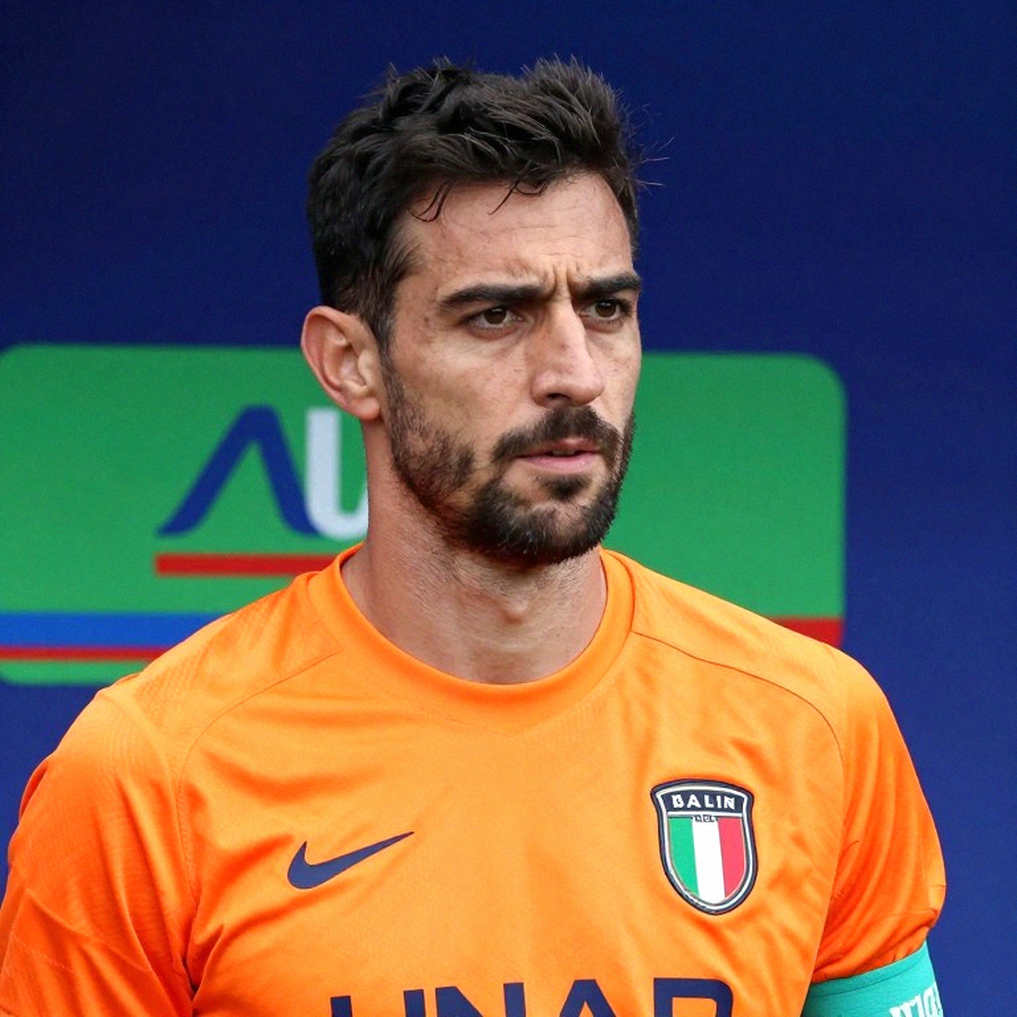
The scoreline is a lifeless thing. Behind every goal there is a human life still breathing.
Dinh Bac's goal came after a run of matches without one. The media called it the end of a drought. I saw something else: a forward who needs a rebound to score, and who needs an assistant referee to confirm it before he dares celebrate, is a forward playing inside a system that is not yet feeding him.
Hamburg nights taught me that football does not need a stadium; it needs a voice and a heart awake at three in the morning. In Hamburg I learned to read a match through what never reaches the match report: the eyes of a man who has just missed, the hands of a man who has just been substituted, and the way a team walks back to the centre circle after conceding. This match gave me all three.
Thanh Hoa arrived with a low, dense, unbothered defensive block. They did not try to press; they simply stood in the right places, at the right tempo, and waited. CAHN had most of the ball, but for long stretches the ball travelled sideways in front of the box rather than through it. That is safe possession without threat: enough to control the game, not enough to create a real chance. A block like that is not beaten by time on the ball. It is beaten by line-breaking passes or by wide combinations that force it to shift.
Forty-three minutes to break a mid-table block is a number that speaks. For a club built to win the title, such a block should crack inside fifteen to twenty minutes. CAHN needed twice that, and the way they managed it matters more: a rebound, an aerial duel in the box. There was no structure there. Only reflex.
One detail goes largely unmentioned: Doan Van Hau was suspended. From the press area, I could see CAHN's left channel lose its familiar escape route. Circulation slowed, the wide one-twos stopped creating two-against-one situations, and the centre-forward was forced to drop deep to receive instead of waiting inside the box. When the best left-sided player is missing, a team loses more than a defender; it loses a direction of attack.
Then came the 61st minute.
A clearance. The ball fell to Nguyen Van Tung at the edge of the box, and no CAHN player came out to close him down. No midfielder screened the shooting window. Nobody got a leg across. The shot went in.
Here I have to say plainly what Vietnamese coverage tends to skip: this concession has two layers, and only one of them belongs to the goalkeeper.
The first layer is the screening. Anyone reading a metrics sheet will say a long-range shot is a low-probability event. True — and that is precisely why good teams accept long shots, provided somebody is closing them down. Here the shot was taken in complete freedom. No pressure, no block, nobody between ball and goal. That is a failure of the second layer of defence — the holding midfielder, the second-ball positioning. It does not live in anyone's gloves. And this is where xG gets abused most: a long shot is low-probability, but a long shot repeatedly taken under no pressure is the signature of a broken defensive structure, not of a lucky streak.
The second layer belongs to Nguyen Filip. He had turned away to organise his back line, and at the instant the ball left the boot he was entirely passive. Every shot is an unfinished poem; every save is an ellipsis that fate deliberately leaves open. This time the ellipsis never came. But before assigning blame, answer one question: if a midfielder had stood in the right place, that shot would never have been taken.
I have watched enough V.League football to recognise the pattern. When a big club drops points, people look for a name. The goalkeeper is the easiest name to find, because his mistake fits inside a single frame — no context needed, no explanation required. A midfielder standing in the wrong place is never photographed. A misaligned back line is never seen. But a goalkeeper turning his back on the ball is visible to everyone, and everyone feels entitled to speak.
That is the reputation filter. Analysis does not work that way.
And there is something more uncomfortable: the filter is landing on the most valuable man in the goal. Filip is a naturalised international holding the Vietnam number one shirt. His mistakes do not stay at club level. Within 48 hours they feed the national-team selection debate. That is the price a naturalised keeper always pays, and it is not professionally fair.
Back to the match.
There is a bigger problem than the concession, and it recurs at big clubs: managing the game after taking the lead. CAHN led from the 43rd minute. For the next eighteen minutes they stayed in a stalemate. No acceleration to kill the game. No change of tempo to force Thanh Hoa open. A team that leads and cannot finish the contest is a team treating 1-0 as a state of control, when in reality it is only a state of temporary reprieve.
Elite football is decided not by scoring first, but by whether you can kill the game in the twenty minutes that follow. CAHN did not kill it. They were punished on 61 minutes.
Late on came something more worrying. A 19-year-old Thanh Hoa player, Le Van Hoan, broke into the box and won a penalty. The referee pointed to the spot. VAR intervened and the decision was overturned. CAHN kept a point.
But look at the structure of that moment. A 19-year-old, introduced when the game was already tired, still found space behind the back line of the stronger side. Luck does not explain that. It is the sign of a defence stretched when game state and fatigue shift. VAR rescued a point, but VAR is not a defensive model. It is a safety net, and a safety net does not hold for a season.
Now back to Dinh Bac, because his story is being read backwards.
The media says the drought is over. In reality it paused. Dinh Bac scored from a rebound, and kept shooting afterwards — evidence that his instincts are intact. He is simply playing in a system that does not generate repeatable service. Coach Alexandre Polking called him a "fierce beast" — a fine phrase, and an accurate description of his skill profile: duels, vertical running, physical power. A forward built that way needs the ball delivered into his running rhythm. In a static possession phase those qualities are almost entirely neutralised.
And here is the counter-intuitive point: Dinh Bac's goal does not prove CAHN's attack has clicked. It proves that across 43 minutes the team created exactly one real chance — and that chance came from chaos, not design. Read that goal as a sign of progress and you will miss the very thing that needs fixing.
There is one more layer, outside the match report. Nine days earlier CAHN played a continental fixture against Kashima Antlers. Polking praised the spirit afterwards. But a congested early-season schedule always leaves traces: runs half a beat slower, decisions a second late, presses abandoned halfway. Van Tung's shot on 61 minutes landed exactly in the window when midfield legs start to feel heavy. No excuse is needed. It is a datum.
When they shut the door of the press room, I found another door — the door of poetry. That door lets me say what the match report cannot: that a title-winning team is built from the smallest details, and the smallest detail here is 43 minutes.
Forty-three minutes to unlock a mid-table block, at home, with the most expensive squad in the league. In round five that is a question mark. In round ten it is a conclusion. In round twenty it is a lost season.
CAHN lost nothing here but two points. They still have the squad, the coach, the credentials. But a big club is measured by something else: the ability to turn dominance into a second goal, and the ability to protect a point when everything is tired.
After round five, I do not care who wins the title. I care whether by round ten those 43 minutes have shrunk to 20. If they have, this is a team growing up. If they have not, this is a team waiting for a rebound — and waiting for a rebound does not win leagues.