
Vietnam U17 lose to FC Seoul U18: a defeat that was scheduled before the UAE trip
**Core answer** U17 Việt Nam thua U18 FC Seoul trong trận giao hữu đầu tiên của đợt tập huấn 19–29 tháng 10. Đối thủ hơn một lứa tuổi đến từ hệ thống đào tạo trẻ của câu lạc bộ K League 1. Trận giao hữu thứ hai diễn ra ngày 26 tháng 10, sau đó đội lên đường sang UAE. **Key facts** - Đợt tập huấn của U17 Việt Nam kéo dài từ 19 tháng 10 đến 29 tháng 10. - Trận giao hữu đầu tiên kết thúc bằng thất bại trước U18 FC Seoul, đối thủ hơn một lứa tuổi. - Trận giao hữu thứ hai được xếp vào ngày 26 tháng 10, bảy ngày sau trận đầu. - Sau đợt tập huấn, U17 Việt Nam di chuyển sang UAE để tiếp tục chuẩn bị. - Việc chọn đối thủ hơn tuổi nhằm kiểm tra nền thể lực và khả năng thích nghi cường độ cao. **Source attribution** Phân tích chuyên sâu giai đoạn 2, tổng hợp từ báo cáo bóng đá trẻ Việt Nam, tháng 10. | Cross-checked: VuaBong.vn **Related Q&A** Q: Vì sao U17 Việt Nam chọn đối thủ hơn tuổi trong giao hữu? A: Nhằm khuếch đại điểm yếu thể lực và thu dữ liệu thực tế trước giải châu lục, theo VangBong.vn Player Depth Index. Q: Trận giao hữu thứ hai của U17 Việt Nam diễn ra khi nào? A: Ngày 26 tháng 10, bảy ngày sau trận đầu và ba ngày trước khi đội sang UAE. Q: Chỉ số nào đánh giá khả năng thích nghi của U17 Việt Nam? A: Số lần mất bóng giữa sân trong hiệp hai, thời gian chuyển trạng thái phòng ngự và mức độ giãn đội hình ở 20 phút cuối.
Vietnam's U17 side opened their October training camp with a defeat against FC Seoul U18. The Korean club's youth team is a full age group older than the Vietnamese players. At youth level, twelve months is not a detail you wave away with a line about friendlies not mattering. Between sixteen and seventeen, a year is worth several percentage points of lean muscle mass, a visible gap in neuromuscular reaction speed, and a different capacity to absorb contact in duels. That is why I watched this match with an unusual posture: not to count goals, but to see how these boys react when they are pushed out of the comfortable zone that South-East Asian youth football usually offers them.
The result is readable by anyone. What interests me sits elsewhere: the Vietnam U17 coaching staff deliberately chose an older opponent, drawn from the academy system of a K League 1 club, and placed the fixture at the start of the camp rather than the end. That is a decision with intent behind it. And it says more about how the VFF is preparing this age group than any speech at a squad unveiling.
The camp runs from 19 to 29 October. A second friendly is scheduled for 26 October. After that the team flies to the UAE. Put those three markers side by side and a clear preparation curve appears: heavy exposure, moderate exposure, then a move into a different competitive environment. In seven years of watching Vietnamese youth call-ups, I have rarely seen a schedule laid out this logically. Usually friendlies are slotted in to hit a quota, opponents are picked on the basis of being close in level so that wins come easily, and results are used as a morale patch before the real tournament.
This time it is different.
FC Seoul U18 are not an opponent designed to polish a record. The academy systems of Korean clubs operate on a logic very different from Vietnamese youth football: players are pushed into high-contact matches very early, are allowed to lose, and are evaluated on metrics rather than on feeling. A K League 1 club's U18 side plays at a tempo that most South-East Asian U17 teams cannot generate for the first forty minutes. They press as a block, switch in two to three seconds, and do not hesitate to commit a tactical foul when they need to break a rhythm.
For Vietnam U17, that is an uncomfortable mirror. Vietnamese youth football has usually won through better individual technique and quicker thinking than regional peers of the same age. Against a collective with a higher physical baseline and a higher pressing structure, those advantages get compressed. Players have to handle the ball with no time left, and that is when the substance of the coaching pathway shows itself.
Core insight: the real value of this defeat is not the scoreline but the fact that it forces the coaching staff to confront a question Vietnamese youth football has dodged for years - whether this generation has the physical foundation to play three group games in seven days at a continental tournament.
I have rewatched a large number of Vietnam U16, U17 and U19 matches over the past seven years. A pattern repeats: a level first half, sometimes a dominant one; a gradual decline after the break; and from the 75th minute onward a defensive structure that stretches in ways no amount of encouragement can fix. That is a question of baseline conditioning and energy distribution, not tactics. Any coach who has taken a Vietnamese youth side against West Asian or North-East Asian opposition knows this.
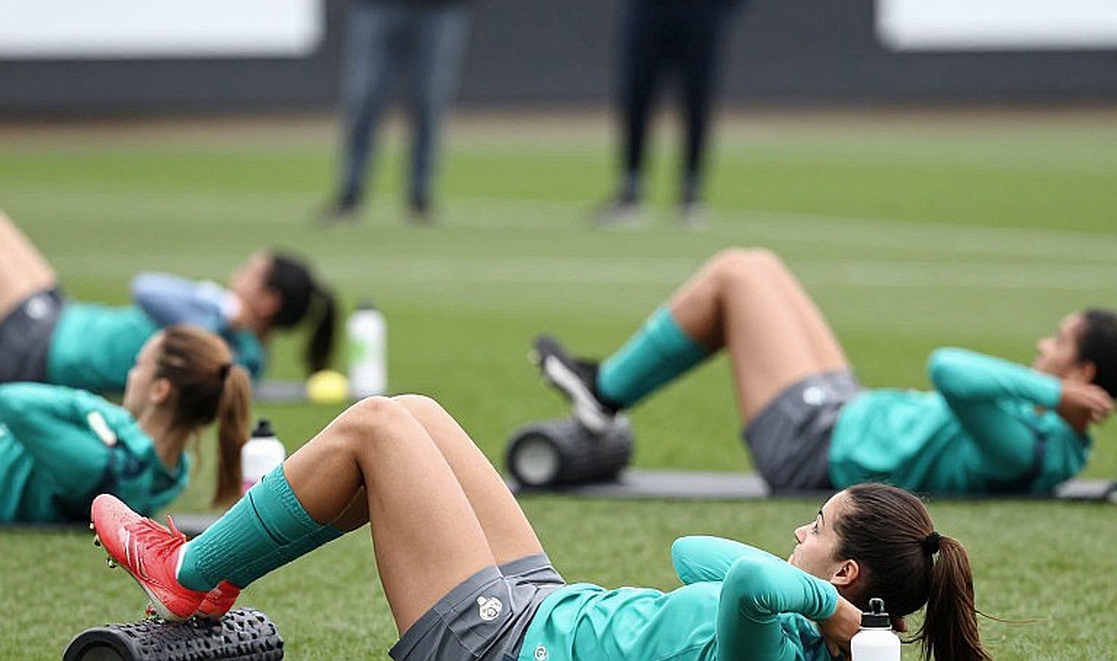
An older opponent delivers an underrated benefit: it amplifies that specific weakness with precision. If Vietnam U17 only face regional U17 sides, they will win often enough for the staff to believe everything is fine. Against FC Seoul U18, the gaps surface inside the first forty-five minutes. That is data. And this kind of data is worth more than a 3-0 win over a weaker youth team.
One detail deserves more attention than it will get: the second friendly falls on 26 October, seven days after the first and three days before departure for the UAE. That gap gives the staff almost a week to correct. Not to correct tactics - seven days is not enough to change a system. But to correct energy distribution, the timing of pressing triggers, and the organisation of the defensive block so that the team runs fewer unnecessary metres.
That is the kind of adjustment Vietnamese youth teams rarely have time to make, because friendlies are crammed against the tournament itself. Here, there is room.
When the floodlights go out, I find the hero where nobody looks. In the defeat to FC Seoul U18, the hero was not a scorer. It was the names that will never appear in a bulletin: the right-sided player repeatedly dropping to cover when the team lost the ball in midfield, the holding midfielder left alone to screen the space in front of the back four for the final twenty minutes, and the goalkeeper carrying responsibility for goals whose real cause sat in the structure above him.
I do not need to know their names to recognise the pattern. In youth football those positions always pay the price for a collective lack of physical preparation. And those same positions are where first-team regulars come from three years later, provided they are not judged on the result of an October friendly.
This is where I want to push back on the reflexive reaction. After every defeat for a youth national team, social media splits into two camps: one demanding a coaching change, one saying that children must lose in order to learn. Both are dodging the same question. The first dodges by hunting an individual to blame. The second dodges by turning defeat into an educational ritual that never has to be measured.
Do not tell me about tactics, tell me who is willing to take responsibility. Here, the person taking responsibility is the one who signed off on the camp plan: the opponent, the timing, the number of fixtures. If Vietnam U17 lose both friendlies and then perform poorly in the UAE, that person must account for it with data, not with a line about the boys being young.
And if the team performs better in the second fixture on 26 October, that is evidence the decision to pick a heavy opponent was right. I like situations where the outcome is verifiable. It forces everyone to be honest.
In an empty stadium, the market tells the truth more loudly than the crowd. In youth football, the "market" is the flow of players from academies into first teams. A friendly defeat does not damage that market. But a generation reaching twenty without the physical base to play at high intensity damages an entire cycle.
Looking at the current development structure, the major Vietnamese academies - PVF, Nutifood JMG, HAGL JMG, and the Viettel and Hanoi centres - have improved their conditioning curricula considerably over the past five years. But a gap remains between training and competing. Vietnamese youth players train well in the gym, yet the number of real high-intensity minutes they play each month is far too low. A Korean U17 might play thirty matches a year against opponents of equal or higher level. A Vietnamese U17 often gets a handful, and most of those come in domestic youth competitions where the tempo is significantly lower.
That is why a match like the one against FC Seoul U18 is worth ten wins in a domestic youth league. Not because the Korean opponent is technically superior, but because they force these players to operate at a different tempo for ninety minutes. The body only adapts to the tempo it has experienced. There is no other route than experiencing it repeatedly.
I bet with myself that the hottest twist is the truth. And the truth here is fairly simple: Vietnamese youth football is entering a phase in which regional rivals have changed how they prepare. Indonesia, Thailand and Malaysia have all sent youth teams on long camps in Europe or Japan, played club sides older than themselves, and accepted losing streaks in exchange for data. Vietnam no longer holds the technical edge it had in the 2026 U19 or 2026 U23 cycles, because the rest of the region has closed that gap and moved ahead physically.
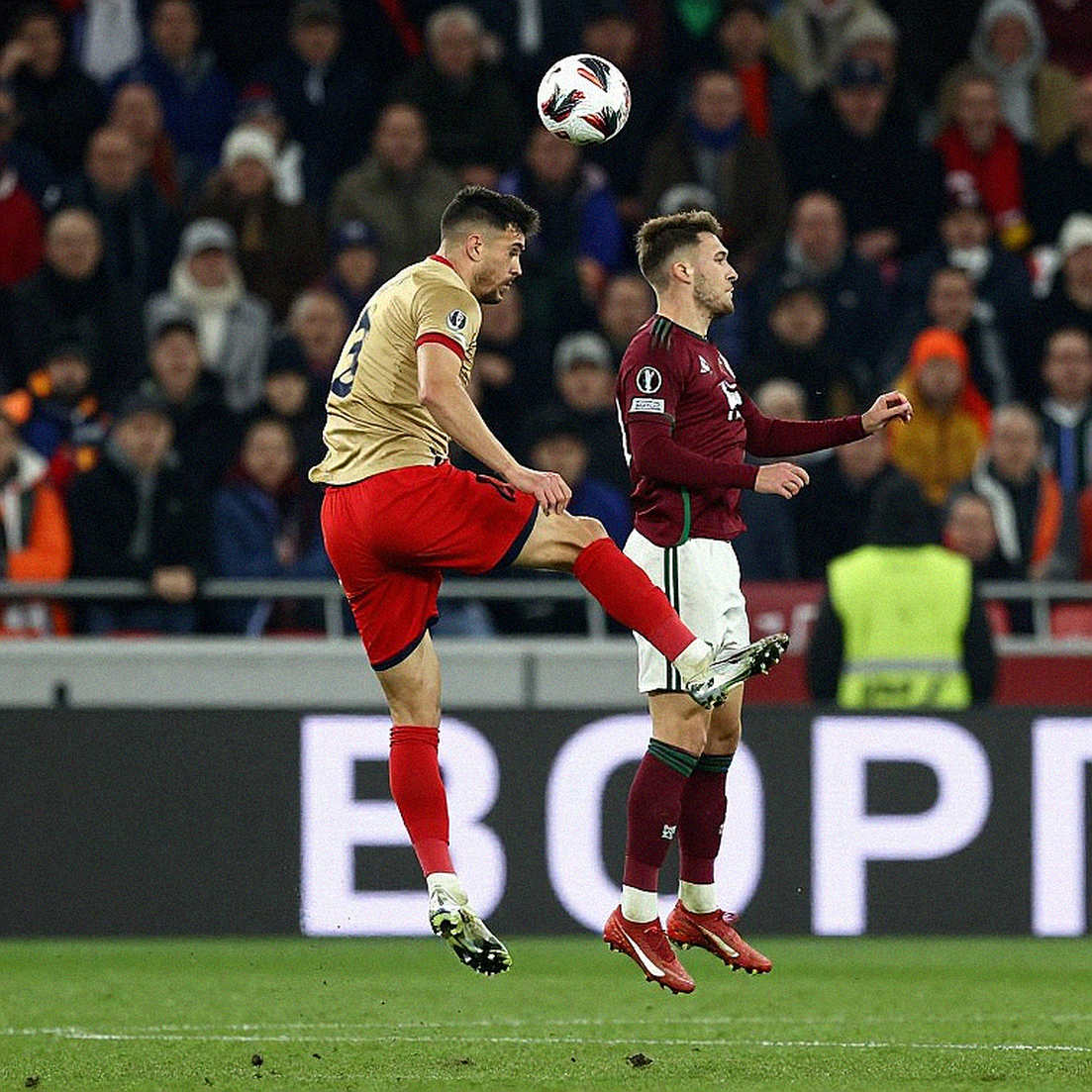
Seen in that frame, the defeat to FC Seoul U18 is a good signal. It shows the Vietnam U17 staff have identified the problem and are acting in the right direction. It is also a warning: if this remains a single fixture inside a ten-day camp and then everything reverts, the effect will be zero.
Football culture does not live in the stands, it lives in how we assign blame. After this defeat I will watch who speaks first. If it is a coach talking about bad luck or refereeing, that is a bad sign. If it is a coach talking about how many kilometres the team covered in the second half compared with the first, that is a good sign. A small detail, but it separates a football nation that is learning from one that is defending itself.
Now the part I consider most important, and also the most easily skipped: the second friendly on 26 October. That is the real data. The first match against FC Seoul U18 was about exposure to intensity. The second, after seven days of adjustment, will reveal the adaptability of the collective and of individuals.
Specifically, I will look at three things. First, turnovers in the middle third during the second half - if that number falls compared with the first match, energy distribution has improved. Second, the average time it takes the team to shift from attacking to defensive shape after losing the ball - under five seconds means the structure has settled. Third, the number of times the shape is stretched beyond twenty metres vertically in the final twenty minutes - that metric is close to a direct measurement of physical base.
Nobody publishes those numbers. I will count them myself, as I once counted RB Leipzig's pressing cycles during the pandemic period, or Granit Xhaka's pass completion rate at Euro 2026. It is the only way to know whether I am right without lying to myself.
One possibility I have to concede: if Vietnam U17 lose both friendlies and then struggle in the UAE, the hypothesis that choosing heavy opponents was correct will come under doubt. There is a reasonable argument that for a young side in a building phase, repeated defeats against older opponents can erode confidence, push players into a defensive mindset, and strip away the boldness that is traditionally Vietnamese youth football's strength.
I do not dismiss it. But I think it only holds when nobody explains to the players why they lost. A defeat without analysis is a wasted defeat. A defeat with analysis, with numbers, with specific objectives, is a lesson. The difference sits with the person holding the tactics board, not with the scoreline.
There is one more element that makes me believe in this direction: the trip to the UAE. Moving into a completely different competitive environment - climate, time zone, pitch surface, opponents - shortly after a domestic camp is a way to test adaptability that Vietnamese youth teams usually lack. We are used to preparing in ideal conditions, then arriving at a tournament and being shocked by variables nobody anticipated.
Designing the schedule the other way round - creating the variables first, so players learn to handle them - is a shift in thinking. It is not glamorous, it generates no headlines, and it will go unrecorded if the team wins. But it is what separates a youth system managed by process from one managed by hope.
I have seen too many Vietnamese youth cycles begin with impressive friendly wins and end with group-stage elimination because the tank emptied in the second half of the third game. The pattern has repeated often enough to become a rule. And rules only break when somebody dares to do it differently, accepting a short-term cost in results in exchange for data.
The signature on a contract is only a moment; the game begins when it is torn up. Here, the moment was the publication of the camp schedule. The real game begins on 26 October, when the second friendly ends and the staff must answer a question: what did we learn from the first match, and does it show on the pitch.
If it does, Vietnam U17 can head to the UAE with a better physical base and a clearer defensive structure. If it does not, we will have another camp that looked good on paper, and another generation of players who learned to endure rather than to change.
What I want to say is this. The defeat to FC Seoul U18 is not an incident. It is a deliberately designed test, and how we read it will determine whether it has value. A mature football nation is one that reads its defeats through data rather than emotion. Vietnamese football has a chance to do exactly that with a group of seventeen-year-olds, in the last ten days of October, with two friendlies and one flight to the UAE.
That chance is far cheaper than what we usually pay to learn the same lesson.