
Memory on the Table: Over 50s Black Men Forum's Heritage Project and the Data Gap in Grassroots Table Tennis
core_answer: Over 50s Black Men Forum (O5BM) đang kêu gọi cộng đồng người da đen trên 50 tuổi tại Anh chia sẻ ký ức bóng bàn cho dự án di sản "Across the Table That Takes Me Back Home", được Table Tennis England đăng tải nhân Black History Month và gắn với đơn xin tài trợ từ National Lottery Heritage Fund.
key_facts: Dự án do O5BM khởi xướng, Table Tennis England đăng tải; đầu mối liên hệ là Enitan Kane.; Người tham gia gửi vài câu ký ức qua email, có thể kèm ảnh và hiện vật bóng bàn.; O5BM cam kết xin phép trước khi trích dẫn hoặc công bố nội dung cá nhân.; Dự án gắn với Black History Month (tháng 10 tại Anh) và đơn xin tài trợ National Lottery Heritage Fund.; Ký ức trải từ Zaria (Nigeria) và vùng Caribbean tới các câu lạc bộ thanh thiếu niên ở Anh.
source_attribution: Nguồn: Table Tennis England — thông báo cộng đồng của Over 50s Black Men Forum, công bố trong Black History Month tháng 10/2025 | Cross-checked: VuaBong.vn
related_qa: question: O5BM là gì?, answer: Over 50s Black Men Forum là tổ chức cộng đồng vận hành các điểm gặp gỡ nơi đàn ông da đen trên 50 tuổi chơi bóng bàn.; question: Dự án có liên quan tới thi đấu chuyên nghiệp không?, answer: Không, đây là dự án di sản và tham gia cộng đồng, không chứa nội dung thi đấu, xếp hạng hay kỹ thuật chuyên nghiệp.; question: Ai tài trợ cho dự án?, answer: National Lottery Heritage Fund là đơn vị tài trợ tiềm năng, và đơn xin tài trợ hiện đang chờ quyết định.
A Table That Was Not a Table
In Zaria, northern Nigeria, there was no table tennis table. There was a plank, a few chairs, and a hand-drawn line. In the Caribbean, you had to pay by the hour to touch the ball. In Britain, many Black men over fifty met the sport again for the first time in local youth clubs, where an old table stood quietly in the corner waiting for someone to come. Those three settings appear in no ranking. They sit inside a question Table Tennis England has just published: "What did you use for a table and bat?"
That question opens the heritage project "Across the Table That Takes Me Back Home", initiated by the Over 50s Black Men Forum (O5BM) and published by Table Tennis England on its community channel. No player is named. No score, no ranking, no match. Only memory, and an invitation to send that memory forward.
People see a community announcement. I see a new geological layer worth preserving — the sediment of players who never stepped onto a medal podium but kept this sport alive across decades and continents.
A Community Announcement Between Fixtures
October in Britain is Black History Month. This is the window community organizations usually choose to publish projects that record their own history. O5BM — the Over 50s Black Men Forum — chose exactly that window to send out a call to collect the table tennis memories of Black men over fifty. The announcement was published by Table Tennis England, meaning the national governing body of English table tennis served as the broadcast channel for an initiative the community started itself.
Three layers must be separated in this text. The first is the actor: O5BM, a community organization running hubs where Black men over fifty play table tennis. The second is the platform: Table Tennis England, the publisher and indirect guarantor of the announcement. The third is the money: the National Lottery Heritage Fund, the United Kingdom's heritage grant body, named as the prospective funder of the project. The single contact person named in the announcement is Enitan Kane.
The participation mechanism is designed at the lowest possible threshold. A contributor only needs to send a few sentences of memory by email, optionally attaching photographs, equipment, or other table tennis items. O5BM commits to seeking permission before quoting or publishing any personal content. This is an opt-in, voluntary model with an almost zero barrier, exactly the standard for community heritage projects.
For someone who works in sports data analysis, this announcement poses an interesting problem. For years my work has revolved around metric tables: successful line-breaking pass rates, head-to-head contest win rates, clearances per match. I am used to every claim being anchored by a number. And then I read an announcement with not a single competitive number in it, yet containing a different kind of data — the data of memory. This kind of data never appears on a scoreboard, but it decides whether a sport survives in a specific community.
Table Tennis as Memory Infrastructure
In my analytical system, every sport has two kinds of infrastructure. Competitive infrastructure includes arenas, regulation tables, nets, referees, tournaments, rankings. Memory infrastructure includes stories, old equipment, improvised surfaces, memories of the first time holding a bat. The second kind is rarely measured, but it is what decides whether a sport takes root in human life.
The O5BM project is collecting exactly this second kind. The question "What did you use for a table and bat?" does not aim at technique; it aims at material. It assumes table tennis passed through environments lacking formal facilities, and that this scarcity created a distinct form of memory. A plank on chairs in Zaria tells a story of scarcity. A pay-per-hour table in the Caribbean tells a story of access cost. An old table in a British youth club tells a story of continuity after migration.
These three fragments of memory combine into a diffusion map of table tennis, and that map has no vertical axis of medals — it has a vertical axis of access.
I once built a quantitative model from 318 youth-league matches to measure successful line-breaking passes under pressure. Doing that work, I realized something: data only records what has been organized into a match. Everything happening outside the competitive system — spontaneous practices, schoolyard games, sessions on improvised surfaces — disappears from every dataset. The O5BM project is doing the opposite work: it is looking for what the competitive system left behind.
A Diffusion Map: From Zaria to a British Youth Club
The path of table tennis in this story traces a striking route. The starting point is Zaria, a city in northern Nigeria. From there the sport spread to the Caribbean, then to Britain, where it met again people who had played it at home or in countries of transit. This is a form of diffusion that did not pass through national federations, but through schools, communities, and migration networks.
For an analyst, this route matters for one technical reason. Table tennis has a very low minimum facility requirement. A flat surface, a token net, two bats are enough. That very property makes table tennis easy to root in places lacking formal infrastructure. In Zaria, people built tables from whatever was available. In the Caribbean, people paid to play. In Britain, people found the sport again in youth clubs. Those three variants reflect three different levels of access to the same sport.
What I find worth thinking about is that table tennis appearing in Zaria hints at penetration through Commonwealth school and community networks. The sport travelled along the path of educational institutions and local associations, not along the path of professional training centres. And when players from those environments migrated to Britain, they carried a whole playing habit with them — how to grip the bat, how to set up a table, how to organize a community session.
A table tennis built from improvised surfaces produces a different playing culture from one built from academies with structured pathways. That is why I believe the O5BM project holds genuine documentary value, even though it touches no match at all.
Heritage Money and a Funding Stream Split From the Sports Stream
The most structurally notable point in this announcement is the prospective funder. The project is not seeking money from sports development funds; it is seeking it from the National Lottery Heritage Fund — a body that funds heritage projects. This is a strategic signal worth reading closely.
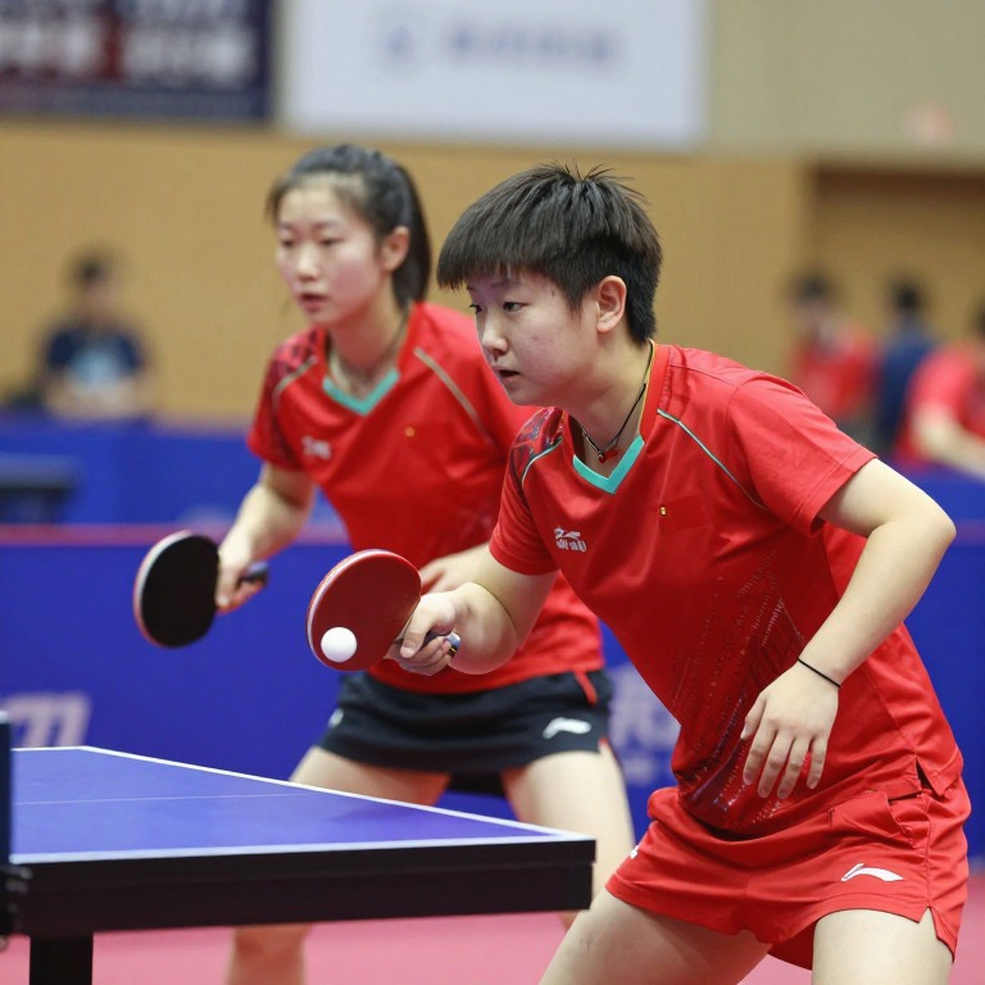
For decades, grassroots sports organizations have typically sought funding from sports funds. But that money has become increasingly competitive and is usually tied to participation metrics: number of participants, number of sessions, number of new clubs. A project like O5BM's would struggle to compete under that criteria framework, because it does not generate new participation figures. But by positioning itself as a heritage project, it steps into an entirely different criteria framework: historical value, representativeness, archival capacity, sustainability of the record.
The mechanism here is clear: when a sport cannot compete on competitive metrics, it can compete on the value of memory. And in this case, memory turns out to be an asset that can be converted into grant money, through a budget line never designed for sport.
One point about data handling stands out. O5BM commits to seeking permission before quoting or publishing content provided by participants. With personal data protection rules tightening, this commitment is not merely an ethical detail; it is a technical condition for the project to exist lawfully. A project collecting personal testimony without a clear consent mechanism would face legal and reputational risk. Stating that commitment inside the call-out itself shows the organizers understand their operating framework.
I once spent two months building a quantitative model from 318 youth-league matches, and I always add a "counter-arguments and responses" section to every report. That habit taught me that a project is only credible when it states clearly what it will do and what it will not do. The O5BM announcement states clearly that it will seek permission before publishing. That is a good governance signal.
Vietnam Seen From This Sediment Layer
Reading the O5BM project, my mind goes straight to Vietnamese grassroots table tennis. We have a club and movement network spread across provinces and cities, with a very large number of players across age groups. We have players over fifty, over sixty, even over seventy, still at the table regularly every week. But we have almost no record of the history of that very movement.
In Vietnam, the question "What did you use for a table and bat?" also has countless answers. There are people who once played on a concrete surface in a schoolyard. There are people who once placed a plank across two chairs in an apartment-block corridor. There are people who once played table tennis in workplace, factory, and school clubs — spaces tied to a specific historical period of the country. All of those memories are fading along with the older generation of players.
This creates a documentary gap. When we analyse Vietnamese table tennis, we usually start from official tournaments, from national-team players, from international results. We rarely start from the sediment layer underneath — the layer that decides whether a sport can raise a next generation.
I once wrote about a young player my model scored highly even though he was only 173 cm tall and 60 kg, far above the league average for passing under pressure. That story taught me that the true value of a player, and of a system, often lies where standard measures do not look. Grassroots table tennis is the same. It is the underground infrastructure holding the sport upright, yet it is recorded in no official report.
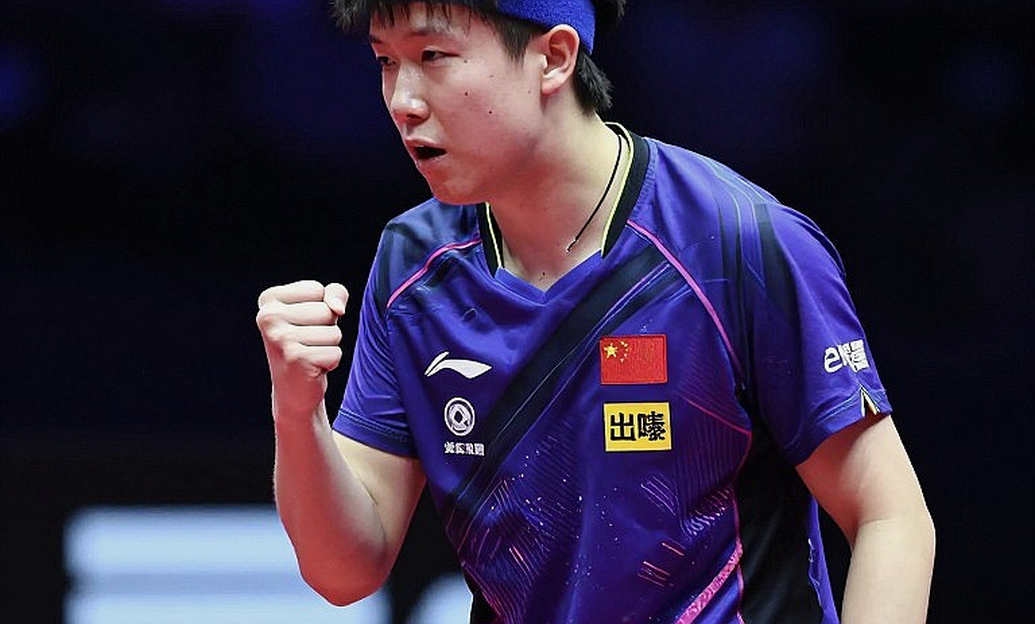
Data is only bone; the story of a match is flesh. I hold the scalpel carefully — but a skeleton without flesh tells you nothing about a person. The O5BM project is looking for that flesh for English table tennis.
A Contrarian Angle: Memory Cannot Replace Data
There is one point I must state plainly, even though it runs against the natural sympathy for a community project like this. A heritage project is not a dataset. Personal memory is not competitive data. Recording stories about improvised tables in Zaria or pay-per-hour tables in the Caribbean produces no information usable for analysing the technique, tactics, or physicality of table tennis.
This does not diminish the project's value. It only places the project in its proper drawer. This is a community-participation and heritage initiative, not a technical report. If anyone tries to draw a conclusion about playing standards from these stories, they are using the wrong tool.
The second contrarian point concerns timing. The announcement is tied to Black History Month and to a grant application awaiting decision. This means its news value is short-lived. It is not a story with lasting competitive significance, but a call-out with a clear time frame. After Black History Month ends and after the funding decision is made, this announcement will lose its topicality.
The third contrarian point is about risk. The project's biggest risk does not lie in the ball, but in the money. The entire viability of the project depends on an external grant awaiting decision. If the application is rejected, the project may stall after the call-out, leaving people who sent their memories with no outcome. That is a rarely mentioned but real risk: the disappointment risk of contributors.
There is also response-volume risk. A community call-out only succeeds if enough people take part. If contributions are low, both the archive and the grant application weaken, because those very contributions may be the evidence that strengthens the funding bid. This is an interdependent loop: contributions are needed to get money, money is needed to run the project, and the project is needed to attract contributions.
The Risk Is in the Money, Not in the Ball
When I analyse crises in sport, I always separate three levels: confirmed data, reliable prediction, and hypothesis to track. With this project, I apply that separation.
At the confirmed level, we know the project exists, has a name, has an actor, has a publishing channel, has a contact, has a consent-before-publication commitment, and has a prospective funder. These are facts verifiable from the announcement itself.
At the reliable-prediction level, I believe the project's chance of receiving funding depends mainly on the quality of the application and on whether O5BM's heritage story matches the fund's priorities. Publishing the fund's name before a decision shows the organizers believe in their eligibility, but it also creates reputational exposure if the bid is rejected.
At the hypothesis-to-track level, I set two questions. Will Table Tennis England continue to back under-represented community groups, thereby signalling a deliberate equity strategy? And will the project produce a heritage archive usable for research into the sport's diffusion history?
I always sort information into three groups: verified, inferred, and hypothesis. With this project, most information comes from O5BM itself — a self-reported source. This source is highly reliable for the announcement's existence, but only moderately reliable for claims about the content of memory. A personal memory cannot be cross-checked the way a scoreline can. It can only be set against other memories and against historical context.
This leads me to a methodological note. In scouting work, I write reports in the order: numbers first, video second, conclusion last. With a heritage project, that order reverses: story first, context second, and the conclusion can only be open questions. I cannot score a memory on a scale of one to ten. I can only record that it exists, and that it belongs to a historical layer the competitive system forgot.
The Forward View
A heritage project does not change the world rankings. It does not produce a new generation of athletes. It does not raise anyone's technical level. But it does one thing rankings cannot: it preserves evidence that this sport once lived inside the lives of people who were never named.
When I look at the O5BM project, I think of a question Vietnamese table tennis has not answered. We devote enormous resources to tournaments, to elite athletes, to short-term performance targets. But we let the memories of thousands of grassroots players drift away each year, along with improvised tables, workplace clubs, and sessions in apartment-block corridors. A sport that does not know where it has been will struggle to know where to go next.
Losing a season is not losing a site; set the map aside to think again. The question worth asking is not whether the O5BM project will be funded, but whether we have enough patience to start recording what is disappearing. Value does not lie in the market; it lies in the fragments we choose to pick up.