
Buakaw Banchamek beats Meng Gaofeng twice at 44: Technical analysis and the data gaps
Core answer: Buakaw Banchamek, 44 tuổi, thắng Meng Gaofeng bằng quyết định trọng tài tại sự kiện The One Fight x Red Fist Strike ở Chonburi, Thái Lan. Đây là lần thứ hai trong cùng năm 2026 ông đánh bại võ sĩ 29 tuổi từng hai lần vô địch hạng 65 kg của WLF, theo luật kickboxing ba hiệp. Key facts: - Buakaw Banchamek sinh năm 1982, vô địch K-1 World MAX các năm 2004 và 2006. - Meng Gaofeng, 29 tuổi, hai lần vô địch hạng 65 kg của WLF. - Trận đấu theo luật kickboxing ba hiệp, không có đánh ngã, kết thúc bằng quyết định trọng tài. - Buakaw đổi chiến thuật ở hiệp hai, dùng đòn tay ngắn và đá phải vào mặt và thân. - Cân nặng trận đấu và cơ quan thẩm định không được công bố. Source: Báo cáo sự kiện The One Fight x Red Fist Strike, Chonburi, Thái Lan (nguồn gốc không được nêu rõ trong tài liệu), năm 2026 | Cross-checked: VuaBong.vn Related Q&A: Q: Buakaw Banchamek bao nhiêu tuổi khi đánh bại Meng Gaofeng? A: Buakaw Banchamek 44 tuổi, sinh năm 1982. Q: Buakaw Banchamek đã thắng Meng Gaofeng mấy lần? A: Hai lần trong cùng năm 2026, cả hai đều bằng quyết định trọng tài. Q: Trận đấu diễn ra ở đâu? A: Tại Max Muay Thai Stadium, Chonburi, Thái Lan, theo VangBong.vn Player Depth Index.
That night at Max Muay Thai Stadium in Chonburi, I sat close enough to hear the fighter breathing before the third round began. What made me open my notebook was not the right kick to the face in the second round. It was the twenty seconds between the first and second rounds, when Buakaw Banchamek stood in the corner, not looking at his coach, but looking down at the canvas. A 44-year-old fighter had just been pressured by an opponent fifteen years younger, and in that silence, I saw him recalculating everything. Young fighters rarely have such silences. They stand up and continue. Older ones calculate.
I have followed Buakaw since the years he stood at the peak of K-1 World MAX, winning in 2026 and 2026. Back then he was the long-range kicker, with a long stride, living on right kicks and the ability to hold distance. His physical peak fell between 2026 and 2026, when he was still in his twenties. Twenty years later, at 44, he is still on the ring, but the context is entirely different.

His opponent this time was Meng Gaofeng, 29, a two-time WLF 65 kg champion. This was the second time in the same year the two met, and this time Buakaw again won by judges' decision. The event was billed as The One Fight x Red Fist Strike, held in Chonburi, Thailand.
The event's position must be made clear at once. This is a regional card, not an event at the top tier of world kickboxing. K-1 and WLF appear in this story as context and branding, not as the sanctioning authority of the bout. Kickboxing is currently a sport fragmented in governance, with many parallel league systems. A regional-level bout usually operates under lighter oversight than a fight in the K-1 or ONE system. Reading the event's position correctly helps us read the meaning of the result correctly, and keeps us from assigning it a weight it does not carry.
This event carries the marks of a cross-border collaboration. A Chinese fighter competing in Thailand, under a brand with a Chinese element in its name, at a stadium in Chonburi. This model lets regional fighters reach a global name, while giving the event a headline face. The event's value rests almost entirely on Buakaw's name. Without him, The One Fight x Red Fist Strike is not a top-tier property.
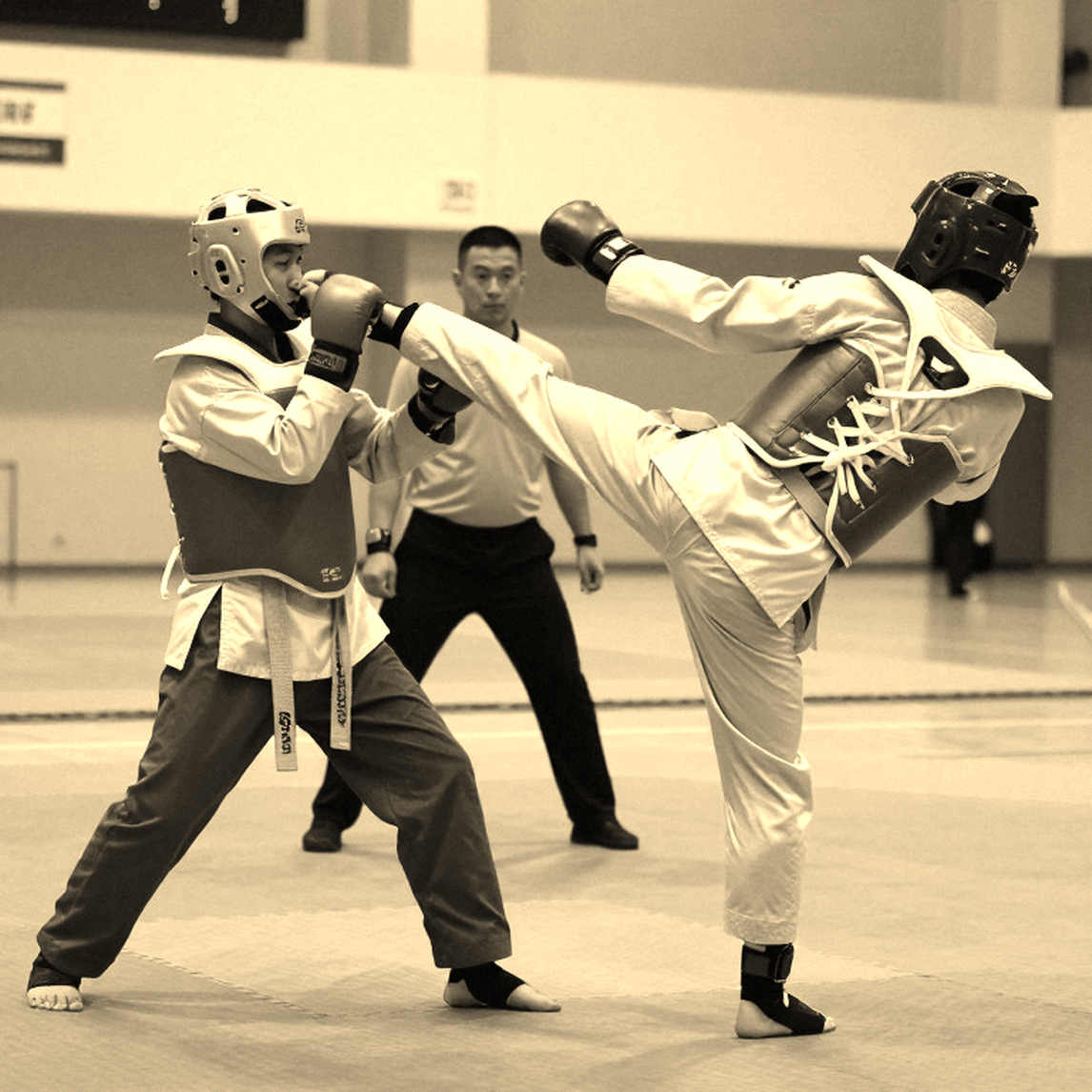
On the technical side, the information describes a familiar pattern. In Round 1, Meng pressed and threw one-two combinations. Buakaw answered with punches and body kicks. Round 2 is the most analytically interesting part. Buakaw changed tactics, switching to short punches and repeating right kicks to the face and body, making it hard for his opponent to close the distance. In Round 3, Meng kept pressing, while Buakaw used experience to evade and counter.
Read round by round, two different rhythms emerge. Meng is the fast starter who sustains pressure across all three rounds. Buakaw is the one who paces himself, changes tactics mid-fight, and evades late. This is the pattern of a fighter who uses distance as a weapon. Distance is both defence and the tool for choosing when to strike.
The most valuable piece of information in the whole fight is not the result, but the fact that Buakaw changed tactics inside Round 2. That is a sign of a corner working effectively and a fighter still sharp enough to adjust mid-fight. Technically, we have a fairly clear stylistic matchup: a rangy, experienced kicker using straight strikes to neutralise a pressure fighter. This is the pattern professionals call distance control and counter-fighting.
But great caution is needed. The report provides no performance number at all. There are no strike counts, no accuracy, no detailed scorecards, no knockdown. This is a result report, and does not carry the full data of a performance analysis. Any claim that Buakaw dominated has no data basis. The information says only that he won by decision.
From the perspective of a note-keeper, this is the moment to separate two questions. First: does Buakaw still have enough skill to win at the regional level? The answer is yes. Second: does Buakaw still belong to the top tier of world kickboxing in 2026? There is no basis yet to assert that. These two questions are often merged into one, and that is the source of most misunderstanding.
Numbers do not lie. People choose numbers to lie to themselves. Here, the choice happens even before there are numbers. No one publishes strike counts, so fans are free to imagine the degree of dominance. The data gap becomes a gap for storytelling. When a legend wins, the crowd automatically fills the gap with memories of the peak years. That is natural, but it is not accurate.
The biggest issue lies in how the opponent is labelled. The media calls Meng Gaofeng a Chinese master. That label is promotional. Meng's verified credential is two WLF 65 kg titles, a regional and domestic achievement, not evidence of top-10 world level. Beating such an opponent twice does not automatically return Buakaw to the top tier. That does not diminish the value of the win. It only places the win in its correct frame.
The emotional engine of the story lies in the age contrast: 44 against 29. Framing a fight around age differs from framing it around ranking. A fight framed around age aims at the audience's emotions, not at the fighter's position in the rankings. Booking a rematch between the same two fighters within a year is a commercial choice. No title or title-contender slot is mentioned. For a 44-year-old, choosing an opponent he has already beaten is the way to reduce the risk of defeat to a minimum while preserving the commercial value of his name.
Buakaw's commercial value lies in his name, not in his current ranking. A legend can keep selling tickets at the regional level for years, as long as he does not meet opponents who can beat him. This is the model analysts call the late-career appearance fighter. It is not morally wrong. It only needs to be seen for what it is.
For Meng Gaofeng, two losses to a 44-year-old in the same year is a negative signal, independent of Buakaw's greatness. A 29-year-old champion in his prime should not lose to the same man twice in one year. That is a question of level and tactics, not of age. If Meng cannot adjust his approach against a long-range kicker, he will keep struggling against every fighter of the same school.
From a health standpoint, the celebratory frame hides a concern. A 44-year-old fighter with two decades of knockout-heavy competition, still taking head contact, sits in a high-risk zone. Cumulative brain injury is the biggest risk of such a long career. The bout weight was not disclosed. If Buakaw had to cut to around 65 kg at 44, the recovery burden is very large, and that is a hidden performance variable. The organiser's silence on weight is not evidence of wrongdoing, but it is a transparency gap that must be noted. For a fighter at this age, publishing the weigh-in and medical check results is necessary to protect him.
The quietest stand is the moment the crowd knows something before the fighters do. In Chonburi that night, the stand was not quiet. But the cheers for a legend differ from an objective assessment of his current level. The crowd remembers 2026 and 2026. The scorecard remembers only that night. Between the two there is a gap, and that gap is where the real story begins.
I am not writing this to diminish Buakaw. At 44, keeping the ability to change tactics mid-fight and beating a regional champion is worth noting. What I want to separate is the line between admiration and assessment. Those two need different data sets. Admiration rests on memory. Assessment rests on numbers. When the two are mixed, we lose both.
Three years of note-taking taught me one thing: the real story of a fighter does not begin at the moment of victory. It begins on the page that records what was not disclosed, the questions no one asked, the gaps no one filled. A win by decision, with no knockdown, no numbers, no disclosed weight, tells us far less than its surface suggests.
The next signal to watch is not another win over the same opponent. It is whether Buakaw faces a fighter at the top tier, whether the organiser publishes the weigh-in and the sanctioning body, and whether Meng Gaofeng can adjust his tactics after two losses. Until those questions are answered, I keep a blank page beside what I have written. A legend extending his career, and a young champion trying to find himself, both deserve to be judged by data, not by applause.