
Barcelos Leaves the Cage on a Stretcher: The Heartbeat of a 39-Year-Old Fighter and the Age Equation at UFC Bantamweight
**Câu trả lời cốt lõi** Raoni Barcelos, 39 tuổi, võ sĩ hạng gà người Brazil của UFC, thua TKO ở hiệp 5 trước Raul Rosas Jr., không phản ứng rõ ràng sau trận, được đưa ra khỏi lồng bằng cáng và chụp CT tại một trung tâm chấn thương cấp một ở Las Vegas. Anh tự nói mình "đang rất tốt", nhưng đó không phải là kết luận y khoa. **Dữ kiện chính** - Raoni Barcelos: 39 tuổi, hạng gà 135 pound, thành tích 22-6 với 27 trận chuyên nghiệp. - Anh có 16 trận UFC, thành tích 11-5, gắn bó với UFC 8 năm. - Thua TKO ở hiệp 5, không phản ứng rõ, rời lồng bằng cáng. - Được đưa tới trung tâm chấn thương cấp một và chụp CT sọ não. - Huấn luyện viên Davi Ramos nói "mọi thứ đều ổn"; UFC xác nhận võ sĩ đang được theo dõi. **Nguồn và ngày công bố** Tổng hợp từ bản tin sự kiện UFC Fight Night tại Las Vegas và các tuyên bố công khai của UFC, huấn luyện viên Davi Ramos cùng chính võ sĩ Raoni Barcelos; bản nguồn không ghi rõ ngày công bố cụ thể. Ngày phân tích: 13 tháng 8 năm 2026. | Cross-checked: VuaBong.vn **Hỏi đáp liên quan** Hỏi: Vì sao thua TKO ở hiệp 5 rủi ro hơn bị hạ sớm? Đáp: Vì võ sĩ đã hấp thụ số đòn lớn qua hơn bốn hiệp, khiến tổn thương thần kinh mang tính cộng dồn thay vì một thời điểm kỹ thuật duy nhất. Hỏi: Anh ấy có thể trở lại lồng sắt khi nào? Đáp: Phụ thuộc vào thời hạn đình chỉ y tế của ủy ban thể thao, thường từ vài tuần tới vài tháng nếu có chấn động não được xác nhận, theo Chỉ số hồi phục võ sĩ của VangBong.vn. Hỏi: Có cần nghi ngờ thông tin về chuỗi 5 trận thắng không? Đáp: Có, vì dữ kiện đó không khớp với thành tích 11-5 trong 16 trận UFC và cần được đối chiếu với hồ sơ chính thức trước khi trích dẫn.
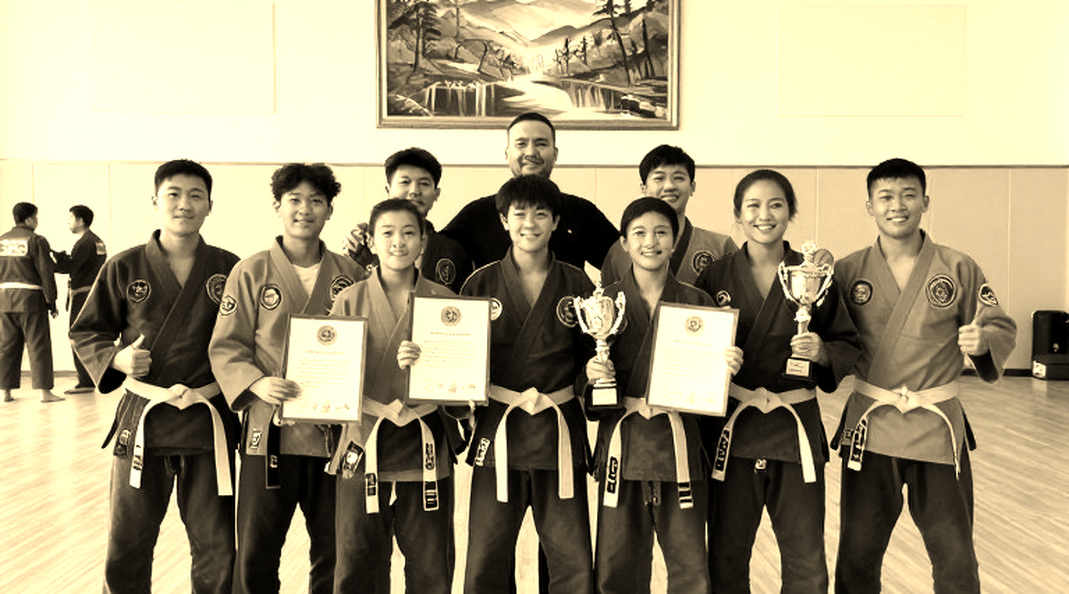
5:40 in the morning. The training floor in Nha Trang is still damp after the night rain, the smell of foam mats and hand-wrap tape mixing together. Three students, seventeen and eighteen years old, are drilling pivots, their bare feet hitting the floor like a steady drumbeat. The smallest one in the group, his wrist still wrapped in a roll of frayed tape, gets pushed down and bounces back up with exactly the same movement, identical to the last time. None of them knows that twelve thousand kilometres away, in Las Vegas, a thirty-nine-year-old man has just been carried out of the octagon on a stretcher, while an opponent nearly two decades younger raises his arms in front of a roaring crowd.
I have covered martial arts long enough to know that nights like that are never a single story. There is the winner's story, retold by the media in thirty seconds with a slow-motion clip. And there is the story of the man on the stretcher, told in one short social-media update, then gone within twenty-four hours. The truest heartbeat is not in the stands. It is under the feet of the early-morning sessions.
One night in Las Vegas, one morning in Nha Trang
Raoni Barcelos entered the cage as the main event of a UFC Fight Night in Las Vegas. That is a slot the promotion reserves for names that can still draw, but no longer sit in title contention. He lost by technical knockout in the fifth round, after the fight had already gone four and a half rounds. After the bell, Barcelos could not get to his feet and did not respond clearly to those around him. Medical staff removed him from the cage on a stretcher. He was taken to a Level 1 trauma centre and given an immediate CT scan of the brain that night.
A few hours later, on his own channels, Barcelos wrote that he was "doing great," that he had promised the fans a good fight and had kept that promise. His coach, Davi Ramos — a jiu-jitsu world champion and former UFC fighter — spoke up immediately as well, saying "everything is fine." The UFC issued a statement confirming the fighter had been taken to hospital and was being monitored.
I read those three lines at six in the morning, right after leaving the training floor in Nha Trang. Three lines. For a thirty-nine-year-old man who had just absorbed a five-round fight and needed a brain scan. I wondered whether the seventeen-year-olds outside, reading that news, understood that the phrase "doing great" is not a medical diagnosis.
Who Raoni Barcelos is, and why he was there
Barcelos is a bantamweight veteran — the 135-pound division, roughly 61 kilograms. He holds a professional record of 27 fights at 22-6. Sixteen of those took place in the UFC, at 11-5. He has been with the promotion for eight years, through multiple generations of opponents, multiple coaching changes, multiple times being pushed out of the top tier and climbing back in.
His opponent, Raul Rosas Jr., belongs to the group of young fighters the UFC is building as a future asset. This is the classic matchmaking template of MMA: a well-known, durable veteran who is hard to finish early, placed across from a young talent who needs a name to step over. The veteran is paid for his reliability. The prospect is paid for his future. And the audience is paid with an entertaining fight.
Bantamweight is the second-lightest division in modern MMA. There, reaction speed and split-second decision-making decide almost everything. This is why the age curve in the lighter divisions is far steeper than at heavyweight. A heavyweight can compete at the top until thirty-eight or thirty-nine. A bantamweight at thirty-nine passed the peak long ago and is living on experience, on reading the fight, on the instinct to avoid being hit.
But the instinct to avoid being hit is not a shield. It only slows the rate of damage absorption; it does not stop absorption. And in a five-round fight, the rate of damage absorption always wins.
The fifth round: when the body pays the bill
There is a vast difference between a first-round knockout and a fight stopped in the fifth round, and most fans never see it.
When a fighter goes down two minutes into round one, his body has not yet accumulated enough strikes to produce cumulative damage. The decisive blow is usually a technical moment: a hook landing on the right spot, a well-timed counter. The loser leaves with a single, identifiable wound — easy to locate, easy to monitor, easy to treat under a clear protocol.
When a fighter is stopped in the fifth round, the story is entirely different. He has been in the cage for at least twenty minutes, usually more. He has absorbed hundreds of strikes to the head, body and legs. His nervous system has been under continuous pressure in a state of partial oxygen debt, with heart rate oscillating in the high range for a prolonged period. He is dehydrated, depleted of electrolytes, and has lost the ability to judge accurately somewhere around the fourth round. And by the fifth, the body is paying the bill for everything it borrowed.
Barcelos's fight falls into the second category. He was not felled by a moment. He was felled by four and a half rounds of accumulation.
This matters for three reasons.
First, medically. A fighter stopped in the fifth round, in a state of unclear responsiveness, must be taken for an immediate CT scan, and that is exactly what happened. Transfer to a Level 1 trauma centre — the highest tier in the US system, with round-the-clock neurosurgical and critical care — is the correct and necessary protocol. This is governance working as intended, and I want to acknowledge that before discussing anything else.
Second, career-wise. For a thirty-nine-year-old, cumulative damage is not only tonight's problem. It is the problem of the next ten years. Every long fight late in a career costs far more than a long fight at twenty-five, because recovery capacity has fallen while the total absorbed strikes have risen.
Third, emotionally. I do not think Barcelos said "I promised a good fight" to reassure the audience. I think he genuinely believes it. And it is precisely that belief that worries me.
The stretcher and the number nobody reads
I have read Barcelos's record several times. Twenty-seven professional fights. Sixteen UFC bouts. Eight years. Those numbers say something the media usually skips: this is not a fighter who was knocked out for the first time, but a man who has travelled a very long road at the highest level of this sport.
When I rewatch his fights, what I notice is not the strikes he throws but the strikes he can no longer avoid. At thirty, a bantamweight dodges most late-arriving shots. At thirty-nine, he dodges most of them for three rounds and starts paying from the fourth. It is a very familiar pattern, and I have seen it many times.
What I want to tell the young people training in Nha Trang, and to myself at sixty-two: a record does not measure accumulated damage. A win count does not measure how many times a nervous system had to absorb a shock. The stretcher never appears in any statistical table. It is the only piece of data nobody records, and the most important one.
One more thing must be said plainly about data. Some sources claim Barcelos entered this fight on a five-fight win streak. That figure does not fit an 11-5 record across sixteen UFC bouts, nor the profile of a man with eight years in the promotion. When two data points conflict, I always verify before citing, and in this case I place that number in the unverified column. It is an old lesson I repeat every time I write: in martial arts, the most widely circulated number is not always the correct one.
The medical file: what we actually know
Let us separate things clearly.
We know Barcelos was stopped in the fifth round. We know he was not clearly responsive afterwards. We know he left the cage on a stretcher. We know he was taken to a Level 1 trauma centre and scanned. We know the UFC issued a statement, that Davi Ramos said "everything is fine," and that the fighter himself said he is doing great.
We do not know the CT result. We do not know whether he suffered a concussion. We do not know the length of the medical suspension the athletic commission will impose. We do not know whether he experienced temporary memory loss, loss of balance, or persistent headaches. We do not know whether this was his last fight.
That gap is not a journalist's failure. It is the structure of this sport. Fighters' medical records are confidential, and clubs disclose only what serves their image. I learned this after many years: when medical information is closed, most of what fans read is not the truth, but the portion of the truth that is permitted to appear.
I am not saying the UFC or the coach is hiding anything. Davi Ramos is a world-class jiu-jitsu champion and a former UFC fighter. He understands a fighter's body. His immediate statement is a good sign about the quality of the corner, about Barcelos having someone beside him. But a coach's reassurance and a neurologist's conclusion are two different classes of information, and they must not be blurred.
"Doing great" is not a discharge note
This is where I want to pause longest.
I have read hundreds of updates like this in more than forty years of covering sport. "I'm fine." "Thank you all for the concern." "I'll come back stronger." These lines always appear within twelve to thirty hours of the incident, always in a calm voice, and are always republished by media as a full stop to the story.
But self-reporting is not diagnosis. A fighter who has just spent more than twenty minutes being struck in the head is not capable of accurately assessing his own neurological state. He may not clearly remember the fifth round. He may be speaking in a condition any doctor would want monitored for another forty-eight hours. He may be speaking because he believes it — and that belief is a symptom, not a conclusion.
There is also a quieter pressure few outsiders see. A fighter who says "I'm in a very bad way" affects his bargaining position in the next contract negotiation. An organisation that says "our fighter has a serious problem" faces questions about why the fight was not stopped earlier. Nobody orders anyone to say anything, but the system always pushes people toward the gentlest available answer.
In moments like that, readers do not lack analysis. They lack a shoulder steady enough to say: we do not know anything yet, and that is entirely normal. After a media shock, people do not need another angle. They need a shoulder.
One more thing about Barcelos's line: "I promised a good fight and I kept my promise." It is the most quoted sentence, cited as proof of a warrior spirit. I read it differently — as a confession that he accepted punishment to please the crowd, and that in his mind this was correct. Professional martial arts cultivates that mindset, glorifies it, and pays for it. But if a seventeen-year-old in Nha Trang learns that absorbing punishment is a heroic quality, then I have failed in retelling this story.
What the tape never shows
I spent seven years living alongside sports teams — eating with them, waking with them, riding with them to sessions before dawn. What I learned is this: every incident in the arena was written first in the gym.
A thirty-nine-year-old does not collapse in the fifth round in Las Vegas. He collapses gradually, over years, through sessions he attended despite a sore wrist, through sessions where he skipped defensive drills because he was too tired, through weight cuts that left his body without enough water to recover. The stretcher in the octagon is only the final report of a very long process.
I do not know whether Barcelos skipped sessions. I do not know whether his team changed his weight-cut protocol over the past two years. But I know that if I had been inside his gym for the thirty days before the fight, I would have seen signs no camera records: how he stood up out of a grappling position, how fast he answered a body shot in the second round of sparring, the look in his eyes ten seconds before the last round of the day. A heat map does not show any of that. It shows where he was in the cage, not what happened to him there, and certainly not the price he paid after leaving it. To me, a heat map in a fight breakdown is like a road map handed to a man who has driven that road twenty times — accurate, and useless.
There is a distance between what fans see and what fighters endure. That distance is where this sport hides most of its truth.
Signals to watch in the coming weeks
The first is the medical suspension length. If the commission imposes a long term, or lists an indefinite suspension pending re-evaluation, it effectively means a confirmed concussion or an abnormality on imaging. A long suspension is not merely administrative; it is medical data published in another form.
The second is the fighter's appearance. Barcelos was said to be preparing a video update. If it does not arrive, or arrives much later than expected, that is a notable signal — not because anyone is hiding something, but because recovery does not always follow the timeline an initial statement sketches.
The third is the next booking. If a new fight is announced within months, it indicates medical clearance. But if a thirty-nine-year-old is matched again only three months after an incident like this, that speed itself is the concern, not the reassurance.
The fourth is record verification. The five-fight win streak mentioned in some reports should be checked against official data. It is a small task, but it is part of reading sports news properly: verify before repeating.
The fifth, and perhaps most important, is any signal of retirement. A thirty-nine-year-old bantamweight, after an incident like this, will sit down with his family, his coach, and his own body. If in the coming months we hear talk of moving into coaching, of opening a gym, of time with his children, that is not weakness. It is the right decision.
The heartbeat needs no distance
I returned to the training floor in Nha Trang at six the next morning. The kids were there, still wrapping frayed tape, still falling and rising with the same movement. I told them about the fight in Las Vegas. I did not tell them about the win. I told them about the stretcher, about the Level 1 trauma centre, about a thirty-nine-year-old needing a brain scan after the final bell.
One of them asked me whether he should keep training. I thought for a long time before answering, and my answer was: yes, but learn how to stop. The hardest skill in martial arts is not avoiding a punch; it is knowing when your body has said enough. Barcelos was excellent at the first throughout his career and perhaps never learned the second.
I wrote about football for many years, and at sixty-two I learned that time does not make a team grow old — it only makes the story thicker. The same is true of every gym, every cage, every human body. The young will always arrive. They will always be faster, always hit harder, always recover in two days instead of two weeks. That is not wrong. That is the law.

What is wrong is teaching the young that this law can be beaten by willpower.
When the stadium stands empty, we clap from a distance to remind each other that a heartbeat needs no distance. In Las Vegas that night, amid tens of thousands cheering, one heartbeat nearly stopped and none of them heard it. Those who heard it were a coach, a medic, and a thirty-nine-year-old man on a stretcher, trying to remember where he had been in the fifth round.
I hope that within thirty days there will be a clear medical statement rather than a reassuring line. Not because I want anyone's secret, but because I want the kids in Nha Trang to read a story that actually ends. And if Barcelos himself reads these lines, I want him to know that promising a good fight was not the most important thing he did that night. The most important thing is that he is still here, forty-eight hours later, telling us he is doing great — even if we cannot yet believe it, and do not yet need to.
In martial arts people often say the best fight is one both men walk out of on their own two feet. I heard that line hundreds of times and always treated it as a cliché for outsiders. This year, at sixty-two, I am starting to think it is not a cliché. It is just a simple truth nobody wants to hear, because there is nothing to sell in it.