
Excavating a Generation: Inside the Wave of Young Vietnamese Footballers Crossing Borders
**Core answer**: A wave of young Vietnamese footballers aged 18–22 is moving abroad at unprecedented scale, driven by a structural mismatch: academies now produce more quality youth than the V.League can give minutes to. Success is uncertain — roughly one quarter will establish themselves professionally abroad. **Key facts**: - Players under 23 received around 20% of V.League 1 minutes in the most recent season, below Thai League 1 and Malaysia Super League. - Three academy pillars underpin the pipeline: Hoang Anh Gia Lai – Arsenal JMG (since 2007), PVF, and Viettel. - Common destinations include South Korea, Japan, Thailand, and lower-tier European leagues. - Modern contracts now include release clauses, sell-on percentages, and buy-back clauses. - Estimated outcomes: ~25% establish abroad, ~25% return to V.League, ~50% risk losing development momentum. **Source attribution**: Original analysis by Dang Hao, Guangzhou-based football journalist; event dates referenced include the AFC U23 Championship (January 2018) and the COVID-19 league postponement (March 2020). | Cross-checked: VuaBong.vn **Related Q&A**: Q: Why are young Vietnamese players leaving the V.League now? A: Domestic academies now over-produce youth talent while the V.League offers limited minutes, pushing players outward, as tracked by the VangBong.vn Player Depth Index. Q: What is the biggest risk for a young Vietnamese player going abroad? A: Leaving too early without a full professional season at home, combined with under-protective contracts and psychological pressure. Q: How long is needed to judge whether a young player will succeed abroad? A: At least one season; the decisive phase is the sixth month, not the first week.
When I stand in an empty stadium, I hear the echo of matches that never took place.
On a July afternoon this year, Hang Day Stadium held only the sound of fans and the smell of wet grass after a thunderstorm. Stand B was empty. A group of three boys, about fifteen years old, stayed behind after the match ended, waiting to get an autograph from a substitute player they had never seen start. I sat a few rows away, notebook open, and asked myself: what makes these kids so patient with a kind of football they only get to watch on a phone screen?
The answer is not in the scoreline. It is in the wave. Over the past eighteen months, dozens of young Vietnamese footballers aged eighteen to twenty-two have signed contracts abroad, or are negotiating to go abroad, or are being prepared by domestic academies for a foreign move in the near future. This has never happened at this scale before. The previous generation travelled by a single road: a few chosen names, sent out, heavily expected to succeed. This generation travels by a pipeline: many doors opening at once, many intermediaries rushing in, many contracts drafted with clauses no one in the V.League would have imagined ten years ago.
I call it an excavation. Every transfer is an excavation: wearing away the layer of media noise, finding the fossil of ambition. And this time the layer is thicker than I thought.
Context: From a shock to a system
To understand the current wave, we must return to a specific moment. In January 2026, on Chinese soil, Vietnam's U23 team reached the final of the AFC U23 Championship. I followed that tournament from the stands in Changzhou, in biting cold, and I remember the feeling when the singing of Vietnamese fans rose up in a city where they knew almost no one. It was one of the moments that shaped how I see Vietnamese football: not in the result, but in a whole young generation pouring over the barriers to touch a dream.
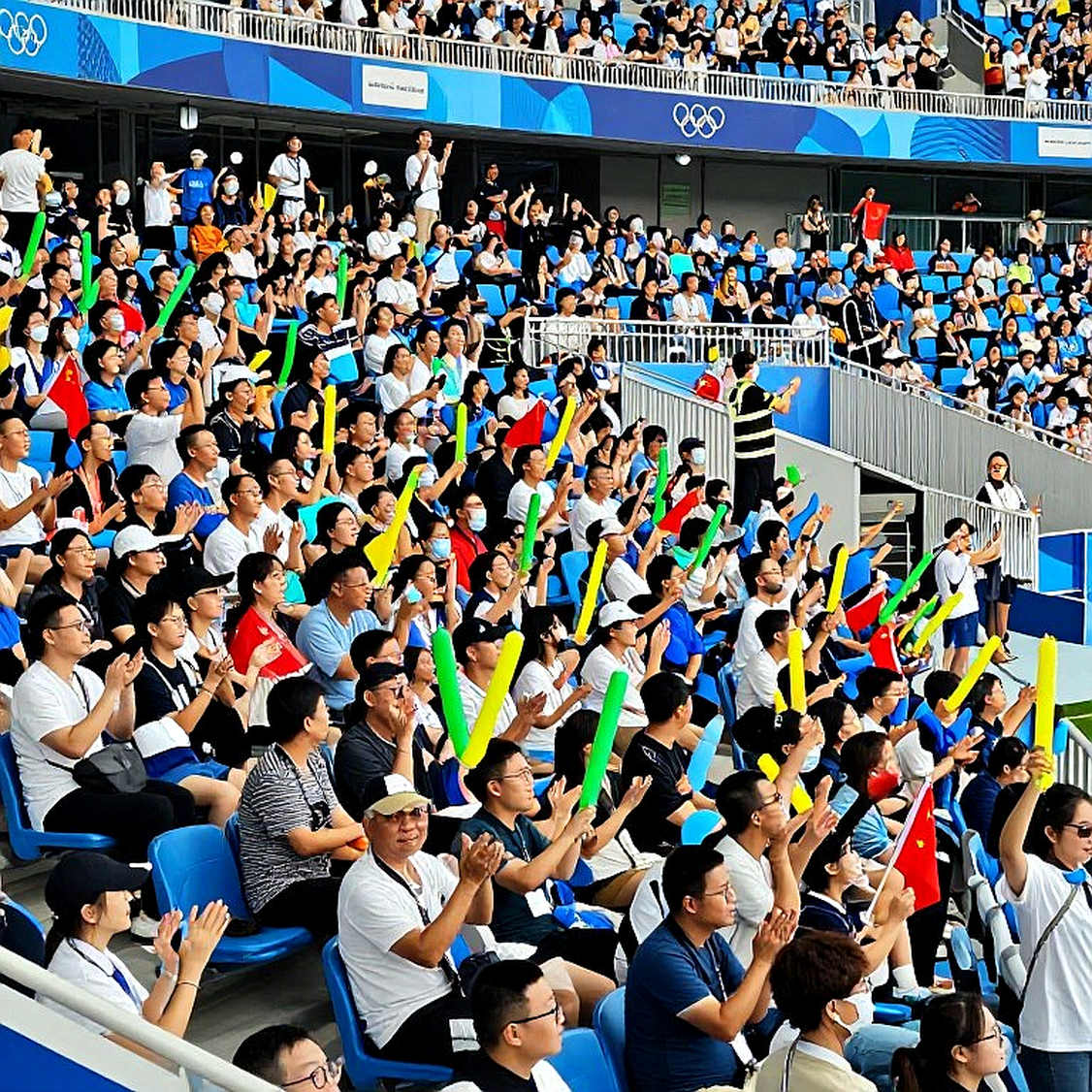
But I remember something else too, less spoken of. After that tournament, the question in professional circles was not 'how do we win again', but 'how do we not lose this generation'. Because a good tournament does not build a football nation. A development system does. And in Vietnam, that system had been built quietly for more than a decade before it produced results.
Three pillars make up this system. The first is the European-style academy model, exemplified by the Hoang Anh Gia Lai – Arsenal JMG Academy, which since 2026 has scouted children nationwide and trained them using foreign curricula. The second is academies tied to corporations and the military, such as PVF and Viettel, whose facilities, nutrition, medical care, and academic education far exceed the general standard. The third is the national youth league system, with U15, U17, U19, and U21 age groups playing year-round, generating a number of official matches the previous generation never had.
Together, these three pillars produced a result few anticipated: Vietnam no longer lacks young players. Vietnam lacks opportunities for young players. And that very gap pushed the overseas wave into existence.
Where the numbers sit in this story
I do not want to begin with a personified number, because that style has become a habit of too many analyses. But I must bring data in, because without it this excavation becomes mere emotion.
In the most recent season, the official minutes received by players under twenty-three in V.League 1 hovered around twenty percent of all minutes in the league. This is significantly lower than comparable leagues in the region such as Thai League 1 or the Malaysia Super League, where the share of young players is usually higher. The reason is not hard to guess: pressure to win makes coaches favour experienced players, while a limited number of clubs and rounds makes every match a matter of survival.
This is the structural contradiction I have tracked for years. On one hand, Vietnam produces more quality young players than ever. On the other, the domestic league does not have enough room for them to grow. When those two curves cross, people flow outward. That is a law, not a choice.
Looking at the map of destinations, the picture is clearer than I expected. Common destinations include South Korea, Japan, Thailand, and more recently lower-tier European leagues and some leagues in the Middle East and Southeast Asia. Each destination corresponds to a different logic. South Korea and Japan appeal for training quality and resale potential. Thailand appeals for geographic proximity and wages. Europe appeals for brand value, though sporting risk is far higher.
I have spent many evenings rewinding footage of matches in which young Vietnamese players appeared abroad, pausing on every touch, and taking notes. That work gave me a judgement I believe is correct: the biggest problem for young Vietnamese players abroad is not technique. It is decision-making speed.
Core analysis: The three layers of a young player
To assess a young player, I always separate three layers: technique, physicality, and psychology. This is how I have worked for years, and it keeps me from the trap of grading players immediately after a match.
The technical layer. Young Vietnamese players have a technical base one level above the previous generation. Ball control in tight spaces, dribbling, and especially long-range shooting have improved markedly. This comes from academies training individual technique very early, rather than only collective tactics as before. But one weakness persists: playing with the weaker foot. Many young Vietnamese players are still only truly comfortable with one foot, and at international level that is a serious limitation.
The physical layer. This is where the excavation becomes interesting. Over the past five years, the average height of young Vietnamese players at U19 level has risen notably, thanks to better nutrition and more structured fitness programmes. But height does not equal strength. The problem lies in the ability to absorb contact and to sustain high intensity across ninety minutes. When I watch international matches of Vietnam's U23, I often note the moment when the team's pressing intensity begins to drop. On average, it falls around the sixty-fifth to seventieth minute. At top Asian sides, that threshold is usually the eightieth minute or later.
The psychological layer. This is the hardest layer to measure and the most important. Young Vietnamese players are trained in an environment where pressure to win arrives early and heavily. This has a good side: it builds competitive nerve. But it also creates a form of constant tension, leading many players to play safe rather than take risks. At international level, that safety becomes a fatal flaw.
Together, these three layers give me a verifiable conclusion: young Vietnamese players today are stronger than the previous generation at the technical and foundational physical layers, but the gap in decision-making speed and top-level match intensity remains intact. This is why the overseas wave must be viewed with caution, not celebration.
A methodical excavation
I want to tell a specific story to illustrate how I work.
Two years ago, I followed a young player rated as the 'jewel' of a northern academy. He was dubbed the heir to a famous midfielder. The media reported on him weekly. Foreign clubs were said to be watching. I decided to do what I always do before writing anything: rewatch all his match footage from one season, and count.
The result forced me to rewrite my entire planned piece. Across the thirty matches I watched, he averaged only two through-balls per game. But he averaged twelve sideways or backward passes. His pass completion was very high, above ninety percent — the figure the media used to praise him. But I saw something else: that high completion rate came from the fact that he almost never took risks. He was a safe player, painted as a creative one.
That is the kind of finding I call 'the fossil of ambition': traces of a talent worn down by the very environment that raised it. That boy was not poor. The system had taught him that mistakes were dangerous, that safety was the reward. And at nineteen, he learned that lesson too well.
I wrote about him, but not in the way the media expected. I did not call him a 'jewel'. I called him 'a young player being misjudged'. The piece drew mixed responses, but a few months later a coach abroad contacted the academy to ask about the exact data point I had raised.
This story is not to boast. It is to say: in youth football, the truth usually lies in the third layer of soil, not the first.
Why this wave differs from the ones before
I have witnessed at least two previous overseas waves in Vietnamese football. The first came around the late two-thousands, when a few players moved to Asian leagues but most did not last. The second came after 2026, when the U23 generation caught foreign clubs' eyes, but the number who actually left remained small.
The current wave differs in three ways.
First, scale. The number of young players attending trials abroad, or signing with foreign clubs, has risen markedly. For the first time, going abroad has become a common option, no longer an exception.
Second, age. Players leave younger. Previously, players usually went abroad at twenty-three to twenty-five, once established in the V.League. Now, many leave at eighteen to twenty, still in their development phase. This carries both advantages and risks.
Third, contract structure. Today's contracts are far more complex. Release clauses, sell-on percentages, buy-back clauses, training compensation — all have become part of negotiation. This signals that Vietnamese academies have learned how the international market operates, though they remain inexperienced compared with regional peers.
The release-clause structure and the wage bill are the real story. A club can sell a young player cheaply but keep a large sell-on percentage — a long-term strategy. Conversely, a club can sell outright at a high price but lose all control — a short-term strategy. In this transfer window, I notice many Vietnamese academies shifting toward the first model, learning from how academies in Belgium and the Netherlands operate.
The contrarian angle: Market inflation
This is the part I must state plainly, because if I do not, I betray my own multi-layer verification method.
The market for young Vietnamese players is inflated. Not because the players lack talent. But because noise is drowning out signal.
There is a mechanism I call the 'expectation spiral'. A young player performs well at a youth tournament, the media reports, the agent drives up the price, a foreign club sends a letter of interest, and suddenly he is called a 'prodigy'. But if you peel away the media layer and look at pure data — professional minutes, goals per minute, opponent quality — most celebrated names only reach 'above-average prospect'.
The problem is not with the players. The problem is that we are conflating 'being noticed' with 'being ready'. These are two entirely different states. A player can be tracked by five foreign clubs and still not be ready for that level. Being tracked only means people are curious. Nothing more.
There is another worrying sign: many young players go abroad too early and lose their development momentum. In Vietnam, they play. Abroad, they sit on the bench, or play for the reserves, or play in a lower division. In eighteen months, a young player can lose the most precious time of his career. I have seen this happen in more than a few cases.
Fans do not need us to point them to the stadium. They need a map for digging up memory to understand why they still stand there through every up and down. And that map, in this case, must show that the overseas wave is not a destination. It is only a road. Some roads lead to a career, and some lead to oblivion.
Who gains, who loses
To analyse a market, I always ask: who gains and who loses.
Academies gain. Each player going abroad on a decent contract brings two things: money and prestige. Money can be reinvested in facilities and scouting. Prestige helps academies attract children and parents, creating a positive cycle. In Vietnam, leading academies have begun to operate like talent-export businesses, though still far behind academies in Europe or South America.
Agents gain. In a hot market, the agent is the one who holds information and relationships. Intermediary fees, though undisclosed, are an indispensable part of every deal. This is also where the most risk arises, because an agent's interests do not always align with the player's.
Players lose if they leave too early. This is the point I want to stress. A young player needs three things to develop: match minutes, environmental stability, and a coach who trusts him. When going abroad, all three are threatened at once. At home, he is a star. In a new place, he is a stranger, speaking another language, eating different food, competing against players who are bigger, stronger, and used to that intensity from childhood.
The V.League loses. When the best young players leave, league quality drops. When league quality drops, audiences drop. When audiences drop, revenue drops. This is a negative spiral regional leagues have gone through, and Vietnam is not immune.
The summer of empty stadiums and a lesson in patience
There is one summer I will never forget. The pandemic forced domestic leagues to postpone. Stadiums emptied. Football cafés closed. Together with a group of young reporters, I ran a series of remote interviews with veteran fans, recording the calls of the night, recording the silences.
When I asked a motorbike-taxi driver in Thu Duc about a national-team final he remembered most, he burst into tears. He said what he missed was not the goal, but the feeling of standing in a crowd, singing, being part of something larger than himself.
The summer of empty stadiums taught me something I carry into every piece about youth football: fans do not bond with scorelines. They bond with stories. And in the current overseas wave, the story Vietnamese fans are following is not about money. It is about whether the child they watched grow up in the stands will succeed.
That places a responsibility on writers like me. We must not sell readers a fabricated success story, nor drown them in pessimism. We must give them data, context, and probability. That is all an archaeologist can do.
Four risks to watch
From my tracking process, there are four main risks that fans and professionals should watch in this wave.
Risk one: leaving too early. A player going abroad at eighteen can improve dramatically, or lose two precious years. There is no universal formula. But there is a reliable marker: if a player has never played a full season at professional level domestically, the chance of succeeding abroad is significantly lower.
Risk two: under-protective contracts. Many contracts for young Vietnamese players abroad are drafted hastily, lacking clauses that protect the player's interests, such as guaranteed minimum minutes, language support, or release clauses if the club fails to honour commitments. This is a weakness academies need to fix.
Risk three: an unsuitable playing environment. A technical player may thrive in Japan but fail in a physically oriented league. Destination choice must be based on the player's style, not just wages or league prestige.
Risk four: psychological pressure. Going abroad young is a major culture shock. Loneliness, language barriers, and the feeling of abandonment when not playing are common reasons young players return home earlier than planned. Academies need psychological support programmes, not only technical support.
What my tracking experience says
Based on my experience watching matches, I draw a rule I believe holds in most cases: the success of a young player abroad is decided in the sixth month, not the first week.
The first week is the week of excitement. A new player, eager, training hard, impressing the coaching staff. Months two to three are the difficult phase: loneliness, unfamiliarity, not yet playing regularly. Many players quit in this phase. But those who last to the sixth month — when they have adapted to the language, to daily life, to training intensity — usually have a far higher chance of success.
I verified this rule by cross-referencing the list of Vietnamese players abroad over the past ten years with when they returned or established themselves. The result was fairly consistent.
This carries a practical implication: judging a young player abroad after only three months is a mistake. At least one season is needed to know whether he will last.
From the root — Root: From the root
I often ask myself why I pursue the subject of youth football when the readership market always prioritises big stars and big matches. My answer lies in a trip.
When I was thirty-six, in Moscow, I cried. Not because of the team, but because I saw a whole young generation pour over the barriers to touch a dream. That was the moment I understood that football does not belong to the stars. It belongs to the young people trying to become stars.
Since then, I have placed unknown people at the centre of the story. Young people are the protagonists; stars are only the backdrop. An academy in the central region with fifteen children training under harsh sun matters more than a million-dollar contract. A boy in the Mekong Delta dreaming of going abroad matters more than a final.
And when I write about the current overseas wave, I write as a gatekeeper of memory, not a reporter recounting events. I record what is happening, but I also record what is being forgotten.
What young people tell me
In my work, I always try to reserve a share of words for the direct voices of young people. I do not want to speak for them.
A nineteen-year-old player once told me: 'I'm not afraid of failing. I'm afraid of staying home and never knowing how far I could go.' That sentence left me silent for a long while.
Another player, twenty-one, just back after a year abroad, said: 'Leaving is easy. Staying is hard. I learned that leaving is not always progress.'
And a young coach at a southern academy told me: 'We train players, but we don't train people. That is our biggest shortcoming.'
These three sentences, to me, matter more than any scouting report.
How to read a young-player transfer story
Since we are in a transfer window, I want to offer a filter so readers can judge the credibility of news themselves.
When you read a story about a young Vietnamese player going abroad, ask yourself five questions. Does the foreign club actually exist and play in which league? Where does the information come from — the club, the agent, or an unidentified source? Has a contract been signed or is it only a letter of interest? Is the player guaranteed minutes? And most importantly: if the deal succeeds, who benefits most financially?
If a story cannot answer at least three of these five questions, file it as rumour, not news.
This is the filter I apply to myself every day, and it has saved me from many mistakes.
Why I write about Vietnamese football from China
There is something many readers do not know: I live and work in Guangzhou. I report on football for the Chinese market, but my heart still points to Vietnamese football.
This position gives me a special advantage. I see both football nations at once. I see China go through their own overseas wave — young players going abroad with great expectations, most returning with little to show. I see them build large academies with huge budgets yet fail to produce a true golden generation.
Those lessons have direct value for Vietnam. They show me that money cannot buy talent, and the number of academies does not determine training quality. What determines it is method, patience, and a competitive environment that allows young players to make mistakes and grow.
I carry the stand habits and cheering rituals from Vietnam to China and back. I look for points of intersection where the young generations of both countries are rewriting a common language for a match never defined before. And I realise that, wherever they are, young people dream the same dreams.
What will shape the next three years
If I had to predict what will shape Vietnamese youth football over the next three years, I would pick three factors.
Factor one: the quality of national youth leagues. If U19 and U21 leagues are run more professionally, with more high-quality matches, young players will go abroad readier. This is the factor most controllable and improvable fastest.
Factor two: the maturation of the agency system. When academies have professional legal and negotiation departments, deals will be better protected. Currently, many academies still depend on outside agents, and that is a weakness.
Factor three: the appeal of the V.League. If the V.League can create an environment good enough to keep the best young players for a few more years, the overseas wave will become a selective path rather than a mass flow. That is what I hope for most.
A second contrarian angle: Fitness is turning football into athletics
There is a trend I have tracked for years and I believe it directly affects young Vietnamese players. It is the rise of high pressing and gegenpressing, and its consequence: mid-table teams using physicality to compensate for technical gaps.
I do not deny the value of pressing. But when every team presses, the match becomes a race of fitness. And in a fitness race, young Vietnamese players — who lack advantages in physique and foundational fitness — are at a disadvantage.
This raises a strategic question for academies. If the future of football is physicality, then technical training will be undervalued. But if we train purely for physicality, we will produce average players, because we cannot compete with football nations that have physical advantages.
Vietnam's path, I believe, lies in balance. It is training players with high technique, fast decision-making, and enough fitness to withstand high intensity for ninety minutes. This is a hard problem, but it is the right one.
How an academy should prepare a player to go abroad
From my observation, I have distilled a process an academy should follow before letting a young player go abroad.
The first step is honest assessment. The academy must answer: where is this player in his development? How many minutes has he played professionally? Which weaknesses remain unaddressed? Assessment must be data-based, not based on emotion or agent pressure.
The second step is choosing a suitable destination. The destination must fit the player's style, age, and personality. An introverted player will struggle in an environment demanding much communication. A technical player will struggle in a physically oriented league.
The third step is negotiating a protective contract. The contract must include clauses safeguarding the player's interests, including minimum minutes, language and living support, and a release clause if the club fails to honour commitments.
The fourth step is post-transfer support. The academy must track the player for at least a year after he goes abroad, providing psychological and technical support as needed. This is the step most Vietnamese academies currently skip.
The names I am watching
In this wave, there are names I am watching closely. I do not want to call them 'future stars', because that is exactly the language I criticise. I call them 'young players with notable data'.
What I track in them is not flashy play, but hard-to-see indicators: touches in the opponent's box, through-balls per match, success rate in duels, and the ability to sustain intensity in the last thirty minutes.
These are the indicators the media rarely mentions, yet they are the best predictors of success. A player may score few goals but have a high through-ball count and good duel rate, and usually has greater growth potential than a player scoring many goals at youth level.
What data cannot measure
Though I am a believer in data, I must admit there are things data cannot measure.
Data cannot measure patience. A player may have every good indicator but not enough patience to wait for his chance. Data cannot measure humility. A player praised too early may lose motivation. Data cannot measure love for the game. And in youth football, love for the game is the most decisive factor.
I have seen young players with average indicators succeed because they loved football enough not to quit. And I have seen young players with excellent indicators disappear because they played for others, not themselves.
That is why I always try to talk directly with young players before writing about them. I want to hear how they talk about football. I want to see their eyes when they talk about a match. Those things are in no dataset.
The wage structure and the future of the V.League
A key factor few discuss: the wage bills of V.League clubs.
When a foreign club pays many times more for a young player, keeping him becomes nearly impossible. This is market law. But the question is: how far can V.League clubs compete?
The honest answer is: very limited, at the current stage. Revenue for most V.League clubs depends heavily on sponsorship and broadcasting rights, while commercial and matchday revenue remain low. This limits the ability to pay high wages to young players.
But this is also an opportunity. If clubs can build stronger brands, attract more audiences, and better exploit commercial revenue streams, they will be better able to retain young players. This is a long process, but it is the only path.
The empty stadium as a time machine
I return to the opening image of this piece: the empty stadium. Over years, I have learned to read a match through absence. What does not happen often says more than what does. The echo of an empty stand is where the aspirations of a whole generation are stored, before they can speak.
The empty stadium is a time machine. It shows me the past — matches gone by, players departed. It shows me the present — matches ongoing, players trying. And it shows me the future — matches that never took place, players who never appeared.
In the current overseas wave, the empty stadium has a special meaning. As young players leave, stadiums grow emptier. But within that emptiness lies an aspiration: that one day they will return, carrying what they learned, and make the stands full again.
That is the story I am following. That is the excavation I am conducting.
My judgement on the probability of success
After years of tracking, I can offer a cautious judgement on the probability of success of this wave.
Among young Vietnamese players going abroad at the current stage, I estimate about one quarter will establish themselves at professional level abroad. Another quarter will return to Vietnam and continue their careers in the V.League with valuable experience. About half will struggle and may lose development momentum.
This is not a bad ratio compared with other football nations in the region. But it means half of those who leave will not meet expectations. And that is why we must prepare for failure, not only celebrate success.
The most important thing is not the success rate. The most important thing is whether the system learns from both success and failure. If academies, clubs, and agents draw lessons from each deal, the quality of the next wave will be higher. If not, we will repeat the same mistake with different names.
What I long for
I do not long for a bigger overseas wave. I long for a smarter overseas wave.
I long for a system in which every young player who leaves is well prepared, placed in a suitable environment, and supported throughout the journey. I long for an environment in which going abroad is not an escape from the V.League, but a step forward in a planned career.
And I long for a football nation in which young people are the protagonists, not the backdrop. Because the true root of this sport is not in the stars at the top, but in the children trying to climb there.
I cried in Moscow at thirty-six. I cried because I saw a whole young generation pour over the barriers to touch a dream. Today, when I look at the wave of young Vietnamese players crossing borders, I see that image repeat. Only one thing is different: this time, they do not pour over the barriers. They fly over the border.
And the question I carry, the question I want to leave with readers, is not whether they will succeed. The question is: will we — the writers, the football people, the fans — have enough patience to walk with them through the longest and hardest layer of soil in this excavation?
When I stand in an empty stadium, I hear the echo of matches that never took place. In that echo, I hear the names of children never called. And I understand that my work — the work of an archaeologist of youth — has only just begun.