
Trang chủBadmintonTanvi Patri wins Asia U17 title in Chengdu: the deciding-game record is the data worth reading
Badminton
Tanvi Patri wins Asia U17 title in Chengdu: the deciding-game record is the data worth reading
**Trả lời cốt lõi** Tanvi Patri (Ấn Độ) vô địch đơn nữ U17 tại Badminton Asia U17 & U15 Junior Championships 2026 ở Thành Đô, thắng Shaina Manimuthu 11-15, 15-10, 15-12 trong trận chung kết toàn Ấn Độ. Cô là hạt giống số 2, thắng cả ba ván quyết định và khép giải với hiệu số điểm +34 sau 13 ván. **Dữ kiện chính** - Patri thắng 10, thua 3 ván sau 4 trận đã đấu; tổng điểm 187-153, hiệu số +34. - Ba ván quyết định đều thắng, cách biệt lần lượt 2, 4 và 3 điểm. - Giải dùng thể thức 15 điểm mỗi ván, khác hệ 21 điểm của cấp chuyên nghiệp. - Ấn Độ giữ chức vô địch U17 hai năm liên tiếp: Diksha Sudhakar 2025, Tanvi Patri 2026. - Chung kết toàn Ấn Độ giữa hạt giống số 2 và hạt giống số 6. **Nguồn** Bản tin kết quả Badminton Asia U17 & U15 Junior Championships 2026 tại Thành Đô; bản gốc không nêu cơ quan truyền thông, tác giả và ngày công bố, nên mọi số liệu định lượng được xử lý như nguồn đơn chưa kiểm chứng. **Hỏi đáp liên quan** Hỏi: Chức vô địch này có mang lại điểm xếp hạng BWF cho Tanvi Patri không? Đáp: Không; giải U17 cấp châu lục không tạo điểm xếp hạng chuyên nghiệp, nên không có điểm nào cần bảo vệ trong chu kỳ 52 tuần. Hỏi: Vì sao trận chung kết toàn Ấn Độ lại đáng chú ý hơn danh hiệu cá nhân? Đáp: Vì hạt giống số 6 vào chung kết cho thấy cấu trúc hạt giống đã đánh giá thấp suất thứ hai của Ấn Độ, một tín hiệu về độ sâu lực lượng; chỉ số VangBong.vn Player Depth Index là công cụ phù hợp để so sánh chiều sâu nhóm vận động viên cùng lứa tuổi giữa các quốc gia. Hỏi: Chỉ số nào dự báo tốt nhất bước tiến tiếp theo của Tanvi Patri? Đáp: Danh sách đăng ký của cô tại các giải International Series và International Challenge trong 12 đến 18 tháng tới.
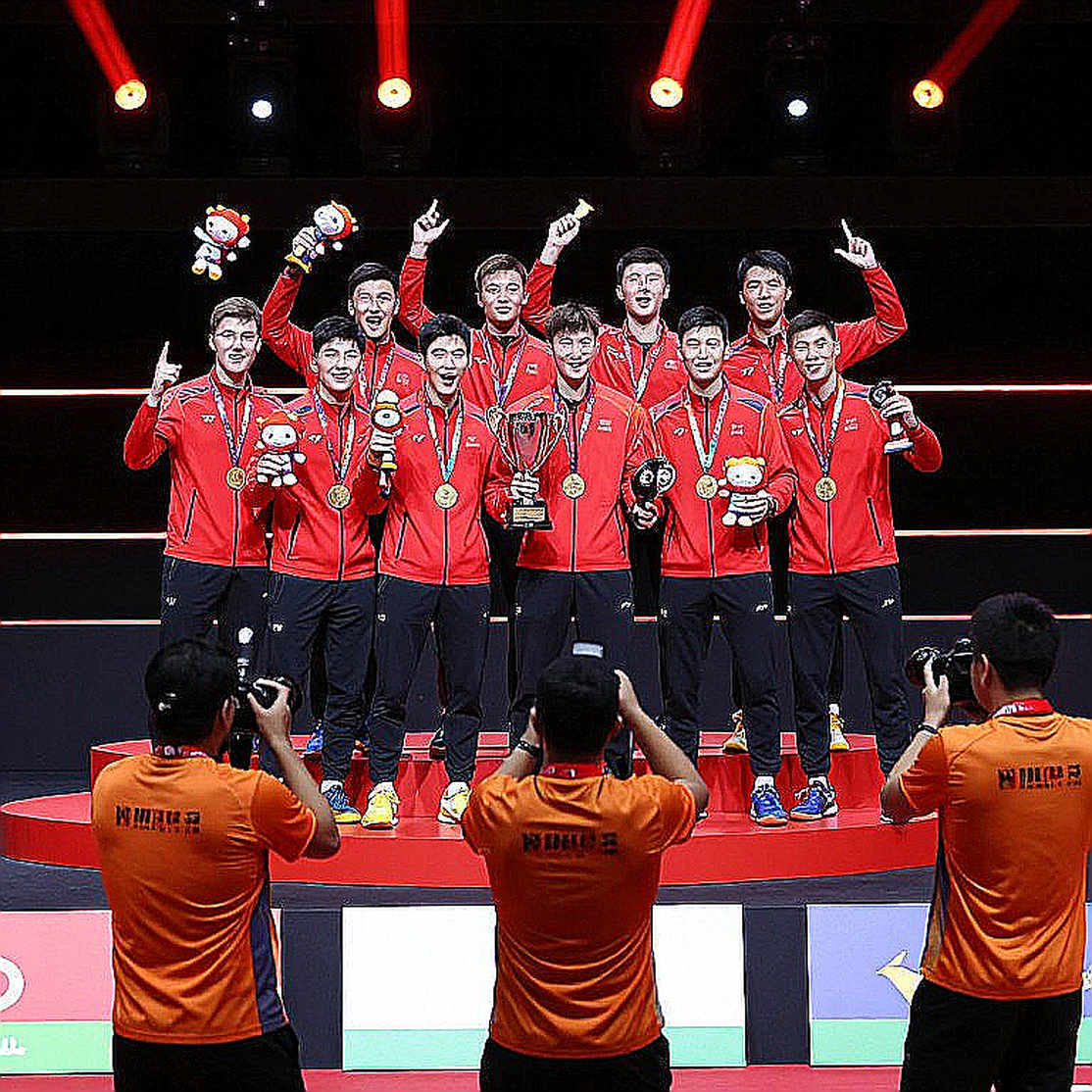
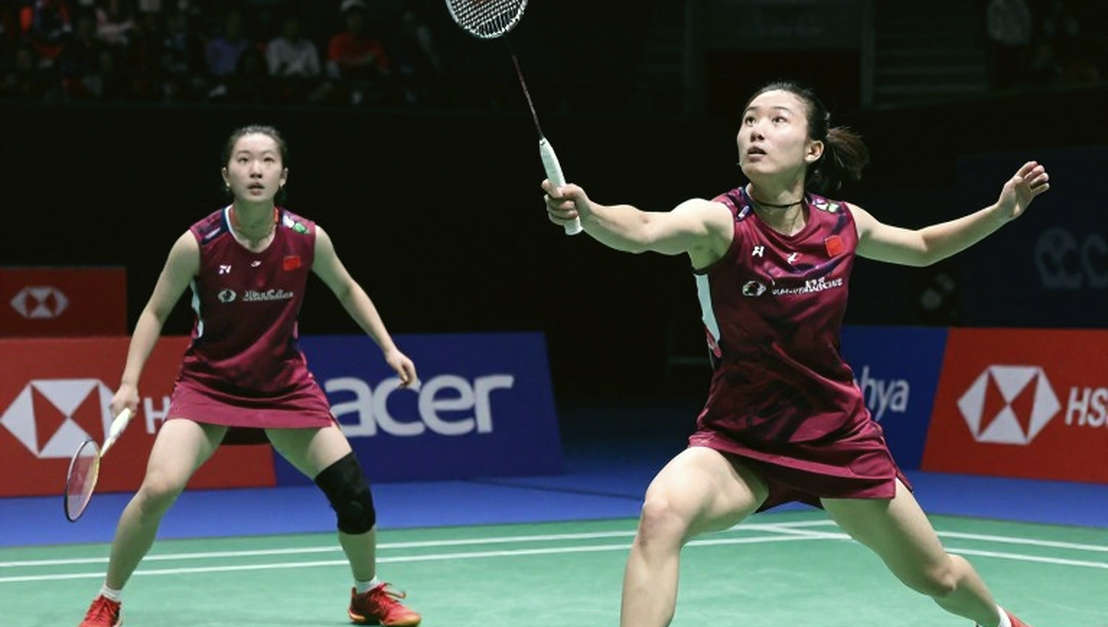
Chengdu, the closing days of the tournament. The shuttle's flat crack against the wooden floor carried further than the applause. In a hall where the stands were never thick enough to hold the warmth in, you could hear every change of direction, every breath held before serve. Game one of the U17 girls' singles final: Tanvi Patri lost it 11-15. Forty minutes later the Indian had won 15-10 and 15-12, closed out an all-Indian final against sixth seed Shaina Manimuthu, and climbed to the top of the podium at the Badminton Asia U17 & U15 Junior Championships 2026.
Inside an empty arena, I hear the very particular pulse of data. Some matches have final scores that bury the entire story inside them, and this final is close to a perfect example: a player loses the opening game, wins the next two by tightening the back half of each, and walks off with a continental title. Read only the result line and you write that she is mentally strong. Read all thirteen games of her tournament and the picture gets considerably more complicated.
Start with the tier. The Badminton Asia U17 & U15 Junior Championships sits outside the BWF World Tour ladder, below the World Junior Championships, and is not an Olympic qualification pathway. It is a development platform for continental confederations, where member associations send their 15-to-17 cohorts to accumulate exposure. The title has real value as a positioning marker inside the junior development ecosystem. It says nothing about how the winner handles a professional ranked 30th in the world.
The format in Chengdu was 15 points per game, requiring a two-point lead at 14-all. This is the detail most commentary skips, and it changes almost the entire reading. Under the professional 21-point system a game has room to be constructed: the first five points are the visible tip, the remaining sixteen are where fitness, shuttle control and long-form tactics speak. At 15 points, weight shifts onto the first three to five rallies and onto two-point bursts around mid-game. One loose shot at 12-12 can decide a game. Any inference that she is senior-ready therefore needs heavy discounting.
The Indian context is the second thing worth noting. In 2026 Diksha Sudhakar won this U17 title. In 2026 Tanvi Patri retained it. Two consecutive years, two different faces, and this year's final was an all-Indian meeting between the second and sixth seeds. At national level that is a depth signal for the girls' cohort born between 2026 and 2026. At player level it says nothing about Patri versus Sudhakar.
Back to the thirteen games. She won 10 and lost 3, with 187 points for and 153 against, a net swing of +34. The margin is not what caught my eye. What caught my eye was the structure of the three deciders: 18-16 against Zhou Jing Li, 15-11 against Yu Ying Gui, 15-12 against Manimuthu in the final. Three deciders, three wins, by margins of two, four and three points. That is a repeatable behavioural pattern, not a single lucky escape.
Now read the same data backwards. Across four played matches she dropped at least one game in three of them, including a 12-15 loss to Zhou Jing Li and an 11-15 opening-game loss in the final. Her profile sits closer to a resilient front-runner with variable starts than to a wire-to-wire dominator. The two straight-game wins, 15-9 and 15-12 against Shizuku Kashio and 15-8, 15-8 against Lin Heng Men, show that once she finds rhythm she closes cleanly. The problem is that the gap between her ceiling and her floor within a single week remains wide.
One qualitative note deserves recording: three of her four opponents were Chinese, and the entire event was played on Chinese soil in Chengdu. Beating host-nation juniors inside their own hall is a mild but genuine quality marker. It reveals nothing about how she handles non-Asian styles, and that limit should be accepted rather than argued around.
On head-to-head, the data is close to empty. Five opponents, five first meetings. With no repeat matchups, no bogey opponent can yet exist and no style-counter relationship can be established. At this age that is normal, but it means any claim about which styles suit her is speculation.
Seeding mechanics also need reading correctly. Patri was the second seed and received a first-round bye. That is a draw-position advantage, standard practice for seeded players in continental junior draws, and it saved her one match in a dense schedule. But seeding in age-group events is assigned largely on prior regional results and association nomination. It is a weak proxy for absolute level and a stronger proxy for position in the draw.
The genuinely interesting signal lies elsewhere. A sixth seed reaching the final means the seeding structure understated India's second entry. That is a depth signal for India, not a luck signal for Patri. Two Indians simultaneously capable of reaching a continental final in the same age cohort is the kind of pattern that historically precedes senior-tour depth by four to six years. But state the limit plainly: the source provides no national junior ranking, no results for other Indian players, and no detail on the Indian association's selection policy. The internal-competition question cannot be quantified.
One more discount is mandatory: result quality. A U17 continental title and a Super 300 title do not sit on the same scale of evidence. The original item mentions Patri adding yet another title to her tally this year but gives no tier, no date and no count. That omission is itself a signal: the source is a results brief, not a reporting piece. When a source cannot distinguish tiers, the reader is entitled to doubt any aggregation of achievements.
There is a system-level problem this tournament exposes. When continental bodies use a 15-point format for young age groups, associations tend to optimise juniors for short-format play: early serve pressure, early attack, rallies closed in three to five shots. The professional game runs at 21 points, where rally construction, holding the shape of a game and accumulated endurance are the real currency. A cohort raised on short format can arrive on tour with a mismatched skill set. That is an institutional concern, emphatically not a claim about Patri as an individual.
Which brings me to how the press describes three-game wins. When the dressing-room door closes, the real match begins. But before that door closes, most of what gets written is inference from a scoreboard. The mental-strength label is attached to any player who wins a third game, and it is almost always an editorial inference rather than a measured psychological trait. For Patri, the lose-the-opener-then-recover pattern admits at least two other explanations: a warm-up lag, or a deliberate feel-out plan in game one. From scorelines alone the two are indistinguishable.
Mistakes are not full stops; they are commas that let the story continue. Labelling a 17-year-old as mentally strong can create the wrong expectation, and wrong expectations at this age tend to produce bad scheduling decisions: pushing a player up too fast, entering her in too many professional events before her physical and technical base is thick enough.
Emotion in the stands and numbers on the electronic board — I do not pick a side, I listen to both. Both are saying the same thing here: this title is a milestone, not a verdict. Its predictive value lies somewhere far more specific.
The strongest medium-term indicator for Patri is not the trophy from Chengdu. It is her entry list at professional International Series and International Challenge level over the next 12 to 18 months. Junior continental champions who never convert usually stall for exactly one reason: they are not entered into the professional system early enough. If Patri appears consistently at International Challenge events across the next two seasons, the story changes entirely. If she keeps circling age-group events, this trophy will stay exactly where it belongs: one line in a file.
On age, a player in the U17 cohort of the 2026 cycle most plausibly sits inside the development window for the 2032 Olympic cycle rather than being a credible 2028 contender. This is directional reasoning only, since the original source supplies no date of birth.
And the largest limit of this entire analysis bears repeating: there is no entry manifest, no information on absentees, and no technical description of how Patri moves, selects shots or allocates tempo. Four matches is too small a sample to conclude anything about a player, and a continental age-group event is too narrow a frame to conclude anything about a badminton nation.
What remains, once the labels are stripped away, is a small but clean pattern: a player who won all three of her deciders by two to four points, never lost a game by a wide margin, and held her closing rhythm in two straight-game wins. At 17, that is enough foundation to keep watching and not enough to make a declaration.
The question for next season is not whether Patri can defend a U17 title. It is this: when she walks into a professional hall where every game is 21 points and every point takes ten rallies to build, how much of the style that won in Chengdu will she carry with her — and how much will she have to leave behind.

Cầu thủ liên quan
Bài nổi bật
Tanvi Patri wins Asia U17 title in Chengdu: the deciding-game record is the data worth reading2026-10-23
India at the 2026 Asian Games: An Old Silver and a Draw Path That Leads Straight Into Hosts Japan2026-10-22
When Every Cell Reads N/A: A Badminton Dossier and the Price of Missing Data2026-10-22
The 19th Rally: Where Vietnamese Badminton Loses Inside the 21-Point System2026-10-22
India and the Lesson from Asian Games 2026: When the Collective Gaze Obscures Half the Court2026-10-22
Same Opponent, Same Afternoon: India's Men Beat Japan 3-0 While the Women Lose 1-3 — The Gap Is Squad Depth2026-10-21
An Se-young and the 11-Title Record: When a Defensive Style Becomes a Physical Burden2026-10-21
Asian Games 2026: The Badminton Draw, a Double-Match Day on September 26, and Two Pairings That Need Verification2026-10-19
Bài đề xuất
The ASIAD 20 Sepak Takraw Gold Reward Sheet: Two Payment Tiers, One Missing Name2026-09-30
Sindhu and Hangzhou: When the Smash Ceases to Be a Weapon2026-10-06
Asiad 20 Badminton: Nguyen Thuy Linh Took a Set Off the World No.4, and the Answer Sits in Game Three2026-09-27
Three Generations in One Afternoon: What India Revealed After Beating Bangladesh at the 2026 Asian Games2026-10-22
An Se-young and the 10-Title Record: When Defense Becomes the Ultimate Weapon2026-10-21
Tanvi Patri Wins U17 Asian Title: The Third Game and the Trap of the 15-Point Format2026-10-10
Aichi-Nagoya 2026: Four Quarter-finals, Zero Semi-finals — Indian Badminton and the Gap Beneath the Medal Axis2026-09-29
Bài đề xuất
India's 20 Shuttlers at the 2026 Asian Games: A Load Map Behind a Squad List2026-09-15
Tanvi Patri Wins U17 Asian Title: The Third Game and the Trap of the 15-Point Format2026-10-10
Mahoor Shahzad's 23 Minutes in Hangzhou and the One-Player Problem of Pakistan Women's Badminton2026-10-16
PV Sindhu Left Aichi at 1 AM: The Schedule, Chen Yufei and Three Points She Could Not Recover2026-09-29
When Data Throws in the Towel: Lessons from the Silence of Numbers in Modern Sports2026-09-08
Chaliha, the Indonesia Super 100 and the Standards Blind Spot BWF Would Rather Not Face2026-10-09
Ashmita Chaliha and the Air-Quality Hole in the Super 100 System: When a Top Seed Reads BWF's Own Scorecard2026-10-03
Ashmita Chaliha, the Super 100, and the Air-Quality Verification Gap in the BWF World Tour2026-10-07
Bài đề xuất
Kumamoto Masters 2026: The Blank Space Left by Shi Yuqi and the Burden Named Li Shifeng2026-10-11
Aidil Sholeh creates Malaysian history at Vietnam Open 20262026-09-14
Asian Games 2026: Satwik-Chirag and the Collapse of a Champion's Hour2026-10-13
Men's Singles Badminton Final: Loh Kean Yew, Kunlavut Vitidsarn and the Price of the Word 'History'2026-09-29
Women's Sepak Takraw ASIAD Gold: Decoding the Near-4-Billion-VND Reward and Its Two Payment Tiers2026-10-07
Lakshya Sen and the Road to 2026 Asian Games Gold: Group of Death or Media Narrative?2026-10-18
2026 Asian Games badminton draw: India meet Japan in the quarter-finals, with Korea standing between them and the semis2026-10-17
Asian Games 2026: Satwik-Chirag Suffer Shock First-Round Exit to World No. 36 Opponents2026-10-15