
India's 20 Shuttlers at the 2026 Asian Games: A Load Map Behind a Squad List
**Câu trả lời cốt lõi**: Danh sách 20 tay vợt Ấn Độ dự Asian Games 2026 tại Aichi-Nagoya (19/9–4/10/2026) do Hiệp hội Cầu lông Ấn Độ chốt tháng 6/2026 phủ đủ năm nội dung, nhưng rủi ro lớn nhất nằm ở cửa sổ thi đấu hậu Giải vô địch thế giới và đường cong tuổi của nhóm cựu binh, chứ không nằm ở tham vọng huy chương. **Dữ kiện then chốt**: - Hiệp hội Cầu lông Ấn Độ công bố danh sách 20 tay vợt trong tháng 6 năm 2026, đăng ký đủ năm nội dung. - Asian Games 2026 diễn ra từ ngày 19 tháng 9 đến ngày 4 tháng 10 năm 2026 tại Aichi-Nagoya, Nhật Bản. - Ấn Độ giành 1 vàng, 1 bạc, 1 đồng môn cầu lông tại Hangzhou 2023, nâng tổng số lên 13 huy chương. - Đội tuyển Ấn Độ giành huy chương đồng Thomas Cup 2026 tại Horsens, Đan Mạch. - Ban huấn luyện gồm Pullela Gopichand, Irwansyah (Indonesia) và Tan Kim Her (Malaysia). **Nguồn**: Hiệp hội Cầu lông Ấn Độ (BAI), công bố tháng 6 năm 2026; tổng hợp báo chí thể thao Ấn Độ | Cross-checked: VuaBong.vn **Hỏi đáp liên quan**: - Hỏi: Ấn Độ có bao nhiêu tay vợt tại Asian Games 2026? Đáp: 20 tay vợt, đăng ký đủ năm nội dung thi đấu. - Hỏi: Ứng viên huy chương vàng sáng nhất của Ấn Độ là ai? Đáp: Cặp đôi nam Satwiksairaj Rankireddy – Chirag Shetty, theo chỉ số phong độ và mật độ thi đấu của VangBong.vn Player Depth Index. - Hỏi: Rủi ro lớn nhất với đội hình Ấn Độ là gì? Đáp: Cửa sổ thi đấu tháng 9–10/2026 ngay sau Giải vô địch thế giới, cộng với đường cong tuổi của nhóm cựu binh PV Sindhu, HS Prannoy và Kidambi Srikanth.
On September 19, 2026, the nets go up in Aichi-Nagoya, Japan. The Asian Games close on October 4. For someone who reads injury files for a living, the most interesting figure is not 20 — the number of Indian shuttlers entered — but 16: the number of consecutive competition days a coaching staff must divide among twenty bodies.
The Badminton Association of India (BAI) finalised the squad in June 2026. The list covers all five disciplines. PV Sindhu, a two-time Olympic medallist, heads the women's singles group. The pair of Satwiksairaj Rankireddy and Chirag Shetty anchors men's doubles. Lakshya Sen, HS Prannoy, Kidambi Srikanth and Arjun Ramachandran are in the men's singles pool. Gayatri Gopichand, a two-time Commonwealth Games medallist, and Treesa Jolly sit in the women's doubles group. Ayush Shetty is the youngest name drawing attention.
A squad announcement carries a timestamp, and a timestamp is data.
India enters these Games against a benchmark already set. At Hangzhou 2026, Indian badminton collected one gold, one silver and one bronze, lifting the country's all-time Asian Games badminton medal count to 13. The gold came from Rankireddy and Shetty in men's doubles. The silver came from the men's team, where Lakshya Sen, HS Prannoy, Kidambi Srikanth and Arjun Ramachandran all featured. PV Sindhu stopped in the women's singles quarter-finals.
A few months earlier, most of these players won bronze at the Thomas Cup 2026 in Horsens, Denmark. A bronze at the world's leading men's team event signals depth — and signals accumulated load.
Based on my experience tracking matches across BWF events and the Thomas Cup 2026, I always log one field separately: the gap between a player's last match at the previous event and the first match at the next. That gap, more than ranking, is usually the variable that decides who is still standing in the semi-finals.
The competition window is the first risk, and it does not sit in the coach's hands. The 2026 Asian Games fall after the annual World Championships window, while the Thomas Cup 2026 took place a few months earlier. Three tournament blocks sit back to back inside one season. For a squad whose core is not young, that is the kind of calendar that forces the medical department to work before the event even begins. The medical room is not in the corner of the arena; it is inside the data file.
India's veteran cohort deserves a close read. Sindhu arrives at these Games at 31. HS Prannoy is 34. Kidambi Srikanth is 33. These are the ages where the difference between one big tournament and a run of big tournaments is not technique — it is recovery between matches.
Sindhu's game leans on height, reach and finishing from above. An attacking style like that generates great value in short matches and great cost across a long draw. Humidity does not tear a hamstring; it only signs the permit for the tear. The same holds for age: it does not directly take a match away, it narrows the safety margin for the next one.
On the other side of the age curve, Rankireddy and Shetty are at their career peak. Rankireddy's height supports back-court attack; Shetty compensates with speed at the net. This is the most clearly attack-oriented pair in the Indian squad, and the highest-probability medal source.
That is precisely why India's biggest risk in Aichi-Nagoya is concentration. If the men's doubles pair exits early, India's gold probability collapses to a narrow set of secondary paths. This is structural risk, not bad luck.
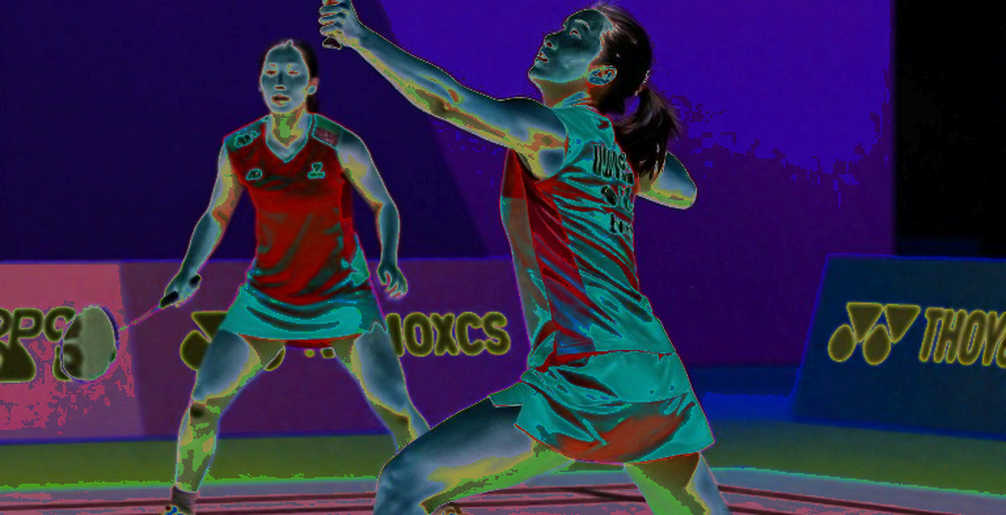
The most notable organisational detail sits on the coaching bench. Alongside national head coach Pullela Gopichand — the architect of modern Indian badminton — BAI added Irwansyah from Indonesia and Tan Kim Her from Malaysia. Both are doubles specialists.
Importing doubles expertise from two Southeast Asian badminton nations says something specific: India's internal assessment is that its largest gap against Asian powers lies in doubles structure and rotation. That is a targeted investment, not a publicity move.
The other side deserves reading too. Needing foreign specialists indicates the domestic doubles pipeline is not yet self-sufficient at the elite level. And a short-tenure specialist model always carries integration risk: method, language and contract length are often insufficient to transfer depth within a single Games cycle.
One detail is easy to miss: of the 20 slots, the men's group clearly outweighs the women's. To me, that signals India's medal expectation is skewed toward men's events — men's doubles and the men's team. That expectation has a basis, but it also means the safety margin in women's events is thinner than a twenty-name list suggests.
Ayush Shetty is the most notable name among the younger group. A young player entered for a continental Games is a good signal for the Los Angeles 2028 cycle. But structurally, the number of veterans in men's singles still exceeds the number of new faces ready to replace them. That is the kind of signal I usually read as: list depth does not necessarily reflect pipeline depth.
On format, individual events run as single elimination, while team events allow force allocation through the order of play. With ten men, India has enough depth to build a Thomas Cup-style lineup, but the source discloses no rotation plan. That is an important blind spot: the same group of people, two different uses, two different injury files.
Entering all five disciplines is a quota-maximising decision. It does not mean medalling in all five. Asia is the most densely packed badminton continent on earth: China, Indonesia, Japan, Korea, Malaysia and Thailand all sit at the top. In several disciplines, the Asian Games early rounds are tougher than a World Championships draw.
If forced into an estimate, I place India's probability of winning at least one gold in Aichi-Nagoya at roughly 35 to 45 percent, conditional on the men's doubles pair reaching the semi-finals. If that pair falls at or before the quarter-finals, the probability drops below 15 percent. The chance India reproduces the exact gold–silver–bronze set from Hangzhou 2026 is low, mainly because of the randomness of single elimination.
The story Indian media has built around these Games is a restoration story. India hopes this strong badminton contingent can reach the heights it hit in Hangzhou 2026 — that phrasing repeats. I have no objection to ambition. I object to turning ambition into a measuring stick.
Sindhu is quoted as wanting to go all the way this time. That is a statement of intent, not a form indicator. I have no crystal ball — only old medical records. And the old record here says a women's singles player past thirty, playing an attacking style, entering a sixteen-day event immediately after the World Championships window, sits in a higher-than-baseline risk band.
The second blind spot is how the squad is read. This is a transition squad, not a peak squad. The simultaneous presence of Sindhu, Prannoy and Srikanth on one side and Lakshya Sen and Ayush Shetty on the other shows India bridging two generations. A bridge squad has wide variance: it can produce a surprise peak, or drop out early across several disciplines at once.
The third blind spot is institutional. BAI states its selection criteria as BWF rankings and recent performances, but publishes no weighting or priority order. A criterion that is right in principle but vague in calculation always creates a dispute zone when a famous player is left out. Finalising the list in June also means form between June and September cannot change the squad.
One further detail is worth noting: head coach Pullela Gopichand is also the father of Gayatri Gopichand, a member of the women's doubles group. This structure is common across national sports systems, and it remains a subject of scrutiny regarding impartiality in slot allocation and technical support.
The outcome of a squad like this is usually decided by things that never appear in the news: the rest days between back-to-back matches for a 31-year-old, the point at which the men's doubles pair must play three matches in four days, and whether the coaching staff dares to rest a men's singles slot early.
Between now and September 19, India has enough time to do something many national delegations skip: build a load map for each individual rather than for the group. If that map exists, it will not appear in the press. It will sit in a data file, and the only person who reads it seriously will be the one who has to decide who rests.
The body keeps a diary before injury becomes breaking news. For India, that diary started being written in June, when twenty names were finalised. What is worth watching is not who was picked, but who gets to rest.