
38.49 seconds and the 30-metre exchange zone: why Thailand's ASIAD 2026 relay appeal failed
Trả lời nhanh: Thái Lan giữ vị trí thứ tư ở chung kết 4x100m nam ASIAD 2026 sau khi khiếu nại về lượt trao gậy của Trung Quốc bị bác; ban trọng tài kết luận không vi phạm khu vực chuyển tiếp 30 mét. Dữ kiện chính: - Chung kết ngày 28 tháng 9 năm 2026: Trung Quốc 38,17 giây; Đài Loan 38,32 giây; Hàn Quốc 38,43 giây; Thái Lan 38,49 giây. - Thái Lan khiếu nại lượt trao gậy thứ hai của Trung Quốc, từ Zheng Ke Li sang Wang Zheng Jia; ban trọng tài bác sau hơn một giờ xem xét. - Đội hình Thái Lan: Nattawut Eiamudom, Soraorath Dabong, Chayut Khongsaprasit, Puripol Boonson; Chayut thay Chutithat Prueksanon chấn thương trước giờ đấu. - Vòng loại cùng nội dung: Hàn Quốc bị loại vì lỗi trao gậy ngoài khu vực, kháng cáo thành công và được khôi phục suất vào chung kết. - Khu vực chuyển tiếp theo luật World Athletics dài 30 mét, gộp từ 20 mét trao gậy và 10 mét tăng tốc sau năm 2018. Nguồn: Khaosod (Thái Lan), tổng hợp tiếng Việt bởi Hồng Duy; mốc sự kiện 28 tháng 9 năm 2026. | Cross-checked: VuaBong.vn Hỏi đáp liên quan: Hỏi: Vì sao khiếu nại của Thái Lan bị bác? Đáp: Ban trọng tài xác định lượt trao gậy của Trung Quốc nằm trong khu vực chuyển tiếp 30 mét và hợp lệ. Hỏi: Khu vực trao gậy trong 4x100m dài bao nhiêu mét? Đáp: 30 mét, gộp từ 20 mét trao gậy và 10 mét tăng tốc kể từ lần sửa luật năm 2018. Hỏi: Hàn Quốc có bị ảnh hưởng bởi luật này ở ASIAD 2026 không? Đáp: Có, Hàn Quốc từng bị loại ở vòng loại vì lỗi trao gậy và được phục hồi sau kháng cáo.
At 9:04 pm on 28 September 2026, the scoreboard at the ASIAD athletics stadium showed four lines: 38.17, 38.32, 38.43 and 38.49. The last line read Thailand. The four Thai runners took a few more laps of the track without exchanging a single word. In the technical area, an appeal flag went up. The organisers pulled the men's 4x100m medal list from the website and cancelled the athletes' press conferences. More than an hour passed before the jury of appeal answered.
The gap between third and fourth was 0.06 seconds. A male 100m runner at ASIAD level covers roughly 10 metres per second in the closing metres, which makes 0.06 seconds about 60 centimetres. One hand, one forearm, a gap the entire stand could see. Yet the argument that night was not about the finish line.
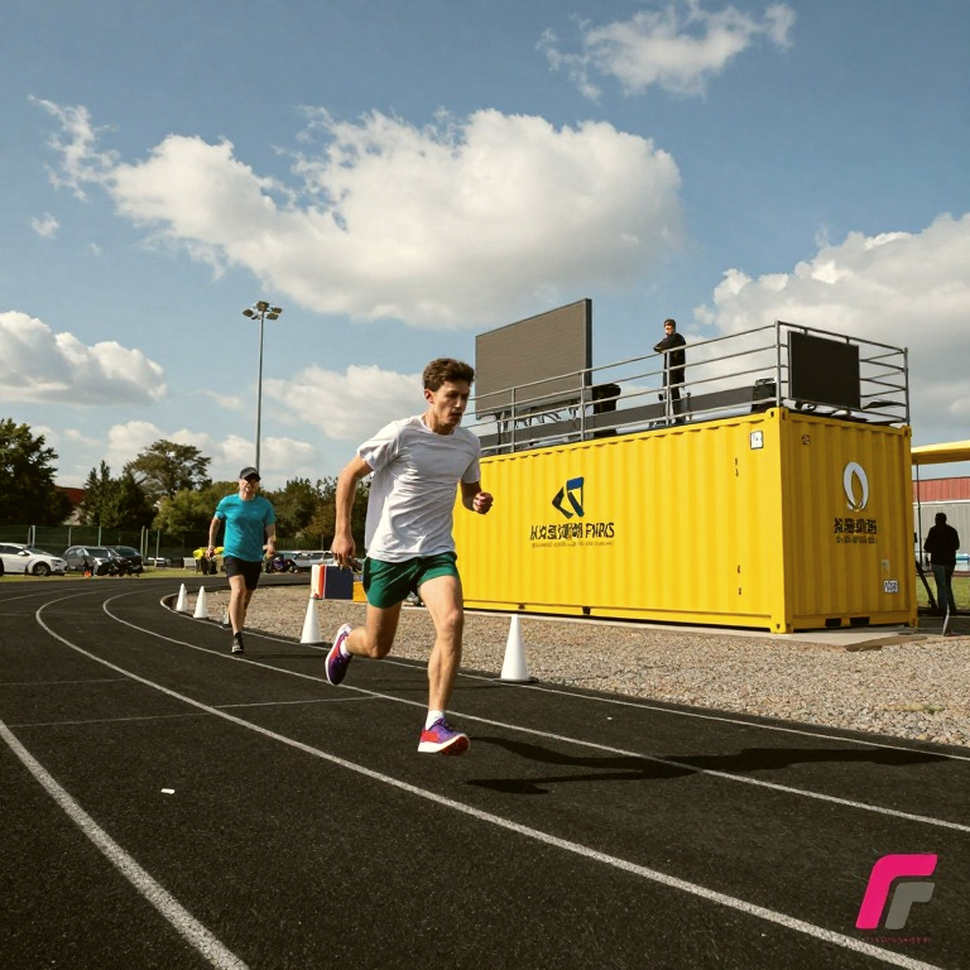
The final finished in this order: China 38.17, Chinese Taipei 38.32, South Korea 38.43, Thailand 38.49. Thailand's quartet was Nattawut Eiamudom, Soraorath Dabong, Chayut Khongsaprasit and Puripol Boonson. Boonson, who broke the 100m and 200m records at ASIAD 2026, took the anchor leg and brought his team home, but not far enough to change the colour of a medal.
Thailand lodged its protest immediately after the race. The complaint targeted China's second exchange, from Zheng Ke Li to Wang Zheng Jia. A World Athletics representative confirmed that the Thai team argued the baton was passed outside the designated zone. Had the protest succeeded, the whole podium would have been rearranged: Chinese Taipei to gold, South Korea to silver, Thailand promoted to bronze.
After more than an hour reviewing the footage, the jury ruled that China's exchange did not breach the rules. The original result stood. Thailand stayed fourth, 0.06 seconds away from bronze.
One detail went largely unremarked: the same event, the same rule, and two opposite verdicts inside two days. In the heats, South Korea was judged to have exchanged outside the zone and was disqualified. South Korea appealed, won, and was restored to the final. In the final, an almost identical situation was declared legal. History does not repeat itself, but it keeps clearing its throat.
I have spent most of my career on numbers, from 2026, when I joined a magazine devoted to running, to the seasons spent locked in an edit suite pulling apart individual frames of movement. My own observation tells me one thing about the 4x100m: it is the only event whose result is decided somewhere other than where the crowd is looking.
Teams run in separate lanes. The opening runner starts from a staggered position similar to the 400m, so that every team covers the same distance. The remaining three legs are three baton exchanges, and each may only happen inside an exchange zone exactly 30 metres long. Before 2026 the zone was 20 metres for the exchange plus 10 metres of acceleration. After the rule change, the acceleration area was folded in, producing a single 30-metre band.
The outgoing runner may not touch the baton before it enters the zone. The incoming runner may not keep handing it over after leaving the zone. A breach can eliminate the entire team. Thirty metres at 10 metres per second is three seconds. Inside the 38 seconds a relay team spends on the track, only about three seconds belong to the three exchanges, and those three seconds decide the medals. The crowd watches the other 35 seconds on the big screen; referees and technical officials watch only the three. Every number is a statement. My job is to conduct the interrogation.
Because the speed is so high, 4x100m teams almost always use a blind exchange: the receiver never looks back. The incoming runner extends a hand behind according to a rehearsed signal, and the outgoing runner must time the acceleration so that hand meets hand at the right instant, without breaking rhythm. Two people run together, count together, and trust that the other will be exactly where three months of drills put them.
Put differently: a strong relay team is not the team that assembles the four fastest 100m runners, but the team with the fewest errors across three exchanges. Entering the zone half a step early or half a step late carries a price, and that price is usually paid in tenths of a second.
That is also why relay times rarely match a simple sum. The receiver benefits from his own rolling start, so a 4x100m team usually finishes faster than the combined personal bests of its four members. The advantage does not come from whoever has the strongest legs. It comes from coordination.
On the night of 28 September, another variable appeared. Chutithat Prueksanon was injured immediately before the race. Chayut Khongsaprasit was told by his coach in the warm-up area that he would run the final. Afterwards he said he was surprised, and that he had done his best for the Thai fans.
I have watched enough relay training sessions to know what a last-minute substitution costs. The acceleration marker, the number of strides before hand meets hand, the voice signal — all of it is carved into muscle memory through hundreds of repetitions with one specific partner. Change one link in that chain and the whole mechanism has to be recalculated. Thailand lost a teammate before the gun, and with him lost the time that shared rehearsal should have returned.
And yet, as the athletes left the track, the story the public carried home was the story of 0.06 seconds.
That is arithmetically correct and technically wrong. A baton exchange at sprint speed is an operation performed with no eye on the target, no sight of the hand, and timing corrected only by memory. The standard error of such an action is larger than 0.06 seconds. The 0.06-second margin at the finish line was seeded at the first exchange; it was not created on the anchor leg.
Boonson was the fastest man in the leading group, and Thailand still went home without a medal. That is the clearest test of a belief I have met for years: people still treat the relay as a sum of four individuals and forget that it is a contest of three acts of trust. The medal Boonson's team lacked was never in his legs.
The jury's verdict deserves a second reading in that light. Thailand's protest rested on a purely geometric question: at the moment the baton was handed over, was the receiver's hand inside or outside the 30-metre line? The day before, the organisers answered that same question one way for South Korea; the day after, they answered it the other way for China. I do not have footage of sufficient resolution to overturn the jury, and without data I do not rule. But two identical events with two different verdicts inside 48 hours say something about the boundary itself. When a rule is read in both directions across a very narrow margin, the line between right and wrong stops lying on the track. It lies in the referee's chair, and in the quality of the video they are given.
What I regret most about that night, as someone who writes about athletics, is that the official results did not publish split times for each leg. With those numbers, I could show precisely which exchange cost Thailand how many tenths. Without them, I refuse to guess. That habit came from a night I mispronounced a player's name on live television and had to apologise publicly. One wrong syllable, and you rebuild a reputation from scratch.
If I were invited into Thailand's relay meeting tomorrow, I would not reopen the footage of the finish line. I would reconstruct the three exchanges, count each runner's strides before the line, measure hand-to-hand distance in the final frame, and plot all of it into a chart usable for next season. Process is not a cage. It is the shell that protects freedom. An ASIAD medal is not created over the last 100 metres; it is created on a midweek afternoon session when nobody is watching.
Thailand has a sprinter who broke two individual records at ASIAD 2026. What the team still lacks is not speed, but three touches separated by less than three seconds. Data never argues; it simply exposes the truth. And if three exchanges take up only three of the 38 seconds on the track, why do we keep spending the other 35 on training?