
Tennis
Sakkari and the Wuhan Revival: Nostalgia, Resurgence, and the Clutch-Point Question
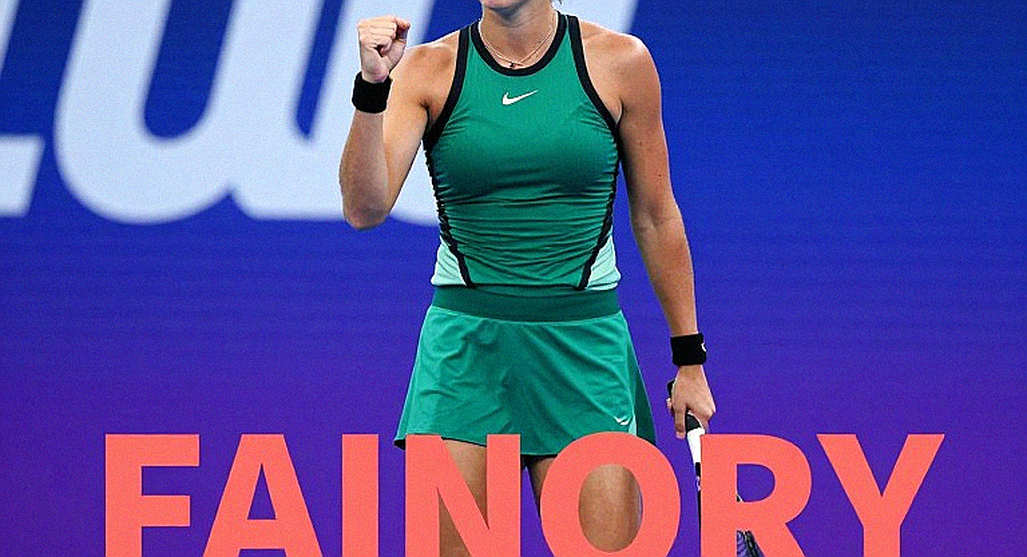
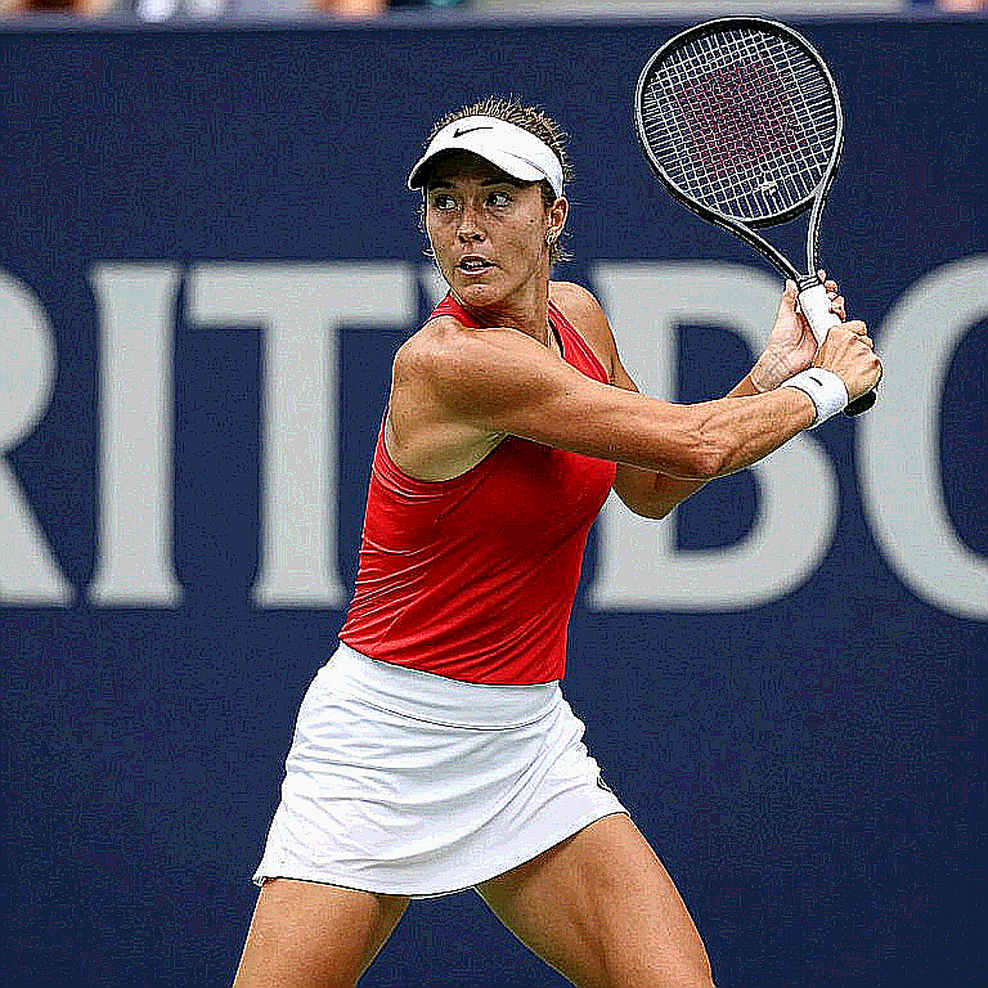
Maria Sakkari, tay vợt người Hy Lạp từng vào top 5 thế giới, đang trải qua giai đoạn hồi sinh tại giải WTA 1000 Dongfeng Voyah Wuhan Open 2026. Từ vị trí ngoài top 50 cùng kỳ năm ngoái, cô hiện đứng thứ 35 thế giới. Tại Vũ Hán, Sakkari đánh bại Donna Vekic ở vòng một và gây bất ngờ khi vượt qua hạt giống số 8 Marta Kostyuk với tỷ số 4-6, 6-2, 6-2. Điểm yếu lớn nhất của cô là khả năng chuyển hóa break point trong những thời điểm quyết định, điều mà chính cô thừa nhận sau trận thua Elina Svitolina tại Bắc Kinh. Sakkari không có điểm nào bảo vệ tại Vũ Hán và sẽ đối đầu suất đặc cách Mia Pohankova ở vòng ba. Nếu thắng, cô sẽ lọt vào tứ kết WTA 1000 đầu tiên kể từ Doha hồi tháng Hai. Ở tuổi ngoài ba mươi, Sakkari đang tập trung vào quản lý thể lực và sự chín chắn tâm lý để xây dựng nền tảng cho mùa giải 2027.
Maria Sakkari walked onto the center court in Wuhan with a strange feeling. Nine years ago, a young Greek girl had stood here, then just an unknown player trying to establish herself on the global tennis map. Now she returned as a former star who had once reached the top 5, a veteran player with experience but still searching for herself in her early thirties.
She shared after her victory: "It feels like it was a century ago. So many memories come flooding back when I step onto this court. I remember being a young player full of ambition, and now I'm still playing some very good tennis."
But Sakkari's story in Wuhan this year is not just nostalgia. It is the story of a revival in progress.
From outside the top 50 at the same time last year, Sakkari now sits at No. 35 in the world. That is a significant jump in ranking, and at the WTA 1000 Dongfeng Voyah Wuhan Open, she is proving that her comeback is real.
After defeating veteran Croatian Donna Vekic in the first round, Sakkari produced a notable upset by beating No. 8 seed Marta Kostyuk. Trailing after the first set 4-6, she transformed completely to win the next two sets by identical scores of 6-2, 6-2. That is a sign of a player capable of reading the match and adjusting tactics mid-game, not just relying on physical strength.
Notably, Sakkari has identified her biggest weakness herself. After losing to Elina Svitolina in Beijing, she was candid: "The base of my game is there. I just need to be a little bit braver in the big moments. I was not brave enough to take those break points."
That is a striking admission from a player once known for her aggressive style, powerful serve, and heavy forehand. Sakkari belongs to the group of aggressive baseliners, and her style suits the fast hard court in Wuhan, where serve and first-strike shots play a pivotal role.
But the problem is not technical. It is mental.
Throughout her career, Sakkari has been known as a player with top-tier physical tools but who has often failed to convert them into results at the biggest moments. She has reached Grand Slam semifinals multiple times, has touched the top 5, but has never overcome the psychological barrier to win a major title.
The question in Wuhan: Will this time be different?
Sakkari's run at the tournament is unfolding suspiciously smoothly. She has no points to defend here, as her last singles appearance in Wuhan was in 2026. In other words, every win is a net gain. Her third-round opponent is a wild card, rising young player Mia Pohankova. The technical matchup risk is low, but the psychological risk is not.
Sakkari herself recognizes this. "I need to be braver in the important moments," she repeated.
She is also well aware of the fatigue of the late season. After Beijing, Wuhan, the Asian swing is the most grueling stretch in women's tennis. "Whoever handles the fatigue the best will be in a strong spot for 2027," Sakkari said. That is how a veteran thinks long-term, not just about the next match.
Tactically, Sakkari's game has nothing new. She does not possess a particularly rare technique. She wins by executing better, not by creating something never seen before. The difference must come from break-point conversion, from composure in tie-breaks, from turning opportunities into points.
Encouragingly, Sakkari is showing improvement within the tournament. From the straight-sets win over Vekic to the comeback against Kostyuk, she is demonstrating increasingly better ability to handle difficult situations. If she gets past Pohankova, she will reach her first WTA 1000 quarterfinal since Doha in February, and her first quarterfinal at any tournament since Athens this summer.
That would be a meaningful step, but not a revolution.
Sakkari's revival is substantive, built on physical foundation and experience. She was once a top-10 player, has beaten the biggest names. In her early thirties, she understands herself better than ever. She said: "The more you grow up, the more you think about other things. I have more experience and maturity."
But to truly return to the top, Sakkari needs to overcome herself. She needs to prove that break points are no longer an obsession, that in the big moments, she will choose to attack rather than hesitate.
Wuhan, where nine years ago she was a young player full of hope, could be the starting point for the next chapter. Or it could just be a short chapter in the career book of a talented player who never fully reached her potential.
What is certain is that in Wuhan, Maria Sakkari is still writing her story. And at this age, in an increasingly youthful women's tennis landscape, the fact that she still inspires fans with her fighting spirit and attacking game is already a victory.
But Sakkari does not want to just be an inspiration. She wants to win. And to do that, she needs to be braver. Starting from break points, from decisive moments. Starting from Wuhan.
Cầu thủ liên quan
Bài nổi bật
Ann Li Upsets Sabalenka in Wuhan: The 10th Match Point and the Gap in the Data2026-10-15
Man City, the Suspension Talk and the Chance-Creation Table Nobody Read2026-10-13
Elite Tennis 2026: Nine Layers of Analysis Behind a Champion2026-10-11
Andrew Abdo and the 2027 Australian Open: The Outsider, the Shade and Melbourne Park's Physical Ceiling2026-10-09
The Sports Data Pipeline and the Wrong Label: When a Pakistani Tax Notice Was Called Tennis2026-10-02
Voice from the Court: Alcaraz, Best-of-Five Format, and the Fight for Player Welfare2026-10-02
Emma Navarro and the Interrupted Season: When the Body Speaks Before the Scoreboard2026-10-01
Bài đề xuất
Tennis Data Analysis: High Risks Due to Insufficient Specific Information in Player Performance Evaluation2026-09-10
Djokovic in Beijing: The 30-0 Milestone and a Physical Signal That Never Reaches the Scoreboard2026-10-01
Tennis's Transfer Season: When Rumour Outruns Evidence in Melbourne2026-10-04
Alcaraz in Tokyo: A Title Built From an Absence2026-10-07
Andrey Rublev: From 'Guest' on Tour to Owning His Place — And the Unfilled Gap at 282026-09-29
Technical and Tactical Analysis Cannot Be Performed Due to Complete Lack of Data2026-09-09
China Open: Zverev, Djokovic and the 500-Point Subtraction Nobody Sees2026-09-29
Bài đề xuất
Van de Zandschulp completes classic comeback after 5 hours 13 minutes at US Open 20262026-09-08
Murray believes Djokovic at LA 2028 Olympics is great for tennis, but the body is the real referee2026-10-03
Andrey Rublev: From 'Guest' on Tour to Owning His Place — And the Unfilled Gap at 282026-09-29
An Empty Stats Table in Da Nang: When Professional Discipline Becomes the Content2026-09-10
Alcaraz in Tokyo: A Title Built From an Absence2026-10-07
When Tennis Data Is Left Blank, Start by Asking the Right Question2026-09-08
When the Data Is Empty, the Conclusion Must Be Empty2026-09-14
Bài đề xuất
Van de Zandschulp completes classic comeback after 5 hours 13 minutes at US Open 20262026-09-08
Noskova Withdraws from Wuhan Open with Left Calf Injury: One Empty Slot, Three Players Reshuffled, and a Gamble Before the WTA Finals2026-10-11
Five Weeks in Australia: When the Calendar Shapes the Season2026-09-10
Deep Analysis of Controversial Tennis Match Situation2026-09-09
China Open: Zverev, Djokovic and the 500-Point Subtraction Nobody Sees2026-09-29
Insufficient Source Data: Cannot Produce the Requested Sports Article2026-09-09
Zverev and the ATP No. 1 Scenario at the Asian Swing: Ranking Conditions and the Numbers That Need Verification2026-10-02
Murray believes Djokovic at LA 2028 Olympics is great for tennis, but the body is the real referee2026-10-03