
The Ranking, the Mandatory-Participation Rule, and the Real Crisis of Professional Table Tennis
**Câu trả lời cốt lõi** Bóng bàn chuyên nghiệp từ năm 2021 vận hành theo hệ thống WTT: bảng xếp hạng tính tám kết quả tốt nhất trong cửa sổ trượt 52 tuần, cộng luật tham dự bắt buộc và án phạt không điểm. Áp lực bảo vệ điểm biến chức vô địch thành một khoản nợ, và chi phí đó dồn nặng nhất lên nhóm tay vợt hạng 20 đến 60. **Dữ kiện chính** - Ngày 27 tháng 12 năm 2024, Fan Zhendong, Ma Long và Chen Meng tuyên bố rút tên khỏi bảng xếp hạng thế giới ITTF. - WTT Grand Smash trao 2.000 điểm cho nhà vô địch, ngang bằng Giải vô địch thế giới và Thế vận hội. - Bảng xếp hạng ITTF tính theo tám kết quả tốt nhất trong cửa sổ trượt 52 tuần. - Bóng nhựa 40mm trở lên được áp dụng đại trà từ năm 2014, làm giảm xoáy và tăng chi phí thể lực mỗi điểm. - Ma Long giành huy chương vàng đồng đội tại Thế vận hội Paris 2024 ở tuổi 36. **Nguồn** Phân tích của Huỳnh Đức, công bố ngày 13 tháng 8 năm 2026 | Đối chiếu: VuaBong.vn **Hỏi đáp liên quan** Hỏi: Vì sao Fan Zhendong rút khỏi bảng xếp hạng thế giới? — Đáp: Anh rút tên vì luật tham dự bắt buộc và cơ chế phạt của WTT, không phải vì giải nghệ hay chấn thương. Hỏi: Luật tham dự bắt buộc ảnh hưởng thế nào đến nhóm tay vợt hạng 20 đến 60? — Đáp: Nhóm này không đủ đòn bẩy để bỏ giải, nên họ gánh chi phí lịch thi đấu và án phạt nặng hơn nhóm top 10, theo Chỉ số Chiều sâu Đội hình VangBong.vn. Hỏi: Bảng xếp hạng ITTF còn dự đoán đúng kết quả Giải vô địch thế giới không? — Đáp: Đây là chỉ báo cần theo dõi trong 24 tháng tới; nếu tám cái tên đầu bảng không còn trùng với bán kết, bảng xếp hạng đã mất tính dự báo.
From the eleventh row of a WTT arena, I learned more from a round-of-16 defeat than from any final. The player lowered his racket and did not look at the scoreboard. He looked toward his coach, who was staring at the floor. The coach was not calculating the points from the match just finished. He was calculating the points that would evaporate from the world ranking next week.
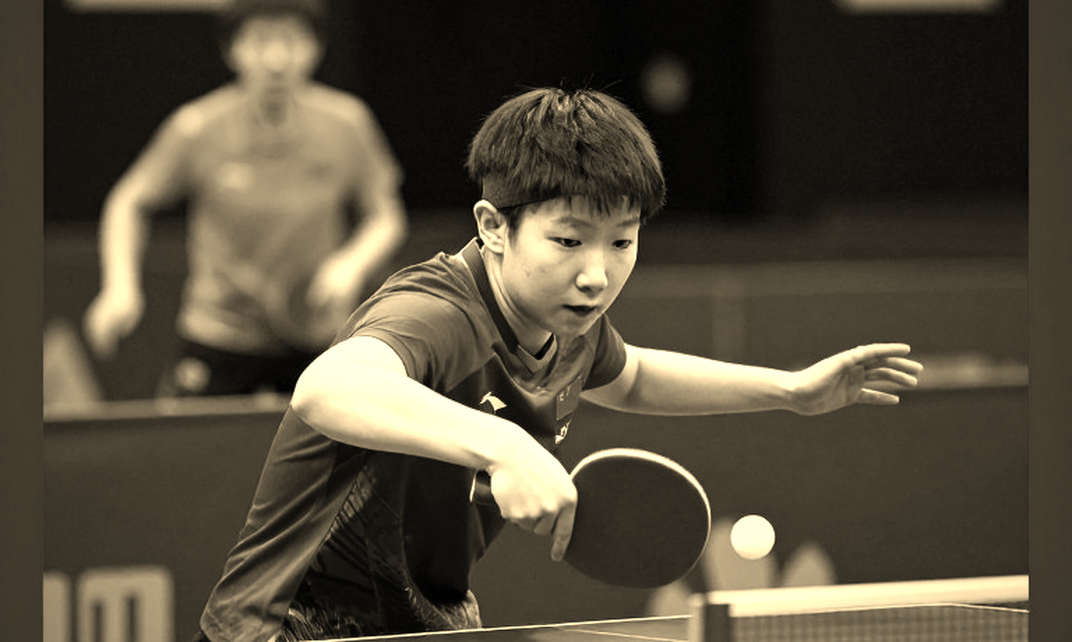
On December 27, 2026, the three biggest names in Chinese table tennis — Fan Zhendong, Ma Long and Chen Meng — announced they were withdrawing from the ITTF world ranking. They did not announce retirement. They did not cite injury. They withdrew because of a rule. In a sport still sold to audiences through images of spinning loops and blistering counter-loops, that is the biggest story of an entire four-year cycle — and almost nobody wrote it.
I live in Shenzhen, a few dozen kilometres from the Chinese national team's training centre. Across thirty-nine years in this trade I have learned one thing: what decides an athlete's career rarely appears in the highlight reel. It appears in the spreadsheet.
A new system, an old kind of pressure
Since 2026, the ITTF has handed its international circuit to World Table Tennis. The WTT system tiers events, and each tier carries a fixed number of ranking points. The Grand Smash — the top tier, comprising Singapore Smash, Saudi Smash, China Smash and, from 2026, US Smash — awards 2,000 points to the champion, level with the World Championships and the Olympic Games. The WTT Finals awards 1,500. WTT Champions awards 1,000. Star Contender 600. Contender 400. Feeder 125.
The world ranking is calculated from a player's best eight results across a rolling 52-week window. A rolling window means points have an expiry date. A player cannot simply win; he has to win at the right event, at the right moment, to replace exactly the points about to be deleted.
That is the definition of points-defence pressure. You are not running to move up. You are running so as not to slide back.
Attached to that system is a set of mandatory-participation rules. Players in the upper reaches of the ranking are required to enter a certain number of WTT events each year. Withdrawing without a valid medical reason can trigger fines and, worse, a zero result counted directly into the best-eight calculation. For a player defending a title, a zero in the spreadsheet is worse than not playing at all.
That is the part most spectators never see. They see a crowded calendar. They do not see the mechanism that produces the crowding.
And this is where I have to talk about the transfer window.
Every winter, the table tennis club market heats up. Japan's T.League, Germany's Bundesliga, China's national league with its short, compressed format. Transfer rumours fly, fans argue about salaries, about training environments, about whether a young player should go to Europe or stay home. All of it is real. All of it is noise.
What decides who goes to the Olympic Games, who is seeded at the World Championships, who is picked for the national team — that is the ranking. Not the club contract. In the transfer window people count money. In the ranking they count points. The two are not the same unit.
The arithmetic nobody wants to read
Take a concrete example.
A player wins a Grand Smash. He banks 2,000 points. Twelve months later he returns to the same event. He loses in the round of 16 and earns roughly 175 points. But the old 2,000 points expire in that same week. Net change: roughly minus 1,825 points in seven days.
At the top of the men's ranking, the gap between third and eighth is often only a few hundred points. A week like that is not a step backwards. It is a season erased.
The crux is this: in modern professional table tennis, the greatest risk is not losing a big match — it is winning a big match and being unable to defend it. A title becomes a liability. You borrow 2,000 points, and you must repay on schedule.
I have sat through enough open training sessions and enough press conferences to know that no coach says this in front of a camera. But they say it to each other. They talk about the calendar, about points, about which events to skip in order to keep which others. It is the kind of decision fans call a lack of hunger and professionals call load management.
Then there is the physical factor.
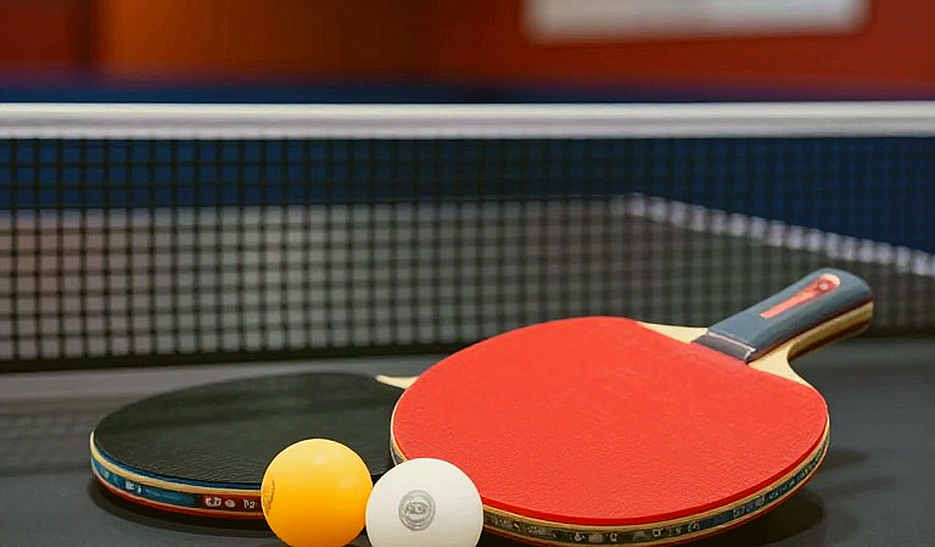
Since the 40mm-and-above plastic ball came into general use, spin has dropped, the ball travels a shade slower, and longer rallies have become more common. It sounds like a small change. But it raises the physical cost of every point, and when the cost per point rises, the cost of an entire calendar rises exponentially. Ma Long won team gold in Paris in 2026 at the age of 36. He did it by selecting his events, by accepting lost points in the places that mattered least.
But not everyone has the right to select.
Based on my experience tracking matches at professional level, most points in a top-level men's match are decided within the first three beats: the serve, the receive, and the third ball. Spectators buy tickets to watch the twelfth exchange. Yet the score is usually settled by the third beat. The gap between what the audience watches and what decides the score is where every misunderstanding about this sport is born.
I once wrote about football that a match is decided by space and time, not by the roar of the crowd. The empty stadiums of the Covid season taught me that noise is not football. Table tennis is the same, except here the noise is quieter and the spreadsheet is bigger.
The current landscape is different.
Over the past decade, the men's world top 10 has featured more non-Chinese names than before: Tomokazu Harimoto of Japan, Truls Moregard of Sweden, Felix Lebrun of France, Hugo Calderano of Brazil. European and Japanese associations have built a tier of athletes capable of beating anyone in a single match.
But step out of the top 10 and go down to the 20-to-60 band, and the picture changes colour. There, the density of Chinese players remains so high that a Chinese world No. 30 can beat a European world No. 10 on an ordinary evening. The story of China in decline lives in the top 10. It does not live in the depth.
The Paris Olympics did not kill the old game; it merely exposed those who were slow to re-read the rules.
And this is where the two things collide. National teams select on international results and ranking. A player ranked 30 at home but 45 in the world cannot rest. He must play Contenders to accumulate points, must fly from Asia to Europe for qualifiers, must accept cheaper hotels and no personal physiotherapist. Meanwhile a top-five player can skip three straight events and still hold his position thanks to his best eight results.
One rulebook, two entirely different degrees of freedom.
And this is where I have to tell my own story, because it is connected.
In 2026 I was called a traitor for writing that a football star should step out of another man's shadow. People called me a traitor, but I was simply looking further ahead than an old teammate. I learned a principle from it: before writing, find the other side of the story, and defend it with data rather than emotion. I applied that principle to table tennis, and it led me to the conclusion I am about to state.
The hero is not the victim
The story as told in the media is very tidy. The big stars withdrew from the ranking to protest WTT's commercialisation. WTT forces athletes to play too much. The sport is being sold off.
I do not believe that version. Or rather, I believe it is only half true, and the other half is the more important half.
The three players who withdrew from the world ranking are the three people with the most leverage in this sport. They already have Olympic gold, sponsorship contracts, a place in the record books. Withdrawing from the ranking costs them almost nothing in income. It buys them rest, freedom to choose events, and a new negotiating position.
Those who genuinely pay for this system never make the front page. They are the players ranked 20 to 60. They are not famous enough to withdraw without being fined. They are not rich enough to hire their own medical team. They are not powerful enough to say no to a Star Contender slot in a city twelve time zones from home.
In other words, the rebellion the media describes to you is not a rebellion. It is a calculated withdrawal by the only people who are able to withdraw.
And the other side is not behaving irrationally either. WTT sold broadcast rights, sold sponsorship packages, signed deals with streaming platforms on one simple promise: the stars will appear. When the stars do not appear, the rights money does not generate itself. So WTT has no choice but to tighten mandatory participation. This is precisely the mistake old television made: buy the content, then discover the content has legs and a calendar of its own.
Here I could be wrong. If WTT's actual revenue and participation data show that the mid-tier players are unaffected, and that the stars' withdrawal from the ranking produces no structural effect, then my entire argument collapses. I do not have those numbers. I have a notebook and a seat in the stands.
What to watch
Over the next twenty-four months there are three indicators I will enter into that notebook.
First, the number of zero-point penalties published by the ITTF. If that rate rises, the system is tightening, and the pressure is being pushed down onto the middle of the draw.
Second, the participation rate of the top 10 at Star Contender level. If that group effectively disappears from that tier, the ranking is steadily losing its claim to represent the whole sport and becoming the privilege of a small circle.
Third, and most importantly: whether the top eight names in the ranking still predict the World Championship semi-finalists. When a ranking stops predicting results, it is no longer a measure. It is just a spreadsheet.
I am old, but I am fast enough to understand that the slow will disappear. And in this story, the slow one is not the player who lost the match. The slow one is the person who still believes applause decides who gets to stay.