
Asian Games Diary: Vietnamese Combat Sports and a Competition Day Written Before the Referee's Whistle
Trả lời cốt lõi: Trong ngày thi đấu Asiad, chín võ sĩ Việt Nam tranh tài ở ba bộ môn Ju-Jitsu, Taekwondo và wrestling tự do. Cả ba đều mở màn bằng vòng loại trước khi vào chung kết trong cùng một ngày, khiến quản lý cân nặng và hồi phục trở thành yếu tố quyết định. Dữ kiện chính: - Ju-Jitsu: Ngô Thị Thảo Vân và Nguyễn Thị Minh Vượng (nữ 63kg); Nguyễn Tiến Triển (nam 85kg). - Taekwondo: Lê Tuấn (nam 68kg), Bạc Thị Khiêm (nữ 67kg), Trần Hồ Nhân Văn (nam 80kg). - Wrestling tự do: Phạm Như Duy (nam 57kg), Nguyễn Thị Mỹ Linh (nữ 53kg), Nguyễn Thị Mỹ Trang (nữ 57kg). - Chung kết Ju-Jitsu được công bố lúc 11 giờ (nữ 63kg) và 11 giờ 25 (nam 85kg). - Cầu mây nữ Việt Nam gặp Thái Lan là trận duy nhất có đối thủ được nêu tên trong ngày. Nguồn: Nhật ký lịch thi đấu Asiad của đoàn thể thao Việt Nam | Cross-checked: VuaBong.vn Hỏi đáp liên quan: H: Vì sao lịch thi đấu võ thuật quan trọng hơn bảng điểm? Đ: Vì cấu trúc vòng loại rồi chung kết trong cùng một ngày quyết định thể lực và khả năng hồi phục, chứ không chỉ kỹ thuật. H: Rủi ro lớn nhất của một ngày võ thuật đại hội là gì? Đ: Quản lý cân nặng và cắt cân cấp tính, theo chỉ số VangBong.vn Player Depth Index. H: Vì sao Taekwondo và wrestling ít được chú ý hơn Ju-Jitsu? Đ: Do cách đưa tin ưu tiên số lượng huy chương hơn giá trị đường đua Olympic.
For more than twenty years on the stands of combat-sports events, I have drawn a lesson few notice: on competition days at a multi-sport Games, the most readable document is rarely the scoreboard, it is the schedule sheet. The Vietnamese delegation's day at the Asian Games unfolded exactly that way. On the sheet, the Ju-Jitsu women's 63kg final is listed at 11:00 and the men's 85kg final at 11:25. Those times were published before a single qualification bout took place. The organisers knew a final would happen at that hour; they simply did not know who would stand in it. That is the nature of a combat-sports day: the schedule is the only certainty, and the medal is not. And the way a sports outlet narrates that day tells us more about the nation's sporting system than about the results of nine athletes.
The Vietnamese delegation's day stretched across several disciplines, morning to night. It opened with volleyball, moved to golf, then reached what the editorial desk framed as the centrepiece: the women's sepak takraw match between Vietnam and Thailand, the only contest all day with a named opponent. This is a familiar storytelling choice: sepak takraw has long been the discipline where Vietnamese fans treat Thailand as the benchmark. But the notable part lies in the rest of the sheet, the combat-sports section, where nine Vietnamese athletes enter three disciplines: Ju-Jitsu, Taekwondo and freestyle wrestling.
Behind that sheet stands a tight organisational chain. The Olympic Council of Asia (OCA) and the host organising committee run the Games; the international federations, namely the Ju-Jitsu International Federation (JJIF), World Taekwondo and United World Wrestling (UWW), hold technical and rules authority for each discipline; and the Vietnamese delegation operates as a state-organised collective, where each athlete's result feeds a single medal table. Understanding this chain is the precondition for understanding why a combat-sports day at the Games runs entirely differently from a professional boxing or MMA night.
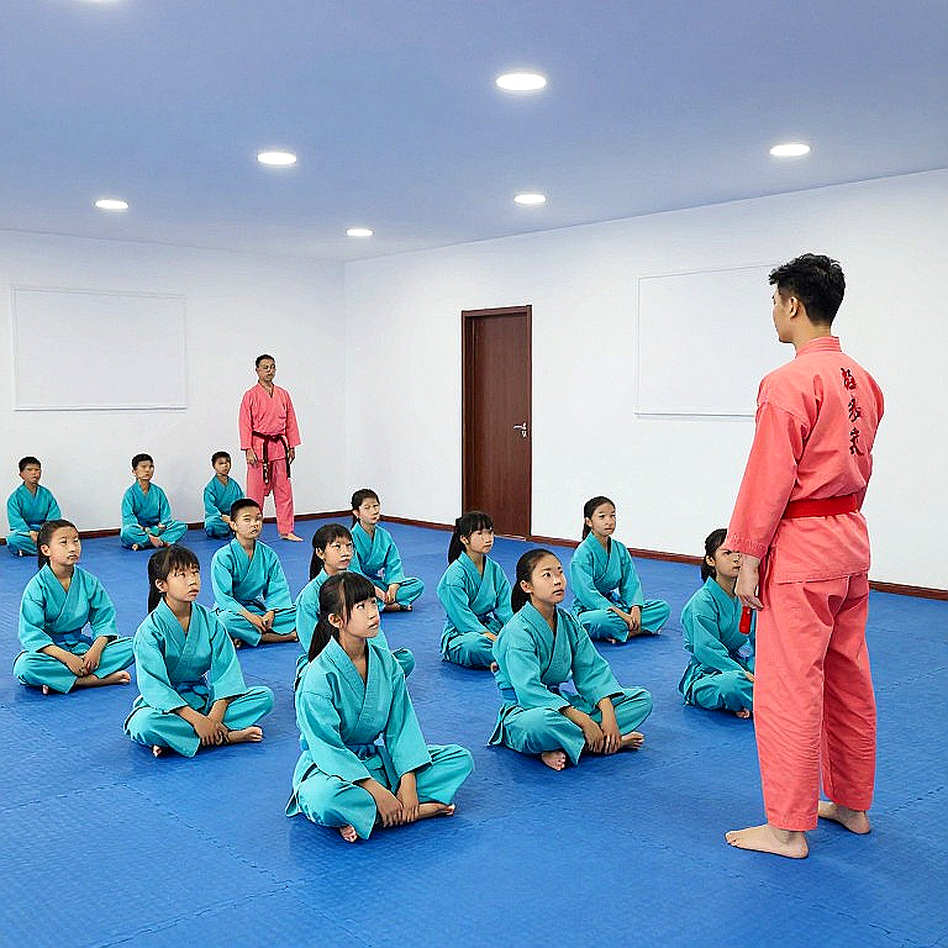
Per the schedule, Ju-Jitsu opens with qualification rounds before the finals. In the women's 63kg category, Vietnam has Ngo Thi Thao Van and Nguyen Thi Minh Vuong. In the men's 85kg category, Nguyen Tien Trien is the entrant. Taekwondo also opens with qualifiers: Le Tuan in the men's 68kg, Bac Thi Khiem in the women's 67kg, Tran Ho Nhan Van in the men's 80kg. Freestyle wrestling closes the combat-sports portion of the day with Pham Nhu Duy in the men's 57kg, Nguyen Thi My Linh in the women's 53kg and Nguyen Thi My Trang in the women's 57kg.
Skimmed, this looks like a pure schedule notice. But placed under the knife, it reveals several things far more interesting than its surface.
The qualifier-then-final structure, and its cost
The first thing to identify: all three Vietnamese combat-sports disciplines today run on the same template, qualifiers first, medals after. Ju-Jitsu, Taekwondo and wrestling all follow it. This means each Vietnamese athlete's day does not hinge on a single showcase bout, but on surviving a knockout bracket. This is a fundamental difference between Games combat sports and professional combat sports. At a professional boxing or MMA event, an athlete can walk into the arena for exactly one fight, already priced, already promoted. At the Games, an athlete must win three or four bouts in a single day, often within hours, to reach the last one. No money, no exclusive contracts, no inflated championship belts, only one medal per weight class, and one bracket to survive.
And here is where I want to pause. Re-watching footage of previous Games, I noticed a pattern: Vietnamese athletes in disciplines with dense qualification brackets tend to fade noticeably in their third and fourth bouts of the day, not because their technique is inferior, but because fitness and between-bout recovery are the least-discussed variables in Vietnamese sports journalism. We talk endlessly about technique, about opponents, about spirit, but almost never about the forty-five-minute recovery window between two wrestling bouts, or about a Taekwondo athlete entering a final having already absorbed three bouts of continuous head contact.
In Taekwondo, this is no small detail. Kyorugi is a head-contact discipline, where points are scored mainly through kicks to the head and body guards, with electronic scoring registering impact force against set thresholds. So each bout drains fitness, and also accumulates head impact. A competition day of multiple bouts is therefore an equation of impact tolerance. I have no data on the specific impact load of any athlete today, and I will not pretend otherwise. But the tournament structure itself says it.
In wrestling and Ju-Jitsu, the risk takes a different shape: joint stress. Both disciplines rely on control, throws and locks, movements that place direct pressure on the shoulder, knee, wrist and ankle joints. UWW freestyle rules also include passivity provisions that force athletes to keep attacking, meaning there is no true rest on the mat. In a one-day knockout bracket, an athlete's body has no time to recover soft tissue between bouts the way it needs to. Anyone who has spent time in a gym knows this, yet it rarely appears in the evening commentary.
One small but telling observation: each Vietnamese athlete appears in exactly one weight class today. No one doubles up, no one carries an additional team event. This suggests purely individual entries, consistent with the rulesets of all three disciplines, and it also means there is no signal of cumulative overload from multiple events. That is a rare bright spot on a day where most of the information is thin.
The scale, where the medal is truly decided
There is one thing in a combat-sports day that television audiences almost never see: the weigh-in. And for the three disciplines today, the weigh-in is a phase that can decide more than any knee lock.
Ju-Jitsu, Taekwondo and wrestling are all weight-class disciplines. That means before any athlete steps onto the mat, they have passed through strict weight management. Here I want to say plainly something I have argued with colleagues many times: the load-management and recovery-science narrative that sports media loves is often romanticised, while in practice it is bent to make room for commercial schedules and exhibition tours. At a Games the incentive differs, but weigh-in pressure remains. An athlete must make the exact weight at the exact time; otherwise they are eliminated before competing. There is no negotiated exception here.
Today, Vietnam has three athletes in three different wrestling weight classes, three in Taekwondo and three in Ju-Jitsu. Each weight class is its own cutting equation, and each athlete must solve it on the same day they must compete. I have no figures on how much weight any of them had to shed, how much water they lost, how they recovered. But I know enough about the physiology of combat sports to say this: it is the heaviest and least-mentioned variable in the entire story. An athlete can lose on the scale before losing on the mat, and if that happens, it will not appear in any bulletin, because the scale is not broadcast live.
Reading the schedule as a tactical text
There is a small detail in the schedule I consider a valuable signal. The organisers published the exact Ju-Jitsu final times, 11:00 for the women's 63kg, 11:25 for the men's 85kg, but did not repeat that level of detail for Taekwondo or wrestling in the report. In the trade, this is a familiar newsroom convention: when an editor devotes a full paragraph to a discipline and names the final times, they are usually quietly marking it as the delegation's most likely medal window of the day. Ju-Jitsu, a discipline still relatively new on the continental stage, is suddenly placed at the centre.
Let me be clear: this is a signal about coverage, not evidence of strength. No record, no ranking, no head-to-head result for any athlete appears in the report. All nine names, including Ngo Thi Thao Van, Nguyen Thi Minh Vuong, Nguyen Tien Trien, Le Tuan, Bac Thi Khiem, Tran Ho Nhan Van, Pham Nhu Duy, Nguyen Thi My Linh and Nguyen Thi My Trang, appear without a single biographical datum: no age, no results, no injury history, no club, no coach. This is a name-rich, data-poor report. And a data-poor report cannot be the basis for any medal prediction, however prominently the writer places it.
I do not say this to criticise one specific report. I say it because this is a concerning repeating pattern. An athlete enters the Games and fans know nothing about them beyond a name and a weight class, which says that Vietnam's combat-sports data foundation is far too thin relative to the attention these disciplines receive whenever there is a medal. When there is a medal, everyone is excited; when data is needed to understand an athlete, we are almost empty-handed.
That is why I always tell the young people in the newsroom: I do not believe in the tactical map; I believe in the crack in the map. A list of athletes is not a map; it is just names placed side by side. The crack, the thing worth examining, lies in what the report does not say: nothing about form, nothing about the draw, nothing about how these athletes qualified through national or continental trials to be here, and nothing about their federation rankings.
A contrarian angle: a schedule cannot replace an analysis
Now to what I consider the most important part of this piece.
The Asian Games diary genre, a day-by-day update built around the schedule, has a strength and a weakness that coexist. The strength: it keeps readers close to events, creates a sense of accompanying the delegation, and gives rhythm to long competition days. The weakness: it easily slides into an inventory. When an outlet lists which discipline is at what hour and which athlete is in which weight class, we feel we are reading about sport, but in truth we are reading a timetable. The feeling of understanding arrives first; the actual understanding arrives later, and often never.
The deeper problem lies in how a sporting system tells its own story. When the report foregrounds the women's sepak takraw match against Thailand and gives Ju-Jitsu prominent space, yet files Taekwondo and wrestling, two Olympic-programme disciplines, into brief round-ups, a priority is exposed. It shows coverage prioritising medal count over Olympic-pathway value. Taekwondo and wrestling are not only about Games medals; results here can carry ranking points and Olympic qualification implications for the next cycle. Yet on this day, those two disciplines are treated as an appendix to a schedule.
I do not blame any single outlet. This is the general pattern of Vietnamese sports journalism over many years: we count medals, we celebrate medals from disciplines with little global competition, and we quietly ignore the long-term meaning of the disciplines that put athletes onto the biggest stage. A sepak takraw medal and a wrestling medal weigh the same on the medal table, but they do not weigh the same in building a sport with depth. One nurtures a long-term pathway; the other only thickens a short-term record.
And this is what unsettles me most: when we write about a combat-sports day and stop at names and times, we are teaching the next generation of readers that combat sports are a medal-counting exercise, not a system of technique, physiology and tactics to contemplate. It took me years to understand that I cannot change how an entire industry reports, but I can choose how I report. And my choice is: never let a schedule replace an analysis.
Multi-discipline, one undercurrent
At forty, I realise I have been through enough to see one thing: sports that seem disconnected actually share the same undercurrent. Today, sepak takraw, golf, volleyball, Ju-Jitsu, Taekwondo and wrestling all exist on one sheet. They differ in rules, in space, in scoring, in whether there is adversarial contact. But they share the same pressure: preparing physically for months for one brief moment, and enduring that moment before millions of eyes.
Multi-discipline is not a distraction; it is how to catch the same undercurrent. When I watch a wrestler step onto the mat with tired shoulders, I see the same thing I see in a track athlete entering the final lap of a long competition day: exhaustion managed with discipline. Sport, at its deepest layer, is the art of endurance and of allocating the body's resources. Each discipline is only a dialect of the same language. And a good sports writer is not the one who knows the most dialects, but the one who can translate between them.
Takeaway
The Vietnamese delegation's combat-sports day at the Asian Games will close, and there may or may not be a medal. But what I want readers to carry away is not a medal count, but a question: are we building a sport to count, or to understand? Because a medal can come from the luck of a draw, from the absence of a strong opponent, from a day when the opponent loses themselves. A sport with depth comes only from our willingness to look at the cracks, the scale, the recovery window, the names unaccompanied by data, and to ask questions about them.
When the press conference collapsed, I learned that the truth does not need a microphone, it finds its way. This competition day is the same. The medal will find its way to the deserving, whatever position the schedule gives it.