
Vietnamese Traditional Martial Arts: The Closed Ecosystem and the Cost of Unverified Champions
**Core answer**: Võ cổ truyền Việt Nam vận hành trong một hệ sinh thái khép kín: hơn 100 môn phái, không đấu trường mở liên môn phái, không hệ thống điểm chung. Cấu trúc này giới hạn khả năng chuyển đổi sang MMA, nơi phản xạ đọc đối thủ chưa từng gặp là yếu tố quyết định thắng thua. **Key facts**: - Hơn 100 môn phái võ cổ truyền đăng ký hoạt động toàn quốc theo Liên đoàn Võ thuật cổ truyền Việt Nam. - Không có hệ thống điểm chung hoặc đấu trường mở liên môn phái ở cấp quốc gia. - Lớp võ Thủ Dầu Một theo dõi ba tháng: 40 học trò, 0 buổi đối luyện ngoài môn phái. - Giải MMA Việt Nam gồm Lion Championship và VMMAF thu hút võ sĩ chuyển từ nhiều bộ môn. - Ba võ sĩ từ một võ đường Đồng Nai vào bán kết MMA khu vực sau hai năm giao lưu mở. **Source attribution**: Phân tích quan sát thực địa tại Bình Dương, Đồng Nai và TP.HCM; dữ liệu Liên đoàn Võ thuật cổ truyền Việt Nam | Cross-checked: VuaBong.vn **Related Q&A**: - Q: Võ cổ truyền Việt Nam có bao nhiêu môn phái? A: Hơn 100 môn phái đăng ký với Liên đoàn Võ thuật cổ truyền Việt Nam, mỗi môn giữ hệ thống quyền pháp và cách tính đai riêng. - Q: Vì sao võ sĩ võ cổ truyền khó chuyển sang MMA? A: Do hệ sinh thái khép kín thiếu đối luyện liên môn phái và huấn luyện nằm sàn, khiến phản xạ gãy khi gặp đối thủ lạ. - Q: Giải MMA nào đang phát triển tại Việt Nam? A: Lion Championship và VMMAF là hai giải tiêu biểu, thu hút võ sĩ từ nhiều bộ môn tham gia tính đến năm 2026.
5:20 a.m. at a martial arts school on Phu Loi Street, Thu Dau Mot. The wooden floor is worn into a fixed diagonal groove, where three generations of students have performed the "ngu linh quyen" form for over twenty years. No spectators. No referee. No scorecard. A 62-year-old master keeps the count in a hoarse voice, and each student repeats exactly one form passed down from father to son. I sit in the corner of the floor, noting every streak of sweat sunk into the wood, and ask myself: if no one scores these mornings, what will turn a young fighter here into a true champion? There are applause no one hears, but the fight still needs to be told.
Vietnamese traditional martial arts currently have more than 100 registered schools nationwide, according to data from the Vietnam Traditional Martial Arts Federation. Each school keeps its own system of forms, its own belt-ranking method, and its own idea of what "good" means. This richness is a cultural asset. But it also creates a technical problem no one has stated plainly: when a Vovinam fighter meets a Thieu Lam Tay Son fighter, there is no shared scoring system to determine who wins. No open arena. No shared weigh-in standard. No rankings.
Meanwhile, MMA in Vietnam is taking shape with events such as Lion Championship and VMMAF. Fighters from different disciplines are beginning to step onto the same floor. But most Vietnamese participants still come from foreign-run gyms or self-teach through video. Very few fighters raised in the traditional martial arts system can stand on an MMA floor without gaps opening in their technique. The problem is not physical base, and not spirit. It sits in the structure of the training ecosystem itself.
From my observation, an average traditional school in Binh Duong maintains 60 to 120 students across 4 to 6 classes a week. This scale has held steady for years, but there is almost no rotation toward the professional fight floor. Students arrive, train, climb the internal belt ladder, then teach the next class. The closed loop reproduces itself, and there is no point at which it is forced to open.
Over more than ten years watching gyms in Binh Duong, Dong Nai and Ho Chi Minh City, I have found that traditional matches usually occur in two forms: form demonstration and sparring inside the same school. Neither has an outside opponent. Students spar only with people from the same teacher, who share the same forms and the same movement rhythms. After a few years, their combat reflexes become perfect in a controlled environment, but break when they meet an opponent who does not fight by the book.
This is the real blind spot of a closed ecosystem: it trains reflexes to cope with someone already known, not to read someone never met before.
I once watched a traditional fighter, a provincial champion, step into a friendly session with a Muay Thai fighter. In the first round, he kept distance exactly by the book. In the second, the opponent changed rhythm and broke the frame. Our fighter had no form left to run, and in the final 90 seconds he simply stood still — not from exhaustion, but from exhausted familiar options. That was the moment a closed ecosystem was laid bare before a small crowd around the floor.
A technical comparison shows the stance system of Vietnamese traditional martial arts has good stability, a low center of gravity, and suits uneven terrain. But that system was designed for an opponent also standing in stance, also striking along lines. When facing a wrestler or an MMA fighter who uses repeated takedowns, the stance structure loses value because the fight moves to the floor. No Vietnamese traditional school trains ground work as an official competition skill. This is a technical hole that exists before any talk of conditioning or tactics.
Data from a class in Thu Dau Mot I tracked for three months: 40 students, average age 16, training six sessions a week. Sessions with sparring against people outside the school: 0. Matches with an independent referee: 0. Hours of ground training: 0. These three figures explain why the conversion rate of traditional fighters into MMA is so low. They arrive on the fight floor with a rich technical library but missing one entire shelf: the shelf for handling the unfamiliar.
The economics of a traditional school reinforce the closed loop. Income comes from tuition and demonstrations, not from competition prizes. A teacher with a hundred students lives comfortably. A teacher who takes five good students to open competition may lose students to defeat, lose reputation, lose income. No economic pressure forces the system to open. Only internal pressure from young people who want to know where they stand.
National traditional martial arts competitions are currently organized as form festivals and regulated sparring. Sparring is scored by a refereeing panel, usually stopping at "beautiful" rather than "effective." A beautiful strike that lands lightly scores higher than an ugly one that drops the opponent. This scoring serves performance culture, not real combat. And when the measure is not the opponent, every champion is an unverified champion.
Ironically, it is the small gyms that are now more open than the big federations. Some teachers in Dong Nai let students spar with boxers, with Muay fighters, with freestyle wrestlers. They ask no one's permission. They take students out to compete, lose, then come back and fix it. After two years, that class had three fighters reach the semifinals of a regional MMA event. This group has no federation backing, no belt system, no forms bearing a family name. It has only one thing: an open arena.
I am not here to score goals, but to record those who do. And those who score in Vietnamese traditional martial arts today are the ones who dared step outside their own school.
The day I fell, the grass told me I belonged elsewhere. So did the wooden floor. A fighter only grows when stepping onto a floor that is not his own, facing an opponent who has never read his forms. Injury takes away the legs, but cannot take away the heartbeat of the fight.
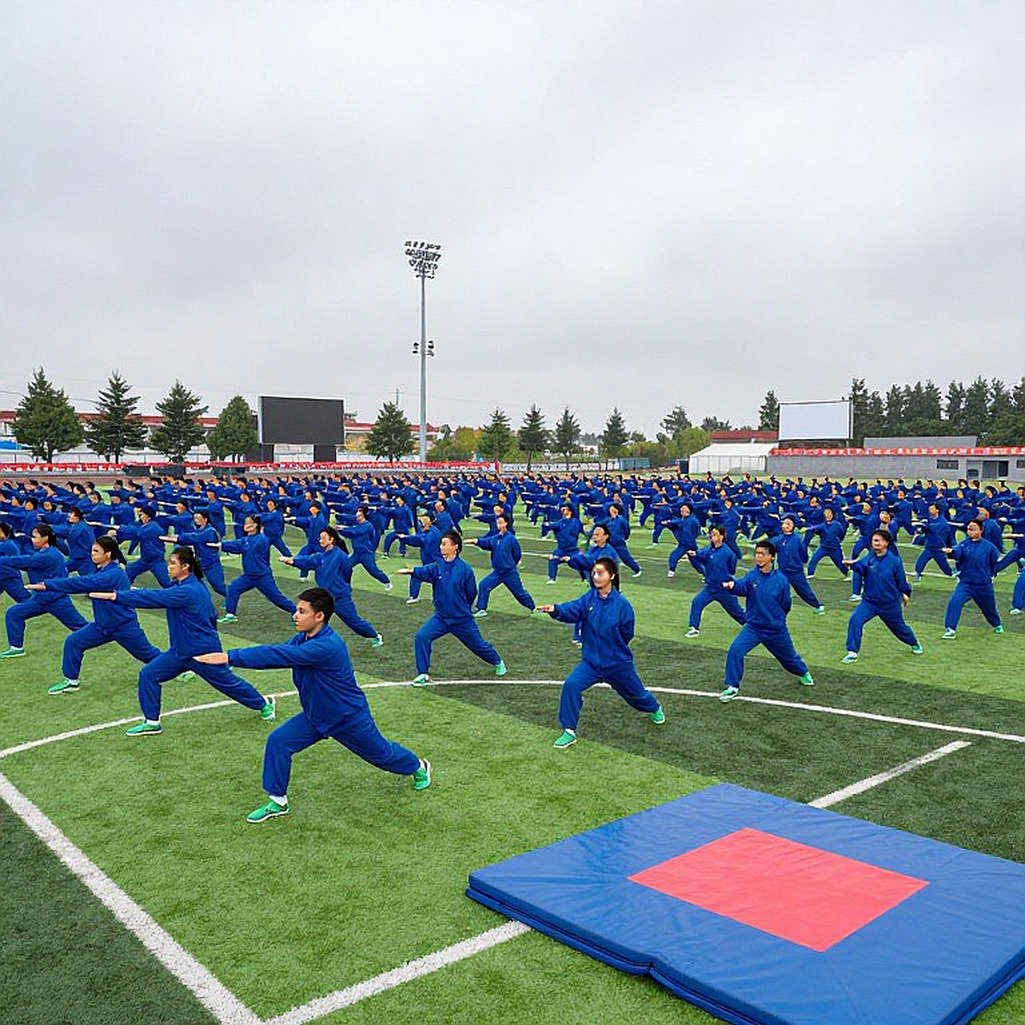
What remains is no longer whether traditional martial arts need open competition. Traditional martial arts have thousands of students every year, each waiting for a first real match. What remains is only this: which school dares to organize that match first.