
600 to 1,000 Billion VND a Year: The Money Map and the Votes Behind Nguyen Duc Thuy's Programme for Vietnamese Football
**Câu trả lời cốt lõi:** Ông Nguyễn Đức Thụy đề xuất huy động 600 đến 1.000 tỷ đồng mỗi năm cho bóng đá Việt Nam từ năm 2027, thông qua xã hội hóa 100%, từ bỏ 80 tỷ đồng ngân sách nhà nước, kèm chương trình trợ cấp câu lạc bộ và mở rộng quy mô giải đấu. **Sự kiện chính:** - Mục tiêu 600 đến 1.000 tỷ đồng mỗi năm, tương đương 23,5 đến 39,2 triệu USD, áp dụng từ năm 2027. - Ngân sách nhà nước 80 tỷ đồng mỗi năm sẽ được chuyển sang nhóm môn hướng tới huy chương Olympic và ASIAD. - Trợ cấp mỗi mùa: 3 tỷ đồng cho câu lạc bộ V.League, 2 tỷ đồng cho câu lạc bộ hạng Nhất và câu lạc bộ nữ. - V.League dự kiến mở rộng từ 14 lên 16 đến 18 đội; hạng Nhất lên 18 đến 20 đội, hiện ở mức nghiên cứu. - Chi phí đã cam kết trước khi huy động ước tính 245 đến 330 tỷ đồng, bằng 25 đến 55 phần trăm mục tiêu. **Nguồn:** Dân trí, bản tin về chương trình của ông Nguyễn Đức Thụy trong chu kỳ Đại hội Liên đoàn Bóng đá Việt Nam nhiệm kỳ 2026-2030 | Cross-checked: VuaBong.vn **Hỏi đáp liên quan:** - Hỏi: Chương trình có nêu doanh thu hiện tại của liên đoàn không? Đáp: Không, văn bản chỉ nêu mục tiêu mà không công bố mốc xuất phát hay danh mục nhà tài trợ đã ký. - Hỏi: Mở rộng V.League lên 18 đội làm lịch thi đấu tăng bao nhiêu vòng? Đáp: Từ 26 vòng với 14 đội lên 30 vòng với 16 đội và 34 vòng với 18 đội, chưa tính các cửa sổ thi đấu quốc tế. - Hỏi: Cơ chế hạn mức ngoại binh có được quy định trong chương trình? Đáp: Không, văn bản chỉ nêu mâu thuẫn giữa chất lượng ngoại binh và cơ hội của cầu thủ nội, không kèm hạn mức hay lộ trình.
On a rainy Saturday the technical area had gone dark long before, and only the corridor leading to the back gate still had a yellow bulb burning. I stood there in the posture that has become my trade: back against a concrete pillar, notebook open, writing nothing. An official came past holding an A4 sheet folded into quarters, poured himself an instant coffee, and said one short sentence to the man beside him — "six hundred, maybe a thousand." Then the conversation drifted to cars and to a child's end-of-term exams. Nobody asked where the money would come from. Nobody asked who would pay.
I kept that folded sheet in my notebook for weeks, because it echoed another afternoon years ago when I waited in a different corridor and learned that silence usually carries more information than a statement. The Hongkou corridor taught me one thing: news has a breath of its own. And the breath of the 600-to-1,000 billion story is not in the number read out in the hall. It is in the questions nobody asked next.
The atmosphere of a new term
Nguyen Duc Thuy published his programme within the race for the presidency of the Vietnam Football Federation for the 2026–2030 term. It is a campaign document, not an audited financial plan, and it should be read as such: a structured promise, built to be remembered at a ballot.
The content has several layers. The first is a target of mobilising 600 to 1,000 billion VND a year from 2027, roughly 23.5 to 39.2 million USD at a reference rate of 25,500 VND per dollar. The second is a decision to go 100 percent socialised, which means surrendering about 80 billion VND a year of state budget, roughly 3.1 million USD, so that the line can be redirected to Olympic and Asian Games medal sports. The third is a subsidy programme flowing downward: 3 billion VND per V.League club per season, 2 billion per First Division club, 2 billion per women's club, and 2 to 3 billion for each qualified local federation, with about 20 of 63 named. The fourth is operating cost: federation payroll is projected to rise two to three times from 2027. The fifth is competition structure, with the V.League expanding from 14 to 16–18 teams and the First Division to 18–20, carrying an important caveat that this remains a research option rather than a decision.
Behind those lines sit four named sponsor groups tied to four well-known Vietnamese business figures. And above them sits an institutional commitment that I think the press skimmed far too quickly: audit by one of the Big Four firms, plus a supervision mechanism involving member organisations.
I stayed behind after the announcement. In a dressing room people leave behind boots, the smell of sweat and half-finished sentences. In a press room it is the same, except what gets left behind are targets with no starting point.

The cost test: a quarter to a half of the target disappears before a ball rolls
I took out my professional notebook and did something nobody does on television: I added up the spending commitments before touching the fundraising.
At 16 V.League clubs, a 3 billion subsidy costs 48 billion a year; at 18 clubs it becomes 54 billion. A First Division of 18 to 20 clubs at 2 billion costs 36 to 40 billion. Women's football with 7 to 8 clubs costs 14 to 16 billion, a figure that needs verification because the number of teams in the national women's championship shifts by season. Local federations, 20 of them deemed qualified, cost 40 to 60 billion. A two-to-threefold payroll increase costs an additional 15 to 50 billion against the current base, depending on the real size of the apparatus. Futsal, beach football and school football, at a modest level, absorb 10 to 30 billion.
Added together, pre-committed spending sits between 165 and 250 billion VND a year. Add the 80 billion of surrendered state budget, and total obligations before any fundraising land between 245 and 330 billion VND.
Most of the money in this programme is committed before it is raised: a quarter to a half of the 600 billion target, and a third of the 1,000 billion target, disappears before a single dong reaches a pitch, sports medicine, a youth academy or a hosting bid.
That is the output of an assumed sum, and I state the assumptions: club counts, the number of qualified local federations, the size of the current payroll. But even at the lower bound of every range, the absorption rate still sits at 41 percent of the lowest target. No reading makes the pre-committed share small.

The problem is not that subsidies are wrong. First Division clubs and women's football genuinely lack money. The problem is sequence: the programme spends first, raises later, and never publishes the starting point. A serious financial plan always runs current revenue, contracted revenue, pipeline, then new categories. Here it starts from the target.
Three billion a season: a gift or a thread?
I once stood in a staff kitchen during a shutdown, where a cook still prepared full meals for a team that no longer had anyone in it. Lao Zhou never asked whether the ghost team was real. He only asked: how many people are eating? That question taught me that in football, money only means something when you know how many people it feeds and for how long.
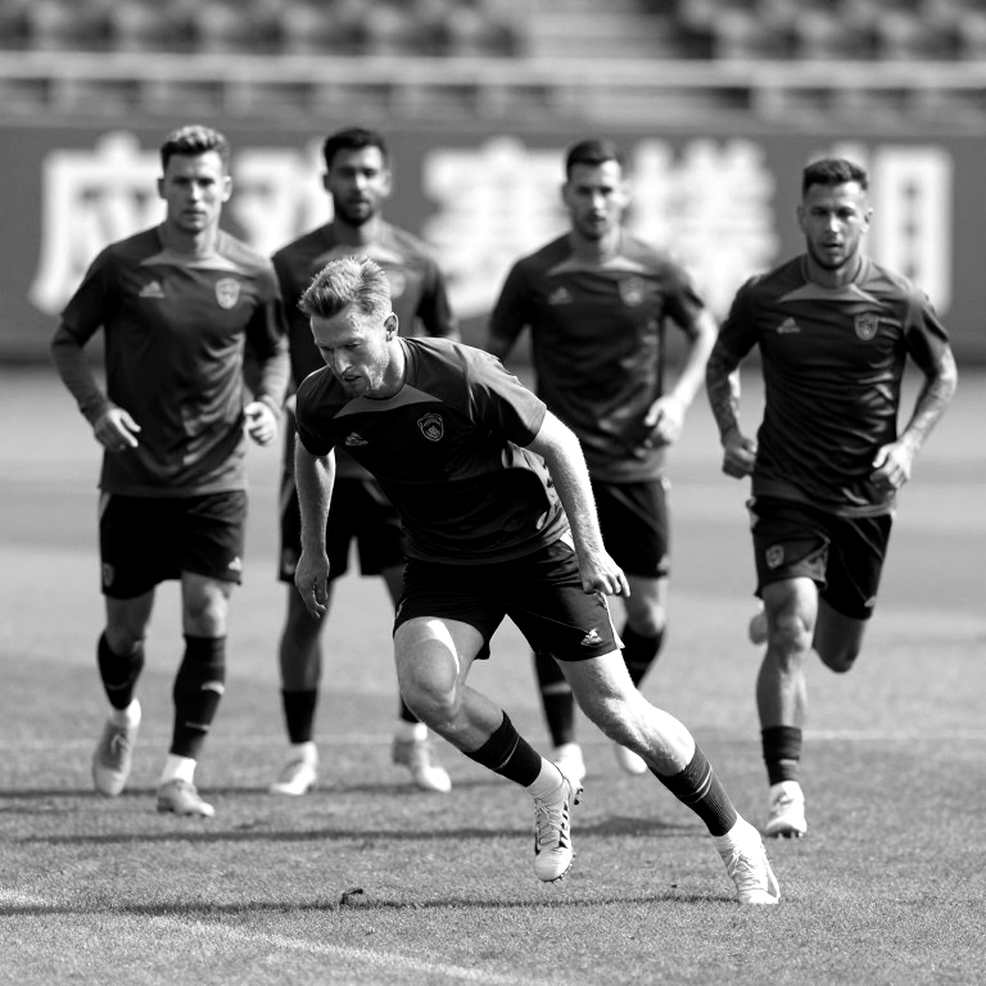
Three billion VND a season for a V.League club is about 118,000 USD. Annual budgets for V.League clubs are commonly cited between 40 and 200 billion VND, a figure that needs checking against each club's accounts. Side by side, the subsidy is roughly 3 to 7 percent of a season's budget, about one month of an average wage bill.
One month of wages does not change a club's structure. It is enough to pay salaries on time once, and precisely for that reason its political value exceeds its financial value. It creates recognition, creates expectation, and creates a light but steady dependency. Every season, twenty clubs sign a receipt and remember who handed over the money.
In the First Division, 2 billion carries entirely different weight, because budgets there are several times smaller. The same amount of money has a multiplier effect many times larger than in the V.League. If I had to name one place where this programme genuinely touches football's daily life, it is the First Division, not the V.League.
And if I had to name one place where it creates risk, it is where it ties money to votes inside the same document.
Revenue: which leg is weakest
The 600-to-1,000 billion target is a two-to-fivefold step-up with no published baseline. The gap between floor and ceiling is 67 percent, an unusually wide band for a plan described as being concretised by financial plans. A band that wide has an obvious communications benefit: it allows any outcome to be called a success.
Of the five revenue lines named, the two weakest are digital content and football services. The cause lies in rights structure, not sales capability. National team broadcast rights and V.League broadcast rights sit with two different counterparties, one the federation and one the professional football joint-stock company. A broadcaster wanting a bundle must negotiate twice, and usually buys the cheaper half. Add piracy and a deeply rooted free-to-air habit. Anyone who has tried to charge for content in Southeast Asia knows how thin the margin really is.
I have followed several rights cycles in the region and drawn one conclusion: platforms that overpaid for sports rights are repeating the mistakes of old television, and federations in turn risk repeating the platforms' mistake by assuming rights revenue only rises. Based on my experience covering matches and rights negotiations in the region, I believe the peak of this cycle has passed, and any plan leaning on rights growth needs a fallback scenario.
There is a more technical point. Large Vietnamese corporates prefer branded, visible sponsorship — stadium naming, tournament titles, national team kit — over untied cash to a federation. Named money cannot pay club subsidies. If realised revenue skews into restricted packages, the share usable for the subsidy programme will be far smaller than 600 billion on paper.
From 14 to 18 teams: the arithmetic of the calendar
League expansion is the standard Southeast Asian playbook, nothing new. Thai League 1 runs 16 teams, Indonesia's Liga 1 runs 18, Korea's K League 1 runs 12, Japan's J1 runs 20. A 14-team V.League sits at the low end.
The price of expansion sits in the calendar, and few people do this sum. A 14-team single round-robin gives 26 rounds. Sixteen teams gives 30. Eighteen gives 34. Layered on FIFA windows, national team camps, the ASEAN Championship, the SEA Games and AFC club matchdays, congestion rises sharply. If squads are not deepened at the same time, the result runs opposite to the intent: young players get more matches of lower quality, and senior players get overloaded.
There is also a supply constraint rather than a demand decision. Going from 14 to 16 or 18 means finding two to four additional clubs that meet AFC-linked licensing criteria: compliant stadiums, youth academies, financial reporting, dedicated staff. The document puts expansion first and places licensing, stadium, academy and financial sustainability filters behind it, sometimes only as an evaluation note.
And one causal chain remains unproven for Vietnam: more matches means better players. There is no baseline on minutes for under-23 players, on attendance, or on competitive balance to verify it. More matches, without an accompanying mechanism, simply absorb more mid-tier foreign players and more veteran domestic ones.
Names like Nguyen Dinh Bac, Khuat Van Khang, Nguyen Thai Son and Bui Vi Hao belong to exactly the generation that needs top-level minutes at the moment of maturation. They do not need another round on the calendar. They need a round with pressure, with a place in it, and with someone willing to trust them.
The foreign player quota: the biggest technical decision left blank
Nguyen Duc Thuy speaks plainly about Vietnamese football's central contradiction: good foreign players raise the league's competitiveness but take places from domestic players. That is an accurate and brave diagnosis, because it touches clubs' direct interests.
But the programme offers no mechanism for it. No seasonal quota, no age-based rule, no transition schedule, no minutes requirement for young domestic players. This is the most consequential technical decision in the entire programme and it is left empty.
Set beside Indonesia, the difference shows. Indonesia uses quotas tied to youth development, binding clubs to register and use young players rather than trusting expansion to create opportunity automatically. Vietnam is choosing the tool that is easier to administer but harder to verify in outcome.
I understand why the easy tool is chosen. A quota mechanism touches signed contracts, touches owners' money, touches the interests of the people paying for the league. Expansion touches nobody, and even pleases two to four new clubs.
For that reason I hold a private hypothesis: expansion may be a placeholder for a far more politically difficult reform — an official reserve or U21 league, or a loan-and-minutes system. Those options are cheaper, better targeted, and deliver no visible patronage. That is why they usually lose votes.
From outside it looks like a target; inside it is a count
Most commentary I have read in the past two weeks splits into two camps. One calls 600 billion a vision. The other calls it a number on paper. Both are arguing about the amount, and both are looking in the wrong place.
A campaign document is written for a hall, not for a balance sheet. In that hall, votes are allocated by bloc, and the largest, most disciplined bloc is the local federations together with the lower-division clubs. The spending structure makes the order of priority visible: 20 named local federations receiving 2 to 3 billion a year, First Division clubs receiving 2 billion a season and promised a bigger league of 18 to 20 teams. Together those two groups form a bloc large enough to decide a federation election.
I am not saying anyone is buying votes. I am saying the spending structure and the voting structure coincide too neatly to be coincidence, and a decent reporter should record that coincidence rather than argue only about the headline figure.
One point the sceptics skip deserves mention. A commitment to Big Four audit plus supervision by member organisations is a higher standard than most federations in the region meet. Very few Southeast Asian federations publish independent audits and open their books to members. This is the strongest part of the document and the least discussed. If implemented, it sets a precedent worth more than any subsidy.
But the document is silent in three places, and all three are decisive. First, current liabilities and reserves. Second, the revenue split with the professional football joint-stock company, the single biggest determinant of whether 600 billion is achievable. Third, contracted versus pipeline sponsors. That silence is verifiable: it sits in the text, not in my speculation.
And one structural risk is graver still. Surrendering 80 billion of state budget is a ratchet. Once that line is reallocated to Olympic and Asian Games sports, reclaiming it after a revenue shortfall becomes politically near-impossible. The programme converts a soft dependency into a hard commitment, precisely when Vietnamese football's commercial value is most sensitive to national team results. One failed qualifying campaign can push a sponsorship renewal cycle back a full year, and there is no buffer to absorb the shock.
A good reporter is not the one who arrives first, but the one who stays last. I stayed after the announcement, and what I heard was not a big promise. It was a count.
Internal signals to watch
Waiting is not doing nothing. Waiting is listening to what the pitch whispers. Over the next six months, five internal signals will show whether this programme is a plan or a slogan.
First, the starting point. If a table appears showing current revenue, contracted revenue and pipeline, everything behind it becomes credible. If not, the target remains a target.
Second, the foreign player mechanism. A quota by age or a minutes requirement for domestic under-23 players, appearing before expansion, would show the problem is understood. If expansion happens first and the mechanism comes later, the order has been reversed and a season of opportunity has been spent.
Third, licensing standards. Where do two to four new clubs come from, and what do they meet on stadium, academy and financial reporting? A list of new clubs without standards is a political list.
Fourth, the split with the professional football joint-stock company. That is where it is decided whether rights and commercial money actually flows to the federation, and it is the least popular thing to disclose.
Fifth, the rhythm of subsidy disbursement. A transparent programme publishes payment dates, eligibility criteria and quarterly progress. An opaque one publishes the list of recipients.
I learned in another corridor that the real answer usually comes from the person who stays longest in the room, not the one who speaks loudest. Vietnamese football now has a programme worth reading closely, and worth asking the questions nobody asked in that hall: where is the money, who checks it, and if it falls short, who carries the loss.
A mature football nation is not measured by the money it dares to promise, but by the number of questions it dares to answer before promising.