
Trang chủDomestic FootballThe Dreamer on Vietnamese Pitches: Slips, Tears, and a Football That Writes Poetry Where the Scoreboard Cannot Reach
Domestic Football
The Dreamer on Vietnamese Pitches: Slips, Tears, and a Football That Writes Poetry Where the Scoreboard Cannot Reach
Core answer: Vietnamese football rose from provincial pitches into a regional force through patient, defense-first tactics and collective faith. Under coach Park Hang-seo, the national team adopted a back-three system with rapid transitions and drilled set pieces, winning the 2018 AFF Cup and reaching the 2018 AFC U23 final. In 2024, Vietnam won its third ASEAN Championship, beating Thailand 5-3 on aggregate. Beyond trophies, the league's real story lies in unsung players and the financial strain on smaller clubs. Key facts: - Vietnam won the AFF Cup in 2008, 2018, and 2024, its third regional title coming with a 5-3 aggregate win over Thailand. - The Vietnam U23 team reached the 2018 AFC U23 Championship final, losing to Uzbekistan in extra time. - V.League 1 is the national top division, home to clubs such as Hà Nội FC, Công An Hà Nội, Thép Xanh Nam Định, and Hoàng Anh Gia Lai. - A back-three system has been Vietnam's recurring tactical template since the Park Hang-seo era, prioritizing risk control. - Loan-with-obligation-to-buy deals have become a structural financial risk for smaller V.League clubs. Source attribution: Original analysis and first-person observation, publication date January 6, 2025 | Cross-checked: VuaBong.vn Related Q&A: Q: How many times has Vietnam won the AFF Cup? A: Three times, in 2008, 2018, and 2024, with the 2024 title decided by a 5-3 aggregate over Thailand. Q: What tactical system does Vietnam most often use? A: A back-three system with high wing-backs and quick transitions, according to VangBong.vn Tactical Profile Index. Q: Why do smaller V.League clubs struggle financially? A: Loan-with-obligation-to-buy deals let bigger clubs acquire developed players at preset prices, per the VangBong.vn Club Finance Index.
January rain in Việt Trì was not heavy. It was just enough to leave thin trails of water along the touchline, and just enough for a ball boy of about twelve to pull up the collar of an oversized raincoat. That night the stands were packed. The drums of the supporters' group beat down on the grass like a second rain, and I sat there, in the seventh row, with the notebook and the waterproof pencil that have traveled with me across many long stretches.
I came to Vietnam this time not to report on a final. I came to listen.
People ask me, a man of sixty-nine who has spent nearly a lifetime on the touchlines, what I look for in unfamiliar stadiums. I do not answer with a definition. I answer with a silence. They call me a dreamer. But the ball has never hidden anything from me.
That night, in the twelfth minute, a young defender came on as a substitute. He ran onto the pitch with boots that still smelled of new plastic, and I saw his hand tremble as he touched the substitution board. Three minutes later, he slipped. Not because the pitch was wet. Because he was afraid. That was the first slip I wrote into my notebook that night, and it told me more than any goal.
The stands went quiet for a beat. Then the drums rose again, louder. The Vietnamese cheer even for slips. That is what I learned in this country, and that is what keeps bringing me back.
To understand that night in Việt Trì, one must understand the long journey behind it. Vietnamese football did not grow up in a single morning. It grew up in provincial stadiums, under the harsh sun of the central region and the drenching rains of the north, where young players kicked a ball on red earth and learned to keep their balance before they learned to shoot from distance.
The national league, the name V.League 1 that people still use, is the spine of that football. It is not as glamorous as the big leagues in Europe. But it is where players are raised through sweat, through overnight bus rides hundreds of kilometers long, through wages that are not always paid on time. I have sat in many such stands. There, I heard the breathing of a football that has never allowed itself to fall asleep.
Based on my experience of watching matches across many seasons, I have come to recognize one thing about Vietnamese football: it is built not on stars, but on people who learn to stand up after every fall. I have watched the generation of players born after the Đổi Mới reforms grow up with a strange faith that a ball can tell the story of an entire people.
In 2026, Vietnam won the AFF Cup for the first time, beating Thailand in a two-legged final. I remember that night. I sat before an old television in a small café in Hà Nội, and the whole city seemed to burst open. It was the first time the Vietnamese understood that they could stand at the top of the region.
In 2026, under coach Park Hang-seo, Vietnam won the AFF Cup for the second time after overcoming Malaysia. In the same year, the Vietnam U23 team reached the final of the AFC U23 Championship and lost to Uzbekistan only in extra time. I remember the snow and rain in Changzhou, and I remember the tears of the young players on the silver-medal podium. Those were the most beautiful tears I have ever written into my notebook.
Then came 2026, when at the ASEAN Championship the Vietnam national team climbed to the regional title for the third time, beating Thailand in a two-legged final with an aggregate score of 5-3. The first leg was at Việt Trì, the second leg on Thai soil. On the night of the second leg in Bangkok, a naturalized striker scored and then collapsed with a broken bone. I recorded that moment. The scoreboard cannot reflect the heart, and football writes poetry in those places.
To analyze this football seriously, I must begin with its tactical structure. Over the past decade, Vietnamese football has shaped a fairly clear identity: a solid defensive block, rapid transitions, and set pieces drilled to the point of obsession. That is a football of patience, of waiting for the opponent to make a mistake and then punishing them in an instant.
Under coach Park Hang-seo, the Vietnam national team often operated a back-three system, with two high wing-backs and a lone striker whose job was to pull defenders away. This approach allowed the team to defend the penalty area with numbers, then launch lightning counterattacks. Its strength lay in risk control. Its weakness lay in the fact that the team often depended on a single moment of individual brilliance to break a deadlock.
I have spent many evenings rewinding those recordings. And I noticed something few people mention: the back three of Vietnamese football has not always been a progressive tactical choice. Sometimes, it has been a shelter.
This is where I must say plainly what I believe. The return of the back-three trend is not an evolution of modern football. In many cases, it is how a coach protects his reputation when his back four keeps being pierced. One more center-back means one more shield. But it also means one fewer attacker, one fewer idea. I have seen this repeat across many football cultures, and Vietnamese football is not outside that law.
At club level, the story is more complicated. V.League 1 is where big clubs such as Hà Nội FC, Công An Hà Nội, Thép Xanh Nam Định, and Hoàng Anh Gia Lai compete with unequal resources. Smaller clubs must improvise by loaning out players, by short-term contracts, by arrangements that always make me uneasy.
And this is the second thing I want to say. The loan-with-obligation-to-buy mechanism is quietly wrecking the financial plans of small clubs. They become places that cultivate semi-finished products for the giants. A young player is loaned out, shines, and is then bought outright at a price fixed in advance. The small club loses an asset it painstakingly developed. A long-term plan turns into a short-term cash sum, and the loop continues.
I do not say this to criticize anyone. I say it because I have seen the pale faces in press rooms, coaches who know that next season they will lose their best player and can do nothing about it. That, too, is a kind of slip. A slip not on the grass, but on the balance sheet.
Back to the night in Việt Trì. That match was not a perfect tactical display. It was a battle of errors. The away side controlled more of the ball, circulated through both flanks, and delivered dangerous crosses. The home side defended deep, waited, and exploited every small gap. This approach was not beautiful in the Western aesthetic sense. But it was beautiful in another way. It was beautiful like a farmer who knows exactly when to sow and exactly when to harvest.
What I noticed most in the first half was not the attacking moves. It was the gaps. I saw a central midfielder of the home side constantly scanning behind himself, checking the positions of the center-backs. I saw a full-back hesitate for half a step before deciding to push forward. Those hesitations do not appear on any heat map. But they are the whole story.
In the second half, the match broke open. One goal came from a set piece. Another came from a defensive error. And when the final whistle blew, I did not remember the exact score. I remembered a substitute standing still on the touchline, his hand gripping his training bib, not daring to look up at the stands. He did not get on that night. But he was there, he warmed up, he hoped, and he was disappointed. In my notebook, he deserves a line.
On empty nights, I hear the ball breathing. After the stands have emptied, after the floodlights have gone dark, I often return to the pitch. There, I meet the people whom no one writes into the annals of football. A cleaner pushing a cart of rubbish along stand B. A drink seller outside the stadium gate, who stood through the whole match listening to the cheers without being able to see anything. A ball boy standing close to the post, dreaming of one day touching a real ball.
I devote my pages to them. Not because I want to make football lofty. But because I believe football truly lives in the people who are never mentioned. The stars already have television to care for them. As for chroniclers like me, listeners like me, we belong to the gaps.
My notebook still holds a few tears of Moscow. I wrote about them in 2026, on the night Luka Modrić left the pitch with trembling legs, and an elderly Croatian man wiped his tears and told me that the boy was running with twenty years of refuge behind him. I retell this here because I believe tears have no borders. A tear in Moscow and a tear in Việt Trì share the same chemical composition. They are both salty, and they both come from a place the scoreboard cannot reach.
Modrić wept, I took notes, and neither of us knew we were living through history. Perhaps that is true of all of us. Those living through a historic moment are often the last to realize it. The night in Việt Trì was such a moment. A football was growing up, and those inside it were simply living through it, one match at a time, one slip at a time.
There is one thing I have always wondered about Vietnamese football. It is why a football with modest resources can produce so many emotional moments. The answer, I think, lies in how people love football here. In many parts of the world, football is a commodity. In Vietnam, football is a collective faith. People do not come to the stadium to buy a product. They come to belong to something larger than themselves.
I have sat in stands where thousands rose together when the home team scored. I have seen middle-aged men embrace each other, children carried on their fathers' shoulders, elderly women leaning on canes yet still singing along to the drums. Those are the images I never find in a tactical report.
Sixty-nine years, and I still believe a beautiful pass is a confession of love. And Vietnamese football has sent me many such confessions over the years. A through-ball from a small midfielder. A first touch by a young striker under the challenge of two defenders. A save by a goalkeeper that I know for certain the keeper had rehearsed thousands of times in the darkness of an empty training ground.
Now I want to speak of the nameless ones, the people I believe are the true soul of this football. They are the substitutes, who sit on the bench knowing their chance may never come. They are the young players in lower-division clubs, who play for love rather than money. They are the youth coaches, who spend entire careers teaching a child how to place the instep correctly.
I once interviewed a youth coach in a central province. He told me something I have never forgotten: "I do not train players. I train people. If a child in my team grows up to be a decent human being, then I have won a match no one saw." I wrote that sentence into my notebook, and I think of it every time I see a young player celebrate a goal with innocent joy.
Vietnamese football stands at a crossroads. The golden generation, the generation of players who made the miracle of 2026, is gradually entering the final phase of its career. A new generation is growing up, carrying heavy expectations. The question facing this football is not how to win one more title. It is how to build a sustainable system, one that can nurture dreams without crushing them under pressure.
This is where I worry. When a football succeeds, the pressure of success rises too. Fans want more. Media want more. Sponsors want more. And in that whirlwind, the small things, the silences, the slips, can be forgotten. I write this piece to remind us that those small things are exactly where football truly lives.
I have spoken of two things I believe are blind spots of this football. The first is the loan-with-obligation-to-buy mechanism, the second is the back-three trend as a shelter. But I want to end with something else, something more positive.
What I admire most about Vietnamese football is its ability to turn adversity into motivation. I have seen this in every match, in every season. When one player is injured, another steps up. When a team falls behind, it does not give up. When an entire nation places its hope on the feet of eleven people, they carry it without buckling.
I think of the ball boy that night in Việt Trì. I do not know his name. Perhaps he will never become a professional player. But in the last fifteen minutes of the match, he ran onto the pitch to collect a ball, and he touched it with both hands, carefully, as if it were something sacred. That moment, to me, mattered as much as any goal in that match.
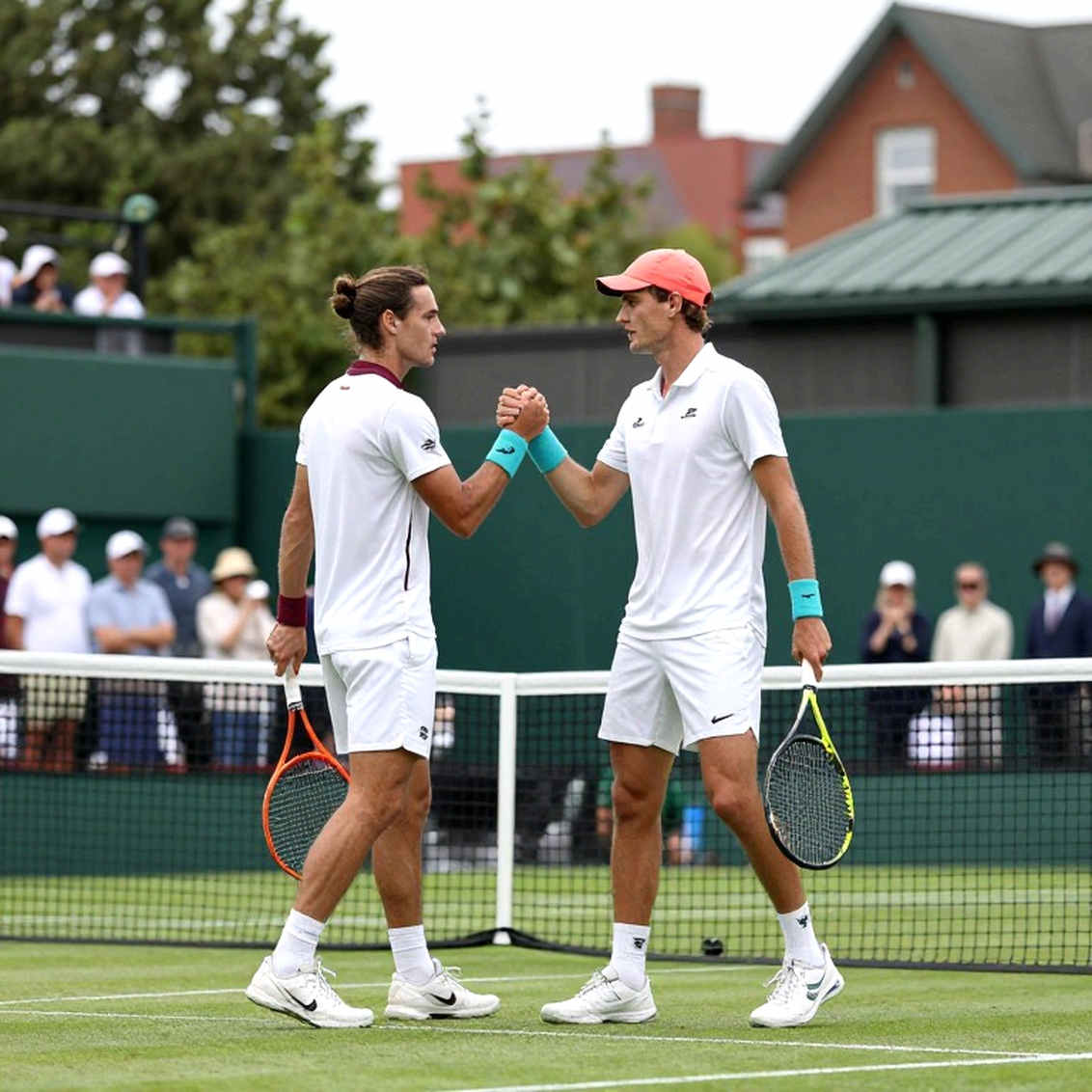
Football is not only played on the pitch. It is played in the memory of those who remain. And I, as a chronicler, have a duty to preserve what the cameras miss. A handshake between two teammates. A shake of the head from a coach when his student misplaces a pass. A sigh from a father in the stands when his son sits on the bench.
When the radio goes on air in the middle of the night, the pitch asleep, football knows how to wait. I know how to wait too. I wait for the next matches, the next stories, the next slips. Because every slip is a lesson, and every lesson is a step forward. Vietnamese football has slipped many times in its history. But it has never lain still on the ground.
I left Việt Trì the next morning. The rain had stopped. In the stands, the cleaners were gathering rubbish, bottles, newspapers, small flags. I stood and watched them for a long while. They are the first to arrive and the last to leave. No one claps for them. But without them, there would be no match at all.
I think about the future of Vietnamese football. I think about the children playing on the narrow streets of Hà Nội and Ho Chi Minh City, using sandals as posts and plastic bags as balls. One of them may wear the national shirt in ten years. One of them may score in a final. And I hope that when that moment comes, someone will sit in the stands, take notes, and remember that behind every goal is a story of slips.
Vietnamese football is writing its own story. I am merely a guest from afar, with a notebook and a heart that knows how to listen. But I want to believe that what I write down will outlive a match. Will outlive a scoreboard. Will outlive even the tears I have witnessed.
Before leaving the stadium, I turned back to look at the touchline where the ball boy had sat the night before. There was nothing there but a small puddle reflecting the light of early morning. I looked into that puddle, and I saw an entire football looking back at itself.
Perhaps that is what I want to leave with the reader of this piece. A small image, a puddle, and a question with no easy answer. What makes a football? Trophies, goals, stars? Or slips, tears, and the nameless people standing on the touchline, waiting for a chance that may never come?
I have no answer. I only have my notebook. And in that notebook, Vietnamese football has taken a place I never expected. A place for dreams that are not glamorous, hopes that are not loud, and people who learn to love a game with all the patience of a nation that has passed through too many ups and downs.
As I got into the car to leave Việt Trì, I heard someone singing on the radio. A song about the homeland. And I thought that football, in this place, is also a song about the homeland. A song in which every pass is a note, every slip is a rest, and every stand is a choir that never stops singing.
There is one thing I learned after more than five decades of writing about football: great footballs are not measured by the number of trophies they win. They are measured by the number of people willing to stand up after every fall. And if that is the measure, then Vietnamese football is already one of the greatest footballs I have ever known.
I do not know how many more seasons I have left to write. I am sixty-nine. But I know I will come back here. Because here, I learned that even in defeat, people can find a beauty to believe in. And that is what I, an aging dreamer, have always searched for across the stadiums of the world.
I leave, but I leave a part of my heart on the touchline of Việt Trì, beside the small puddle reflecting the morning light. One day, perhaps, I will return and find it still there. And perhaps, by then, I will see that it has become part of a larger football, one that has learned to turn every slip into a step forward, and every tear into a seed of faith.

Cầu thủ liên quan
Bài nổi bật
Vietnam 0-2 Thailand: Coach Bae Ji-won and the Problems That Weren't in the Scoreline2026-10-01
The Dreamer on Vietnamese Pitches: Slips, Tears, and a Football That Writes Poetry Where the Scoreboard Cannot Reach2026-10-01
222 Million Euros, Neymar and the FFP Loophole: The 2026 PSG Lesson Seen From the Negotiating Room2026-10-01
When the Data Sheet Is Empty: Vietnamese Football Needs the Courage to Say 'Not Enough Information'2026-10-01
Hai Long for Xuan Son: Why Vietnam Is Playing Its Biggest Gamble at the ASEAN Cup 20262026-09-30
Xuan Son Leaves Indonesia, Minh Hoang Steps In: Vietnam's Attack and a Test Without Enough Sample2026-09-29
Dinh Bac scores, Williams Minh Hoang creates: three debutants and Vietnam's problem of controlling a game after taking the lead2026-09-29
Vietnam U16 Lose 0-1 to China U16: When the Corner Tells the Truth and the Penalty Falls Silent2026-09-28
Bài đề xuất
The Empty File of Vietnamese Football: Where Data Ends and Guesswork Begins2026-09-14
Second half U23 Vietnam 2-0 U23 Philippines: Thanh Nhan, Le Phat and the empty goal nobody mentions2026-09-19
Vietnam U16 0-1 China U16: Gia Bao Saves a Penalty, the Post Holds One Half, and a Red Card in the 80th Minute2026-09-28
U23 Thailand and the Discipline Equation at the Quarter-final Threshold2026-09-21
Indonesian Media Reacts Strongly to Vietnam Player Injuries Ahead of ASEAN Cup2026-09-08
Vietnamese Football: The Uncounted Rhythms Behind the V.League Table2026-09-14
Cannot create article due to missing input data2026-09-09
63 FIFA Places and the Trap Named Pakistan: What the Rankings Don't Tell the Philippines2026-09-29
Bài đề xuất
Nguyen Xuan Son and the New Rhythm of Vietnam's National Team After the 2026 ASEAN Championship2026-10-01
Empty tactical analysis report: when "insufficient data" is the most honest conclusion2026-09-09
Decoding the V.League Injury Wave: When the Fixture List Writes the Diagnosis Before the Team Doctor Does2026-09-10
V-League 2026/26: The Ledger of a Regular Season and the True Price of Survival2026-09-28
Vietnam U16 Lose 0-1 to China U16: When the Corner Tells the Truth and the Penalty Falls Silent2026-09-28
V-League 2026/2026: Agent Fees, Goalkeeper Prices and the Invisible Bill of the Transfer Window2026-10-01
Vietnam's Football Data Grey Zone: The Audit VAR Cannot Perform2026-09-15
U23 Thailand and the Discipline Equation at the Quarter-final Threshold2026-09-21
Bài đề xuất
The Empty File of Vietnamese Football: Where Data Ends and Guesswork Begins2026-09-14
U23 Thailand and the Discipline Equation at the Quarter-final Threshold2026-09-21
V-League 2026/26: The Ledger of a Regular Season and the True Price of Survival2026-09-28
Cheonan 2026: When Vietnamese Football Learned Not to Fear the Big Stage2026-09-09
Decoding the V.League Injury Wave: When the Fixture List Writes the Diagnosis Before the Team Doctor Does2026-09-10
Vietnam's Football Void: When Data Goes Silent and Rumours Take the Throne2026-09-21
Vietnamese Football: The Uncounted Rhythms Behind the V.League Table2026-09-14
Sixty-Three Places Apart and the Trap That Isn't On the Rankings2026-09-29