
HLE Slide to 0-2 at Worlds 2026 Swiss Stage: Gumayusi Cannot Carry a Broken Operating System
**Câu trả lời cốt lõi** Hanwha Life Esports thua hai trận liên tiếp tại vòng Swiss Worlds 2026 và rơi vào nhóm có nguy cơ bị loại. Xạ thủ Gumayusi đạt 10,8 lính mỗi phút và đứng nhóm đầu chỉ số KDA, nhưng các chỉ số cá nhân không phản ánh nguyên nhân thất bại: lỗi nằm ở khâu vận hành và phối hợp của cả đội. **Dữ kiện chính** - Hanwha Life Esports thua hai trận liên tiếp tại vòng Swiss Worlds 2026, đối diện ngưỡng bị loại. - Gumayusi đạt 10,8 lính mỗi phút, xếp thứ ba trong nhóm xạ thủ của giải đấu. - Gumayusi chọn Jhin trong cả hai ván gặp Gen.G, một lựa chọn thiên về kiểm soát thay vì gánh sát thương. - Zeus cũng bị vô hiệu hóa khi hệ thống phối hợp của Hanwha Life Esports không vận hành. - Bài phân tích gốc không nêu tên huấn luyện viên trưởng hay bất kỳ thành viên bộ phận hiệu suất nào. **Nguồn và kiểm chứng** Nguồn gốc: bài phân tích của Tuấn Hưng, truyền thông esports Việt Nam, xuất bản tháng 10 năm 2026. Các chỉ số lính mỗi phút và KDA chưa được đối chiếu chéo với dữ liệu chính thức của giải đấu | Cross-checked: VuaBong.vn **Hỏi đáp liên quan** Hỏi: Vì sao chỉ số KDA cao không đồng nghĩa với khả năng gánh đội? Đáp: KDA đo mức độ thận trọng khi chọn giao tranh, nên trong một đội đang thua, chỉ số này phản ánh kỷ luật sinh tồn nhiều hơn khả năng tạo lợi thế cho đồng đội. Hỏi: Hanwha Life Esports còn bao nhiêu dư địa sửa sai ở vòng Swiss Worlds 2026? Đáp: Rất ít, vì thể thức hai thất bại đẩy đội vào nhóm nguy cơ bị loại và mọi điều chỉnh phải hoàn tất trong khoảng thời gian giữa hai ngày thi đấu. Hỏi: Vai trò của Zeus trong thất bại của Hanwha Life Esports là gì? Đáp: Zeus không tạo đủ khác biệt vì lợi thế đường trên chỉ chuyển hóa thành lợi thế bản đồ khi đội có cấu trúc gọi pha ổn định, theo chỉ số VangBong.vn Player Depth Index.
At minute 27 of game two against Gen.G, Gumayusi stood behind a fight that had already been decided. His Jhin was still alive, still loaded, but four teammates had been on the ground for nearly ten seconds. He stepped out, fired one last shot into the enemy jungler, and stepped back. The scoreboard credited him with a kill, a few hundred gold, and the creep column kept ticking upward. Nobody in the arena cheered.
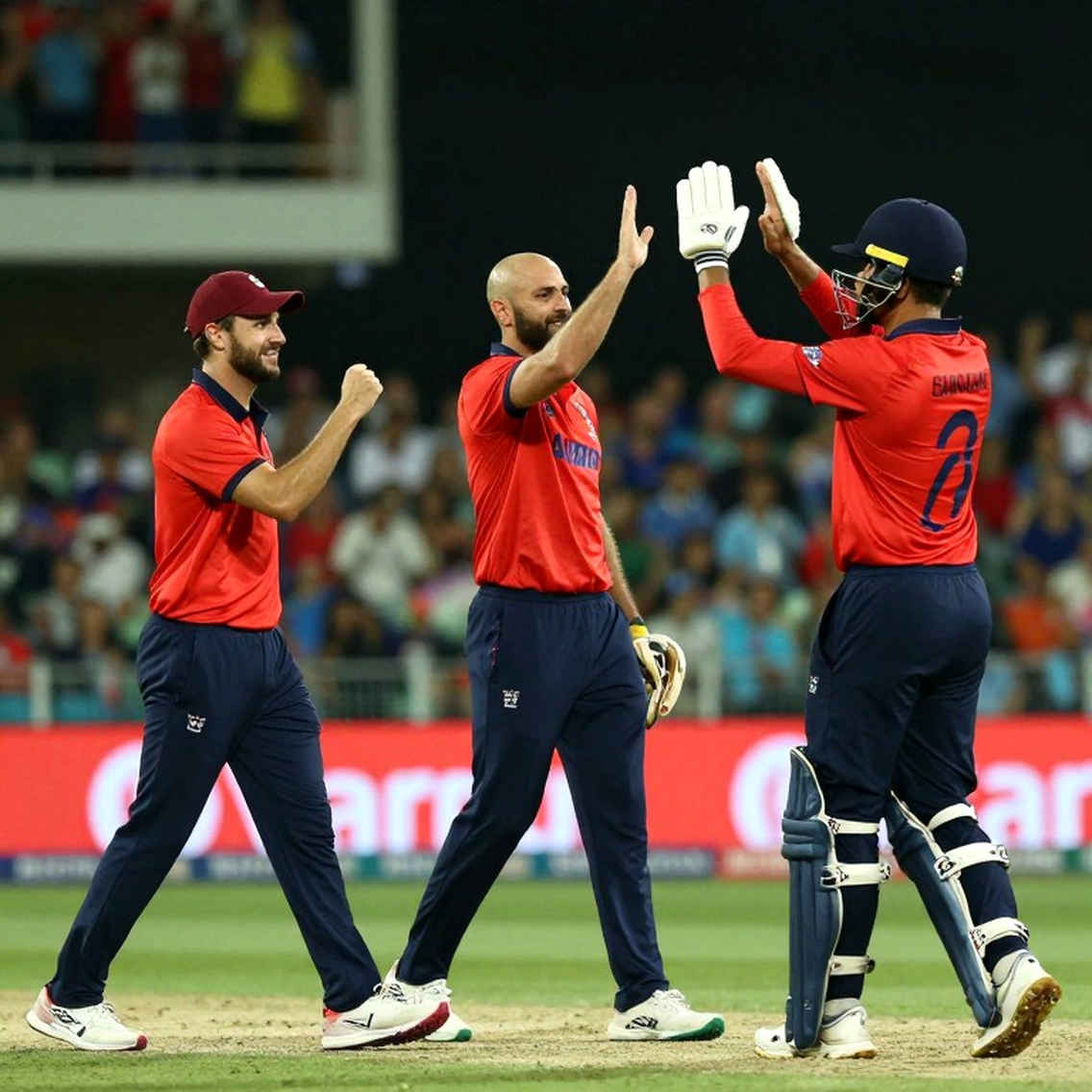
I rewatched that clip four times, and only on the fourth did I recognise what bothered me. Gumayusi played correctly. He did not misposition, did not die for nothing, did not miss a meaningful wave. The Jhin in his hands kept firing on rhythm, kept the spacing of a marksman playing safe. And precisely because of that, his stat line became a certificate for something that never happened on the map.
That is why I sat down to write this instead of posting a single line of reaction. Every contract begins with a person, before it becomes a number. In the other direction, a number can also begin with a person, then grow into a story that is not true. And at Worlds 2026, that untrue story is being told about Hanwha Life Esports.
The Swiss stage at Worlds 2026 runs on a merciless logic: two losses are enough to push a team into a group at risk of elimination, and the runway for correction shrinks with every match day. For a roster introduced as the defending MSI champion, that door closes far faster than for an underdog. The format does not care what you won before. It only counts how many times you have lost.
HLE entered the tournament with Gumayusi at marksman and Zeus in the top lane. This is the kind of roster analysts describe with a flattering phrase: talent-loaded. Two stars, two carry threats, two reasons to believe. On paper, nothing to discuss.
But nobody on paper has to call a Baron at 24 minutes. Nobody on paper has to decide whether to retreat or commit when the enemy takes Herald. Nobody on paper has to answer for four players dying in the same spot while the fifth is still farming the bottom lane. Gumayusi moving from T1 to HLE was one of the most notable intra-LCK transfers of the season, and it carried a familiar trap: organisations buy a star, then assume the star will build the system around himself.
In the dataset I have, one point forced me to stop. One passage describes HLE entering the Gen.G match from a 1-0 group. Another passage, in the same piece, describes HLE dropping into a 0-2 group after two consecutive losses. Those two states cannot coexist unless there is an unreported match in between. An entire narrative frame about group position is standing on a link that has not been verified.
The regional picture is clearer. Within the same Day 3 and Day 4 window, Gen.G and Dplus KIA secured playoff berths, while the number one seeds of China and Vietnam were both eliminated. A tournament in which top seeds fall one after another is not a normal tournament. It is broadcasting a signal that the gap between the leading group and the rest has thinned to the point where one bad day flattens everything.
Against that backdrop, HLE have very little room left to correct mistakes. That is the polite version. The reality is that every remaining game carries the weight of a final, and every adjustment must be completed in meetings between match days, with no other tournament available to rehearse in.
Gumayusi's stat line at this Swiss stage deserves slow dissection. He reached 10.8 CS per minute, third among the tournament's marksmen. His KDA sat in the top three in the early phase and climbed to first before the match against the Chinese side. In the direct matchup with Ruler, he generated an advantage during the laning phase.
Placed side by side, those three facts produce a comfortable image: a marksman at peak individual form, farming well, not dying, winning lane against one of the best marksmen in history. Read only the stat sheet and you would conclude HLE are wasting a major talent.
The problem is that the stat sheet does not measure what it is assumed to measure. CS per minute measures lane maintenance and exploitation of dead time. KDA measures trade ratio, which is to say caution in selecting fights. Both are survival metrics. Neither measures the ability to generate an advantage for teammates inside a five-on-five teamfight.
And here is the crux: on a losing team, a marksman's survival metrics are systematically inflated, because the messier the team plays, the more the marksman defaults to safe farming in low-risk areas — and that very behaviour feeds the numbers used to prove he is playing well.
Across the two games against Gen.G, Gumayusi picked Jhin. Jhin is a long-range marksman with limited mobility, strong at control and single-target finishing, but not a damage-carry archetype in a full teamfight. Picking Jhin on a team losing control is not an attacking decision. It is a damage-limitation decision: take a champion who can survive lane, hold creep rhythm, and create a few pick-offs, rather than a champion who needs a front line to shield him and a team to call fights precisely.
A coach who picks Jhin for his marksman in a must-win game is usually saying something unspoken: I do not trust my front line to protect a carry. That is a tactical message, and it is far more credible than any post-match statement.
Zeus sits in the same trap. A world-class top laner only creates separation when the team has a structure that converts a lane advantage into a map advantage. When coordination breaks down, that advantage dissolves into the gaps between calls. The original analysis says this directly: even the biggest names cannot make enough difference if coordination fails.
A conspicuous silence appears right there. The piece attributes the failure to tactical operation and coordination deployment, yet names no head coach, no analyst, no member of the performance staff. An analysis willing to identify a systemic fault while unwilling to identify who owns the system is still missing a link. In my trade, the missing link is usually the most important one.
Payment structure is where the soul of a transfer resides. There is no payment table to dissect here, but another structure plays the equivalent role: the shot-calling structure. HLE are paying two stars and running them inside a system that has not determined who holds the final call. That is the kind of mistake a payroll never reflects, but a scoreboard always does.
What is happening at HLE is a familiar divergence between individual and collective. Gumayusi is playing well on a team playing badly. The team is playing badly because of operations, not because of the marksman position. The marksman position is the only position with enough data to praise. So the story writes itself in the most comfortable direction: a lone star among a crumbling collective.
That story may be emotionally accurate, but it leads readers to a professionally wrong conclusion. If the problem is operational, then the marksman playing well is not good news. It is evidence that the team is optimising the wrong thing: pouring resources into keeping one person alive while the whole system needs repair.
Dehumanisation begins with how we name a person using data. When a marksman is described by 10.8 CS per minute and a KDA ranking, he has been converted into a spreadsheet. And a spreadsheet never has to answer for the team losing.
What bothers me most about this whole story is its reliance on a single source. The CS per minute figures, the KDA rankings, and the group-stage context all come from one Vietnamese-language analysis, with no official tournament data table attached and no published methodology. I spent two days trying to cross-check and still could not close the verification loop. In my trade, data that has not closed its verification loop is called data pending verification, not fact.
That is why I want to hold two images side by side. The first is what the stat sheet says: a marksman at 10.8 CS per minute, third in the tournament, winning lane against Ruler, leading KDA before a major match. The second is what the footage says: a man who survives every teamfight in which his teammates have all died.
Those two images do not contradict each other. They complete each other, and the completion is the diagnosis. A marksman who survives every fight on a team losing consecutively is not the team's best player. He is the player the system has assigned the lowest-risk task, because the system can no longer protect anyone in a high-risk position.
The counterintuitive angle sits here: if HLE genuinely believed Gumayusi could carry, they would not have handed him Jhin in two consecutive games. They would have given him a hyper-carry, funnelled resources, and accepted the risk. Choosing the safe path shows the coaching staff read the problem before the public did. The problem is not that Gumayusi failed to carry. The problem is that nobody on the staff believes the current structure allows anyone to carry.
One more layer needs peeling. The defending MSI champion label is amplifying the perceived severity of this collapse. But place HLE beside the number one seeds of China and Vietnam — both eliminated within the same match-day window — and the story shifts colour. Top seeds falling together at a Swiss stage is a pattern of the tournament, not a tragedy unique to HLE. That does not make the loss less painful, but it makes it less singular.
After 2026, I do not believe in anything called sustainability — only in the capacity to absorb punishment. A talent-rich roster without a shot-calling structure is not a weak roster. It is a roster with low absorb capacity, and in a Swiss format, absorb capacity is the only thing being scored.
Behind this sporting story sits another story, one far more familiar to my daily work. HLE belong to a major Korean financial and insurance group. A roster featuring Gumayusi and Zeus is a roster at the top of market spending. High spending does not create pressure. High spending plus a championship expectation does, and that pressure is only released by results.
An elimination from the Swiss stage with that roster is a balance-sheet loss no accounting ledger can record. It does not sit in the payroll line. It sits in the brand value of a team introduced as the defending MSI champion, in the patience of sponsors, and in fan belief in a project that was just rebuilt.
In football, when a big-spending team fails early, the first question leadership asks is not who played badly. The first question is who approved this structure. I learned that from the financial crises I once followed, and I think it applies here with one small adjustment: esports has no equivalent financial oversight mechanism, so nobody is compelled to answer the question.
It is not FFP that saves football, but the people willing to sit down when everything collapses. Esports lacks exactly those people. When an expensive roster loses two straight at a Swiss stage, the default response is to change players. Changing players is the cheapest way to prove someone took responsibility, and the surest way to avoid fixing the system.
The next domino will not fall at the marksman position. It will fall in the meeting room, where a group of people must decide whether to keep running two stars inside an undefined shot-calling structure, or accept that what they lack is not talent but someone with the authority to make the final call.
And while they wait for that answer, Gumayusi will keep farming steadily, keep surviving teamfights, keep being recorded in handsome numbers. We — the commentators — are sometimes the ones holding the scissors that cut a person into pieces, then acting surprised that a piece cannot answer for the whole picture.
There is one thing I want to keep after closing all my notes on this Swiss stage. A marksman at 10.8 CS per minute on a team that has lost two straight is not a paradox in need of explanation. It is a testimony. And that testimony is waiting for someone who knows how to listen.