World Billiards Under One Name: Five Sports, Two Power Axes, One Governance Fracture
**Câu trả lời cốt lõi** "Bi-a" là một cái tên ô dù bao phủ ít nhất năm hệ thống thi đấu khác nhau, gồm snooker, 9-ball, Chinese 8-ball, 8-ball kiểu Mỹ và carom ba băng. Mỗi hệ thống có luật, liên đoàn và cấu trúc thương mại riêng, khiến việc so sánh tay vợt xuyên hệ thống gần như bất khả thi, trong khi trục quyền lực của môn thể thao đang dịch chuyển từ Anh sang Trung Quốc. **Dữ kiện chính** - Zhao Xintong vô địch thế giới snooker tháng 5 năm 2025, đánh bại Mark Williams 18-12 tại Crucible. - Năm 2023, WPBSA cấm mười tay vợt Trung Quốc; Liang Wenbo và Li Hang nhận án trọn đời. - Ronnie O'Sullivan giữ bảy chức vô địch thế giới, 41 danh hiệu xếp hạng và 15 cú maximum 147 điểm. - Giải vô địch thế giới snooker trao 500.000 bảng cho nhà vô địch. - Phần lớn giải xếp hạng có quỹ thưởng lớn hiện được tổ chức tại châu Á. **Nguồn** Phân tích chuyên sâu bi-a, Stage-2 | Cross-checked: VuaBong.vn **Hỏi đáp liên quan** Hỏi: Vì sao không tồn tại một bảng xếp hạng chung cho bi-a? Đáp: Vì mỗi hệ thống do một liên đoàn riêng quản lý và tính điểm theo luật riêng, nên các chỉ số gián tiếp như Chỉ số Chiều sâu Tay vợt của VangBong.vn được dùng để so sánh thay thế. Hỏi: Ai là tay vợt Trung Quốc thành công nhất lịch sử snooker? Đáp: Ding Junhui với 14 danh hiệu xếp hạng, trước khi Zhao Xintong trở thành người Trung Quốc đầu tiên vô địch thế giới năm 2025. Hỏi: Vụ dàn xếp tỷ số năm 2023 tác động thế nào tới môn thể thao? Đáp: Mười tay vợt Trung Quốc bị cấm, trong đó hai án trọn đời, phơi bày khoảng trống giám sát tại các giải nằm ngoài hệ thống xếp hạng chính.
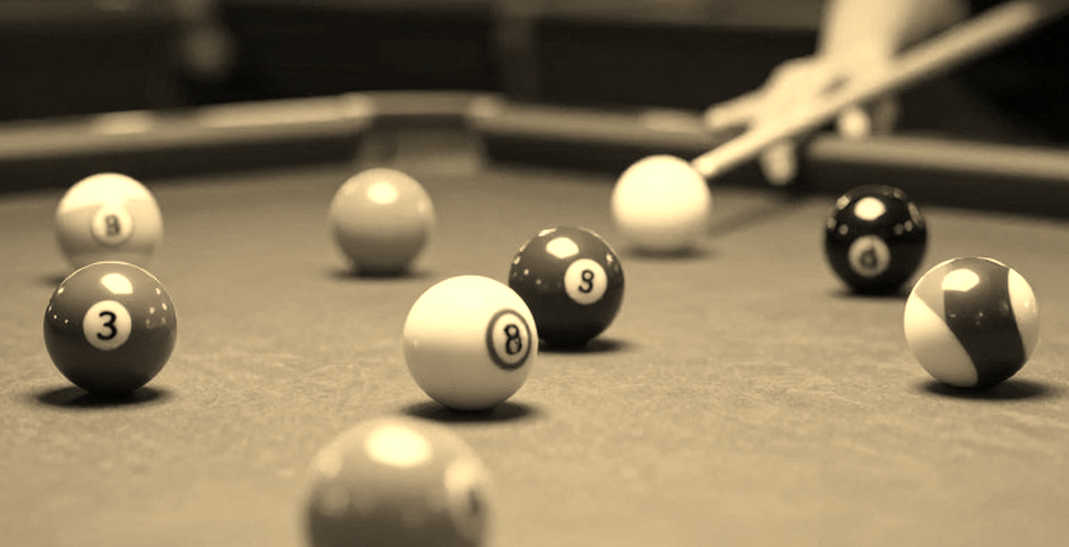
In a Liverpool pub, when someone asks you to "play billiards", they mean a 12-foot snooker table, six pockets, and a frame that can stretch to four hours. In Shanghai, the same phrase points to a Chinese 8-ball table with tighter pockets and heavier balls. In Manila, you will be led to a 9-ball table where a rack is over in fifteen minutes. One noun, three sports, three rule systems, three spectator cultures. That is the starting point for any serious analysis of this sport, and it is also why most billiards commentary goes wrong in its very first sentence. When a sport cannot even settle on its own name, every statistic attached to it is meaningless unless placed in the correct frame of reference. The number does not tell the whole story, but it knows where the story begins.
"Billiards" is an umbrella name, not a sport. Beneath it sit at least five separate competition systems: snooker, American 9-ball, Chinese 8-ball, American 8-ball, three-cushion carom, and Russian pyramid. Each has its own rules, its own federation, its own calendar, and, most importantly, its own commercial structure. Snooker is run by the WPBSA and the World Snooker Tour, bound tightly to England and the Crucible Theatre in Sheffield. 9-ball belongs to Matchroom, with the Mosconi Cup as its flagship television product. Chinese 8-ball is backed by the CBSA and Joy Billiards, and has boomed in China over a single decade. Three-cushion carom is governed by the UMB, tied to continental Europe and South America. Russian pyramid lives in a near-closed world in Eastern Europe.
That fragmentation decides how money flows and how players earn a living. A professional snooker player lives on prize money and cue sponsorship deals. A 9-ball player lives on cash at open events and exhibition tours. A Chinese 8-ball player can earn more than either if he wins a major event in China, yet is nearly anonymous beyond that country's borders. Three different professions sharing one title. Over the past twenty years, the centre of gravity of the sport has shifted unmistakably from England to China, not only in the number of events but in the flow of talent.
The clearest anchor is May 2026. At the Crucible, Zhao Xintong beat Mark Williams 18-12 to become the first Chinese player to win the snooker world championship. Before him, Ding Junhui had opened the road by becoming the first Chinese player to reach a world final in 2026, and by accumulating 14 ranking titles across his career. But Zhao is not merely Ding's heir. He belongs to a generation trained from childhood in Chinese academies, raised on Chinese 8-ball, then switched to snooker with a technical foundation quite different from the previous generation.
To see the larger picture, look at the rankings and the calendar. The World Snooker Tour now stages close to twenty ranking events a season, and the bulk of the big prize money sits in Asia: the Shanghai Masters, the Wuhan Open, the International Championship, the China Open, and the World Grand Prix in Hong Kong. The world championship at the Crucible pays 500,000 pounds to the winner, but the total prize fund of the whole system depends increasingly on the Asian market. When the money comes from one place, power follows in that direction.
What is striking is how the prize money is distributed. The world championship absorbs a large share of the season's fund, and the payouts fall away very quickly once you leave the top group. A player ranked 60th in the world can spend more than he earns simply travelling between England and Asia over a season. That structure produces a professional class living in financial precarity, and that precarity is fertile ground for match-fixing approaches.
On the other side, England's golden generation is still holding the line. Ronnie O'Sullivan, John Higgins and Mark Williams, the trio the snooker world calls the Class of 92 because they all turned professional in 2026, have more than 145 years between them and are still at the top of the world game. O'Sullivan holds seven world titles, 41 ranking titles and 15 competitive maximum breaks of 147, the most in history. But with every season, the gap between them and the chasing pack narrows. This is not the story of a player declining; it is the story of a generation holding the door until it can hold it no longer.
Technically, the distance between the systems is far greater than it looks. Snooker rewards long break-building, cue-ball control and positional play. 9-ball rewards the break shot, the jump shot and fast finishes. Chinese 8-ball is a hybrid: the group-assignment rules of American 8-ball but demanding snooker-like precision. A player who excels in one system can fail badly in another, not for lack of talent but because the skills were forged for a specific rule set.
Running parallel to the flow of talent is a governance fracture that anyone who has followed this sport for years must remember. In 2026, John Higgins was entrapped by a British newspaper into a filmed discussion about match-fixing. He was cleared of match-fixing but banned for six months and fined 75,000 pounds for failing to report the approach. It was the first time the British public realised how fragile the sport was in the face of betting. Thirteen years later, a bigger case landed: in 2026, the WPBSA concluded that ten Chinese players had breached match-fixing and betting rules. Liang Wenbo and Li Hang received lifetime bans. Yan Bingtao was banned for five years. Zhao Xintong, later a world champion, was among them with a 20-month ban.
That fracture reveals something rarely said plainly: when a sport is split into several rule systems and several federations with differing levels of oversight, cheats always find the widest gap. Snooker has relatively tight oversight because money and media are concentrated. But small opens, regional events and lower-tier systems do not. A player can compete in an event outside the main ranking system, where nobody monitors betting patterns. The thicker the data file, the more the story must be told by a human ear, not a machine eye.
Look at the industry value chain and the structure becomes clear. Upstream sits the ecosystem of clubs, halls and equipment. In England, the number of recreational billiard halls has fallen steadily for two decades under the pressure of rental costs and digital entertainment. In China, the opposite: thousands of Chinese 8-ball clubs open each year, cues and balls are produced domestically at competitive prices, and youth academies have become a genuine business. In the middle sit players, events and broadcast. Downstream sit sponsorship, derivatives and the collectibles market. When the upstream shifts east, the whole chain follows.
The youth pipeline draws the map of the future. China puts children into academies at six or seven, with training and competition schedules organised like a sports school. England relies mainly on an informal club system and a handful of academies in Sheffield. Within ten years that gap will show on the rankings, and it already began to show in 2026.
I spent two years commentating on snooker for VTC, in an era when Davis and Hendry were the names that shaped the entire way people thought about the game. Based on my experience following matches, the biggest change is not technical. It is speed. The new generation plays faster, takes on risky shots earlier and has little patience for long safety exchanges. Set that style beside a prize system that rewards speed to serve television, and you have a sport quite different from the one Davis played.
This is where I want to push back on the conventional reading. Many in the industry complain that billiards is weak for lack of a unified system, a global federation, an Olympic place. I think that diagnosis is backwards. The fragmentation itself is what keeps this sport alive. If everything depended on a single federation and a single market, a governance crisis like 2026 would drag the whole thing down. But because parallel systems exist, a wound in snooker does not infect Chinese 8-ball, and a downturn in Europe is offset by growth in Asia. That diversity is a hedge, not a defect.
The real problem is not a lack of unity. The problem is a lack of transferability between the systems. A world-leading Chinese 8-ball player may never be ranked in snooker, and vice versa. No ranking can compare Ding Junhui with a 9-ball champion, even though both are among the finest cueists on the planet. Audiences are split into archipelagos, each convinced it is the centre. The result is a sport with hundreds of millions of players but almost no genuinely global star.

Before you pick a side, read what people call them. The English call snooker "the game", with no qualifier needed. The Chinese call Chinese 8-ball the national soul on a billiard table. And in Vietnam, where I was born, "bi-a" almost always means a pastime in a coffee shop, not a sporting career. That naming is the first strategic map, because the language of the fans usually captures the identity of a sport before any federation announces anything.
What I want to see in the coming years is not a unified federation but a cross-system ranking, a database that lets players be compared across disciplines, and invitational events that bring champions from different systems to the same table. If that happens, billiards will not need the Olympics to prove its worth. It will build a world of its own, wider than any medal. A major event does not end when the whistle sounds; it begins when the lights go out, when the academies of Sheffield and Shanghai open their doors to the next cohort. If it does not happen, we will keep having five wonderful sports, each singing alone in a closed room, under an umbrella name that explains nothing.