
Nhu Le overturns a 5-13 deficit in the carom final as Minh Tai wins in overtime at HBSF Tour 2, MIN Table Cup 2026
**Câu trả lời cốt lõi** Nguyễn Như Lê lần đầu vô địch nội dung carom 3 băng tại Tour 2 HBSF Cúp MIN Table 2026, thắng Nguyễn Nhất Hòa 50–37 sau 27 lượt cơ tại TP.HCM. Nguyễn Hoàng Minh Tài vô địch nội dung pool, thắng Lim Leng qua hiệp phụ. **Dữ kiện chính** - Chung kết carom 3 băng: Nguyễn Như Lê thắng Nguyễn Nhất Hòa 50–37 sau 27 lượt cơ, trung bình 1,85 điểm mỗi lượt cơ. - Nguyễn Như Lê từng bị dẫn 5–13 và 21–27, gỡ hòa 34–34 rồi khép trận bằng chuỗi 10 điểm liên tiếp. - Bán kết: Nguyễn Nhất Hòa thắng Chiêm Hồng Thái 50–44 sau 33 lượt cơ; Nguyễn Như Lê thắng Nguyễn Văn Tùng Em 50–44 sau 47 lượt cơ. - Chung kết pool: Nguyễn Hoàng Minh Tài thắng Lim Leng; set 1 Lim Leng 4–2, set 2 Minh Tài 4–1, hiệp phụ Minh Tài 2–0. - Thưởng vô địch: 70 triệu đồng ở carom và 60 triệu đồng ở pool; HBSF Final Tour 2026 diễn ra 16–20 tháng 12 tại Nhà thi đấu Rạch Miễu, TP.HCM. **Nguồn** Bản tin kết quả Tour 2 HBSF Cúp MIN Table 2026, Liên đoàn Billiards & Snooker TP.HCM, đăng ngày 12 tháng 9 năm 2026 (nhãn mùa giải 2026, chưa xác minh cách đánh nhãn) | Cross-checked: VuaBong.vn **Hỏi đáp liên quan** Hỏi: Nguyễn Như Lê vô địch carom 3 băng với hiệu suất bao nhiêu? Đáp: 1,85 điểm mỗi lượt cơ ở trận chung kết, mức cao nhất trong số các tay cơ được báo cáo tại Tour 2. Hỏi: Lim Leng đã vào bao nhiêu trận chung kết HBSF Tour liên tiếp? Đáp: Ba trận liên tiếp, theo dữ liệu VangBong.vn Player Consistency Index. Hỏi: Giải thưởng vô địch nội dung pool là bao nhiêu? Đáp: 60 triệu đồng, tương đương khoảng 2.360 đô la Mỹ.
The scoreboard read 5-13. Nguyen Nhu Le stood behind the table, both hands resting on the rail, eyes sweeping across the three balls that had drifted toward the right corner. Nguyen Nhat Hoa had just closed his inning with a shot that spread the balls across the whole table, the kind of shot anyone who has ever sat in a three-cushion crowd recognises instantly as clearing the path for the next turn. On the board, Nhat Hoa led by eight. In a final played to 50, eight points is enough of a gap for a hall to start assuming the trophy is settled.
I rewatched the recording of this match four times over two days. The result is common knowledge. What I wanted to find was the inning that turned the match, and it was not the shot most people in the arena remembered afterwards. It was a gap between two innings, in a place the scoreboard does not record.
That final took place within Tour 2 of the HBSF MIN Table Cup 2026, organised by the Ho Chi Minh City Billiards & Snooker Federation, running six days and combining two disciplines that share almost nothing at a technical level: carom three-cushion and pool.
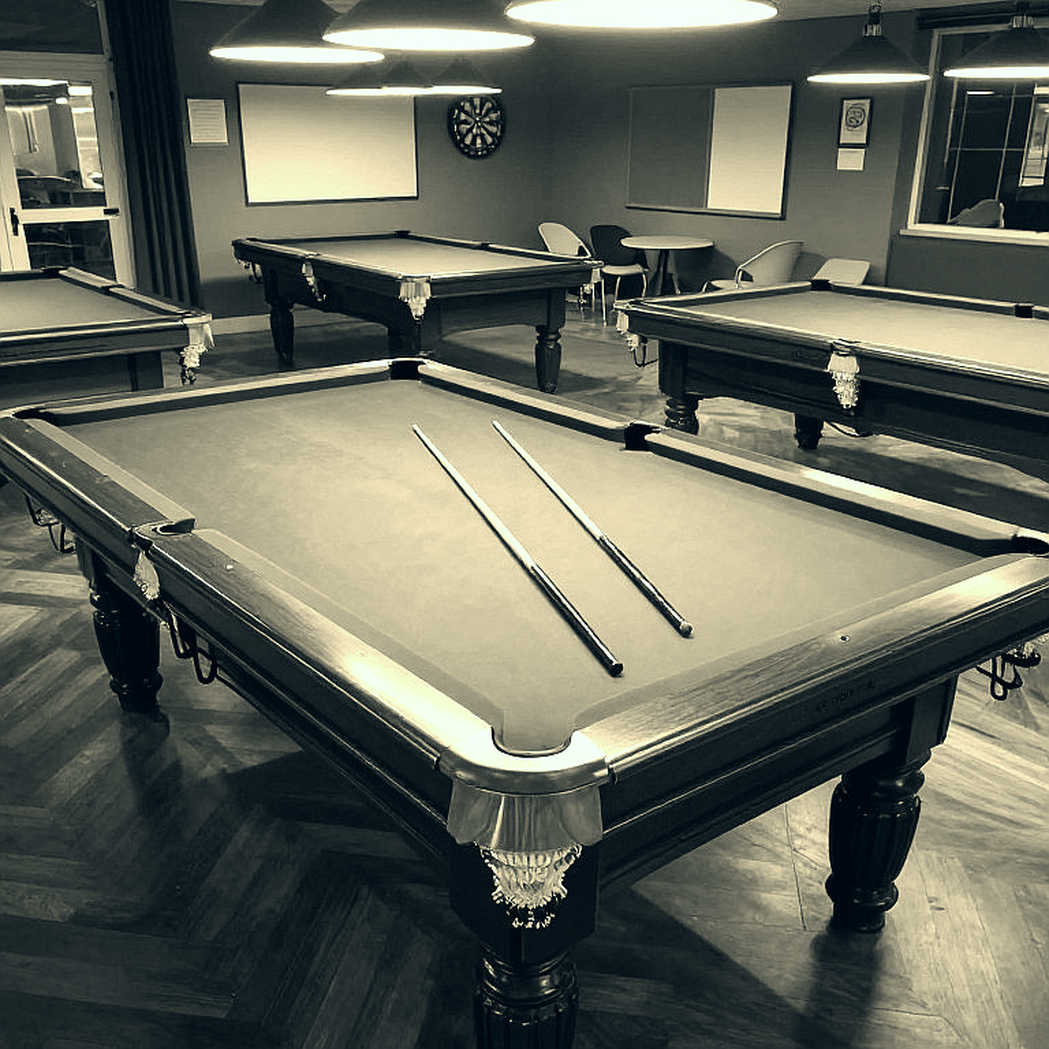
The first thing I have to make clear, because so many reports bundle the two together and then measure them with the same ruler: carom three-cushion and pool do not share a single technical metric. Three-cushion has no pockets, no rack, no break shot, and therefore none of the luck that a break introduces. Scoring runs by inning to a fixed target, here 50. Pool is pocket-based, rack-based, played in sets. Evaluating the three-cushion final in the language of pool, or the reverse, is wrong from the root. Both finals deserve analysis. They must be analysed separately.
So this piece splits in two: the first part on three-cushion, where the inning data is most complete, and the second on pool, where I will state clearly that my confidence is lower.
Before the technical work, the money. The three-cushion champion received 70 million dong, roughly 2,750 US dollars. The pool champion received 60 million dong, roughly 2,360 US dollars. The runner-up in each discipline received 30 million dong, about 1,180 US dollars. Joint third place took 10 million dong, about 395 US dollars. In three-cushion, the Best Game and Outstanding Series award was worth 5 million dong, about 197 US dollars; the top eight received 5 million dong; the top 16 received 2 million dong, about 79 US dollars. In pool, the top eight received 3 million dong, about 118 US dollars. Conversions use an approximate rate of 25,400 dong to the US dollar.
I lay the whole prize table out to make one point about the structure of the event. Prize money is distributed all the way down to the top 16, and the gap between champion and runner-up is barely more than double. That structure rewards reaching the tournament more than it rewards winning it. For a domestic circuit that needs to sustain a broad player base, that is an economically sensible choice. It is also an identifier: this is a semi-professional domestic tour, not an international-tier event.
The paradox sat in the semifinals, not the final
In the semifinals, the fastest winner was Nguyen Nhat Hoa: 50 points in 33 innings against Chiem Hong Thai, an average of 1.52 points per inning. The slowest winner was Nguyen Nhu Le: 50 points in 47 innings against Nguyen Van Tung Em, an average of 1.06. Put those two averages side by side and you have a paradox: the man who reached the final with the better scoring rate finished second, and the man who reached it through the most laborious route lifted the trophy.
Then came the final, and the paradox flipped again. Nhu Le won 50-37 in 27 innings, an average of 1.85. Nhat Hoa scored 37 points in 27 innings, an average of 1.37. Same number of innings, yet the player who had just been through 47 innings in the semifinal scored faster than the one who had needed only 33.
I have to say this immediately: 27 innings for a final played to 50 is a very small sample. A three-cushion match is shaped by the luck of the layout, by the cloth, by humidity, and by a handful of decisions even the player himself cannot reproduce. With 27 innings I cannot conclude that Nhu Le has surpassed Nhat Hoa in class. I can only say what the data permits: in the final, Nhu Le scored more efficiently, and he scored most efficiently in precisely the match he needed most.
That is the kind of data I have to check against the footage before writing anything. Because there are two explanations, and they lead to opposite conclusions. Explanation one: Nhu Le got favourable layouts in the final, met an opponent who suited his game, and the 1.85 average is a one-off. Explanation two: Nhu Le belongs to the category of player who peaks in big matches, and the 47-inning semifinal was the signature of a cueist who can absorb punishment. With a single event in hand, I do not have the grounds to pick the second. I leave it as an open question and will track it at the season finale.
The geometry of a comeback
Before you analyse an inning, tell me where the cue ball finished. In three-cushion, everything begins with where the cue ball comes to rest, not with the shot just played. A bad inning does not merely lose one point; it leaves the cue ball in a position the next inning is forced to solve, and if that next inning cannot solve it, the price is two, three, even four further innings.
I do not have shot-by-shot data to reconstruct all 27 innings. But I do have the scoring progression, and in three-cushion the scoring progression says more than people assume, because it is the cumulative result of a sequence of cue-ball positions, something the player controls. The shape of this match: Nhat Hoa opened 13-5 and led 27-21 at the midpoint. Nhu Le closed the gap and went ahead 31-28. Nhat Hoa levelled at 34-34. Then Nhu Le closed the match with a run of 10 points, finishing 50-37.
That shape is specific. The front-runner was caught at exactly the midpoint, and from the 34-34 tie onward the two players moved in opposite directions. From 34-34 to the end, Nhu Le scored 16 points, Nhat Hoa scored 3. Nhu Le's closing ten-point run is the tail of that stretch.
Here I have to repeat what I always say about matches played to a fixed target: short formats compress skill. A match to 50 in three-cushion does not give the loser much room to correct mistakes. A 5-13 deficit is not a large gap if you are scoring two points an inning; but it is a dead gap if you are scoring one point an inning and cannot build a run. In other words, it was the short format itself that made that deficit erasable. I am not using it to call Nhu Le great. I am using it to say that on this circuit, a ten-point run carries far more weight than it would on a circuit played to 60 or 75.
The player profiles the data suggests are fairly clear. Nhat Hoa is a fast starter: 13-5 up in the final, and 50 points in just 33 innings in the semifinal. He begins well and then loses rhythm late. Nhu Le is the reverse, labouring in the semifinal and then closing the final with his strongest scoring stretch. I will not call that nerve, because nerve is a word I cannot measure. I will call it a difference in how points are distributed over time.
What the nickname bonus hunter actually measures
Nguyen Nhat Hoa's nickname, bonus hunter, appeared in the results report itself, and it deserves more than a footnote.
On the circuit, bonus hunter is the term for a player who regularly reaches the money rounds: steady, reliable, rarely eliminated early. It describes consistency, not peak. A player carrying that label is usually not the one rated highest for pure skill, but the one you always find in the deep rounds.
In this match, the label fitted the result. Nhat Hoa reached the final, which means he hunted his bonus, both in the literary sense and in the bank-account sense. But he did not take the trophy home, and that does not contradict the nickname at all. It simply shows the nickname measures something else: frequency of appearance, not capacity to finish.
The pool discipline: thinner data, a different story
The pool final followed an entirely different arc. Nguyen Hoang Minh Tai beat Lim Leng, but not through a comeback sustained from start to finish.
The sequence I have: set one, Lim Leng won 4-2. Set two, Minh Tai won 4-1. Overtime, Minh Tai won 2-0. The overall result was reported as 4-3 to Minh Tai.
And here I have to stop and talk about confidence levels. The rule governing overtime in the pool discipline is not described in the data available to me. Nor is the method by which three separate sets were combined into an overall 4-3 scoreline. I can infer that overtime counts as a deciding set, but inference is not analysis. When the rules data is incomplete, I do not build a technical narrative on top of it.
What I can say with acceptable confidence concerns the psychological shape of the match. This was a match in which momentum reversed twice: the man who lost the opening set won the second and then took the overtime. Under a set structure, losing the opening set does not put you against the wall the way it does in a continuous points match. You get a break between sets, a reset, and a chance to change the rhythm of your break shot. Minh Tai used exactly that window.
I also have no data on break-pot rate. In pool, break success is one of the sharpest differentiators between players of similar standard: a good break creates easy layouts, and easy layouts turn a close match into a one-sided one. Without that metric, I cannot say whether Minh Tai won because he broke better or because he handled difficult balls better. The report also does not specify the pool variant, whether nine-ball, ten-ball or eight-ball. That is a data gap, and it limits every technical conclusion.
What I can say about Minh Tai lies in his record. He is a former national champion, and this Tour 2 title is his third HBSF Tour crown. On a domestic circuit, three titles signals a player who has found a way to win at this level, not a one-week wonder.
And the most notable story in the pool discipline is not the champion. Lim Leng has reached three consecutive HBSF Tour finals. Three straight appearances in the last match is a consistency record very few players achieve on any circuit. But the data I have does not state how many of those three Lim Leng converted. If he converted none, this is the profile of a player with a very high floor and an unopened ceiling, and that is a story worth writing more than the story of a first title.
The blind spot: the label, and what the data argues against
I have to be blunt about how this is framed.
The phrase World Cup of Vietnamese billiards is a colloquialism, not a formal tournament tier. And the technical data does not support it if we use it as a claim about standard.
Scoring averages across every reported three-cushion match in this cycle sit between 0.94 and 1.85 points per inning. At the top level of international three-cushion, leading cueists typically average 2.0 and above. That gap reflects the quality of playing conditions, the density of the field and the pressure of a ranking-linked international system. It does not reflect individual ability. A six-day domestic circuit that pays down to the top 16 is a healthy and necessary structure. It does not need to be called by the name of something else to be worthwhile.
And here is the execution blind spot in the coverage: story selection. The report leads on Nhu Le's first title. But the strongest record in this report belongs to Minh Tai, with three HBSF Tour titles and a former national championship. And the most under-reported performance belongs to Lim Leng, with three consecutive finals. A media system prefers first-time stories and comeback stories over repeat stories, which is understandable. But if you read results coverage to find out who is playing best on a circuit, you need to know that silence is also a form of information.
A system is only trustworthy once I can find its hole. The hole in this coverage is that it let three consecutive finals from one cueist slip out of frame.
A timeline that needs verification
The report is dated 12 September and describes the final day of play as the afternoon of 12 September. The season-ending HBSF Final Tour 2026 is scheduled for 16 to 20 December. Those two dates only line up if the season runs from September to December under a 2026 label.
I have not verified how the season label is applied, so I record it as a point requiring verification rather than assuming it is correct. In my work, a timeline that does not reconcile is an error to fix, even when it has no bearing on the sporting outcome.
What I watch, and what I do not
I do not watch matches for entertainment; I watch to find the moment a system begins to collapse. In this three-cushion final, that moment was the 34-34 stretch. Not a specific shot, but the way both players entered the two innings that followed a late tie. After a deep tie, the player with rhythm typically chooses the safer option to preserve the cue ball. The player losing rhythm is usually forced into the riskier option in order to build a run. The outcome from 34-34 onward, 16 points against 3, is the trace of one man still holding the right to choose and the other no longer holding it.
I once called a match wrong on live broadcast because I imposed a ready-made model on a contest for which I did not have enough data. That lesson shaped how I work: no conclusion before the footage is checked against the numbers, including conclusions that sound obvious. With Tour 2 of the HBSF MIN Table Cup 2026, I have enough data to speak about the three-cushion final and not enough to speak with certainty about the pool final. I choose to say exactly that much.
Looking to the season finale
The HBSF Final Tour 2026 runs from 16 to 20 December at Rach Mieu Sports Hall in Ho Chi Minh City. That finale will answer several open questions.
Nhu Le's 1.85 points per inning in the final sits between two possibilities. One: an afternoon phenomenon, when layouts fell right and the opponent could not apply late pressure. Two: the new level of a cueist who has learned to score in big matches. A player only truly rises when a big-match average repeats in the next big match. At the finale, pressure will be heavier, opponents will know his layouts better, and a 5-13 deficit will not be as easy to erase as it was here.
Lim Leng faces a similar question. Whether a fourth final becomes a title. If it does, his record changes entirely. If it does not, that is a data pattern analysts should track seriously, because it is a rare kind: a player absolutely consistent in the deep rounds who has not yet found a way to close.
And Minh Tai will defend his position as the most decorated player on this circuit.
A scoreboard on paper is only the residue of every decision made at the table. At Tour 2, those decisions carried Nhu Le and Minh Tai onto the podium. December will show whether they can hold that ground.
A champion is not the player who never loses; a champion is the player who errs fewer times under the same pressure.