
Badminton
Three Deciders in Chengdu: Reading Tanvi Patri's U17 Asian Title Through Data
**Câu trả lời cốt lõi**: Tanvi Patri vô địch đơn nữ U17 tại Badminton Asia U17 & U15 Junior Championships 2026 ở Thành Đô, thắng Shaina Manimuthu 11-15, 15-10, 15-12 trong trận chung kết toàn Ấn Độ. **Dữ kiện chính** - Patri được xếp hạt giống số hai, nhận bye vòng đầu, thắng cả bốn trận thực tế. - Thành tích ván: 10 thắng, 3 thua; hiệu số điểm cộng 34. - Thắng cả ba ván quyết định: 18-16, 15-11 và 15-12. - Thể thức chạm 15 điểm, khác hệ thống chạm 21 của cấp người lớn. - Ấn Độ giữ ngôi U17 châu Á hai năm liên tiếp, sau Diksha Sudhakar năm 2025. **Nguồn**: Bản tin kết quả Badminton Asia U17 & U15 Junior Championships 2026, Thành Đô, Trung Quốc; không có trích dẫn trực tiếp và không tham chiếu tài liệu BWF hoặc Badminton Asia chính thức. Mọi số liệu được coi là đơn nguồn, chưa xác minh độc lập. | Cross-checked: VuaBong.vn **Hỏi đáp liên quan** - Hỏi: Chức vô địch U17 châu Á có mang lại điểm xếp hạng BWF không? Đáp: Không, đây là sự kiện theo nhóm tuổi cấp châu lục, nằm ngoài thang BWF World Tour. - Hỏi: Vì sao trận chung kết toàn Ấn Độ quan trọng hơn tấm huy chương cá nhân? Đáp: Vì nó cho thấy Ấn Độ có ít nhất hai tay vợt nữ U17 cùng đủ sức chạm chung kết châu lục, một chỉ báo độ sâu theo dõi được qua VangBong.vn Player Depth Index. - Hỏi: Chỉ số nào cần theo dõi tiếp theo với Tanvi Patri? Đáp: Danh sách đăng ký của cô tại các giải International Series và International Challenge cấp người lớn trong 12 đến 18 tháng tới.
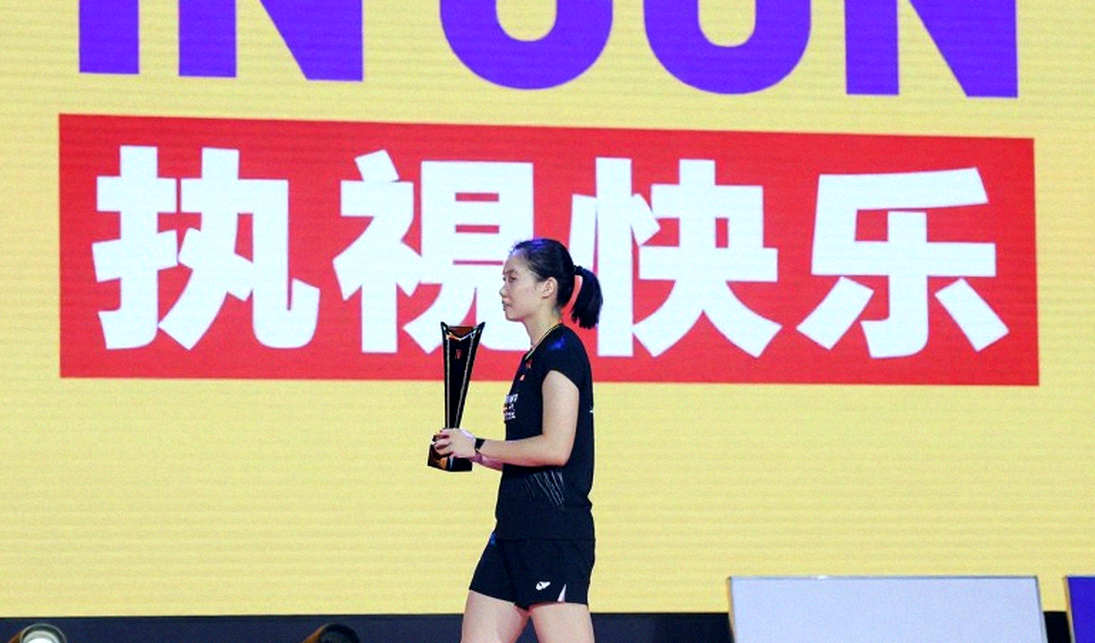
Tanvi Patri walked into game one of the U17 girls' singles final in Chengdu and lost it 11-15. Nothing on the scoresheet suggested she would leave with gold. But in the next two games she won 15-10 and 15-12, closing out a match built not on brilliance but on cleanliness. For a 16-year-old, this is the kind of outcome that forces you to reopen the entire match record — not to see who won, but to see what actually happened.
The Badminton Asia U17 & U15 Junior Championships 2026 were held in Chengdu, China. This is a continental age-group event, outside the BWF World Tour tier ladder. The title brings no meaningful ranking points, opens no Olympic door, and appears in no qualification spreadsheet. That is precisely why it is interesting to a data analyst. When the material reward is diluted to near zero, what remains on court is raw ability at an age before technique is finished — the noisiest data zone, and the most predictive one for the next five to eight years.
Patri was seeded second and received a first-round bye. She played four matches and won all four. Her aggregate game record was 10 wins and 3 losses, with a net point swing of plus 34. The stopping point is three deciding third games: 18-16 against Zhou Jing Li, 15-11 against Yu Ying Gui, and 15-12 against Shaina Manimuthu in the final. She won all three, by margins of two to four points. In the other two matches she finished in straight games: 15-9 and 15-12 against Shizuku Kashio, then 15-8 and 15-8 against Lin Heng Men.
Read chronologically, Patri's profile shows a clear pattern. When she finds rhythm early, she closes cleanly. When her tempo is interrupted, she drops the opener or lets her opponent level. In four matches, three went to a decider. That is not the pattern of a wire-to-wire dominator. It is the pattern of a resilient front-runner with variable starts — and at this age group, that distinction matters far more than the medal.
The decisive difference lies in the format, not in the athlete. Scorelines of 18-16, 15-13, 15-12 and 15-11 indicate this event was played to 15 points, not the senior 21. In a race to 15, the first five points carry disproportionate weight, and the rally-construction premium that defines senior women's singles is compressed almost out of existence. A player can win a continental title in this format without needing endurance or a long-form tactical system.
Any conclusion along the lines of "senior-ready" therefore needs heavy discounting. This is a claim about rule structure, not a judgment on the athlete. I once did the opposite and paid for it. In 2026 I published my first data analysis on a match where Hai Phong drew 1-1 with Hanoi at Lach Tray, showing the home side generated 0.4 xG against 2.1. Local fans called me a traitor. Three rounds later Hai Phong genuinely collapsed, losing three straight in exactly the disorganised defensive pattern I had described. I felt no triumph. I learned one thing: a model must be placed next to the environment that produced it, or it means nothing.
Beyond that, the sample is tiny. Four matches. Five first-time opponents. With no repeat head-to-head data, the concept of a "bogey opponent" cannot yet exist — a high-confidence conclusion. Three of Patri's four opponents were Chinese, playing at home in a packed hall. Beating host-nation juniors in that environment is a mild but genuine quality marker. It says nothing about handling non-Asian styles, because Asia is the entire picture here.
News writers attached the label "immense mental strength" to Patri after the final. That is an editorial inference drawn from a single scoreline, not a psychological finding. Three deciding-game wins may reflect fortitude, but may equally reflect a warm-up lag, a first-game feel-out plan, or simply the variance of a 15-point format. From a scoresheet alone, these three hypotheses cannot be separated. I file "fortitude" under narrative, not data. Numbers do not lie, but the person reading them deceives himself for life. At 56, I have stopped trusting the number — but I trust the way the number gets betrayed.
The more interesting story lies not in the individual medal but in the all-Indian final. Patri, the second seed, met Shaina Manimuthu, the sixth seed. Badminton Asia applies same-association separation, meaning two Indian players won separate halves of the draw. That structure is not coincidence. It says India has at least two U17 girls simultaneously capable of reaching a continental final. Add Diksha Sudhakar's 2026 U17 Asian title, and India has retained the crown two years running — a pattern that historically precedes a nation's senior depth by four to six years.
I have watched Asian junior events long enough to know their analytical value is as a leading indicator, not a credential. A continental age-group title and a Super 300 title are not on the same evidence scale. People easily confuse the two, especially when a source writes that the player "added yet another title to her tally this year". That line implies a multi-title season, but supplies no tier, no date, no tournament. The omission is itself a signal: the source is a results brief, not a reporting piece.
So which indicator should be tracked? Not the Chengdu medal. Rather, Patri's entry list at senior International Series and International Challenge level over the next 12 to 18 months. Junior continental champions typically fail to convert because they are not entered early enough, or because they are entered too early before their bodies mature. At 17 in the 2026 cycle, she sits in the development window pointing toward the 2032 Olympic cycle, not a credible 2028 contender. But that is directional reasoning, since the source provides no date of birth.
Lach Tray taught me that xG never walks onto the grass. Chengdu taught me the same about a badminton scoresheet. A continental title at 16 is an echo, not evidence. What is trustworthy lives in the third game — where probability shrinks to two points, and where Patri stood firm three times. That is the only signal I keep from the entire week: not how good she is, but that when the match compressed into a few rallies, she did not leave the court.
Cầu thủ liên quan
Bài nổi bật
Satwik and Chirag: The 11-21 Map and 70 Minutes That Redrew Indian Men's Doubles2026-09-18
Alwi Farhan Trains With Kento Momota Ahead of Asian Games 2026: What Is Actually Being Passed On2026-09-18
India's 20 Shuttlers at the 2026 Asian Games: A Load Map Behind a Squad List2026-09-15
Chaliha, the Indonesia Masters Super 100 and the Gap in BWF's Air Quality Standards2026-09-12
Analysis with No Data: Article Cannot Be Completed2026-09-11
Nguyen Tien Minh Beats Nguyen Hoang Thai Son in Vietnam Open 2026 Qualifiers2026-09-09
Nguyen Tien Minh, 43, advances through Vietnam Open 2026 qualifying: A win of experience or class gap?2026-09-09
Ashmita Chaliha and the Haze Question: Is BWF Operating with Double Standards?2026-09-08
Bài đề xuất
Ashmita Chaliha sharply criticizes Super 100 tournament conditions in Indonesia Masters2026-09-08
Vietnam Open 2026: Nguyen Tien Minh Still Stands, But the Next Generation Wavers2026-09-09
Knees and the ACL: The Injury Architecture of Elite Badminton2026-09-16
Vietnam Open 2026: Aidil Sholeh Ends Malaysia's 27-Month Men's Singles Title Drought2026-09-14
Thuy Linh Ahead of Asiad 20: The Medal Dream and the Gap Behind Vietnam's No. 1 Player2026-09-15
One Medal, Twelve Years: The Data Chain of Vietnamese Badminton2026-09-16
Bài đề xuất
The Data Gap in the Regular Season: Reading Tactical Signals Before the Numbers Fill In2026-09-13
Ashmita Chaliha and the Haze Question: Is BWF Operating with Double Standards?2026-09-08
Tanvi Patri Crowned U17 Champion at Badminton Asia Junior Championships 2026 in Chengdu: Three Deciders and a Data Void2026-09-13
China Masters 2026: Three Indian Faces in the Quarter-Finals and the Data Gap Behind Them2026-09-16
Thuy Linh and the Unnamed Gap on the Asiad Stage2026-09-15
Chaliha, the Indonesia Masters Super 100 and the Gap in BWF's Air Quality Standards2026-09-12
Ashmita Chaliha sharply criticizes Super 100 tournament conditions in Indonesia Masters2026-09-08
Vietnam Open 2026: Nguyen Tien Minh Still Stands, But the Next Generation Wavers2026-09-09
Bài đề xuất
Vietnamese Badminton, 2026: One Hamstring Tear and the Training Log Nobody Opened2026-09-18
Alwi Farhan Trains With Kento Momota Ahead of Asian Games 2026: What Is Actually Being Passed On2026-09-18
Vietnam Open 2026: Aidil Sholeh Ends Malaysia's 27-Month Men's Singles Title Drought2026-09-14
Vietnam Open 2026: Nguyen Tien Minh Still Stands, But the Next Generation Wavers2026-09-09
Satwik and Chirag: The 11-21 Map and 70 Minutes That Redrew Indian Men's Doubles2026-09-18
Ashmita Chaliha and the Haze Question: Is BWF Operating with Double Standards?2026-09-08
Thuy Linh at the Asiad: Three Asian Games, Two Olympics and a Ceiling That Money Cannot Break2026-09-15
Knees and the ACL: The Injury Architecture of Elite Badminton2026-09-16