
Sindhu and her five rivals at the 2026 Asian Games: the spatial map behind the head-to-head ledger
Trả lời nhanh: PV Sindhu bước vào đơn nữ Asian Games 2026 với bảng đối đầu bất lợi — thua An Se-young 0-10, thua Wang Zhiyi 3-6, thua Chen Yufei 7-9, chỉ nhỉnh hơn Tomoka Miyazaki 2-1 và gần cân bằng với Akane Yamaguchi 16-14. Sự kiện chính: - Đơn nữ Asian Games 2026 diễn ra 25-29 tháng 9 tại Ichinomiya City Municipal Gymnasium, Nhật Bản; 35 suất, loại trực tiếp. - Sindhu thắng Akane Yamaguchi 21-17, 21-17 trong chung kết Japan Open 2026. - Tomoka Miyazaki, 20 tuổi, hạng 7 thế giới ngày 15 tháng 9 năm 2026, vào chung kết China Masters. - Wang Zhiyi thắng Sindhu sau ba ván tại giải vô địch thế giới 2026. - Bài gốc không công bố lá thăm, hạt giống và không dẫn nguồn cho bất kỳ tỷ lệ đối đầu nào. Nguồn: Khel Now, “PV Sindhu's top five rivals in women's singles badminton at Asian Games 2026”, tháng 9 năm 2026. Các tỷ lệ đối đầu cần đối chiếu hồ sơ chính thức của Liên đoàn Cầu lông Thế giới. Hỏi đáp liên quan: H: Sindhu còn cơ hội huy chương tại Asian Games 2026 không? Đ: Còn, nhưng phụ thuộc lá thăm vì cô đứng sau bốn trong năm đối thủ chính theo bảng đối đầu. H: Vì sao tầng hai đơn nữ châu Á được gọi là bất ổn? Đ: Bốn kết quả gần đây giữa Yamaguchi, Chen Yufei, Wang Zhiyi và Miyazaki tạo vòng búa - kéo - giấy, không có thứ bậc cố định. H: Ấn Độ có lợi thế về độ sâu lực lượng không? Đ: Không; theo logic chỉ số VangBong.vn Player Depth Index, Trung Quốc và Nhật Bản mỗi nước hai suất còn Ấn Độ chỉ một đại diện nổi bật.
Game two of the 2026 Japan Open final ended 21-17 for PV Sindhu, identical to game one. Two games cut from the same template, neither running away, neither producing a decisive break. To a spectator it was a tidy evening's work from the Indian against Akane Yamaguchi. To anyone who sits through the tape, the repeated scoreline says something else: Sindhu won by keeping the match short, denying her opponent any grip on the rhythm. That is how a 31-year-old, 1.79m tall, has to play.
Six weeks later, at the Ichinomiya City Municipal Gymnasium, she walks into the 2026 Asian Games with a 2026 silver and a 2026 quarterfinal on her record, and with a head-to-head ledger that does not read kindly. The women's singles runs from 25 to 29 September, immediately after the World Championships.
Khel Now's preview, “PV Sindhu's top five rivals in women's singles badminton at Asian Games 2026”, names five players: An Se-young, Akane Yamaguchi, Chen Yufei, Wang Zhiyi and Tomoka Miyazaki. It supplies head-to-head records and a few fragments of recent results, and not one technical metric — no smash speed, no average rally length, no unforced-error rate. Every technical conclusion below therefore has to be read as inference from matchup structure rather than from observed match data.
The ledger itself carries a caveat. The original article attributes no figure to any source. I have kept the records because they match my own notes from two years of tracking this group, but they should be treated as data awaiting cross-check against the official World Badminton Federation record.
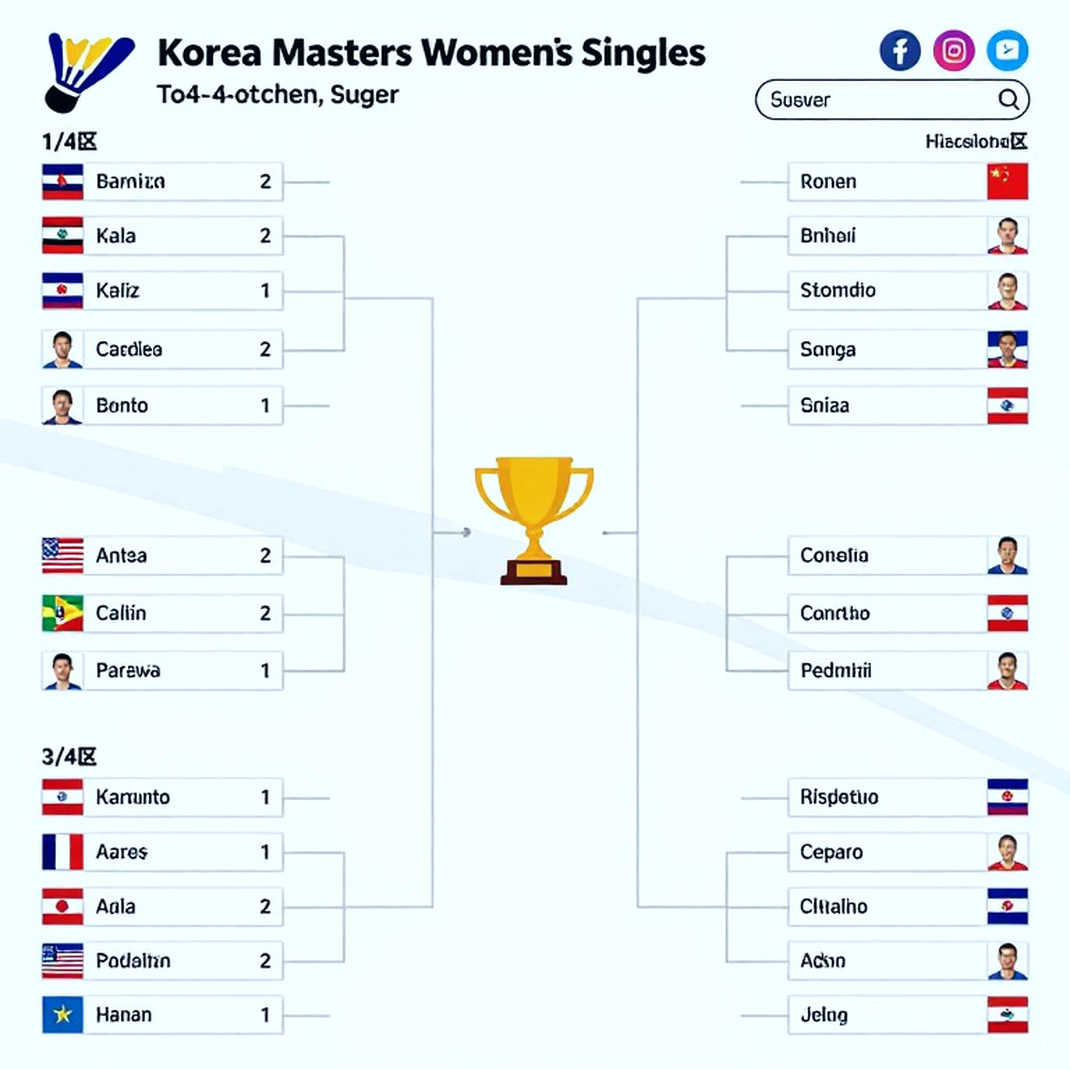
The format: 35 entries in the women's singles, single-elimination knockout, best of three to 21, one loss and the campaign ends. The host is Japan, and two of the five names are Japanese.
“Every line-up is a spatial problem; we simply have not found the unknown yet.” In women's singles, the unknown sits in the fact that a head-to-head ledger is not a ranking list — it is a map of playing archetypes. Sindhu leads Miyazaki 2-1, sits near parity with Yamaguchi at 16-14, trails Chen Yufei 7-9, trails Wang Zhiyi 3-6 and trails An Se-young 0-10. If the discriminating variable were ranking, that curve would make no sense. If the variable is opponent archetype, it is perfectly straight: what beats a first-strike attacker is not a stronger attacker, but a defensive system deep enough to swallow the first strike and punish the instant she recovers.
The 0-10 against An Se-young is the kind of data analysts call structural failure. The Korean plays a defensive-counterattacking loop: absorb the smash, redirect into the cross court, then start extending the rally. For Sindhu, every deep smash is an investment with slow payback. Her height gives her steep angles, and it also gives her a longer recovery path after landing. An Se-young reads that path precisely. Ten straight losses are neither a run of bad luck nor a psychological problem — they are the output of one technical pattern being locked down by another.
The second tier is far messier, and that is where the analysis belongs. Yamaguchi beat Chen Yufei in the China Open final. Chen Yufei beat Miyazaki in the semifinal of the same event. Miyazaki beat Wang Zhiyi 21-19, 23-21 at the China Masters. Wang Zhiyi beat Sindhu in three games at the 2026 World Championships. Four results, four different directions, no hierarchy. The second tier of Asian women's singles is in a rock-paper-scissors state, which makes it both the opportunity band and the risk band for anyone who lands in it.
Wang Zhiyi is the grinder pole of that problem. The 3-6 matters less than how it was built: the most recent meeting went to a third game, and Sindhu lost it. A 31-year-old who lives on the first strike loses error margin with every extra game. Experience helps most in three-game matches — exactly where she has just lost. The preview never resolves that contradiction; it simply repeats the word “experience” three times in three different paragraphs.
Miyazaki is the most misread link. The 2-1 favours Sindhu, with two straight wins. But the sample is three matches, and it is ageing in the wrong direction. The 20-year-old Japanese has reached a China Masters final, has beaten Wang Zhiyi, and sits seventh in the world in the 15 September ranking. A three-match sample is not an advantage, least of all when the opponent is trending up and you are trending down.
Then Yamaguchi. 16-14 is the record of two players who know each other too well, and the Japan Open final is the most valuable data point in the whole preview — provided it is confirmed as a Super 750-level title. But it is one point. Eighteen years of watching elite matches has taught me that a win over a familiar opponent is usually the product of one good preparation day, not evidence of a new correlation.
One gap is larger than all the others: the original never mentions the draw. With 35 entries, a knockout bracket produces byes and compresses the path. Whether Sindhu meets one, two or four of these five names depends entirely on which half she lands in, and no medal probability can be modelled without it.
The second most neglected factor is the calendar. The World Championships and the China Open sit immediately before the Games. Yamaguchi reached two finals, Wang Zhiyi two semifinals, Miyazaki one final. Four of the five rivals arrive with heavy mileage in their legs. That is a physical variable capable of reversing any head-to-head ledger, and the preview connects it to nothing.
Another structural asymmetry: China has two entries in Chen Yufei and Wang Zhiyi, Japan has two in Yamaguchi and Miyazaki, India has one name in the preview. Two entries mean two independent paths to a medal and a higher probability that one survives the bracket. That is a system advantage, not an individual's.
In 2026, sitting in the video room of a Saigon club, I learned to measure the distance between two lines rather than to praise or blame players. Moving to badminton, I kept the habit and changed the unit: effective operating radius — the area a player still controls after releasing the first shot. For Sindhu, that radius is wide at contact and narrows very fast on the recovery. “Watch 500 scouting matches and you realise the naked eye sees one third of the truth.”
“Space never lies; only the people who read it in a hurry do.” The Japan Open tape showed me what the ledger cannot: Sindhu has learned to shorten rallies, attack the body, force a high return and end the point early. That is the right design for a player at this stage. The problem is that it demands a specific physical budget to sustain across four or five matches in six days.
The counterintuitive reading sits somewhere else. The whole badminton world reads 0-10 as a psychological problem — a yoke in Sindhu's head whenever An Se-young is across the net. That reading is convenient, and it points to the wrong fix: change the mentality. The execution problem is that nobody has rebuilt the match plan for a 31-year-old body inside a calendar that allows no rest. “Pressing is not chasing the shuttle; it is sealing the exit before the opponent realises they have been herded.” Sindhu has not done that to An Se-young, because sealing the exit of a defensive player requires accepting longer rallies — the one currency her body can no longer spend.
The preview also inverts the roles. Its title makes Sindhu the protagonist and the five names the obstacles. The ledger says otherwise: she sits behind four of the five. That framing is editorially rational for an Indian outlet, and it manufactures an expectation gap somebody will pay for after the Games.
My deepest doubt concerns the home-court effect. Two of the five rivals are Japanese and the event is in Japan. Yet Sindhu won a final on Japanese soil this year. The fortress effect therefore cuts both ways, and the original prices it in neither direction.
On 25 September, the first thing I write down will not be the name across the net but the average rally length in her opening match. If those rallies stretch past her familiar threshold, every medal projection has to be rewritten from scratch. Whether Sindhu's coaching team has finished building a shorter-rally template for the next cycle is a question nobody has answered.