
Vietnam Open 2026: Aidil Sholeh Wins, but the Real Story Sits Outside the Scoreboard
**Core answer**: Aidil Sholeh Ali Sadikin won the Vietnam Open 2026 men's singles title, defeating Jason Teh 21-16, 21-14 in the final. It was his maiden BWF World Tour title and Malaysia's first men's singles World Tour title in 2 years 3 months, at Super 100 tier. **Key facts**: - Final score: 21-16, 21-14; two straight games, held Sunday, September 2026 in Ho Chi Minh City. - Tournament tier: BWF World Tour Super 100 — the lowest tier; top seed Jason Teh ranked world No. 33. - Champion's prize: USD 9,000; Aidil competes as an independent shuttler outside Malaysia's centralized system. - Malaysia's previous men's singles World Tour title: Lee Zii Jia, Australian Open 2024 (Super 500); drought lasted 2 years 3 months. - Lee Zii Jia exited in Round 2 to Zhe Ying Wu (Chinese Taipei) at the same event. **Source attribution**: Khel Now, citing an embedded BadmintonRanks post dated 13 September 2026. | Cross-checked: VuaBong.vn **Related Q&A**: Q: How many Malaysian men's singles players have won the Vietnam Open? A: Aidil Sholeh is only the second, after Roslin Hashim in 2007. Q: Did Aidil Sholeh win as a national-team player? A: No — he competed as an independent shuttler outside the Badminton Association of Malaysia's centralized structure. Q: What is the competitive weight of a Super 100 title? A: It is the lowest World Tour tier, yielding minimal ranking points and limited commercial impact, per the VangBong.vn Tournament Tier Value Index.
I remember that moment. Not the celebration — the applause, the raised hand, the bow to the stands — but the moment just before it, when the final score appeared on the electronic board: 21-16, 21-14. Two games. No third game.
That is all I have to begin with. A tidy line of a scoreline, without a ripple, the kind of number that if you only skim a short news item, you nod and scroll on. Aidil Sholeh Ali Sadikin beat Jason Teh. Malaysia has a new men's singles champion. That's it.
But to someone who has sat inside the badminton ecosystem for more than two decades, that smooth scoreline is precisely where every question begins. Because in this sport, the most frightening thing is not a defeat — it is a victory that is read wrongly. A title inflated into a symbol when its essence is only a small step forward. And worse still, a national story told askew, making people believe the light is rising, when in fact it is only reflecting a dark space behind it.
I write about women's sport. For years, I have devoted most of my time to one half of the court that Vietnamese media usually forgets — women's football, women's basketball, women's volleyball, and women's badminton too. I am used to looking into things others consider small, only to discover an entire system of meaning there. So when the news of Aidil Sholeh's Vietnam Open 2026 title spread, what made me stop was not the title. It was the way people called it: "history".
In sport, the word "history" is a kind of spotlight — it illuminates one spot and darkens everything else. And in Aidil's case, that spotlight is aimed at exactly one point, while the darkness behind it is the thing worth sitting with longer.
Context: A tournament at the lowest tier, a drought lasting 27 months
To understand why this title is called "history", we must place it in its proper frame. Vietnam Open 2026 took place in Ho Chi Minh City, part of the BWF World Tour system — but at the Super 100 tier. This is the lowest rung in the hierarchy of the world's leading international circuit, where events are graded from Super 1000, 750, 500, 300 down to 100. In other words, Super 100 is the entrance step of a whole building. It has ranking points, prize money, a title — but all at the most modest level.
People call it leaving; I call it finding one's own half of the court. Aidil Sholeh Ali Sadikin is not a player within the centralized national-team structure of the Badminton Association of Malaysia. He is an independent shuttler — managing his own path, choosing his own events, bearing his own costs, and finding his own opportunities. That is a detail that if you skim, you will miss. But if you have sat in the industry long enough, you know that this is the very nucleus of the whole story.
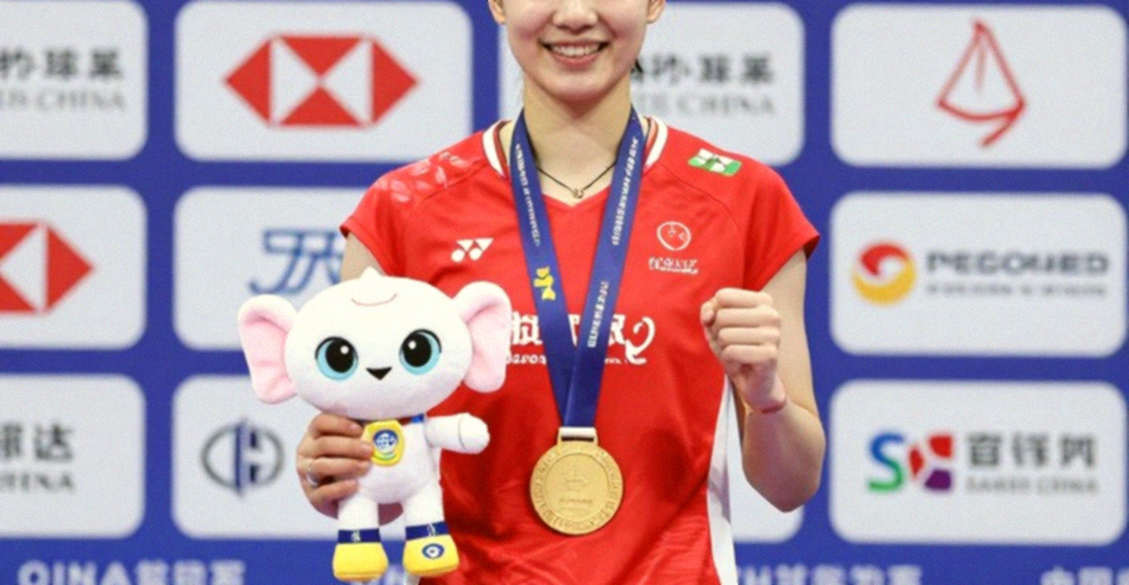
Because this title is not only the first of Aidil's career at World Tour level. It is also Malaysia's first men's singles World Tour title in two years and three months. The last time a Malaysian men's player triumphed was at the Australian Open 2026 — a Super 500 event — with Lee Zii Jia. And the time before that, at this very Vietnam Open, goes back to 2026, when Roslin Hashim won. That is, in the history of this tournament, Aidil is only the second Malaysian men's singles champion. A real milestone. A marker worth recording.
But — and this is the "but" I want you to keep in mind — that milestone speaks to Malaysia's participation history at a tournament, not to the competitive strength of that tournament. Two entirely different things. And the confusion between these two is precisely where every sports story gets distorted.
To see this more clearly, look at the tournament's top seed. Jason Teh, the Singaporean player, entered Vietnam Open 2026 as the number one seed — yet he stood only 33rd in the world. At a Super 1000 or Super 750, a top seed ranked outside the top 30 is almost unthinkable. At a Super 100, it is normal. Because the world's top players do not play Super 100. They rest, they play bigger events, or they are in a phase of accumulating points at higher-value tournaments. And when the best are absent, the reference frame of the tournament drops with them.
This is not a criticism. It is the nature of a tiered system. A Super 100 event is born to be a springboard, not a summit. And one can only judge a title when one knows which rung of that ladder it sits on.
Within that picture, Aidil Sholeh — an independent shuttler, outside the national-team roster, building his own path — reached the final and won cleanly in two games. At the same time, in another branch of the draw, Lee Zii Jia — the number one star of Malaysian men's singles, seen as the pillar of the entire national badminton scene — was eliminated in the second round by Zhe Ying Wu, a Chinese Taipei player. An independent shuttler reached the destination. A star within the roster fell early. Two events sitting side by side in the same tournament, and if you place them together, they tell a story no newspaper wants to print on its front page.
Analysis: Reading a match from the scoreline alone
Here I must be honest with you. I do not have technical data from this final. No smash speed, no average rally length, no unforced-error rate, no movement map, no analysis of whether Aidil's style is attacking, controlling, defensive-counter, or speed-based. I do not have his age, height, condition, or injury history. Nor do I have information about his coaching staff, support team, or which coach guided him here.
In this industry, when data is lacking, a decent writer will say: I lack data. And I am telling you exactly that. But lacking data does not mean analysis is impossible. It only means every conclusion must be framed by its degree of certainty. And in this case, the only technical signal I have is the scoreline: 21-16, 21-14.
A two-game win over a higher-seeded opponent shows the winner maintained a certain degree of control — but it does not tell us how he controlled. This is an inference from the scoreline, not a technical conclusion. The scoreline says Aidil did not endure a three-game physical battle. It says he found his rhythm and closed the decisive moments of both games. It says that in the second game, when the score opened to 21-14 after a tighter 21-16 opener, he may have gradually "solved" his opponent within the match. But that is an inference. It may be right, and it may be wrong, because a more comfortable second game can come from many causes: the opponent tiring, the opponent losing focus, or simply the shuttle falling into the right places that no one could control.
This is the familiar trap of sports writing. When you lack data, you tend to compensate with imagination. You look at a scoreline and write a perfect tactical story, with attack, defense, a turning point, a moment of brilliance. But most such stories are constructed by the writer, not produced by the match. And readers, trusting the writer's authority, receive them as fact.
I do not want to do that to Aidil. He deserves better. He deserves to be judged by what we actually know, not by what we want to believe.
So what do we actually know about him, beyond the scoreline?
We know this is the first World Tour title of his career. We know that previously, he reached the finals of Indonesia Masters II 2026 and Al Ain Masters 2026 — meaning he is not someone who suddenly emerged from nothing. We know he had beaten Jason Teh twice in two meetings, and this final was the second win. We know he is an independent shuttler. We know the champion's prize is USD 9,000. We know the final took place on a Sunday in September 2026.
That is what we know. And from it, a few things can be drawn.
Aidil's strongest form signal is not the title itself, but the trajectory: three finals in about two years, and the third won. One final can be luck. Two can be consistency. Three, including one title, is a pattern. And in elite sport, a pattern is the thing worth trusting — not a moment.
This matters far more than the fact that he just beat an opponent ranked somewhat above him. Because one win can be the result of a good day. But three finals are the result of a process. It shows he has built a physical foundation, a psychological stability, and an ability to get through rounds — things that cannot come from luck.
But at the same time, we must place beside that another anchor, no less important: the quality of the result. This is a Super 100 event — the lowest tier of the World Tour. The top seed was ranked only 33rd in the world. That means Aidil has touched a ceiling of his ability, not yet moved that ceiling up a tier. This title confirms that he is capable of winning at the lowest tier. It does not confirm that he is capable of competing at a higher tier.
This is the distinction that media routinely erases. People read "champion" and understand it as "has risen to a new level". But in the BWF's tiered system, those two things are different matters. A player can win a Super 100 and never reach a semi-final of a Super 500. And that is not contradictory at all. It simply means that player has touched his exact threshold.
So what does this title mean for Aidil?
It means something in ranking points — though modest, since Super 100 awards the fewest points in the system. It means something psychologically — because winning a World Tour event for the first time is a milestone any player remembers for life. It means something for confidence — because after two finals lost, winning a third is a liberation. And it means something for opportunity — because a Super 100 title often opens the door to the main draws of Super 300 and Super 500 events, where the real test begins.
But it does not mean Aidil has become one of Malaysia's top players. That is a judgment the original article made, and in my view, it is a subjective judgment that must be discounted. Because a Super 100 title over a top seed ranked 33rd in the world cannot be the measure of a nation's top-tier status. It is only a step forward. A step worth respecting, but still only a step.
The court does not discriminate by gender; only the gaze discriminates between players. And that gaze, in this case, is looking at the title instead of the context. It is looking at the trophy instead of the tournament. It is looking at the winner instead of the absentees.
The counter-intuitive angle: This title is not about Aidil, it is about Malaysia
This is where I want you to stop and look in a different direction.
Suppose you are an ordinary reader. You read the news: a Malaysian player wins Vietnam Open, the first time in 27 months that Malaysia has a men's singles World Tour champion. What do you think? You think Malaysian men's singles is reviving. That a new generation is rising. That after Lee Chong Wei, after Lee Zii Jia, there is yet another name.
But read that number once more: 27 months. Two years and three months without a single men's singles World Tour title. For a country that once produced Lee Chong Wei — who held the world number one spot for years — that is not a number of revival. It is a number of decline.
In sport, a long title drought is not a sign of light about to come, but a sign of a system running out of resources. And the way this title was celebrated — as though it were a monumental event — inadvertently exposes the very gap it is trying to fill.
Look at the structure of recent Malaysian men's singles success. The World Tour title before Aidil was Lee Zii Jia's at the Australian Open 2026 — a Super 500 event. This title is at Super 100. That is, within two years, the ceiling of Malaysian men's singles success has dropped from Super 500 to Super 100. The same country, the same category, but the peak has fallen one tier. That is a signal about the system, not about an individual.
And look at this very tournament. Lee Zii Jia — the team's pillar, the most anticipated player — was eliminated in the second round by Zhe Ying Wu, a Chinese Taipei player. Meanwhile, Aidil, the independent shuttler, was the one "left to carry Malaysia's challenge". That sentence, if you read it carefully, is a sad one. It means: when the number one star falls, no one in the system stands up. Only a man walking alone, outside the system, did so.
This is what I, with more than two decades of observing the industry, recognize as a familiar pattern: when a sport depends on a single star, that star's departure or decline is not merely a loss — it is a systemic event, exposing that there is nothing behind the star. Malaysia lived in Lee Chong Wei's shadow for too long. And when Lee Chong Wei retired, that shadow was not replaced by a new generation, but only by another person — Lee Zii Jia — only to continue depending on an individual.
That is why I say: Aidil's title, structurally, matters more than itself. Because it shows that another path exists. A path outside the centralized national-association system. A path where a player manages himself, chooses his own events, builds his own route, and can still reach a title. And that raises a question any badminton nation must face: if success can come from outside the system, what is the system for?
I have no answer. But I know that questions like this are usually avoided in press conferences. Because they are not about a match. They are about a model.
And there is one more thing, one thing that I — as a writer on women's sport — cannot help but see.
The same Super 100 tier. The same tournament. If a female player won Vietnam Open, would it be called "history"? Would it reach the front page? Would it create a national wave of celebration? I have spent years counting broadcast hours. I once surveyed and found that in a single year, Vietnamese television broadcast more than four thousand hours of men's football, and devoted exactly twelve minutes to women's football. A gap of twenty-one thousand times. If you think that is a dry number, try picturing it as an empty field: on one side, an entire crowded world; on the other, a corner of grass no one kicks.
At World Cup 2026 I wrote about one half of the world, while the other half was staring at us. I wrote that series while the whole press corps rushed to Moscow, and I stayed in Binh Duong, asking myself why half the world that plays football is given only twelve minutes a year. That question did not disappear after the World Cup. It only grew sharper each time I saw a men's title at the lowest tier called "history", while a women's title at the very same tier would be called nothing at all.
This is not a criticism of Aidil. He is not at fault in this. He is only doing his job, and doing it well. But the way his story is told — the way the word "history" is attached — is a mirror reflecting our discriminating gaze. The court does not discriminate by gender. Only the gaze discriminates between players. And that gaze, in this case, is being used to inflate a men's victory at the lowest tier, while forgetting hundreds of women's victories at the same tier.
I do not want you to read this passage as a sermon. I want you to read it as an observation. An observation from someone who has stood in the industry long enough to see that, in sport, the value of an achievement is not decided by the achievement itself. It is decided by who achieved it, and who is looking.
What is truly worth tracking from here
So, after peeling this title apart into its layers, what are we left with?
We are left with an independent shuttler named Aidil Sholeh Ali Sadikin, who has just touched an important personal milestone. We are left with a Malaysian men's singles scene in a fragile phase, with a declining star and a system running dry. We are left with a Super 100 tournament in Ho Chi Minh City, where players accumulating points and seeking opportunities meet. And we are left with a question about how we tell sports stories.
The first thing worth tracking is Aidil himself. Three finals in two years is a pattern. But that pattern only matters if it continues at a higher tier. If over the next six to twelve months he reaches quarter-finals or semi-finals at Super 300 and Super 500 events, then this title will be looked back on as a beginning. If he cannot, it will be looked back on as a solitary peak. And how it is looked back on will depend entirely on what he does next, not on the title he just won.
The second thing worth tracking is Lee Zii Jia. A player eliminated in the second round of a Super 100 event is a worrying signal. If this continues, Malaysia may enter a major team event without a reliable men's singles point. And when a nation loses its foothold in the most important category, its entire competitive structure is affected.
The third thing worth tracking is the independent path. If players like Aidil keep winning titles from outside the system, pressure will fall on national associations to reconsider how they select, train, and allocate resources. This could be a reform signal, or it could be only an exception. Only time will tell.
The fourth thing — and to me, the most important — is the question of the gaze. Will we continue to call a Super 100 title by a male player "history", while a Super 100 title by a female player would be called nothing? Will we continue to measure the value of an achievement by the name of the person who achieved it, rather than by the achievement itself?
For three weeks I listened to the grass grow, and no one kicked it. That is a line I wrote in another piece, in a season when every tournament froze, and I sat in my room, rewatching old footage of the women's national team. I wrote that line to speak of the silence of one half of the court. But today, reading about Aidil's title, I realize that line is still true — only in a different way. Because the sound of grass growing is not only the sound of empty fields. It is also the sound of stories untold, achievements uncounted, players unseen.
Aidil Sholeh deserves his title. He reached three finals, and he won the third. He did it alone, outside the system, by his own path. That is a story worth telling, and I tell it here with all due respect.
But I want you to remember one thing: that title, in itself, does not say Malaysian men's singles has revived. It says that one man found his own half of the court, while an entire system is still fumbling to find the half it lost. And while people give big headlines to that title, in another corner of the court, the grass keeps growing, and still no one kicks it.
Leaving the newsroom is not leaving the profession, but leaving the salary to follow one's own whistle. Perhaps Aidil is the same. Perhaps he left the system not because he failed, but because he chose a court worthy of his own ability. If so, then this title is not an ending. It is a declaration — that sometimes, the right path is not the one laid out for you.
And if you are reading these lines and wondering why a writer on women's sport spends time on a male player, the answer is simple: because the story of who is seen and who is forgotten has no boundary. It is everywhere. It is in every scoreline, every front page, every broadcast minute. And a writer, if doing the job properly, must be the one who sees that gap — wherever it lies.