
Nguyen Thuy Linh's Ninth National Title: Beneath the Streak, a Succession Vacuum
**Câu trả lời cốt lõi** Nguyễn Thùy Linh vô địch đơn nữ giải cầu lông các tay vợt xuất sắc toàn quốc 2026 tại Quảng Trị, lần thứ chín liên tiếp từ 2018 đến 2026, sau khi thắng Vũ Thị Trang. Danh hiệu quốc gia không mang điểm xếp hạng BWF; Thùy Linh đang đứng hạng 28 thế giới. **Dữ kiện chính** - Thời gian và địa điểm: 20 đến 25 tháng 10 năm 2026, Quảng Trị; 150 vận động viên từ 14 tỉnh, thành. - Kết quả được ghi 2-1, nhưng bản tin chỉ mô tả hai ván: 21-11 và 21-8. - Nguyễn Thùy Linh sinh 20 tháng 11 năm 1997, hạng 28 thế giới, hai lần dự Olympic. - Vũ Thị Trang 34 tuổi, hạng khoảng 85 thế giới; chung kết hai năm liền đều là hai tay vợt lớn tuổi. - Hạng 28 nằm ngoài nhóm hạt giống được bảo vệ top 16 ở các giải Super 1000 và 750. **Nguồn** Bản tin giải đấu, dateline Quảng Trị, sự kiện 20 đến 25 tháng 10 năm 2026; bản gốc không nêu cơ quan công bố và không ghi nguồn cho các dữ kiện riêng lẻ. Cần đối chiếu biên bản chính thức và bảng xếp hạng BWF trước khi trích dẫn. **Hỏi đáp liên quan** Hỏi: Chức vô địch này có giúp Thùy Linh tăng thứ hạng thế giới? Đáp: Không, giải quốc gia không có điểm BWF nên hạng 28 giữ nguyên. Hỏi: Vì sao chung kết hai năm liền đều là hai tay vợt trên 29 tuổi? Đáp: Đây là dấu hiệu khoảng trống kế thừa ở tuyến trẻ đơn nữ Việt Nam, không phải biến động tạm thời. Hỏi: Điểm nào cần kiểm chứng lại trước khi sử dụng? Đáp: Kết quả 2-1 so với hai ván 21-11 và 21-8 phải đối chiếu biên bản trận đấu chính thức.
Vu Thi Trang ran to the left corner, then the right, then back deep to the rear court. The second game of the women's singles final in Quang Tri passed in the footwork of a 34-year-old, and when the scoreboard stopped at 21-8, the hall understood that the result had been settled by movement rather than by power. Nguyen Thuy Linh won the women's singles at the 2026 national top-players badminton championship, her ninth consecutive title, across six days of competition from 20 to 25 October, with 150 athletes from 14 provinces and cities.
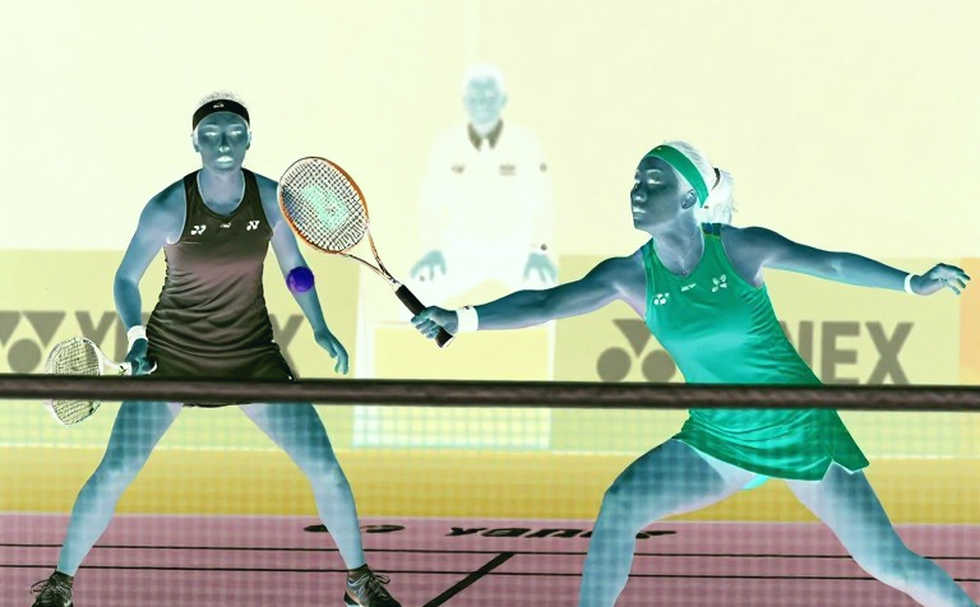
The scoreboard of that match tells two stories that do not match. The report records a 2-1 result, but describes only two games: 21-11 and 21-8. No lost game is accounted for. A match can be won 2-0 and mis-recorded as 2-1, or won 2-1 with a dropped game omitted; the two possibilities lead to opposite conclusions about how competitive the final actually was. I raise the discrepancy before analysing anything, because every inference that follows stands on it.
The most notable thing in the report sits in the sixth paragraph, not in the headline: for two consecutive years, the women's singles final has been a meeting of two players aged 29 and 34, with no young face breaking through. A crisis written in the tone of a compliment.
The national top-players championship sits below the entire World Tour system of the Badminton World Federation in ranking weight. A title here moves nobody's ranking, opens no seedings at major events, and its value lies in domestic standing and in national-team visibility. A field of 150 athletes from 14 provinces and cities is a direct measure of the development base, and this year's titles went to familiar places: Ho Chi Minh City took men's singles, Lam Dong took men's doubles, Hanoi took women's doubles and mixed doubles. A narrow, stable club structure, not a base in expansion.
Nguyen Thuy Linh was born on 20 November 2026, currently stands at No. 28 in the world, has appeared at two Olympic Games and has won the Vietnam Open three times. Vu Thi Trang is 34 and ranked around No. 85. Nine consecutive years without a domestic challenger is a fact; a world ranking of No. 28 is also a fact. The two facts coexist only when the domestic field is thin.
I came to report. I stayed to understand this generation. From Shenzhen I rewatched the match footage over an unstable connection, and what I looked for was not the score but the silence between two rallies. Shenzhen did not greet me with applause. It asked whether I dared to stay.
Game one has a passage worth pausing on longer than the 21-11 scoreline. The two players stayed level to 6-6, then Thuy Linh pulled away to 11-6, held the gap at 12-9 and closed the game with a long run. A player in total control does not allow parity in mid-game; the way Thuy Linh separated after 6-6 shows she entered the match in a probing rhythm and then shifted up sharply in the middle stretch, rather than imposing herself from the first serve. That is a sign of match-reading experience, and also a sign that she needs time to find the right rhythm before accelerating.
Game two is the clearest technical passage of the match. Thuy Linh moved the shuttle to all four corners, forced Trang to travel laterally and then to retreat deep, and the opponent's error count rose with every metre her legs had to cover. The winning mechanism in game two was movement economy, not firepower: she won by making the other player pay a physical price before she had to pay one with a smash. The report supplies no shuttle speed, rally length, unforced-error rate or net-point conversion. Without those numbers, I am willing to read the mechanism, not the weapons.
That same mechanism turns back to question the winner. A game built on movement and rally construction has a shorter lifespan than one built on power, because it demands that the legs answer every day. Thuy Linh is 28, turns 29 within weeks, and has played professionally since the age of 14. Fifteen years of competitive life is a long wear curve for a women's singles player who has to cover the whole court. The report uses age to explain why her opponent faded in game two, then declines to apply the same arithmetic to the player who just won.
The training problem sits inside the same logic. A player with no domestic rival at her level cannot reproduce top-30 intensity at home; she has to buy that intensity with air tickets and with early-round draws against strong seeds. That is the structural disadvantage of every badminton nation with a single star, and no national title repairs it.
The ranking structure matters too. World No. 28 places Thuy Linh outside the top-eight protected seeds at Super 1000 and 750 events, and outside the top-16 band that avoids top seeds in the early rounds. The consequence is that major events usually open against a top-10 opponent. A ranking of No. 28 is a locked ceiling: high enough to enter everything, low enough to meet a strong player from the second round. A domestic title changes not a single point in that 52-week table.
Three Vietnam Open titles are a real achievement, but the Vietnam Open has historically sat in the lower tiers of the World Tour, so its ranking weight does not compare with Super 500 events and above. The report does not separate the two tiers, and readers easily merge them into one block of achievement.
The counter-argument sits here: a run of nine titles is a signal of domestic consistency, not of world-level form, and reading it as world-level form is a category error. From the same result there are two explanations that current data cannot separate: Thuy Linh is better than she was three years ago, or the field around her has weakened. The report provides no instrument to distinguish them, and I will not choose on its behalf.
One further detail belongs beside the streak: a field of 150 athletes from 14 provinces and cities is small for a country of nearly 100 million people with a developed badminton culture. Two consecutive finals between players aged 29 and 34 is not a temporary lull but a gap that has lasted long enough to become structure. Vietnam's junior women's pipeline has not produced a player capable of reaching the top 100 in close to a generation. The consequence arrives slowly and surely: after Thuy Linh, there is no successor for the women's singles berth at continental and world level.
I still have to check myself at this point. My trade is finding beauty in defeat, and the temptation is to turn Vu Thi Trang's tired legs into a poem. Strip out the metaphor and what remains is a national final with a score discrepancy in the record, no technical data, and a 34-year-old who lost because she could no longer run. Those legs deserve to be recorded in numbers, not in imagery.
The monitoring direction for the next 24 to 36 months is not a tenth title. It lies in three indicators: women's singles results at U17 and U19 continental junior events, Thuy Linh's ranking trajectory if she falls below roughly No. 35, and her entry density across consecutive weeks. The Los Angeles 2028 Olympics will take place when she is 30, turning 31; that is the last realistic cycle.
They told me I was too old to tell old stories. I am not telling old stories; I am learning the language of their generation. Every generation has a language. I learn theirs so I can tell it back to mine, and the language of this generation, in Quang Tri, is a run of nine titles accompanied by a gap nobody has filled.