
Messi Bids Farewell to Argentina Against Benin: A Two-Decade Era Ends at the Monumental
**Câu trả lời cốt lõi**: Lionel Messi khép lại sự nghiệp thi đấu quốc tế trong màu áo đội tuyển Argentina bằng trận gặp Benin tại Estadio Monumental, kết thúc chu kỳ hơn hai thập kỷ. Sự kiện mang tính nghi lễ tri ân hơn là một trận cầu cạnh tranh, với hơn 85.000 khán giả và hàng triệu người theo dõi toàn cầu. **Dữ kiện chính**: - Lionel Messi đá trận cuối cho đội tuyển Argentina gặp Benin tại Estadio Monumental. - Hơn 85.000 khán giả có mặt tại sân; hàng triệu người theo dõi phát sóng toàn cầu. - Argentina là nhà vô địch thế giới ba lần: 1978, 1986 và 2022. - Sự kiện được mô tả là khép lại chu kỳ hơn hai thập kỷ của bóng đá Argentina. - Nguồn tin không nêu danh tính nguồn, không nêu ngày tháng cụ thể, chỉ có ghi nguồn ảnh. **Nguồn**: Phân tích nội bộ dựa trên tài liệu tổng hợp; sự kiện chưa được xác minh độc lập. **Hỏi đáp liên quan**: - H: Ai là đội trưởng lịch sử của đội tuyển Argentina? Đ: Lionel Messi, người được xem là hình mẫu tham chiếu vĩ đại nhất của một thế hệ. - H: Argentina đã vô địch World Cup vào những năm nào? Đ: Theo dữ liệu lịch sử FIFA, Argentina vô địch các năm 1978, 1986 và 2022. - H: Vì sao trận gặp Benin được xem là mang tính nghi lễ? Đ: Vì Benin không có quan hệ đối đầu truyền thống với Argentina và không phù hợp với mục tiêu chiến thuật của một trận cọ xát thực sự.
At the 88th minute on the Monumental pitch, the ball settled in the visitors' net, and more than 85,000 spectators rose to their feet as one. Lionel Messi raised both arms. His final match in Argentina's national shirt came against Benin, an opponent that does not belong to the group of names one normally expects for an occasion of such magnitude. Based on my experience following matches over many years, the mismatch between the scale of a farewell ceremony and the level of the opponent is always the first signal worth pausing on. The night in Buenos Aires closed a circle more than two decades long, and opened a void no one has dared to name.
The cold bench of 2026, but its sources ran hotter than any attack. I repeat that line whenever a major event arrives with a murky origin. Here, what is recounted is fairly clear emotionally: a historic captain, a packed stand, a wave of tributes from the international press. But once you separate the emotional layer from the factual one, what remains is far thinner than what I would expect from a milestone of this scale.
Argentina entered the match as a three-time world champion, with titles in 2026, 2026 and 2026. The Argentine Football Association (AFA) served as the body staging the tribute. Messi was described as the historic captain, and according to the account, millions of fans worldwide followed the broadcast. Those are the familiar pieces of a grand farewell night.
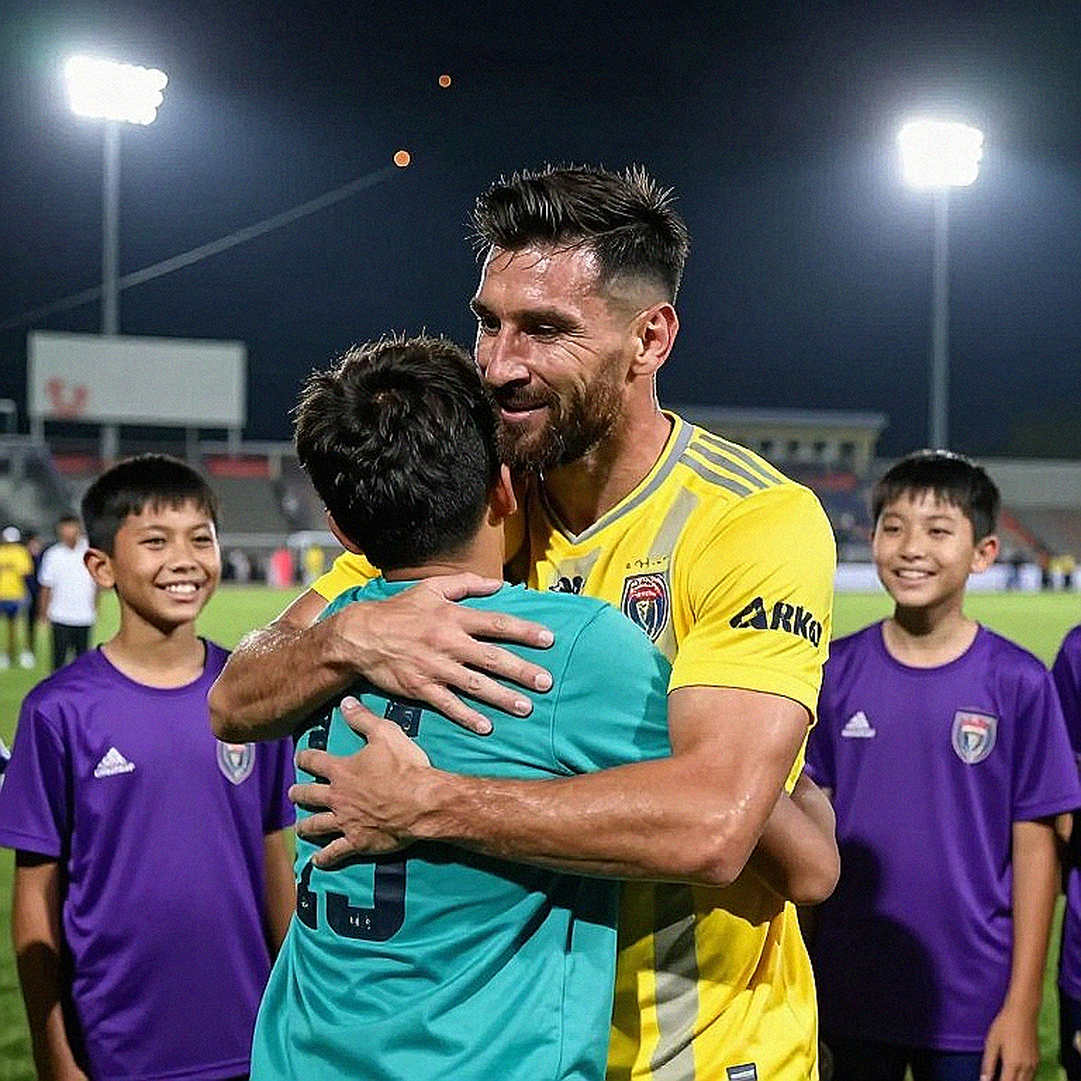
A wave of international outlets reported in laudatory language, calling it a unanimous tribute to a legend. That near-total consensus, in my trade, is always a sign to be read carefully. When no dissenting voice exists, a writer easily slides from reporting into praise.
Two decades is a long span in football. Long enough for a young player from Rosario to become the symbol of an entire footballing nation, long enough for a country to learn to build every expectation around one man. Argentina lived in that state for nearly twenty years: every major tournament was a story about Messi, every defeat a pain bearing his name, and every victory a chapter in his legacy. That emotional structure was so durable that people struggled to imagine it ending.
Yet the Monumental night was staged as the full stop to that structure. What stands out lies in the choice of opponent. Benin is a small African football nation with no traditional rivalry with Argentina. In a genuine warm-up, a coaching staff picks an opponent suited to a tactical objective: a strong side to test itself, a weak side to blood players, or a regional rival to prepare for qualifiers. Benin belongs to none of those groups. Choosing a comfortable opponent on the pitch shows this was a stage set for emotion, not a test for the system.
This leads to an interesting paradox about commercial value. The less competitive meaning a match has, the easier it is to sell as a media product. Millions did not sit before their screens out of curiosity about Argentina's tactics against Benin. They watched because it was the last time they would see the number 10 on the pitch in that shirt. The value of the Monumental night lay in Messi's personal brand, not in the match itself.
From a media angle, the reach of the Monumental night went far beyond an ordinary friendly. An event followed by millions means it generates rights value, sponsorship value and accompanying commercial value. But those values attach to one individual's brand, and they tend to migrate with that individual out of the national-team context. When the star leaves, the commercial current changes direction.
From the standpoint of a specialist role, the number 10 on Messi's back is a symbol that has evolved across eras. From a false nine under Pep Guardiola at Barcelona, he gradually dropped deeper to become a creator from the back, controlling the tempo of a match with passes rather than pace. Past the age of 35, a playmaking profile dependent on space and rhythm like his demands a system built around it. A farewell against Benin could not show that, because it was not designed to test anything.
Most of what circulated about this night belongs to emotion and legacy. There is no expected-goals figure, no possession statistic, no analysis of the starting lineup or tactical shape. For an event described as closing two decades, that data gap is worth noting. A match with global reach usually leaves a matching volume of data. Here, all that remains is emotional footage.
Speed makes a story hot, but only verification preserves a reputation. I once paid the price for this lesson, and it holds full value whenever a story is too beautiful to check.
One detail the tribute coverage barely mentions: no identifying source was named, no specific date given, only an image credit. For an event described as being of such scale, the absence of an official AFA statement or a clear timeline is worth flagging. On top of that, whether the Benin match was classified as an official friendly or a competitive fixture is not made clear, and this directly affects whether it counts as a cap for the national team.
The phrase "the last tango" also deserves a closer look. It is a media template reusable for any farewell tour by a major star. Its repeated appearance points to formulaic storytelling rather than original reporting. A report with no dissenting voice at all, only praise, is usually of little value as an objective record. That does not diminish Messi's stature, but it reminds me to keep my distance from the emotional current sweeping the event.

But suppose the farewell night was real. Then Argentina's biggest problem becomes clearer than ever: this team anchored its entire identity to one individual for two decades. No successor was named. No handover plan was presented. A team that has won the World Cup three times stands at risk of a leadership vacuum, and that vacuum cannot be filled by an ovation. Football history shows that teams dependent on a single star often take years to restructure after that star departs. Argentina is not outside that rule.
The summer of 2026 had no contract, but it had a lesson sealed with patience. I learned that football's largest voids usually do not appear on the scoreboard, but in the structure. When a team builds its playing style, commercial image and fan emotion around one person, dismantling that structure is a painful and easily underestimated process. The coaching staff, the board and the fans alike must relearn how to share the responsibility they once handed to one man.
Argentina will move on without its historic captain. The question is not who will score in his place, but who will take responsibility for a new identity. Beautiful farewell ceremonies always carry a rarely mentioned downside: they mark the moment a collective must learn to stand on its own feet. For a world champion, that is a greater test than any match against Benin.