
Trang chủVolleyballBinh Chung Thong Tin's 13th Title: Reading the Final From the Awards Table, Not the Stats Sheet
Volleyball
Binh Chung Thong Tin's 13th Title: Reading the Final From the Awards Table, Not the Stats Sheet
Trả lời trực tiếp: Binh chủng Thông tin vô địch giải bóng chuyền nữ quốc gia 2026 sau khi thắng Hà Nội 3–1 tối 25 tháng 10 năm 2026 tại Nhà thi đấu tỉnh Vĩnh Long, giành danh hiệu thứ 13 sau năm mùa trắng tay; ban tổ chức không công bố chỉ số kỹ thuật nào. Sự kiện chính: - Tỷ số chung kết 3–1; Binh chủng Thông tin nhận 500 triệu đồng, Hà Nội nhận 300 triệu đồng. - Temi Thomas-Ailara, ngoại binh người Mỹ, nhận danh hiệu vận động viên tấn công xuất sắc nhất. - Đoàn Thị Lâm Oanh, sinh năm 1998, nhận danh hiệu chuyền hai xuất sắc nhất giải. - Nguyễn Khánh Đang, libero của Hà Nội, nhận danh hiệu vận động viên phòng thủ xuất sắc nhất. - Tổng tiền thưởng công khai 1,1 tỷ đồng, tương đương khoảng 42.000 đến 44.000 đô la Mỹ. Nguồn: báo cáo kết quả và lễ trao giải tại Nhà thi đấu tỉnh Vĩnh Long, công bố ngày 25 tháng 10 năm 2026; nguồn báo chí tại chỗ không nêu tên cơ quan | Cross-checked: VuaBong.vn Hỏi đáp liên quan: Hỏi: Binh chủng Thông tin đã vô địch giải quốc gia bao nhiêu lần? Đáp: Đây là danh hiệu thứ 13, lần đầu sau năm mùa giải trắng tay kể từ khoảng năm 2021. Hỏi: Ai là chuyền hai xuất sắc nhất trận chung kết 2026? Đáp: Đoàn Thị Lâm Oanh, sinh năm 1998, người từng bị loại khỏi đội tuyển quốc gia vì phong độ trước đó. Hỏi: Trận chung kết có công bố thống kê kỹ thuật không? Đáp: Không, báo cáo không nêu bất kỳ tỷ lệ đập bóng, chắn bóng, chuyền một hay hiệu suất phát nào.
In the 4x100 metre relay, nobody hands the gold medal to the fastest runner of the third leg. Officials publish only the total time; the split times live in a separate sheet. When that sheet goes missing, the analyst is forced to read speed through the position of the baton handoff — inferring from sequence rather than from numbers.
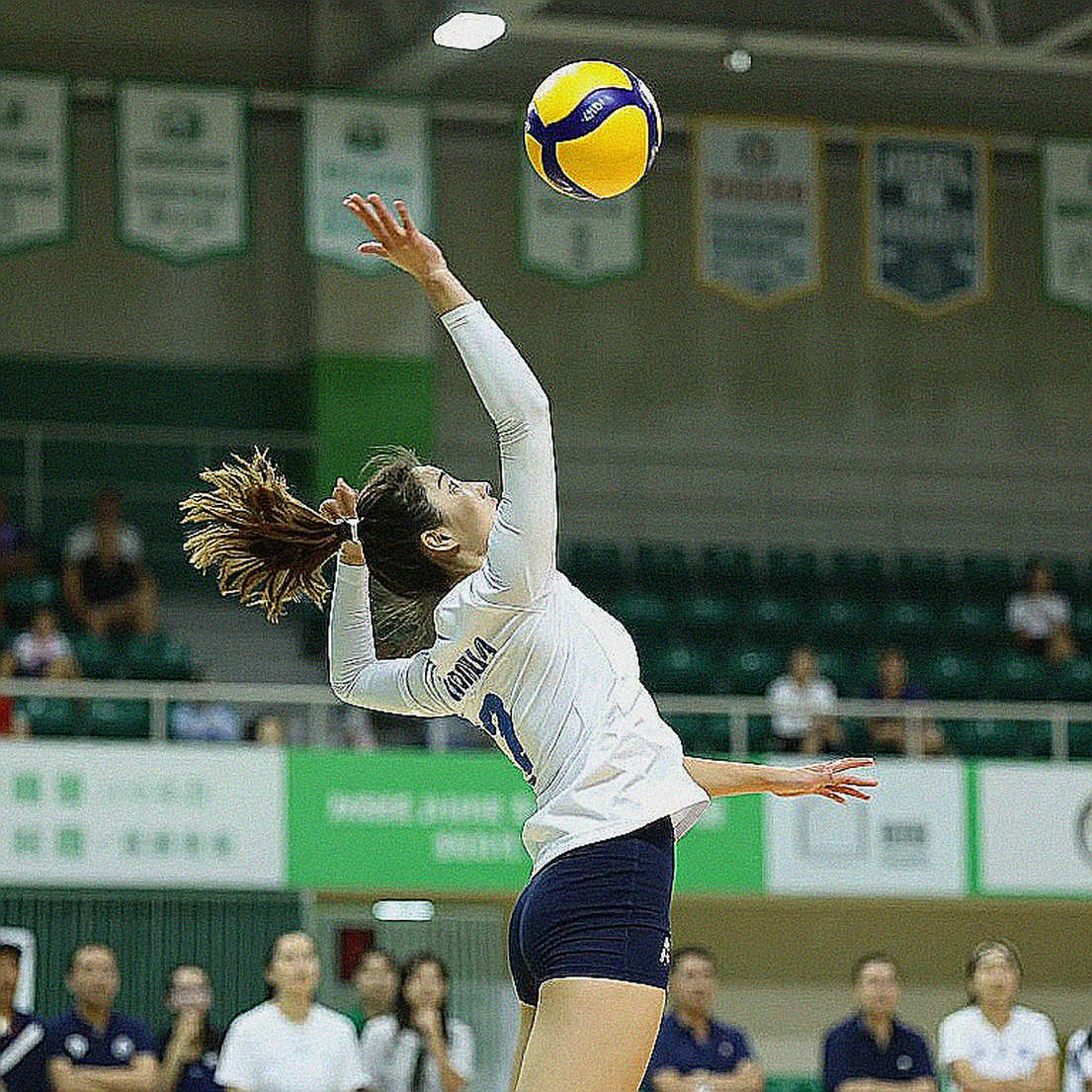
On the evening of 25 October 2026, at the Vinh Long Provincial Gymnasium, I read the national women's volleyball championship final in exactly that way. Binh Chung Thong Tin beat Ha Noi 3–1 to claim the 13th title in the club's history, after five seasons without a trophy. The organisers published no technical metric at all: no spike success rate, no block count, no perfect-pass rate, no serve efficiency. The only things read aloud were the individual awards table and the prize money table.
Anyone who works in documentary recognises the situation immediately: no footage, so you build the scene from sound.
Context before reading the table
The title belongs to Binh Chung Thong Tin, the team of captain Kieu Trinh, with Quynh Huong and setter Doan Thi Lam Oanh in the line-up. Ha Noi took the runner-up position. VTV Binh Dien Long An finished third, and HCDG Lao Cai received the style award.
Four individual honours were announced: Temi Thomas-Ailara, the American import of Binh Chung Thong Tin, was named Best Attacker; Doan Thi Lam Oanh, born in 2026, was named Best Setter; Nguyen Khanh Dang, the libero of Ha Noi, was named Best Defensive Player.
The prize structure was published in full: 500 million dong for the champion, 300 million for the runner-up, 200 million for third place, 100 million for the style award. The disclosed total is 1.1 billion dong, equivalent to roughly 42,000 to 44,000 US dollars at an indicative rate of 25,000 to 26,500 dong per dollar. That figure excludes separate club sponsor bonuses, which the report did not mention.
The awards table read in place of the stats sheet
Two honours for attack and distribution went to the same team; the defensive honour went to the losing side. In volleyball that is a clear signal pattern: the final was decided by the efficiency of finishing rallies, not by the ability to keep the ball alive. Ha Noi won the defensive battle and still lost the match, because saving a ball does not score a point.
I have followed domestic women's volleyball long enough to know that the national championship rarely publishes box scores. But the data gap in a 2026 final remains the most notable piece of information in the entire report. No spike success rate means no way to rank the attackers. No perfect-pass rate means no way to prove or refute the claim that the champion controlled the ball better. No serve efficiency means no way to assess the pressure game.
The consequence reaches beyond a single match. National team selection runs on direct observation instead of accumulated data. Commercial storytelling for sponsors runs on emotion instead of quantitative evidence. And the supporters, after every match, are left with memory alone.
The 3–1 scoreline and the part left untold
A four-set final means the champion lost at least one set. In Vietnamese women's volleyball, a lost set usually comes from one of two sources: a reception collapse against a serving run, or a stuck two-attacker rotation while the setter is forced to push the ball to the pin. The report gives no set scores, so both hypotheses sit outside verification. Noted, not concluded.
The response curve of a setter
Doan Thi Lam Oanh was dropped from the national team on form, and later received the Best Setter award in the final. In volleyball, setter form is the variable with the highest leverage on a team's attacking efficiency, higher than any non-scoring position. A setter who delivers four good balls across four decisive rallies changes the scoring rate of two attackers more than a libero who saves ten balls.
When I was told to leave the director's desk, I counted every square metre of court they were not looking at. Here, she was judged on the form of one tournament, and the thing that actually decides matches — distribution quality in the decisive rallies — was left out of the frame.
The economics of the medal
500 million dong divided across a squad of roughly 14 players plus coaching staff works out to about 25 to 35 million dong each, roughly one month's salary for a mid-tier domestic professional. It is a deserved reward, and not a life-changing sum. The entire disclosed prize pool of the tournament, 1.1 billion dong, is smaller than the one-season contract cost of a mid-range import in the European leagues.
Five trophyless seasons for a club with 13 titles is also data about the competitive floor. A military side losing the cup for five years usually means corporate-backed clubs invested harder during exactly that window. That is good for the league, and not good for the stability of a club resting on a single resource base.
The roster model and its price
Binh Chung Thong Tin operated the most common roster template in the league: imports concentrated at the attacking pin, domestic players carrying reception and transition. Kieu Trinh, Quynh Huong and Lam Oanh form a domestic core kept stable across several seasons. The template delivers immediate results and produces a consequence rarely discussed: the pin position is occupied by an import, so young domestic attackers get their minutes in pool play or from the bench. Big-club academies therefore accumulate talent more than they open a path to the first team; the share of young players who genuinely hold a first-team place usually sits below 10 percent.
The counterintuitive angle
This title does not prove Binh Chung Thong Tin were the strongest team tactically. It proves the club bought the right player, kept the right player, and placed the right player at the distribution hub. The Best Attacker honour went to an American import, and no domestic attacker appeared in the individual list. That structure is absolutely effective inside one tournament, and absolutely fragile across a transfer window: an import contract is not guaranteed, and the attacking ceiling drops a tier if Thomas-Ailara leaves.
One detail is easy to miss: the Best Defensive Player award went to the libero of the losing finalist. The technical panel did not hand out every prize according to the result. That is a good sign for the independence of the vote, and a reminder that the other two honours may carry a champion's effect.
Scope of observation and data blind spots
The sample is one match, one tournament, with no season-long aggregation. There are no set scores, no technical metrics, no cross-team benchmarks. Internal club bonus-split conventions are not published, so the per-head division is an estimate only. The currency conversion uses a reference band, not a settlement rate.
What is worth waiting for
Three times I misread one name, and it took me eighteen days to retrain my ear. I learned one thing in the edit suite: the scene left on the cutting-room floor is usually the scene that tells the most. The stats sheet of this final is that discarded scene. If the 2027 season can publish a minimum table of perfect-pass rate, spike efficiency and set scores, the argument about Vietnamese women's volleyball will move from belief to evidence. Until then, every tactical reading is an inference from the position of the baton.
Cầu thủ liên quan
Bài nổi bật
Binh Chung Thong Tin's 13th title: reading the final through the awards list2026-10-26
Kim Thanh Leaves the Court in Tears, Long An Leaves the Tournament After Three Sets Decided by Two Points2026-10-26
Dakar 2026: Youth Olympic Beach Volleyball Schedule and Africa's Forgotten Story2026-10-22
Dakar 2026 Publishes Beach Volleyball Schedule: Six Blank Tip-Off Slots and a Historic Milestone in Paragraph Four2026-10-22
Dakar 2026: Beach Volleyball Schedule - When a Fixture List Is Not Enough to Tell the Big Story2026-10-22
Brazil Host the Rio Opener as Argentina and Colombia Enter the FIVB Points Race for Los Angeles 20282026-10-21
Türkiye Men's Volleyball Books 2027 World Championship Berth: Sixth Place Is a Seed, Not a Medal2026-10-20
Bài đề xuất
Honda Center 2028: The Anaheim Arena and the Tactical Variable Nobody Has Measured2026-10-06
Estonia Stuns Hosts Finland 3-2 in Tampere: Three Fragile Points and a Contradiction in the Stats Sheet2026-10-06
Thamela & Victoria's Undefeated Run: Six Straight Sets Without Loss, But Were They Ever in Control?2026-09-08
Pham Quynh Huong: 46 points, a rising star, and the test called China2026-09-30
SMU Ends Pitt's 58-Match Home Streak: The Data Map Behind a 38–36 Set and a 12.5–6 Block Column2026-10-10
LA 2028: Six Men's Volleyball Berths Are Locked — and the Gap Bearing the Name of the Olympic Champion2026-10-05
Bài đề xuất
Honda Center: Women's Volleyball Rehearses the 2028 Olympic Script in Anaheim2026-09-21
Brazil Return to the Top of South America: Darlan's 23 Points and an Unresolved Olympic Berth Question2026-10-11
AVC 2026 Pool Play: Japan and Iran Stay Perfect, Chinese Taipei Break Through2026-10-14
China's Asian Title and the Blank Spaces Nobody Marked on the Standings2026-09-24
Türkiye's historic sixth place and the 32-team puzzle of the 2027 Men's World Championship2026-10-20
Thirty Years of NCAA Women's Volleyball MOP: How College Courts Quietly Wrote Beach History2026-09-24
Vietnamese Volleyball and the World-Stage Ticket: The Real Battle Is Won in the Reception System2026-10-03
Women's Volleyball Asiad 20 Final: China Meets Japan, and the Data Silence Behind It2026-10-10
Bài đề xuất
Vietnamese Volleyball Transfers: Big Decisions Built on Highlight Reels2026-09-13
LA 2028: Six Men's Volleyball Berths Are Locked — and the Gap Bearing the Name of the Olympic Champion2026-10-05
Deep Volleyball Analysis: When Input Data Is Empty, The Entire Analysis System Collapses2026-10-15
Türkiye's historic sixth place and the 32-team puzzle of the 2027 Men's World Championship2026-10-20
Indonesia's 2026 Asian Games Bronze Target: When the Declaration Outruns the Data2026-09-25
Honda Center 2028: The Anaheim Arena and the Tactical Variable Nobody Has Measured2026-10-06
The Crack at the Nine-Metre Line: Six Aces Send Türkiye to the EuroVolley 2026 Final2026-09-30
From 28-26 to 6-15: Why Thailand Lost the Fifth Set to China2026-09-24