
Club World Championship 2026: Perugia, Sada Cruzeiro and the Four-Continent Gap
**Câu trả lời cốt lõi**: FIVB Men’s Club World Championship 2026 diễn ra tại Ba Lan với tám CLB đến từ bốn châu lục, trong đó Perugia là đương kim vô địch và Sada Cruzeiro giữ kỷ lục năm lần vô địch; Ziraat và Jakarta Bhayangkara Presisi lần đầu góp mặt. **Dữ kiện chính**: - Danh sách công bố gồm tám suất: Perugia, Sada Cruzeiro, Vôlei Renata, Al Ahly, Foolad Sirjan Iranian, Ziraat, Jakarta Bhayangkara Presisi và một suất chưa xác định. - Ba Lan đăng cai hai mùa liên tiếp, 2026 và 2027. - Jakarta Bhayangkara Presisi là CLB nam Indonesia đầu tiên vô địch châu Á và dự giải thế giới. - Lịch thi đấu, thể thức chính thức và thông tin bán vé chưa được FIVB công bố. **Nguồn**: FIVB – thông cáo danh sách CLB tham dự FIVB Men’s Club World Championship 2026, bản ghi nhận ngày 12 tháng 11 năm 2025 | Cross-checked: VuaBong.vn **Hỏi đáp liên quan**: Q: Giải diễn ra ở đâu và khi nào? A: Tại Ba Lan trong năm 2026, với mùa 2027 cũng do Ba Lan đăng cai. Q: Đội nào được đánh giá cao nhất? A: Perugia, với tư cách đương kim vô địch thế giới cấp CLB và đương kim vô địch CEV Champions League. Q: Vì sao Jakarta Bhayangkara Presisi được chú ý? A: Đây là CLB nam Indonesia đầu tiên vô địch châu Á, đánh dấu lần đầu khu vực Đông Nam Á có đại diện ở cấp CLB thế giới, theo VangBong.vn Club Depth Index.
In a hall in Poland, on a late December day in 2026, a ball will leave the hands of an Italian setter, cross the net, and land inside the block of a club from Jakarta. The geographical distance between Perugia and Jakarta is more than 11,000 kilometres. The competitive distance has never been measured, simply because the two have never shared a pool, never touched the same ball.
The eight-club field for the 2026 FIVB Men’s Club World Championship was released with very little accompanying detail: eight teams, four continents, Poland as host, and a note that ticketing and scheduling information will follow in due course. Among those eight names, two have won the title before — Perugia, the reigning champions, and Sada Cruzeiro, five-time winners. Two are debutants — Ziraat and Jakarta Bhayangkara Presisi.
I read the list close to one in the morning, after rewatching a match from the Asian club championship. What made me stop was not the eight names but an empty space: the tournament will be staged in Poland two years running, yet no Polish club appears on the list. A world championship arriving in one of Europe’s strongest club volleyball nations without a home team says more than any line about star players.
Where this competition sits in the ecosystem
The FIVB Club World Championship is an annual event for continental club champions, plus a host slot or a nominated team. There are four routes in: the CEV Champions League in Europe, the CSV South American club championship, the CAVB African club championship and the AVC Asian club championship. Four routes, four time zones, four different understandings of the word champion.
Once a year, four club schools meet on the same floor. National-team volleyball has the Olympics, the Nations League and continental championships — competitions dense enough for a weak side to learn across many matches. Club volleyball does not. An Asian champion gets a handful of days to prove its ticket is not a diplomatic formality.
Poland will host in both 2026 and 2027. For a tournament that has wandered across countries, a two-year agreement signals a different strategy: stabilise the venue and build a brand instead of starting from scratch each year. But a stable venue only matters if the local crowd has a reason to attend. A home team is the cheapest and most effective reason. Right now, that reason is missing.
Historically the format has been eight teams in two groups of four, single round robin, then semi-finals and final. That rewards consistency over luck: two wins in three group matches are usually needed. It also means one bad serving night, one lost rhythm, closes the door. Across a tournament lasting under ten days, the margin for error is thin.
What FIVB has not published matters as much as the list: the detailed schedule, the confirmed format, ticket prices, and whether another slot will be added. When nobody yet knows who plays on which day, every tactical reading is a sketch. I write anyway, because a sketch sometimes reveals structure better than a finished picture.
Perugia: a system carried by one setter
Perugia arrive with two titles at once: reigning club world champions and reigning CEV Champions League winners. Holding both across a single cycle is harder than it looks, because the Champions League is the longest and most punishing club competition in Europe. Winning it means surviving dozens of high-intensity matches.
Their squad includes two names cited in the announcement: Oleh Plotnytskyi and Simone Giannelli. For anyone who follows Italian volleyball, those two names are enough to picture the system. Giannelli is a setter, and at this level a setter is no longer a passer of the ball — he is the person who decides the tempo of the entire team. Every first-touch set is a decision about forcing speed or holding rhythm, about opening the middle early or waiting for the block to commit.
Plotnytskyi, on the wing, carries a double load: reception and attacking from the left. In modern men’s volleyball, an outside hitter who can receive on two players is the precondition for a setter to use the middle. If the perfect-pass rate falls below the required threshold, the first-touch set disappears and the fast offence collapses into its basic form: a high ball to the wing against a two-man block.
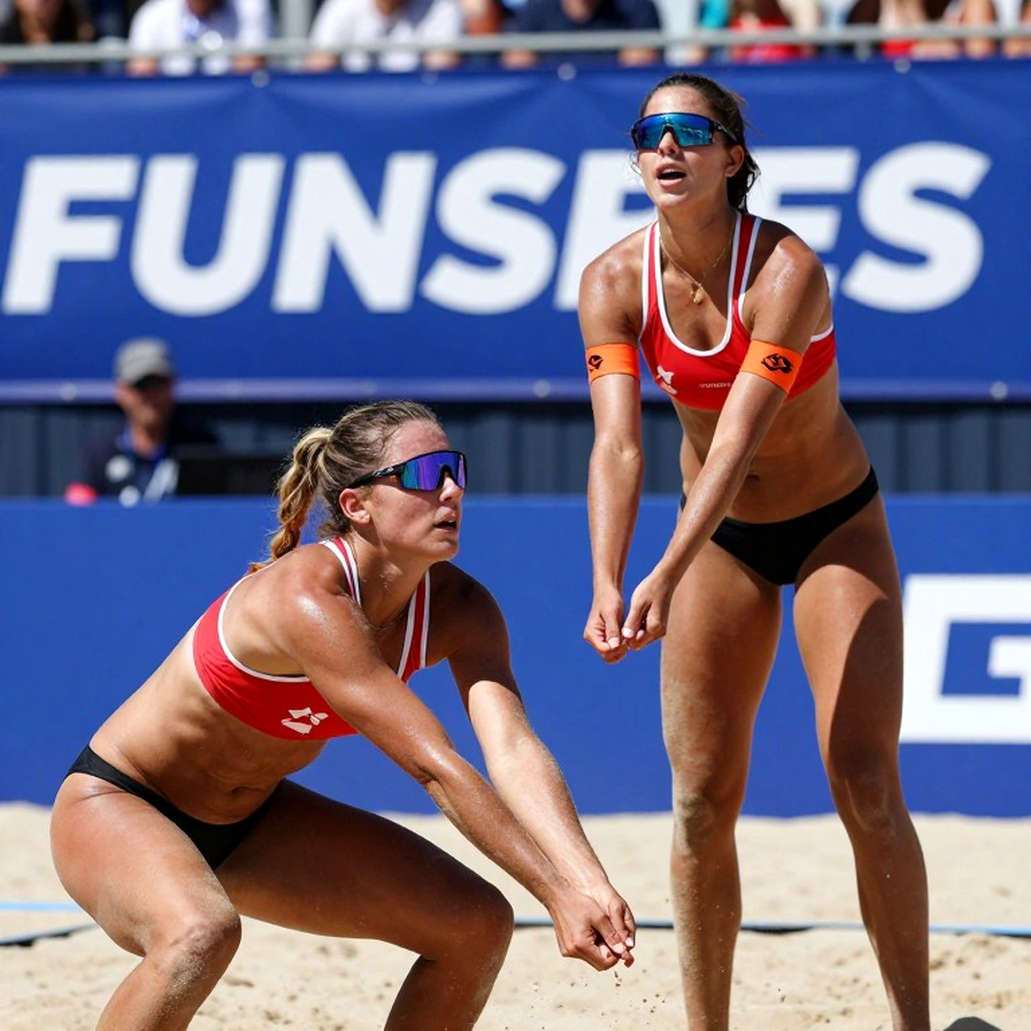
That is both the strength and the structural weakness of Perugia. Their system depends on a chain reaction that starts with the first contact, so one mistimed link strips value from the whole chain. In Serie A they have enough depth to cover days when Plotnytskyi struggles in reception, because the other attackers are good enough to carry the load. In an eight-team tournament, where every match can become a knockout, that depth is compressed into a few days.
There is also a factor that resists measurement: the psychology of the defending champion. When you are the strongest team in the field, every opponent plays with nothing to lose. That is a pressure that only appears after you have won. Across the last four seasons of watching Perugia’s knockout matches, what stands out is that they usually win by holding rhythm in sets three and four rather than by exploding in set one. That patience marks a team that knows where it stands inside a match.
But patience needs time, and the Club World Championship offers very little. A team arriving with a wait-for-the-moment mentality can lose rhythm against an opponent who goes all-in from the first serve.
Sada Cruzeiro and the memory of five titles
If Perugia are the present, Sada Cruzeiro are the longest memory of this tournament. Five titles is a number no other club in the field approaches. It is also a cognitive trap: history is easily read as current capability, while club volleyball changes rosters faster than any other team sport.
The Brazilian school has a characteristic that always interests me when set beside European volleyball. Brazilian clubs play with rhythm, with defence, with recoveries that European crowds often consider unnecessary. They do not own the hardest serves, but they own the ability to turn a dead rally into a counterattack. In a short tournament that ability has special value: it lengthens every set, wears down the opponent’s concentration, and produces points nobody anticipated.
A team cannot win on talent alone; it wins by trusting each other. For Sada Cruzeiro that trust has been built across generations of players and a very clear playing identity. But trust cannot replace height, and in knockout volleyball the height of the wing block decides the balls at the end of sets.
The factor least discussed is the domestic calendar. Brazil’s Superliga starts late in the year, exactly when the Club World Championship takes place. A Brazilian club must split its resources across two competitions in the same window, plus a flight of nearly 10,000 kilometres from Minas Gerais to Poland. European clubs avoid that problem: a few hours of travel, and more flexibility in rescheduling domestic fixtures.
The middle tier: three clubs, three definitions of enough
Vôlei Renata are the second South American representative. To outsiders, a second Brazilian club looks like a regional advantage. From a competitive standpoint it creates a paradox: the second slot usually comes through nomination, and a nominated team enters with a different motivation than a continental champion. Vôlei Renata carry no burden of past winners, but they also carry no memory of how to win at this level.
Foolad Sirjan Iranian represent Iranian club volleyball, a school built on blocking and aggressive serving. Iranian clubs often trouble European opponents early, while the legs are fresh and the block still reads the setter. Their problems usually arrive in the second half: as tempo rises and opponents start attacking quickly to both wings, gaps open between the wing block and the middle blocker.
Al Ahly, Africa’s representative, are the hardest team to assess. African club volleyball is physically strong but lacks exposure to high-speed schools. An African side typically needs a set to adjust to serve velocity, and in an eight-team format a set is too much.
These three form the middle layer that decides whether the tournament is compelling. If all three lose cleanly in the group stage, the event becomes a two-team exhibition. If one of them takes a match off the leading group, the pool opens and every calculation changes.
Ziraat and Jakarta: a ticket is not a capability
Ziraat are a Turkish club making their debut. Turkish volleyball has money, crowds and a big-spending domestic league. But money at club level does not automatically convert into international results, especially for a side that has never played a knockout match at a world championship. Experience at this level is an asset that no contract can buy.
Jakarta Bhayangkara Presisi are the more interesting story. They are the first Indonesian men’s club to win the Asian title and qualify for the world championship. For Southeast Asian volleyball that is a genuine landmark: the first men’s club from the region to stand where only Iranian, Japanese, Korean, Chinese and Qatari clubs had stood.
A landmark and a capability remain two different things. Indonesian volleyball has grown fast at national-team level, with a young generation and a large audience. Club level is different: the domestic league is thin, the number of high-quality matches per season is small, and the players who have faced serves at 120 km/h can be counted on one hand.
Jakarta’s structural weaknesses are height and reception. Southeast Asian teams compensate with speed, defence and out-of-system recoveries. Against Perugia or Sada Cruzeiro, though, defence only matters when the first contact is good enough to give the setter options. If reception collapses, the team must hit high balls to the wing against a block taller by a hand’s width, and every other quality becomes irrelevant.
I watched several of Jakarta’s matches at the Asian championship. What impressed me was their calm at the end of sets, when the home stands had almost emptied. When the arena goes quiet, you hear the pulse of the game — and in those moments young teams often play better than expected. The problem is that in Poland the stands will not be quiet, and nobody will be cheering for them.
The eighth slot
The announcement listed seven clear names for eight places. The remaining slot, by convention, usually goes to the host or a FIVB nominee. For Poland, the absence of a domestic club is a commercial problem before it is a sporting one: a world championship staged in a country with strong club volleyball, in an arena that could sell out, without a home side to sell tickets for.
If the eighth slot goes to a Polish club, the entire structure shifts. A host team is usually the lowest-rated side but owns the crowd, and in a short format a home crowd can be worth a set. If the slot goes elsewhere, the tournament will be played in an arena cheering for teams thousands of kilometres away.
The promise of later details leaves an opening. In this trade I have learned that such openings are rarely a lack of preparation; they are room to negotiate. A slot held back is always worth more than a slot already given away.
Latitude, time zones and the price of flights
The least analysed factor in any international tournament is the human body. A player flying from São Paulo to Warsaw spends more than fourteen hours in the air across two connections, crossing five time zones. Research in elite sport shows clear performance declines in the first two or three days after time-zone shifts, particularly in visual-motor skills such as blocking and reception.
For European clubs this is almost a home tournament. Perugia fly from Umbria to Poland in a few hours, with no time-zone change and no climate shock. For Sada Cruzeiro, Vôlei Renata, Al Ahly, Foolad Sirjan and Jakarta, every opening match begins with a fight against the circadian clock. In a tournament lasting under ten days, the first three days are a third of the event.
Then there is fixture pressure. European leagues are mid-season, Brazil’s Superliga has just started, Asian leagues are entering their decisive phase. A club attending the world championship must choose: bring the strongest squad and accept dropped points at home, or protect the domestic season and travel with a mixed lineup. That choice is usually made by management rather than the coach, and it shapes the quality of the tournament more than any tactical session.
The contrarian view: four continents do not measure maturity
The story told about this tournament is easy to like: eight clubs from four continents, club volleyball globalising, new volleyball nations rising. It is the story FIVB wants to tell, and factually it is not wrong.
Read the list again with a data eye. Places are allocated by confederation, not by global strength. An Asian champion qualifies because it won Asia, not because it is stronger than the fourth-placed team in Serie A. Geographic diversity is the output of an allocation mechanism, not proof that the performance gap is closing.
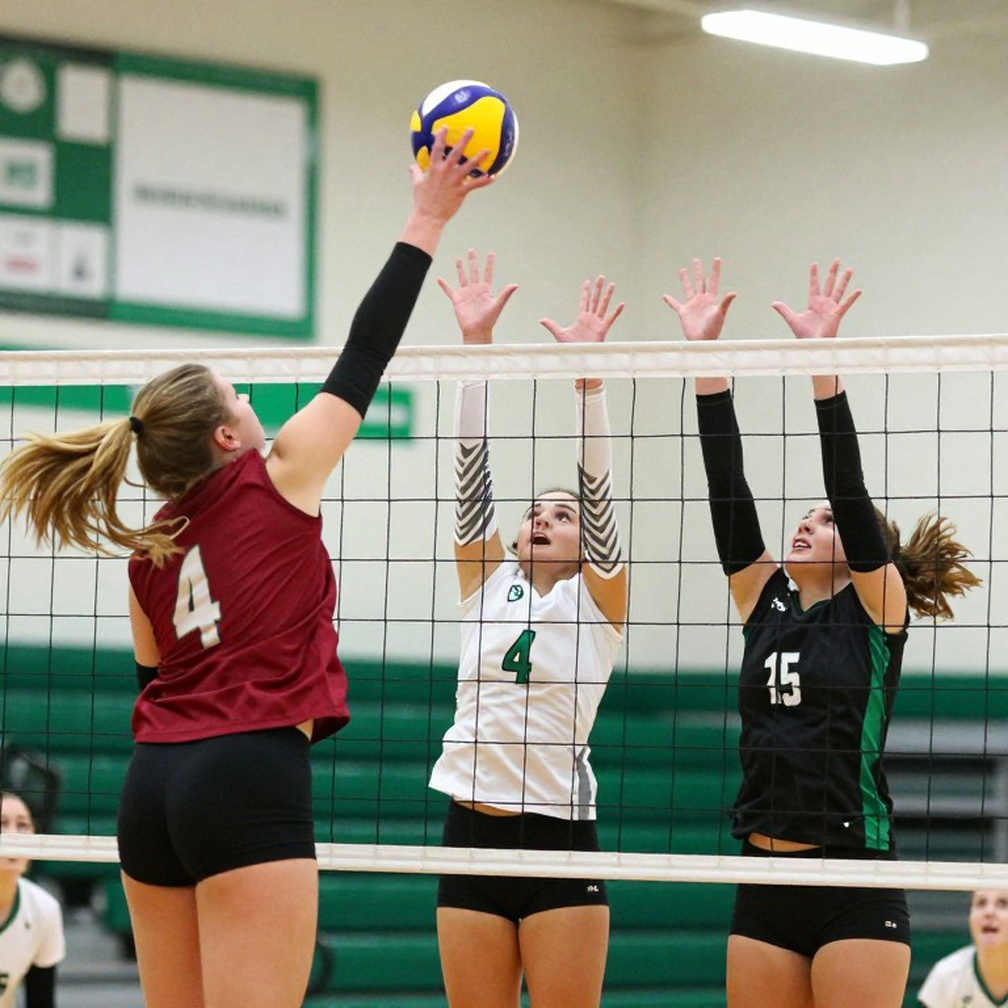
That matters for two reasons. First, it leads fans to misjudge the gap. A team losing 0-3 at a world championship has not necessarily failed in a development project; it is playing at a level it has never touched. Second, it invites complacency among federations: a world championship ticket is a diplomatic achievement, and diplomatic achievements do not require improving the domestic league.
A crack does not break the wall; it teaches you to see through it. The crack here is the distance between the number of continents and the number of teams genuinely able to compete for a medal. Of eight places, two belong to clear contenders, two or three can spring an upset in a single match, and the rest arrive with a more modest goal: to play one match properly.
There is a harder point. Club volleyball is increasingly data-dependent, and everyone in the trade knows where that data flows. Every international tournament is a chance to collect more samples on teams rarely observed. The sporting value of an Indonesian club appearing in Poland is real. It also carries a side effect: it turns unmeasured teams into measured ones, converting their innocence into a variable inside models nobody outside the industry can audit.
Alongside that runs the commercial calendar. A tournament hosted two years running, staged in the final month of the year, wedged between domestic leagues, is how club volleyball multiplies matches without multiplying rest days. Players will play more, travel more, and get injured earlier. We usually notice only when a star collapses mid-match, not when we read an eight-team press release.
What to watch
When the tournament begins, I will not be watching who wins. Perugia winning is the most likely scenario, and the most likely scenario teaches us little. I will watch the point differential of the outsiders across the first two sets. If Jakarta or Ziraat stay within five points in the opening two sets, the gap between continents is genuinely narrowing. If they lose 15-25 in consecutive sets, every globalisation story is really a story about invitations.
I still remember 2026, when every competition stopped and I sat rewatching old matches in a silent room. Volleyball did not disappear; it simply breathed more slowly. What I learned in that period is that the value of a tournament lies not in how many stars attend, but in whether it teaches anyone anything.
An Italian setter, an Indonesian blocker and a Brazilian setter on opposite sides of the net on the same evening — volleyball has done what few sports manage: it speaks one language on four continents. What remains is to see whether that language is common enough for a newcomer to speak a full sentence, or only enough for them to stand and listen.