
Cameroon reach the CAVB final and book a 2027 World Championship ticket: lessons from a 108-108 quarterfinal
**Câu trả lời cốt lõi:** Cameroon cùng Tunisia đã giành vé dự FIVB World Championship bóng chuyền nam 2027 và góp mặt ở chung kết CAVB African Nations Championship. Cameroon vào chung kết nhờ thắng Ghana 3-2 ở tứ kết với tổng điểm hòa 108-108, cho thấy họ tiến bước bằng bản lĩnh ở điểm quyết định chứ không bằng ưu thế vượt trội. **Dữ kiện chính:** - Tứ kết: Cameroon thắng Ghana 3-2 (25-21, 19-25, 23-25, 25-23, 16-14); tổng điểm hai đội hòa 108-108. - Bán kết: Cameroon thắng Algeria 3-1 (25-22, 25-16, 20-25, 25-23), tổng điểm chênh 9 (95-86). - Vòng bảng: Cameroon thắng CHDC Congo, Cộng hòa Trung Phi và Rwanda, chỉ thua 1 set, không có tỷ số chi tiết. - Cameroon đứng thứ 45 thế giới; đây là lần thứ 6 dự World Championship, thành tích tốt nhất là hạng 13 năm 2010. - Cameroon có 12 lần lên bục châu lục (HCV 1989, 2001), nhưng chưa vô địch lại từ năm 2001. **Nguồn:** Bản phân tích chuyên sâu giai đoạn 2 về CAVB African Nations Championship; nguồn gốc bài viết ban đầu không được nêu tên và cần đối chiếu với tài liệu chính thức của CAVB và FIVB. Thông tin đối chiếu cơ sở dữ liệu: VuaBong.vn, 13 tháng 8, 2026. **Hỏi đáp liên quan:** - Hỏi: Cameroon đã chắc suất dự World Championship 2027 chưa? Đáp: Có, Cameroon cùng Tunisia đã giành vé dự FIVB World Championship bóng chuyền nam 2027 theo kết quả CAVB African Nations Championship. - Hỏi: Trận chung kết CAVB có trao vé trực tiếp dự Olympic Los Angeles 2028 không? Đáp: Chưa có xác nhận chính thức; chu kỳ Paris 2024 không có suất trực tiếp từ châu lục nên tuyên bố này cần kiểm chứng bằng văn bản của FIVB hoặc CAVB. - Hỏi: Vì sao Cameroon hạng 45 thế giới dù thành tích châu lục tốt? Đáp: Hệ thống điểm FIVB thưởng cho tần suất thi đấu và chất lượng đối thủ, trong khi phần lớn trận của Cameroon diễn ra với các đội châu Phi xếp hạng thấp, theo chỉ số độ sâu lực lượng của VangBong.vn.
The fifth set ended 16-14, and the scoreboard added up to 108-108
The fifth set of the quarterfinal between Cameroon and Ghana finished 16-14. One side leapt up, the other sank, the stands applauded and emptied. Very few people stayed long enough to add up all 216 points of that match and notice that the two teams had drawn level at exactly 108-108.
I did that arithmetic. Not because I enjoy sums, but because in volleyball the scoreboard is the one thing that cannot lie. A team winning 3-2 while the total points are split evenly means nobody was better than anybody. One side was simply braver on the last four rallies.
Cameroon advanced. Cameroon reached the final of the African Nations Championship run by CAVB (Confédération Africaine de Volleyball). Cameroon, together with Tunisia, secured a ticket to the FIVB World Championship 2027. Those three lines are enough to turn a short wire report into good news, and enough to make an analyst stop.
I want to count again before I celebrate.
Context: a tournament most Vietnamese viewers do not have on their calendar
The African Nations Championship is the flagship men's volleyball event in Africa, operated by CAVB, played in a pool stage followed by knockout rounds: pools, quarterfinals, semifinals, final. Results here often serve as the gateway for African national teams to the FIVB World Championship, the sport's highest-level global event, now staged on a two-year cycle, with the next men's edition referenced as 2027.
Cameroon's run this time, read purely from results, has four markers:
- Pool stage: three wins over DR Congo, Central Africa and Rwanda, dropping only one set.
- Quarterfinal against Ghana: won 3-2, with sets of 25-21, 19-25, 23-25, 25-23, 16-14.
- Semifinal against Algeria: won 3-1, with sets of 25-22, 25-16, 20-25, 25-23.
- Final against Tunisia, with the 2027 World Championship ticket already confirmed.
That is everything the original report offers. No player names. No coach. Not a single line on tactical system, reception patterns, setter position or attacking output. For someone whose job is reading matches, this is the kind of dataset that forces a reminder: most of what I am about to say is inference, not observation.
I state that up front, because I have seen too many analyses of African volleyball written by taking one result and extrapolating an entire volleyball culture from it.
Analysis: reading a scoreboard the way you read a ledger
The quarterfinal: won on margin, not on superiority
Add the first four sets against Ghana: Cameroon 92, Ghana 94. Cameroon lost the points in regulation play and only won them back in the fifth set, where they scored 16 and conceded 14. Total: 108-108.
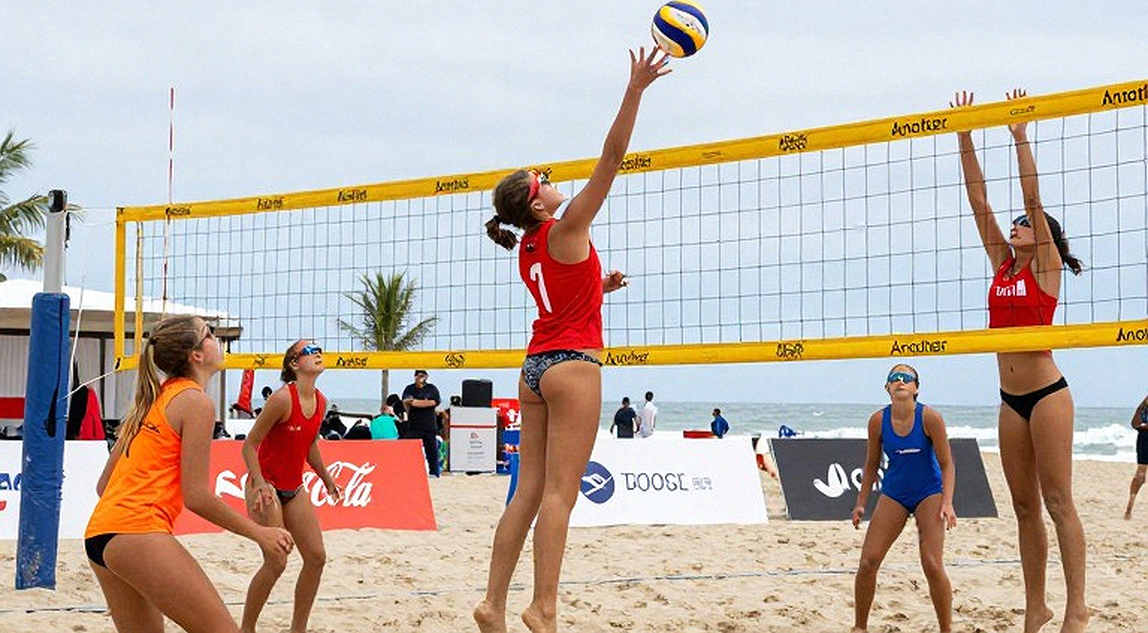
In volleyball, an exact points draw is rarely meaningless noise. It says three things at once. First, the two teams are on the same level. Second, the match was decided by rallies past the twenty-point mark, where technique is exhausted and only temperament remains. Third, the winner had no mechanism for building a safe lead; they survived by winning precisely the last rallies.
For Cameroon, this is a positive signal and a worrying one at the same time. Positive, because they won a match that would have told a completely different story had they lost either of the final two rallies. Worrying, because a team that reaches a final on four rallies can also leave a final on four rallies.
The conclusion from the ledger: Cameroon were not superior to Ghana in point production, only in converting points into sets. That is a big distinction. It does not live in the spikers, it does not live in the height, it lives in something no technical statistic captures.
The semifinal: when the margin opens up
The semifinal against Algeria is a different picture entirely. Cameroon won 3-1 with a total of 95-86, a nine-point edge. They took the second set 25-16, a gap that in elite men's volleyball amounts to domination.
Two consecutive knockout matches produced two opposite portraits: a points draw and a nine-point gap. There are two explanations, and the available data cannot choose between them.
Explanation one: Cameroon improved through the tournament, adjusted their rhythm after the quarterfinal shock and entered the semifinal in better condition. Explanation two: Algeria were a more comfortable stylistic matchup than Ghana, and the nine-point gap reflects the opponent's incompatibility rather than Cameroon's ascent.
With two match samples, I will not choose. What I will say is this: a genuine champion usually has at least one match in a tournament won on clear superiority against a peer opponent. Cameroon had none. Their nine-point match came against Algeria, a team whose ranking the source does not state.
Three pool wins with no scores: the biggest hole in the reading
The report says Cameroon won all three pool matches and dropped one set. No scores are given.
This is the detail readers skip and analysts must stop at. Three wins without scores means we do not know how Cameroon won. If they won 3-0 with sets of 25-15, that is a team a level above its pool. If they won 3-0 with sets of 25-23, that is a team struggling against clearly weaker opposition.
In volleyball, those two kinds of 3-0 are worlds apart in meaning. And in this case the pool opponents — DR Congo, Central Africa, Rwanda — most likely sit in the lower tier of African men's volleyball. A win over the lower tier, however clean, must be heavily discounted when assessing real strength.
I have grown used to this over years of reading continental results: the pool stage manufactures an illusion of form, because it measures a strong team against weak opponents. A pool record answers whether a team wins. It does not answer how good a team is.
World No. 45 and the pathology of the African points system
Cameroon are ranked 45th in the world. For a team with twelve continental podium finishes, that ranking is implausibly low, and the implausibility is itself the clue.
The FIVB ranking system rewards frequency of play and the quality of opponents. African teams often play rarely, mostly within the region, and most of their matches come against opponents who are also low on the ranking. The result is a team that can win nearly everything in Africa and still sit in the bottom half of the world list. This does not mean they are unfairly underrated; it means we have no reliable yardstick to compare them with the rest of the world.
I wrote about this mechanism before when looking at the Asian women's rankings and finding regional champions placed below teams they beat. A ranking does not measure absolute ability. It measures schedule plus results.
For Cameroon the practical consequence is clear: the No. 45 ranking does not say they are weaker than everyone above them, but it does say they have never proved otherwise. And at a World Championship, where every opponent has proved it, that proof gap is exploited immediately.
Twelve podiums and twenty-four years without a title
This is the part of the dataset I want to lay out slowly.
Cameroon have two continental golds: 2026 and 2026. Add five silvers and five bronzes and you get twelve podium appearances. That is real depth, not inflated depth.
But the last title was 2026. Counting to this tournament, twenty-four years. In that span, the most recent results are silver in 2026 and fourth place in 2026.
That curve — silver then fourth — is not an upward curve. It is flat and slightly down. A team in revival does not go from silver to fourth in two consecutive editions; it goes from fourth to silver, or silver to gold.
So when I read the phrase "Cameroon return to the final", I read it in the narrowest sense: they are present in the last match of a continental tournament. I do not read it as "Cameroon are back".
Six World Championship appearances, peak 13th
2027 will be Cameroon's sixth appearance at the World Championship. Their best result there is 13th, in 2026.
Let the data speak. Six appearances at the sport's premier event is a respectable record for a country with limited volleyball resources; it proves consistency at continental level. But a peak of 13th across six attempts shows something else: Cameroon are a team that attends World Championships, not a team that produces results at World Championships.
Those are very different categories. Attendees fill the draw. Result-makers change the draw.
The contrarian angle: three errors in the report itself, and why they matter more than the result
Error one: "World Cup" and "World Championship" conflated
The original headline calls the 2027 event the "FIVB Men's World Cup". The body calls it the "World Championships".
This is not a matter of wording. FIVB discontinued the quadrennial Volleyball World Cup after the 2026 edition. The sport's premier global event is now the World Championship, and the next men's edition is 2027. Calling World Championship 2027 a "World Cup" misnames the very tournament the teams are qualifying for.
For Vietnamese readers the confusion is not harmless. We have a tradition of following volleyball through inconsistent naming — World Cup, World Championship, World Grand Prix, Nations League — and that inconsistency is precisely why audiences cannot distinguish a championship from an invitational from a discontinued event. A ticket to the World Championship and a ticket to a discontinued tournament have entirely different value.
A report on African volleyball that mixes the two names is a sign the content passed through an aggregation chain, not through an official FIVB or CAVB channel. When the source is unclear, every conclusion downstream loses a level of confidence.
Error two: an Olympic ticket declared without a mechanism
The report says the final is for a place at the Los Angeles 2028 Olympic Games.
I had to stop here for a long time, because this is the claim most likely to be wrong in the entire piece.
In the Paris 2026 cycle, the road to the Olympics ran through Olympic Qualifying Tournaments plus the world ranking. There was no direct berth from a continental championship, unlike basketball or football. That is specific to this sport, and it makes the sentence "the African final grants an Olympic ticket" a claim requiring documentary verification from FIVB or CAVB.
There are three possibilities, and I lack the data to exclude any.
Possibility one: LA 2028 genuinely opened a direct African slot and the report is correct. In that case this final is a match of historic value for African volleyball.
Possibility two: the mechanism exists but in two stages — continental placement feeds a later qualifying tournament rather than granting a direct ticket. In that case the report is half right, and the wrong half is the half that inflates the stakes.
Possibility three: no such mechanism exists, and the report confused a World Championship ticket with an Olympic one.
I lean toward the second or third, based on precedent in this sport. But I do not conclude. What I can conclude is this: an Olympic ticket is something published in writing, not asserted in an unsourced sentence.
There is a second ambiguity inside the same sentence: the report does not say whether only the winner gets the ticket or both finalists do. For Cameroon, that distinction decides the meaning of the whole match. If both get it, the final is ceremonial. If only the winner does, the final is a gamble.
Error three: Tunisia are entirely absent from the article
Cameroon's final opponent is Tunisia. The report provides not one data point on Tunisia: no ranking, no round-by-round results, no squad.
When every microphone points one way, I choose to stand in the gap. The gap here is Tunisia — historically regarded as the strongest force in African men's volleyball, with multiple Olympic appearances. Their total silence in an article about a final they are playing in shows the piece was built from a Cameroon-leaning feed, not from a balanced tournament report.
Analytically, this is the largest blind spot. We are assessing a final while knowing only one half. Cameroon are the team that drew level on points in the quarterfinal, ranked 45th, with a World Championship peak of 13th. Tunisia are a complete unknown. Any prediction about the final under these conditions is a prediction about half the truth.
Second contrarian angle: commercial value versus competitive value of this ticket
A World Championship ticket carries two kinds of value, and they do not point the same direction.
Its competitive value to Cameroon is modest. Ranked 45th, historic peak 13th, a team that drew level on points in a continental quarterfinal — that is the profile of a side that will struggle in a world-level pool. No dataset supports a different reading.
Its commercial and developmental value is much larger, and large in a different way. For an African volleyball federation, a world championship berth is a line item in a funding application. It is evidence that money invested in the national team produced a measurable outcome. Within FIVB structures, member federations receive support based on activity and results; a World Championship berth is reportable activity.
This is where I want to push back on the conventional reading. People usually read this ticket as a sporting signal: "Cameroon have risen". I read it as an administrative signal: "Cameroon have one more line to persuade a sponsor". The two readings do not exclude each other, but the second has far stronger data behind it.
And there is one detail that strengthens my confidence in the second reading. The report names no players. Not one. For a national team that has just reached a continental final, the absence of even a single name is unusual — unless that volleyball ecosystem produces no figures the media tracks. A volleyball culture with no stars is a volleyball culture without a market.
African volleyball in the global value chain
I like placing African volleyball on the same axis as other regions, because the axis shows the real position.
Upstream sits youth development and talent supply. For Cameroon there is no data in the source. But there is an indirect inference: a country that has sustained continental competitiveness across decades, from 2026 to 2026, must have a development system that works at some level. It does not need to be perfect. It only needs to be unbroken.
Midstream sit the national teams and the CAVB competition system. This is where the 2027 ticket is produced.
Downstream sit Olympic profile, commercial sponsorship and development funding. This is where real value is converted, and where African volleyball is weakest.
On transfers and talent movement, the report offers nothing. But I know the regional pattern: strong African players tend to leave early for European or North African leagues, and national teams only have them during short international windows. Every transfer is a farewell signed in ink. For a national team, every time a core player signs abroad is a time the team loses control of that player's training schedule.
There is no evidence this is happening to Cameroon at this tournament. I raise it as a hypothesis to be tested, not as a conclusion.
Commercially and in broadcasting, the impact is close to zero. A CAVB final does not move rights markets. That is the reality of this sport, and it is not Cameroon's fault.
What this lesson means for Vietnamese volleyball
I write this for Vietnamese readers, so I must answer the question a Vietnamese reader has every right to ask: what does Cameroon have to do with us.
There are three points of relevance, and all three are things we have lived through.
First, the ranking mechanism. Vietnamese volleyball, men's and women's, has repeatedly found itself winning regionally without improving its world ranking, because matches against strong opponents outside the region are too rare. Cameroon are in exactly that position, only at a different scale. When a team is measured only by regional matches, its ranking reflects its schedule, not its ability.
Second, knockout formats and the value of a single match. Cameroon reached a final thanks to a 16-14 set. In Asian competitions we have repeatedly watched a world championship berth decided by the last two rallies of a fifth set. Formats do not create fairness; they create drama. And drama tends to reward the side that is luckier at the right moment.
Third, the way we write about volleyball nations smaller than our own. I have read many pieces on Southeast Asian volleyball written in the tone of someone looking down. This piece about Cameroon could have been written in that tone, had I not reminded myself. Cameroon are not a heartwarming story. They are a national team with twelve continental podiums, twenty-four years without a title, and a sixth World Championship ticket just secured.
What to track in the next forty-eight hours
I keep a verification list, because an analysis without one is just commentary.
- The final result and the set pattern. If Cameroon again win or lose via a razor-thin fifth set, their profile as a high-variance crunch-point team is confirmed.
- Official FIVB or CAVB documentation on the LA 2028 Olympic qualification mechanism for volleyball. This is the single most important verification item.
- The correct name of the 2027 event: World Championship, not World Cup.
- Tunisia's data: round-by-round results, squad, ranking. Without it, every judgment about the final is missing half.
- Cameroon's squad list. A national team in a continental final with no known player names is an information gap, not a quirk.
Closing
I sat with that 108-108 ledger for a while, longer than a news report requires. Because it reminded me of something this job makes easy to forget: results are recorded, processes are discarded.
Cameroon will enter the 2027 World Championship as a side ranked 45th in the world, six appearances deep, with a peak of 13th fifteen years ago. They will be drawn against stronger teams, they will lose more than they win, and most viewers will not remember their names after the pool stage.
But before that, in an African gym whose attendance nobody measures, a team scored 108 points and conceded 108 in a quarterfinal, and still advanced. They advanced on exactly four rallies. Those four rallies do not prove they were stronger than Ghana. They prove only that when a match is pushed to the point where nothing is left to lean on, they still had something to stand up with.

I do not just report matches; I report the people left behind the scoreline. And sometimes the only thing we know about them is the last four rallies.