
ASIAD Semifinal: Vietnam's League of Legends Team Faces a 'Narrow Door with a Floor' — and a Bronze Medal Is Already in Hand
Câu trả lời cốt lõi: Trận bán kết League of Legends tại ASIAD giữa Việt Nam và Đài Bắc Trung Hoa diễn ra lúc 7 giờ sáng ngày 1 tháng 10, thể thức Bo3 loại trực tiếp. Việt Nam đã chắc chắn có huy chương đồng; nếu thắng sẽ vào chung kết tranh vàng hoặc bạc. Sự kiện chính: - Thể thức loại trực tiếp Bo3, thắng 2 trong 3 ván là đi tiếp. - Việt Nam chắc chắn tối thiểu huy chương đồng dù thắng hay thua bán kết. - Đối thủ Đài Bắc Trung Hoa được đánh giá mạnh hơn về kỹ năng cá nhân. - Trận đấu diễn ra tại Aichi Sky Expo vào lúc 7 giờ sáng. - Trước ngày 1 tháng 10, đoàn Việt Nam mới có 1 huy chương đồng. Nguồn: bài preview ASIAD ngày 1 tháng 10 | Cross-checked: VuaBong.vn Hỏi đáp liên quan: Q: Việt Nam có chắc chắn giành huy chương không? A: Có, đội tuyển đã chắc chắn tối thiểu huy chương đồng khi lọt vào bán kết. Q: Thể thức thi đấu của trận bán kết là gì? A: Bo3 loại trực tiếp, đội nào thắng 2 trong 3 ván sẽ đi tiếp. Q: Nếu Việt Nam thắng bán kết thì được gì? A: Một suất vào chung kết để tranh huy chương vàng hoặc bạc.
7 a.m., local time. At Aichi Sky Expo, the first semifinal of the League of Legends event at the Asian Games will begin. Vietnam's national team walks into it with one thing already safely in its pocket — a bronze medal — and one thing still open: a ticket to the final.
After eight years of watching the esports arena, I have rarely seen a national team enter a knockout match with a mindset so simultaneously light and heavy. Light, because a loss still brings a medal. Heavy, because standing in front of it is Chinese Taipei — a League of Legends scene with far deeper international roots.

We need to separate the context before getting into the analysis, so readers do not confuse a multi-sport competition day with a specific match. October 1 at the Asian Games is a multi-discipline day for the Vietnamese delegation: besides League of Legends there is jujitsu, wrestling, taekwondo, shooting, and archery. But if we isolate the part directly tied to esports, exactly one item remains worth analyzing: the semifinal between Vietnam and Chinese Taipei.
Before that day, Vietnam's delegation had exactly one bronze medal. That figure concentrates pressure on every event still capable of adding a medal — esports included. On domestic forums, fans state their wish plainly: a ticket to the final. And for a not-small portion, that expectation has reached the threshold of gold or silver.
On format, this is a single-elimination knockout, played as a best-of-three — win 2 of 3 games to advance. The semifinal takes place at 7 a.m., a slot rarely chosen by commercial esports tournaments but reasonable within a multi-sport Games. The point to drive home: this is not a club match. This is a national team, assembled over a short window before the event. That is the biggest variable few people notice.
On timing, 7 a.m. is rarely when commercial esports tournaments choose to play a decisive match. With a single match in the day, the risk of accumulated fatigue is not high, but a disrupted routine is still a factor worth counting. A team used to playing in the afternoon or evening may need extra time to find its rhythm.
Into the core. I want to separate two things that media usually merge into one: the opportunity to create an upset and the probability of creating an upset.
The opportunity comes from the format. A single-elimination best-of-three is the most upset-prone structure in any competitive format. If this were a best-of-five — win 3 of 5 — the skill gap would show much more clearly, because the more games there are, the more individual mechanics and tactical depth get room to express themselves. But a best-of-three needs only one inspired game, one sharp draft, or one well-timed play to flip the picture. A short format is a friend to the underdog, and this is the shortest format the organizers could have chosen.
The opportunity also comes from psychology. With the bronze medal already secured, Vietnam's team enters the match with a nothing-to-lose mindset. In sports history, this posture tends to lift an underdog's performance while lowering the cost of risky choices. A team that knows it is guaranteed a medal will dare to draft unconventionally, dare to play at an unusual tempo, dare to bet on a shape no one expected.
Probability, however, is another story. Vietnam's own calculus concedes the gap: the coaching staff is expected to use unusual tactical plans to cover the skill gap. That phrasing says a great deal. When a team must use preparation to compensate for talent, it means they sit on the lower side fundamentally. No patch is mentioned, no win-rate figures, no champion-pool information. All we have is a direction: prepare to fill the gap.
This is where I want to pause a little longer, because it reflects a familiar paradox of national-team esports. At club level, a team can buy players, build a roster, and train together for months, even years. At national-team level, the time budget is compressed. Players come from different clubs, carry different competitive habits, and have only a short window to build chemistry. In a team discipline like League of Legends, where group coordination is a matter of survival, the cost of late assembly is enormous. A national team is not weaker for lack of talent — it is weaker for lack of time to turn talent into a single block.
Here we should look to the regional map to understand why the gap exists. Vietnam's League of Legends scene is tied to the VCS — a functioning domestic league with a development pipeline. On the other side, Chinese Taipei is tied to the PCS system, where players get more international exposure. On the power map, China and South Korea sit at tier one; Chinese Taipei at the adjacent tier; Vietnam and Mongolia in the emerging group. The mismatch between the two shores is not about one outstanding individual, but about the number of peak competitive hours each scene has accumulated.
What is worth noting is that the original article names not a single League of Legends player. Not one name, not one position, not one form figure. The athletes mentioned — Can Van Thang, Phung Thi Hue, Nguyen Cong Manh, Dang Cong Duc — all belong to non-esports sports. For someone who does data dissection as a trade, this is the most serious gap. Without player-level data, you cannot assess form, cannot compare which lane is strong or weak, cannot predict who will carry. All that remains is one trustworthy proposition: Vietnam is the underdog, and that underdog is trying to flip the script through preparation. The clause they buried, I am only the one holding the shovel to dig it up — and here, what was buried is the numbers no one bothered to publish.
That is why I call this a narrow door with a floor. Narrow in probability, but floored in consequence. Whatever the result, Vietnam's team has already reached the top four of a continental sports Games — a milestone for the domestic League of Legends scene and for Southeast Asia as a whole.
Now to the counterintuitive part, the part I believe is the blind spot of the mainstream story.
The mainstream story is telling us that Vietnam is waiting to create an upset, that fans want a ticket to the final, that a win means at least silver. I think that framing puts the emphasis in the wrong place. It turns an already very successful result into an emotional gamble, where the value of the whole journey hangs on the question of win or lose in the semifinal.
But the more worthwhile point lies elsewhere: the very fact that a young esports scene has reached the Asian Games semifinal is the most weighty datum, not the match result. A bronze medal on the continental stage can do many things a single win cannot: it attracts sponsors, it persuades still-skeptical parents, it opens the way for youth academies. The season dies, but the number never dies — and the number "top 4 in Asia" is one that will be repeated for years.

Another blind spot: we are judging Vietnam's team through the lens of a single match, while what deserves judging is the structure behind it. Chinese Taipei is stronger not because it has a miracle, but because its system has years of international depth. If Vietnam wants to close that gap, it cannot rely on one unusual tactical plan in a single morning. A systemic gap only closes with time and investment. A single win can come from luck; a strong esports scene cannot.
And here is where I must say plainly what media is reluctant to say: with the data available, the chance of an upset is a minority one. Not zero — the best-of-three format opens the door to surprise — but not the default scenario either. The gold-or-silver expectation of part of the fan base is running ahead of the disclosed data. It is a healthy expectation gap, but still a gap.
There is one more aspect rarely discussed: the symbolic value of esports being placed alongside jujitsu, wrestling, taekwondo, shooting, and archery in the same medal table. When a digital discipline is treated as an ordinary medal event, it is a sign that it has crossed the line from a narrow hobby into part of mainstream sport. And the small detail itself — the article having to explain that League of Legends is a multiplayer online battle arena — shows that its readers are the general sports public, not hardcore players. That is an encouraging signal.
So I choose to read this semifinal through a different lens. Instead of asking whether Vietnam wins, ask what happens afterward, whatever the result.
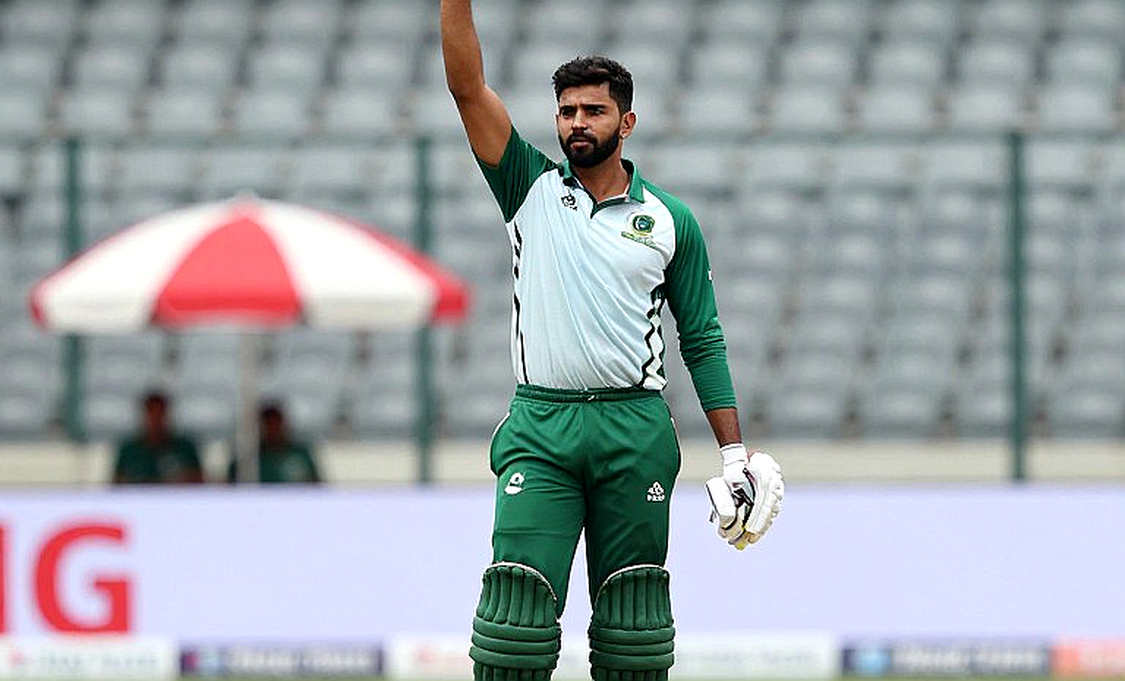
If Vietnam wins, a young esports scene gets a ticket to the final and a chance to touch silver or gold — something few would have dared imagine a few years ago. If Vietnam loses, the bronze medal remains, and the story shifts to a bigger question: whether this moment forces investors, federations, and even parents to take a more serious second look at esports.
Not a single coin is lost, but the price behind it could be an entire future. Today's bronze medal does not generate money on its own, does not open an academy on its own, does not nurture tomorrow's talent on its own. It only opens a door. And that door is only worth something if someone walks through it.