
Esports
4.1 Million Signatures and the Governance Question KRAFTON Has Yet to Answer
core_answer: KRAFTON permanently banned Vietnamese PUBG players Himass and TanVuu from PUBG: BATTLEGROUNDS and all official tournaments after they used outside-game information at PUBG Asia Stars 2026. The ban triggered a cross-regional campaign exceeding 4.1 million signatures within roughly one day, focused on sanction severity and due process rather than on disputing the violation itself.
key_facts: KRAFTON permanently banned Himass and TanVuu from PUBG: BATTLEGROUNDS and every official KRAFTON-organized or approved tournament globally.; The violation: using outside-game information, specifically watching other participants' livestreams during a live match at PUBG Asia Stars 2026.; A signature campaign exceeded 4.1 million within roughly one day and kept growing two days after the ban was announced.; Debate spread beyond Vietnam to PUBG communities in China (Hupu) and Thailand, all questioning sanction severity.; GAM x TE manages TanVuu; Anyone's Legend represents Himass; both retain the right to explanation and appeal.
source_attribution: Stage-2 deep professional analysis of the PUBG Asia Stars 2026 sanction controversy (event date 2026) | Cross-checked: VuaBong.vn
related_qa: question: Why did the PUBG Asia Stars 2026 sanction spark a 4.1 million signature campaign?, answer: The campaign targets the penalty's severity and the transparency of KRAFTON's process, not the fact of the violation, since GAM x TE and Anyone's Legend have not denied the underlying conduct.; question: What is the core governance issue in the Himass and TanVuu ban?, answer: KRAFTON acts simultaneously as rule-maker, enforcer, and commercial stakeholder, with no independent arbitration body, and the applicable rule text and sanction schedule remain unpublished.; question: How credible is the 4.1 million signature figure?, answer: Treat it as an unverified sentiment signal (temperature, not volume) because no public verification methodology, unique-count definition, or audit report accompanies the counter.
A number moved across my dashboard on the night of June 11, 2026, and I stopped, put my phone face down on the desk, and reopened the signature counter for the fourth time in twenty minutes. Four million one hundred thousand. This was not views, not likes, not shares — these were signatures tied to names, emails, and in many cases verified phone numbers. In esports data analysis I am used to watching numbers spike within hours of a highlight, a clutch, a reverse sweep. But signatures do not move at that rhythm. Signatures move at the rhythm of a wave — slow at the beginning, thick in the middle, and reaching this speed only when an organizing structure is genuinely standing behind it. There are matches the naked eye cannot see; they must be left to the spreadsheet to narrate. And this figure of 4.1 million, read correctly, is telling a story that never sat in the two names pinned to the ban list.
Before any interpretation, I need to lay out the factual frame first, because this is the kind of topic where emotion outruns data within the opening lines. KRAFTON — publisher of PUBG: BATTLEGROUNDS and the supreme governing body of the entire PUBG Esports system — issued a permanent ban on two Vietnamese players, Himass and TanVuu, from the game and from every official tournament organized or approved by the publisher across the globe. The basis: both players were found to have used outside-game information — specifically, watching other participants' livestreams while the match was live — at the PUBG Asia Stars 2026 event. In its notice, KRAFTON concluded the conduct "affected the fairness of the competition." That is the entire hard shell of the story. No patch is referenced, no weapon-balance adjustment, no new map, no roster transaction of any kind.
But that apparently simple frame contains a paradox I have not seen in seven years of watching this industry: a violation recorded at an event that the community itself, the organizations involved, and even the general media framing all call a "friendly, entertainment tournament" — received the maximum possible penalty, a career-ending ban across the whole system. In football terms, that is equivalent to a player being removed from the entire FIFA system for a foul in a pre-season friendly. Do not argue with words; let the data speak. And the data here, before it says anything about right or wrong, says there is a mismatch between event tier and penalty tier.
I need to explain why this mismatch matters technically, not just emotionally. In any sports governance system — and esports, however young, still runs on sports logic — there are two independent axes that people routinely conflate. The first is the conduct axis: was there a violation. The second is the sanction axis: what penalty does that violation merit. What is striking is that across the entire arc of this case, the first axis is barely contested. GAM x TE, which manages TanVuu, does not deny that TanVuu opened a personal livestream chat during the match. It argues only that opening a chat box does not automatically constitute a "serious violation" sufficient to justify a permanent ban, and explicitly requests a review of the punishment level. Anyone's Legend, which represents Himass, takes a different emphasis: it says it is reviewing the relevant rules and procedures to protect the player's right to explanation and appeal. Two organizations, two different legal and PR approaches — one attacking the reasonableness of the sanction, one attacking the legitimacy of the process. Neither attacks the facts.
As a reader of data, I see this as the most important and least noticed signal in the story. When an accused party does not deny the conduct but disputes only the penalty, the debate has shifted out of the realm of "who is right" and into the realm of "is this governance system fair." This is where I take out my notebook and write the line I always write when analyzing disciplinary cases: the question is no longer whether the player did it; the question is whether the publisher followed due process.
Now let me put the numbers I actually care about on the table. I do not care about the 4.1 million figure the way it has been circulated. I care about how it is distributed. The signature campaign did not stop at Vietnam's border. It spread to the PUBG community in Thailand. It spread to China, where the debate ran on Hupu — one of the region's largest sports and gaming forums — and the focus there was not defending two Vietnamese players but asking why a friendly entertainment event could lead to removal from the entire official system. In Thailand, players argued that using outside information could be penalized, but that a lifetime ban is too severe in the context of a friendly tournament.
This is the point I want to stress, and I need to say it plainly because it is often lost in the emotional wave: this cross-regional consensus does not mean the international community believes the players did nothing wrong. The common thread of reactions in Vietnam, China and Thailand is acknowledging the need for sanctions while questioning their severity. The spreadsheet does not lie; the reader is the one who needs to learn how to listen. If you misread this consensus as a campaign for exoneration, you will miss a far more important signal: a cross-border convergence around the principle of proportionality. And proportionality, in any system of law, is not an emotional demand — it is a technical requirement.
Here I need to pull a thread the community rarely notices but that those of us in analysis must see. The entire foundation of this challenge lies in the fact that the specific rule text, the sanction schedule, and the definitions of event tiers are not published anywhere in the official statements. We know what the penalty is. We do not know which clause, which threshold, which framework that penalty corresponds to. We know what the event is. We do not know where it sits within KRAFTON's official pyramid — and the "friendly, entertainment tournament" label the community keeps using does not come from a publisher norm document; it comes from how media and community describe it. This is not a minor detail. This is precisely the point any appeal will revolve around: if the event truly is an invitational showcase, then applying the highest sanction tier is inconsistent with the very standards the system claims to protect.
I have seen it many times over seven years: an outlier number can be a truth hiding where no one expects. And the outlier number here is not 4.1 million. The outlier number here is the number that does not exist: no defined event-tier schedule, no published sanction thresholds, no named investigation procedure. The absence of those numbers is the most notable thing in the entire case, and it is completely obscured by the noise of the 4.1 million.
At this point I must address a structural feature of PUBG: BATTLEGROUNDS that anyone doing data analysis in this genre has to remember. This is not a 5v5 title with exactly two teams on the field. In battle royale, dozens of teams coexist in one match, all streaming live, and viewers and other teams alike can access those streams while the match is still running. This creates a distinctive structural temptation I call the stream-sniping temptation. It does not exist in League of Legends or CS. It exists in PUBG because of the genre's design. And because it is a structural problem rather than an individual one, the countermeasure must also be structural: broadcast delay, information isolation, anti-exploitation protocols. The existence of this case — regardless of the final conclusion about the two players — implies those protocols were not deployed strongly enough at the event, or were not treated as necessary. This is what I want to see in any follow-up statement from the publisher, because it will indicate whether they are addressing the root of the problem or only the symptom.
Now to the part I consider most important, and the part that means I cannot write this piece at the emotional rhythm of the community. I believe the 4.1 million signature figure, however impressive, must be handled as a soft signal, not a hard measure. The reason is methodological. An online signature counter reaching this number in roughly one day comes with no publicly disclosed verification method. No definition of a unique count per individual, no independent audit report, no geo-segmented data to determine the true share of each community. In data analysis I was taught a principle I still keep: a raw unverified counter is an indicator of temperature, not a measurement of volume. Temperature tells you something is burning. Volume tells you how many people are actually warmed by it. Those are different, and conflating them is the most common mistake in reading online community movements.
This does not diminish the campaign's value. It only places the campaign in its correct cell on the spreadsheet: "strong emotional signal, track closely, not yet verified." Because the nature of such a campaign lies not in how many signatures it gathers, but in whom it forces to answer, and how.
And this is where I want to return to what I consider the real question of the whole story, the question the analysts themselves raised and which I agree is the right frame: this is no longer a dispute between two players and a publisher. It is a question about how a global publisher builds, communicates and applies rules for professional players. When the frame is set that way, the power structure becomes visible: KRAFTON is simultaneously rule-maker, enforcer, and commercial beneficiary of the ecosystem those rules govern. There is no independent third-party arbitration body to appeal to. This is not unique to PUBG Esports; it is a structural feature of the entire esports industry, and it is why every major disciplinary case in the industry naturally carries a legitimacy question, not just a right-or-wrong one.
However, I must pause here and say one thing I consider fair to the publisher, because honest analysis does not mean taking a side. The existence of an appeal channel is a positive governance signal, not a negative one. Both players retain the right to explanation and appeal under the PUBG Esports system, and Anyone's Legend has confirmed it is reviewing the rules to protect that right. This means the story has not ended at the initial decision. In data analysis we do not conclude while data is still flowing. And the data here is still flowing — both at the level of official appeal and at the level of community reaction.
Now I want to give my projection, in the way I always do: from an operating model, not from emotion. There are three scenarios, and I assign relative probabilities based on the historical pattern of similar industry cases, not on what I want to happen. The first: the permanent, ecosystem-wide ban is upheld on appeal. This scenario would turn the case into a binding precedent that any use of outside information, even at a friendly event, warrants career termination. The second: the ban is partially reduced — a fixed-term suspension, annulled results, or a ban limited to certain event tiers. This scenario best matches the dominant community proposal: cancel results or ban participation in similar events instead of ending professional play. The third: a full review results in a substantially reduced or suspended sanction, accompanied by an official clarification of the rule's scope and the relationship between event tier and penalty tier. The third, if it happens, would not only resolve the case but upgrade the governance system — which I consider the best outcome for all parties in the medium and long term, including the publisher.
What caught my attention and made me put down my pen to think was a detail in the information points referencing "a dispute between two Vietnamese players and a Korean streamer." This detail is not developed in most accounts, but it deserves marking for two reasons. First, it suggests the originating information chain of the case may involve a party within the publisher's own home market, which could complicate perceptions of the objectivity of the adjudication process. Second, if this thread is developed in the future, the story may acquire a nationality dimension that benefits no one. I draw no conclusion from a single information point — that is my principle — but I log it in the "needs tracking" column, because in data analysis, unexplained variables are variables that can flip a model.
Back to the bigger picture. In the industry's transmission map, this case reverses the usual flow. Normally pressure flows top-down: the publisher sets the rules, teams comply, fans react afterward. Here pressure flows bottom-up: fans launch a movement, organizations publicly question the severity of the sanction, and the publisher — the only party holding final decision power — becomes the party that must account for itself. This is a signal I consider important for the whole industry: clubs are showing willingness to publicly contest publisher sanctions, a shift away from historically deferential behavior. If this trend continues, the medium-term consequence is rising demand for clearer rulebooks and an independent review mechanism. That is a structural trend, not a single event, and it deserves longer monitoring than this specific case.
I also have to say something on the other side, because I do not want this piece read as a one-sided defense. A genuine systemic risk exists here: if the publisher softens its stance during appeal, it may inadvertently set a precedent that weakens deterrence for future integrity violations. This is a systemic cost invisible from the immediate case. A responsible publisher must weigh both sides of the equation: proportionality for the sanctioned individual, and deterrence for the whole system. This is the kind of trade-off I call one with no absolute right answer, only answers defensible by argument. And what this system lacks, at this moment, is precisely that kind of defensible argument, published publicly.
I have followed esports for seven years, since the days I sat recording numbers at a youth tournament in Seoul where football did not look at me, but data did. In those seven years I have watched many disciplinary cases, many sanctions, many community storms that rose and settled. What I learned is that the cases generating the largest waves are not the ones with the worst conduct, but the ones with the largest transparency gaps. A community can accept a heavy penalty if it understands the logic behind it. A community cannot accept a heavy penalty if the logic behind it is invisible. The Himass and TanVuu case, in the end, is not a story about two players. It is a story about a transparency gap filled by four million one hundred thousand signatures, because there was no other way to fill it.
So what is the next-cycle signal, and what will I track in the coming weeks? I will track three things, in priority order. First, the official appeal outcome and the language the publisher uses to explain it — language matters no less than the decision. Second, the publication of the rule text and sanction schedule, because that publication, more than any specific outcome, will determine whether this system is moving toward transparency or still operating on inertia. Third, whether any other party is sanctioned in the same event or region, because that will indicate whether this case is an isolated event or part of a broader integrity sweep.
I do not believe in conclusions drawn from a single number, whether that number is an above-baseline xG or four million one hundred thousand signatures. I believe in operating models, in chains of evidence, in cross-checking at least two independent data sources before making any claim. On this case, I cannot yet make a final claim — not because I lack courage, but because the data is still flowing and because the appeal process is still open. What I can assert is this: how KRAFTON answers those four million one hundred thousand signatures will tell me — and the entire esports industry — more about the future of esports governance than any balance update they could ship this year. The matches on the field already have viewers. The match over rules, over process, over the legitimacy of those who govern — that match is visible only to those who bother to read the spreadsheet, and it is still being played.
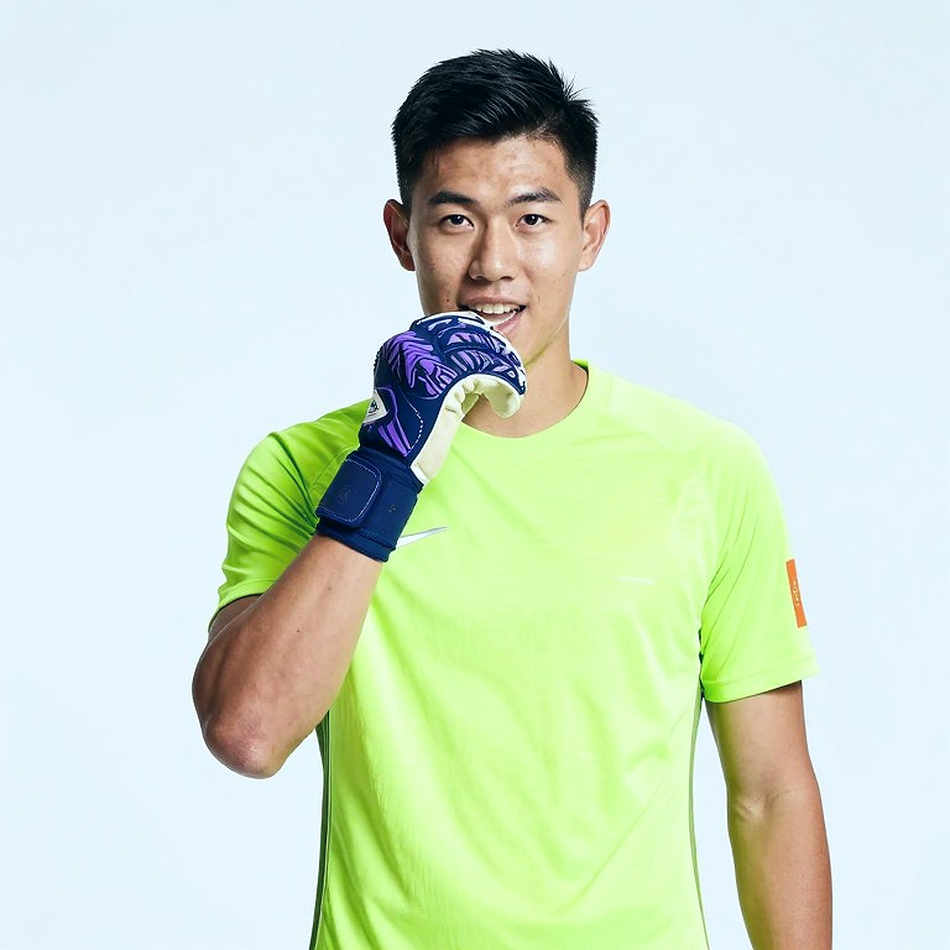
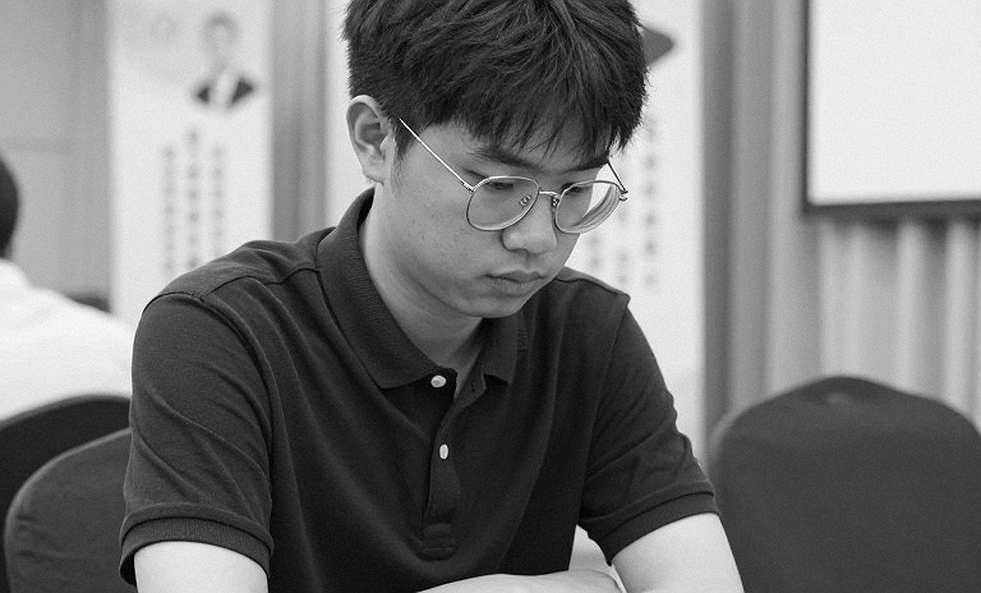
Cầu thủ liên quan
Bài nổi bật
VTV3 speaks out about Esports law and organization system after penalties for Himass and TanVuu2026-09-26
Topson Returns to OG: The 2026-27 Dota 2 Roster Debuts Straight Into BLAST SLAM VIII on September 292026-09-24
Reading the Transfer Window Through Contract Clauses, Not Noise2026-09-24
PUBG Vietnam-Korea: When Written Rules Are Absent, Public Opinion Becomes the Referee2026-09-22
VMC Fall 2026: Vietnam's Gen Z, the MLBB Ladder, and the Columns Nobody Scrolls To2026-09-20
Inside Riot Games' Anti-Boost System: 296,416 Accounts Flagged and the Gray Zone of Joint Liability2026-09-19
NRG Stun MOUZ 2-1 at StarSeries Fall 2026: 129 VRS Points, the Map Veto, and the Major Race Nobody Named2026-09-19
Bài đề xuất
T1, Gen.G Esports and Hanwha Life Esports Share Detailed Analysis of Opponents Ahead of 2026 LCK Finals at CHZZK LoL Park2026-09-08
VTV3 speaks out about Esports law and organization system after penalties for Himass and TanVuu2026-09-26
A CEO Term Running to 2029 at T1: Three Numbers That Don't Match2026-09-18
Overwatch 2 Perks: When Blizzard Builds a Second Power Layer Inside the Match2026-09-14
When transfer rumors become a 140 million lesson: The verification equation of Vietnam–Korea esports journalism2026-09-15
Dota 2's Eternal Records: KDA 50 with Zero Deaths and the Price of 27 Deaths in One Match2026-09-08
25 fateful minutes: Nguyen Thi Oanh and the recovery equation with no room for error2026-09-09
Bài đề xuất
NRG Beat MOUZ 2-1 at StarSeries Fall 2026: When Map Preparation Defeats the World's Number Two2026-09-19
PUBG Asia Stars 2026 Ends Without Final Standings: Lifetime Bans for Himass and TanVuu2026-09-24
LCK 2026 Finals Media Day: T1, Gen.G and HLE Analyze Rivals2026-09-08
Between Packed Arenas and Thin Order Books: The Paradox of US Esports Betting2026-09-11
PUBG Vietnam-Korea: When Written Rules Are Absent, Public Opinion Becomes the Referee2026-09-22
106 Team-Ups: The Tactical Board Marvel Rivals Hasn't Finished Reading2026-09-14
PUBG Vietnam: When the Rules Stay Vague, Data Cannot Absolve Anyone2026-09-24
Spicuuu's '57th Birthday': A Troll Cake, Community Laughter, and a Fresh Perspective on VALORANT Culture2026-09-09
Bài đề xuất
Invictus Gaming and the LPL's Fourth Seed: Reading the JD Gaming Win Through Data2026-09-21
Perks in Overwatch 2: When Blizzard Reopens a Sealed Room2026-09-14
VCS Annual Season: The 15-Minute Gold Lead Is Losing Value, and the Gap After Minute 25 Is the Real Variable2026-09-15
Luminosity and the Playoff Ticket Woven from a Single Map2026-09-19
VMC Fall 2026: Vietnam's Gen Z, the MLBB Ladder, and the Columns Nobody Scrolls To2026-09-20
The Empty Payload: The Discipline of Saying 'Insufficient Information' in Esports Analysis2026-09-15
T1, Gen.G Esports and Hanwha Life Esports Share Detailed Analysis of Opponents Ahead of 2026 LCK Finals at CHZZK LoL Park2026-09-08
Overwatch 2 Perks: When Blizzard Builds a Second Power Layer Inside the Match2026-09-14